DriveQuiz drivequiz.com

PA DMV PERMİT PRACTİCE TEST 15

Pennsylvania
Duration: 17 min
|
Questions: 18
Student Name:
Date:
Correct:      Incorrect:      Score:      
1.
Regulation signs normally are ____ rectangles with ____ letters or symbols.
A) yellow; black
B) white; black
C) green; white
2.
Who has a greater risk of being involved in a traffic crash?
A) Drivers who are driving alone.
B) Young people.
C) All of the above.
3.
Are bicyclists required to obey traffic laws and signs?
A) No, bicyclists are considered pedestrians when it comes to the rules of the road.
B) Yes.
C) Yes, but only if they are riding in a bicycle lane.
4.
When driving on a wet road:
A) as you drive faster, your tires may lose traction.
B) you must be aware that the pavement gets even more slippery when it's been raining for long periods of time.
C) you should follow the vehicle ahead of you more closely.
D) as you decrease your speed, the road becomes more slippery.
5.
If a police officer requires you to take a blood, breath, or urine test, you:
A) must sign a consent form before taking the test.
B) may refuse to take the test if you are 21 or older.
C) must take the test, or your license will be suspended.
D) may choose which test to take.
6.
A steady green light at intersections means:
A) You may drive through the intersection if the road is clear
B) You must increase your speed
C) You may not turn right
7.
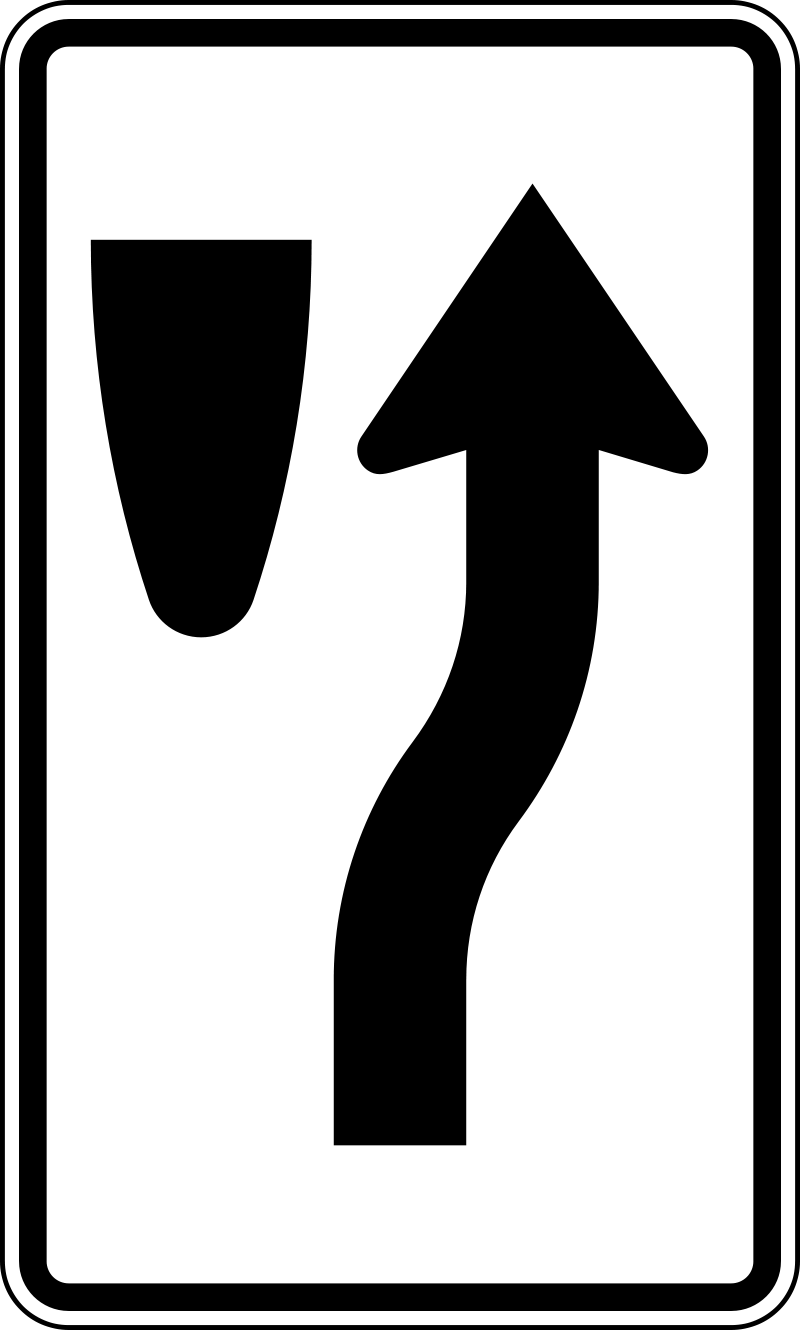
Drivers must pass to the right side of a traffic island, median barrier, or highway divider.
This sign tells drivers that:
A) there is a right turn ahead.
B) they must stay on the right side of the divider
C) a divided highway ends ahead.
8.
Blind spots around a large vehicle are _________________ than the blind spots around a car.
A) larger and deeper
B) less dangerous
C) narrower and shorter
9.
In case of skidding, drivers should NOT:
A) take their foot off the gas pedal.
B) pump the brakes gently if they are about to hit something.
C) tap the gas pedal with their foot.
10.
Lanes of traffic moving in the opposite direction are divided by ____ lines.
A) yellow
B) orange
C) white
D) black
11.
When driving on slippery roads, drivers should:
A) increase their following distance.
B) avoid crossing bridges or intersections.
C) brake harder than usual.
D) change lanes quickly.
12.
If your brakes are wet, you can dry them by:
A) riding the pedal lightly.
B) pull over to the right and wait until it stops raining.
C) having them checked by a mechanic.
13.
When driving, it is important to keep a space cushion _______ of your vehicle.
A) only on the left and right side
B) only in back
C) on all sides
D) only in front
14.
Regulatory signs are:
A) Suggestions
B) Warnings
C) Law
15.
Your brake lights tell other drivers that you:
A) are changing lanes.
B) are slowing down or stopping.
C) are making a turn.
D) have your emergency brake on.
16.
The bridge ahead has narrower lanes or shoulders than the preceding road. Use caution when meeting oncoming vehicles.
This sign warns drivers of:
A) a reduction of lanes.
B) a dip in the road. Drivers should be ready to stop if the dip is filled with water.
C) a bridge ahead, wide enough to accommodate two lanes of traffic, but with very little clearance.
17.
If another car is in danger of hitting you, you should:
A) flash your brake lights.
B) sound your horn.
C) use your emergency lights.
D) flash your headlights.
18.
When driving in heavy traffic, you should:
A) drive with the flow of traffic.
B) maintain a constant speed.
C) drive faster than the flow of traffic.
D) drive slower than the flow of traffic.
ANSWER KEY Check answers after completing the test.
1 B
2 C
3 B
4 A
5 C
6 A
7 B
8 A
9 C
10 A
11 A
12 A
13 C
14 C
15 B
16 C
17 B
18 A