DriveQuiz drivequiz.com

OR DMV PERMİT PRACTİCE TEST 4

Oregon
Duration: 32 min
|
Questions: 35
Student Name:
Date:
Correct:      Incorrect:      Score:      
1.
To avoid the risk of being involved in an alcohol-related crash, you should:
A) decide before you start drinking that you are not going to drive.
B) say 'No, thanks' if someone offers you alcohol.
C) call a taxi if you've been drinking.
D) All of the above.
2.
A signalized intersection is ahead. Prepare to stop if the light turns yellow or red.
This sign means:
A) You must stop ahead
B) Railroad crossing ahead
C) No Passing Zone
D) There is a traffic signal ahead
3.
What is the first thing you should do if your wheels move off the pavement?
A) Pull the steering wheel back.
B) Pull over to the right and sound your horn to warn the other drivers.
C) Ease your foot off the gas pedal and brake gently.
4.
A driver cuts off another vehicle, or threatens another motorist or a pedestrian. These are examples of:
A) excessive driving
B) road rage
C) defensive driving
5.
An edge line that angles toward the center of the road indicates that:
A) the road is narrower ahead.
B) there’s a narrow bridge ahead.
C) you must turn right.
6.
Speed limit signs are:
A) service signs
B) regulation signs (regulatory signs)
C) warning signs
7.
_______ are required to wear safety belts.
A) Only passengers
B) All passengers and drivers
C) All drivers and passengers under 16
D) All drivers and passengers under 18
8.
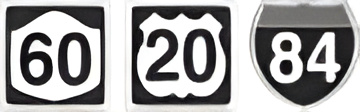
Interstate or State Route numbered highway marker used for route navigation and guide information.
These are:
A) route signs.
B) miles-left signs.
C) speed limit signs.
9.
Where must you position your vehicle when you prepare to make a left turn from a two-way roadway into a one-way roadway?
A) As far to the right as possible.
B) On the right curb.
C) As close as possible to the center line.
10.
You can reduce the chance of a collision with a large vehicle if you:
A) delay near it.
B) cut abruptly in front of it.
C) pay close attention to the turn signals.
11.
A sharp curve is ahead with a recommended safe speed plate. Slow down before entering the curve to prevent vehicle rollover.
This road sign means:
A) Merge, then slow down to the safe speed indicated
B) The road ahead curves right; slow down to indicated speed
C) Winding road ahead; slow down to the indicated speed
D) Divided highway begins. Slow down to the safe speed indicated
12.
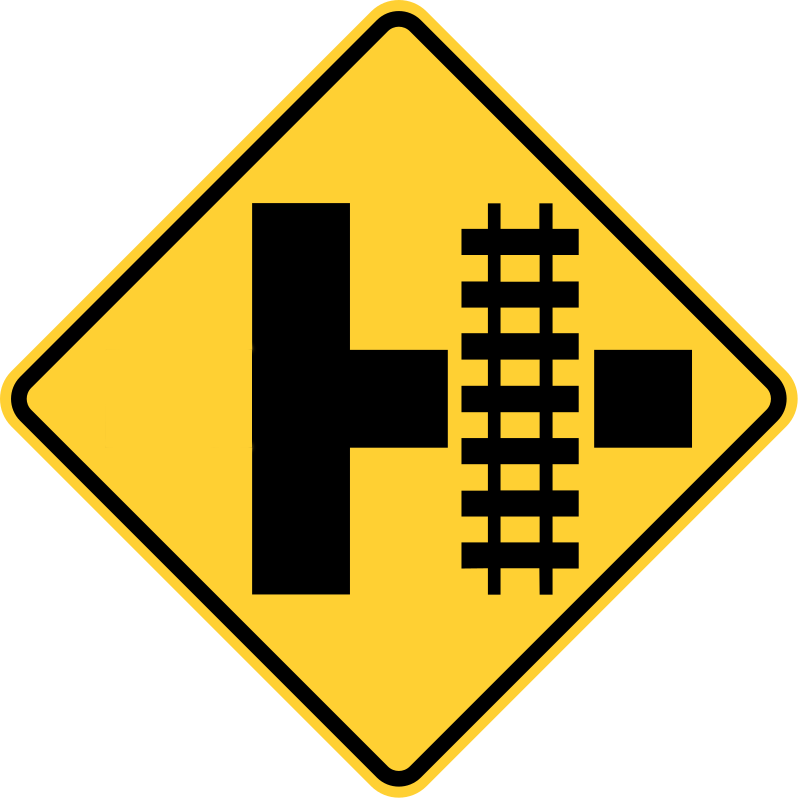
Four-way intersection ahead. Be prepared to yield right-of-way according to traffic control devices.
What does this sign indicate?
A) Parallel railroad crossing (side road)
B) Low ground clearance railroad crossing
C) Parallel railroad crossing (crossroad)
13.
When driving on a wet road:
A) as you drive faster, your tires may lose traction.
B) you must be aware that the pavement gets even more slippery when it's been raining for long periods of time.
C) you should follow the vehicle ahead of you more closely.
D) as you decrease your speed, the road becomes more slippery.
14.
When you prepare to make a left turn from a one-way road into a two-way road, you must:
A) enter the two-way road to the left of its center line.
B) approach the turn in the right lane or from the right side of a single lane.
C) approach the turn in the left lane or from the left side of a single lane.
15.
A signalized intersection is ahead. Prepare to stop if the light turns yellow or red.
This sign means:
A) No traffic signal ahead
B) Traffic signal ahead
C) Open intersection ahead
16.
You may not pass another vehicle on either side of a _______ centerline.
A) solid or broken yellow
B) single broken white
C) double solid yellow
D) single broken yellow
17.
What is the most important rule to remember in any emergency?
A) Do not panic.
B) Run away.
C) Call the police.
18.
The road ahead is divided by a median strip or physical barrier into two separate one-way roadways. Keep to the right of the divider.
This road sign means:
A) Divided highway ahead - stay to the right
B) Do not enter
C) Do not pass
19.
If you crash and you do not have liability insurance:
A) your driving privileges will be revoked for two years.
B) You will be fined $50.
C) your driving privileges will be suspended for one year.
D) You will be fined $75.
20.
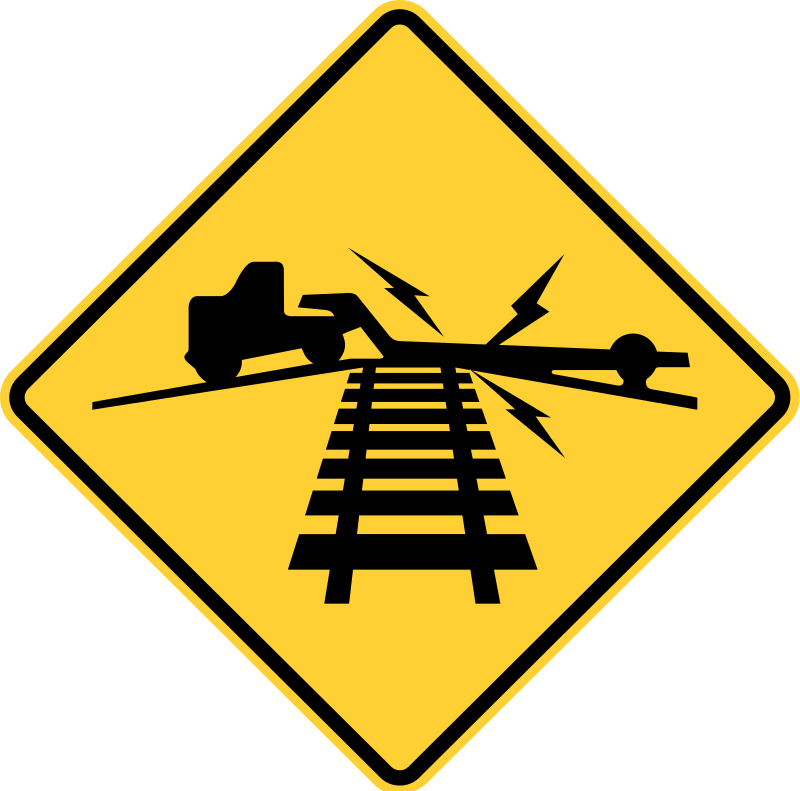
Warns of a high-centered or steep railroad hump crossing where long-wheelbase or low-slung vehicles may become stuck on the tracks.
This road sign means:
A) Winding road ahead
B) Pedestrian crossing
C) Low ground railroad crossing
D) No-passing zone
21.
If your gas pedal is stuck, you should:
A) hook your shoe under the pedal and see if you can free it. If not, shift into neutral and use the brake to slow your vehicle and get off the road.
B) ease your foot off the gas pedal and brake gently.
C) turn off the ignition if your vehicle has power steering.
22.
Indicates the maximum bridge or underpass vertical clearance. Vehicles taller than the posted height must not proceed.
This sign means:
A) Narrow bridge ahead. Slow down and drive with caution.
B) Do not to enter if your vehicle is taller than the height listed on the sign.
C) No passing zone ahead.
23.
A red traffic sign means?
A) Do not enter.
B) Stop.
C) All of the above.
24.
Right turns are strictly prohibited at this intersection under all circumstances.
This road sign means:
A) No left turn
B) No right turn
C) No U-turns
25.
_________________ your mirrors when you prepare to change lanes.
A) Never depend on
B) Never use
C) Always rely on
26.
Your first response to reduced visibility should be:
A) to look for road edge markings to guide you.
B) to turn on your windshield wipers.
C) to reduce your speed.
D) to turn on your headlights.
27.
When changing lanes, you should not:
A) signal your intentions early.
B) check your side and rear view mirrors.
C) use the inside rearview mirror to check for blind spots
D) check to see if other drivers are moving into the same lane.
28.
Your brake lights tell other drivers that you:
A) are changing lanes.
B) are slowing down or stopping.
C) are making a turn.
D) have your emergency brake on.
29.
A steep downhill grade is ahead. Trucks and heavy vehicles should downshift to a lower gear to prevent brake overheating.
When they see this sign, drivers should:
A) be ready to brake sharply and stop.
B) be ready to shift to lower gear.
C) yield to trucks coming from the hill on the right.
30.
When driving in bad weather, drivers should:
A) decrease the following distance.
B) increase their speed to get to their destination more quickly.
C) increase the following distance.
D) None of the above.
31.
When following motorcycles, drivers should:
A) reduce the minimum following distance.
B) try to pass them as they have different braking capabilities than other motor vehicles.
C) keep more space in front of their vehicle.
32.
The roadway ahead is narrowing or a lane is ending. Merge smoothly into the continuing lane.
This road sign means:
A) Lane reduction - the left lane ends soon
B) Highway entrance ramp ahead
C) Lane reduction - the right lane ends soon
33.
When driving on wet roads, you should remember:
A) driving on wet roads can cause hydroplaning.
B) you should give yourself additional time to stop.
C) to stay farther behind the vehicle ahead of you.
D) All of the above.
34.
Warns that a one-way street or divided highway is ending, and you are entering a roadway with oncoming traffic in the opposing lane. Stay to the right.
This road sign warns drivers that:
A) they are coming to a point where another traffic lane joins the one they are on.
B) a divided highway is ahead.
C) the one-way street or roadway is about to change to two-way traffic.
35.
To reduce the risk of being involved in a crash, drivers should:
A) ignore other drivers on the road.
B) communicate with other drivers on the road.
C) drive on side streets and back roads whenever possible.
D) avoid driving during rush hour.
ANSWER KEY Check answers after completing the test.
1 D
2 D
3 C
4 B
5 A
6 B
7 B
8 A
9 C
10 C
11 B
12 A
13 A
14 C
15 B
16 C
17 A
18 A
19 C
20 C
21 A
22 B
23 C
24 B
25 A
26 C
27 C
28 B
29 B
30 C
31 C
32 C
33 D
34 C
35 B