←
Back to Test
Hide Answer Key
Print / Save as PDF
Print / PDF
drive
quiz
.com
OH DMV PERMİT PRACTİCE TEST 9
Ohio
Duration: 36 min
|
Questions: 39
Student Name:
Date:
Correct:
Incorrect:
Score:
1.
This road sign means:
A)
Merge
B)
Side Road
C)
Merging Traffic
D)
All traffic must go straight ahead
2.
This road sign means:
A)
Crossroad
B)
Hospital parking ahead
C)
Merge
3.
This road sign means:
A)
Curves ahead
B)
Divided highway ahead
C)
Divided highway ends
4.
This sign means:
A)
Hairpin corner ahead.
B)
Warning: U-turn ahead.
C)
Sharp right turn ahead.
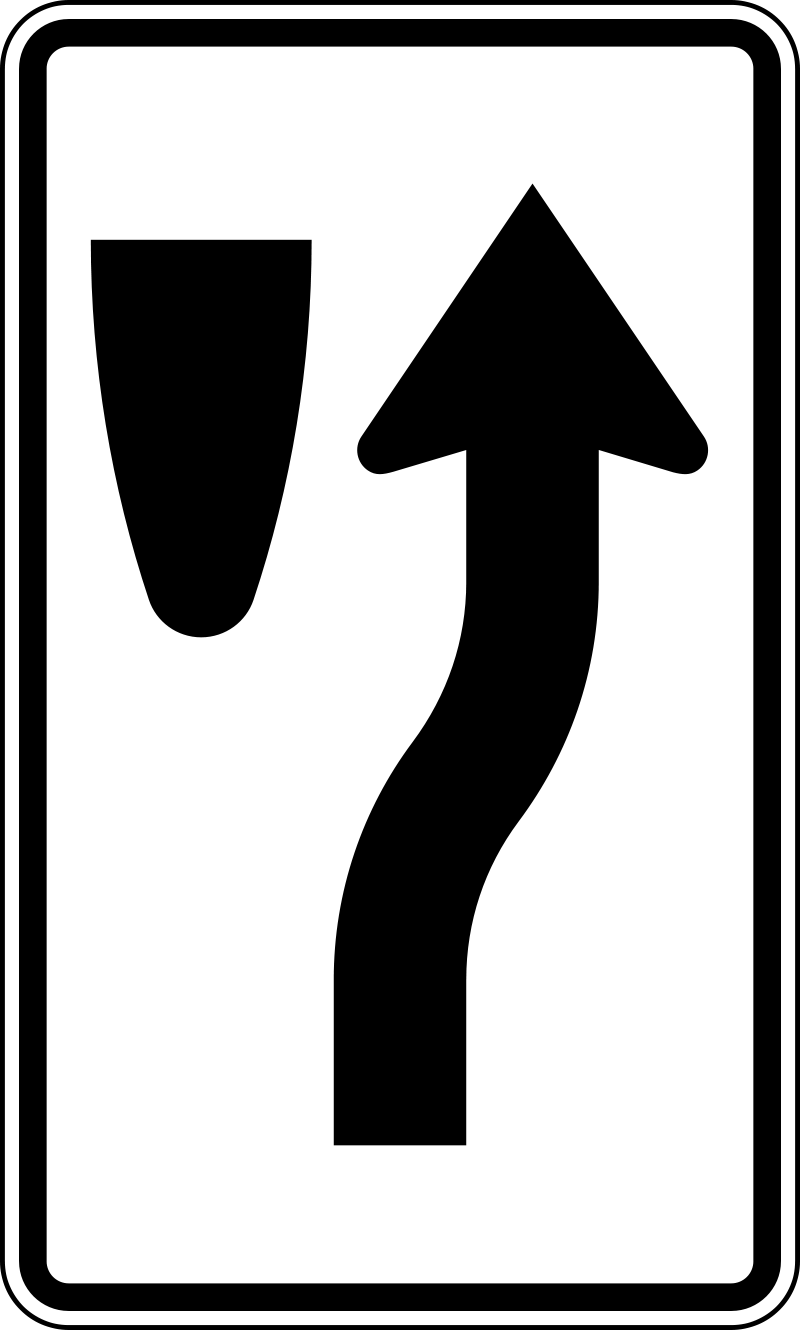
5.
This sign tells drivers that:
A)
there is a right turn ahead.
B)
they must stay on the right side of the divider
C)
a divided highway ends ahead.
6.
When you see this sign you should:
A)
increase your speed and try to pass other vehicles.
B)
slow your speed and be prepared to stop.
C)
slow your speed and do not pass other vehicles.
7.
What is the slow moving vehicle symbol?
A)
A reflective yellow diamond
B)
A reflective white triangle
C)
A reflective orange triangle
8.
This sign tells drivers that:
A)
they must make a left turn at the intersection.
B)
U-turns are not allowed.
C)
they must not make a right turn.
D)
None of the above.
9.
This sign warns that:
A)
traffic must merge left.
B)
the bridge ahead is wide enough for only one vehicle at a time.
C)
traffic must merge right.
10.
This road sign means:
A)
You must come to a complete stop
B)
Do not enter
C)
Slow down, stop if necessary and yield the right-of-way
D)
Merging traffic
11.
The picture shows a _________ sign.
A)
no U-turn
B)
no left turn
C)
sharp turn
12.
What should drivers do when they see this road sign?
A)
come to a complete stop and wait for a train to cross.
B)
slow down, look for a train, and be prepared to stop.
C)
look for a human flagger.
13.
___________ are green with white letters and symbols.
A)
Warning signs
B)
Destination signs (guide signs)
C)
Regulation signs (regulatory signs)
14.
The picture shows:
A)
a railroad advance warning sign.
B)
a speeding fines doubled sign.
C)
a reversible road sign.
15.
This is:
A)
a side road sign.
B)
a merging traffic sign.
C)
a right curve sign.
16.
The octagonal shape is used:
A)
for stop signs and railroad advance warning signs.
B)
exclusively for stop signs.
C)
to warn drivers of existing or possible hazards on roadways.
17.
This road sign warns drivers that:
A)
left turns are not allowed at the intersection.
B)
the road will make a sharp turn to the right.
C)
another road enters the highway from the direction shown.
18.
This road sign means:
A)
No left turn
B)
No right turn
C)
No U-turns
19.
What is the meaning of blue traffic signs?
A)
A blue background indicates a regulatory sign.
B)
They give directional information.
C)
Blue indicates road user services.
20.
When in a motor vehicle on a highway, it is:
A)
illegal to drink from, but permissible to transport, open containers of alcohol in the passenger compartment.
B)
illegal to possess an open container of alcohol in the passenger compartment.
C)
acceptable to drink alcoholic beverages if you are not driving.
D)
permissible to drink a moderate amount of alcohol when driving with a passenger.
21.
What should you do if your vision through the windshield becomes blocked?
A)
Pull your vehicle off the road and park it.
B)
Turn on your emergency lights.
C)
Open the side window so you can see.
D)
All of the above.
22.
When you drive near parks and playgrounds, you should expect children:
A)
not to cross unless they are with an adult.
B)
to know when it is safe to cross.
C)
to stop at the curb before crossing the street.
D)
to suddenly run into the street.
23.
When following a motorcycle, drivers must remember that motorcycles can ____________ than other vehicles.
A)
accelerate much faster
B)
stop much more quickly
C)
stop much more slowly
24.
What should you do if your headlights suddenly go out?
A)
Brake immediately and activate your emergency lights.
B)
Use your emergency lights, parking lights or directional signals.
C)
Ease your foot off the gas pedal and brake gently.
25.
To avoid being in a truck driver’s blind spot, you should:
A)
never pass the truck and put your headlights on.
B)
avoid driving on either side of the truck and don’t tailgate.
C)
flash your lights.
D)
sound your horn.
26.
The amount of space you need to cross traffic depends on the:
A)
road and weather conditions and oncoming traffic.
B)
number of cars behind you.
C)
presence of a yield sign.
D)
number of cars in front of you.
27.
Drivers can not pass a vehicle on the left if:
A)
they approach the top of a hill on a two-way road and can not see over it.
B)
they can not safely return to the right lane before they reach a solid yellow center line for the right lane.
C)
All of the above.
28.
A flashing yellow light means:
A)
Merging traffic ahead
B)
Pedestrian crossing
C)
Come to a full stop
D)
Proceed with caution
29.
As you approach an intersection, the traffic light changes from green to yellow. You should:
A)
apply the brakes sharply and come to a complete stop.
B)
be prepared to stop before the intersection.
C)
be prepared to stop in the middle of the intersection.
D)
speed up to beat the red light.
30.
When getting ready to change lanes, you should:
A)
check your rearview mirror.
B)
quickly turn your head to check for other vehicles.
C)
check your side view mirror.
D)
All of the above.
31.
If a vehicle using high beams comes toward you, look towards __________ of the road.
A)
either side
B)
the center
C)
the right side
D)
the left side
32.
What should drivers do in case of a brake failure?
A)
Shift to a lower gear.
B)
Tie a white cloth on the left door handle.
C)
Brake lightly.
33.
A flashing red traffic light:
A)
has the same meaning as a yield sign.
B)
is used to indicate a pedestrian crossing.
C)
has the same meaning as a stop sign.
D)
indicates that you should drive with caution.
34.
Parking is not allowed:
A)
on the road side of a parked vehicle.
B)
in a tunnel.
C)
All of the above.
35.
When driving on slick roads, drivers should:
A)
accelerate quickly.
B)
take turns more slowly.
C)
use alternate routes.
D)
drive as they would on dry roads.
36.
If you are blinded by headlights on an approaching vehicle, you should:
A)
avoid looking directly at the bright lights.
B)
glance toward the side of the road, then look quickly ahead to determine the other vehicle’s position.
C)
All of the above.
37.
If you begin to feel drowsy while driving, you should:
A)
open your window.
B)
get some coffee.
C)
get an energy drink.
D)
stop driving.
38.
When driving in bad weather, drivers should:
A)
decrease the following distance.
B)
increase their speed to get to their destination more quickly.
C)
increase the following distance.
D)
None of the above.
39.
Are bicyclists required to obey traffic laws and signs?
A)
No, bicyclists are considered pedestrians when it comes to the rules of the road.
B)
Yes.
C)
Yes, but only if they are riding in a bicycle lane.
ANSWER KEY
Check answers after completing the test.
1
B
2
A
3
C
4
A
5
B
6
C
7
C
8
C
9
A
10
C
11
A
12
B
13
B
14
A
15
A
16
B
17
C
18
B
19
C
20
B
21
D
22
D
23
B
24
B
25
B
26
A
27
C
28
D
29
B
30
D
31
C
32
A
33
C
34
C
35
B
36
C
37
D
38
C
39
B