DriveQuiz drivequiz.com

OH DMV PERMİT PRACTİCE TEST 6

Ohio
Duration: 36 min
|
Questions: 40
Student Name:
Date:
Correct:      Incorrect:      Score:      
1.

A steep downhill grade is ahead. Trucks and heavy vehicles should downshift to a lower gear to prevent brake overheating.
This traffic sign warns you about:
A) merging traffic.
B) a hill or a downgrade up ahead on the road.
C) an intersection ahead.
D) a winding road.
2.
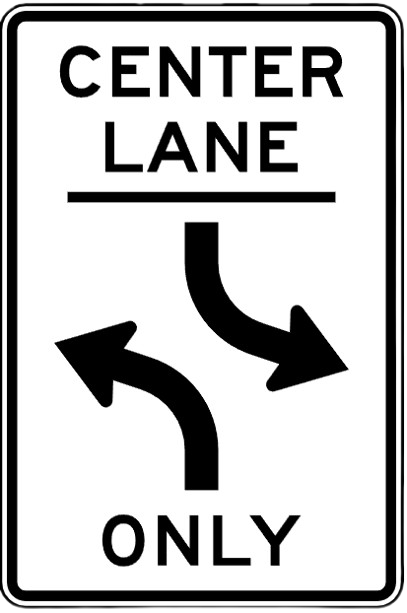
Indicates a two-way left-turn lane in the center of the road. Must only be used to make left turns or U-turns (where permitted), not for regular travel or passing.
This sign means:
A) The center lane is shared for left turns.
B) Left turns in both directions of travel are not permitted.
C) Vehicles may only turn left.
3.
This lane is exclusively designated for making U-turns. Through traffic and right turns are not allowed from this lane.
This sign means:
A) You may make a U-turn.
B) Hairpin corner ahead.
C) You must make a U-turn.
4.
Warns of two consecutive curves in opposite directions (e.g., curves right then left). Slow down to maintain control.
This sign warns drivers that:
A) the highway ahead is divided into two one-way roadways. Drivers should keep to the right.
B) there is a winding road ahead.
C) there is a double curve ahead.
5.
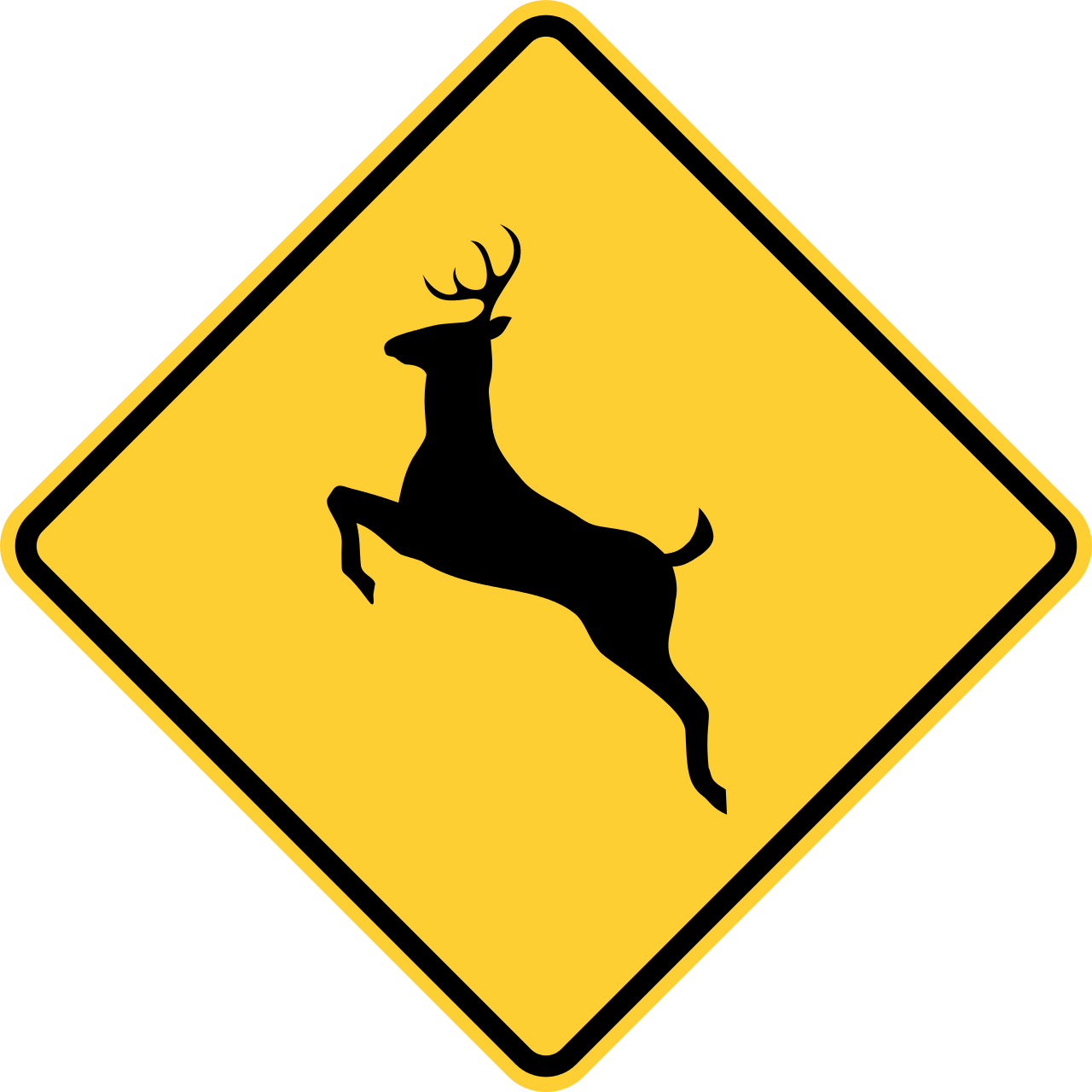
Wildlife and deer frequently cross in this area, especially at dawn and dusk. Scan the roadside and be prepared to brake safely.
When they see this road sign, drivers should:
A) drive carefully because the animal pictured on the sign is extremely rare in the area.
B) watch for this species crossing the road.
C) park in the zoo area.
6.
Prohibits drivers from making a 180-degree turn to travel in the opposite direction at this intersection or stretch of road.
This road sign means:
A) Left turns are not allowed where this sign is displayed.
B) Drivers cannot make a complete turn to go in the opposite direction.
C) Vehicles turning left must make a U-turn.
7.
Which shape is a railroad advance warning sign?
A) Crossbuck
B) Round
C) Pentagon
8.
The road ahead is divided by a median strip or physical barrier into two separate one-way roadways. Keep to the right of the divider.
This road sign means:
A) Divided highway ahead - stay to the right
B) Do not enter
C) Do not pass
9.
The bridge ahead has narrower lanes or shoulders than the preceding road. Use caution when meeting oncoming vehicles.
This sign warns drivers of:
A) a reduction of lanes.
B) a dip in the road. Drivers should be ready to stop if the dip is filled with water.
C) a bridge ahead, wide enough to accommodate two lanes of traffic, but with very little clearance.
10.
Slow down and give right-of-way to all oncoming vehicles, cyclists, and pedestrians. Stop completely if necessary before entering the intersection or merging.
This is the shape and color of a ________ sign.
A) yield
B) stop
C) do not enter
11.
Slower-moving vehicles must stay in the right-hand lane to allow faster traffic to pass safely on multi-lane highways.
This road sign is:
A) a speed reduction sign.
B) a warning sign.
C) a regulatory sign.
12.
Which shape is a yield sign?
A) Vertical rectangle
B) Upside-down triangle
C) Diamond
13.
The roadway becomes particularly slippery during wet or rainy conditions. Reduce your speed, increase following distance, and avoid abrupt braking or steering.
This road sign means:
A) Traffic increases ahead
B) Steep grade ahead
C) Winding road ahead
D) Slippery road ahead
14.
Prohibits drivers from making a 180-degree turn to travel in the opposite direction at this intersection or stretch of road.
This road sign means:
A) No left turn
B) No U-turn
C) Detour ahead
15.
Warns drivers that two separate lanes moving in the same direction are merging into one. Drivers in the right lane must adjust speed and merge smoothly with existing traffic.
This road sign means:
A) Merging traffic from the right
B) Sharp curves ahead
C) Intersection ahead
16.
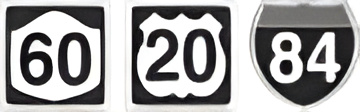
Interstate or State Route numbered highway marker used for route navigation and guide information.
These are:
A) route signs.
B) miles-left signs.
C) speed limit signs.
17.
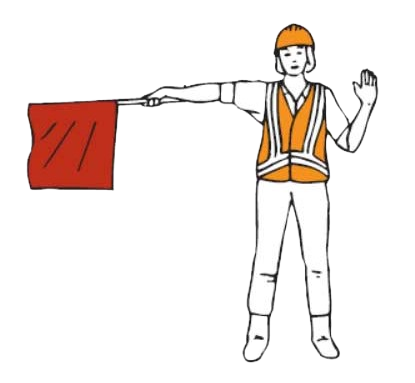
Driver arm extended downward out the left window with palm facing rearward signals an intention to slow down or stop completely.
This signal means:
A) Stop
B) Move to the left
C) Slow down
D) Proceed
18.
A red traffic sign means?
A) Construction warning.
B) Railroad crossing.
C) Stop.
19.
Warns of two consecutive curves in opposite directions (e.g., curves right then left). Slow down to maintain control.
This road sign means:
A) A road joins from the left
B) The road ahead turns sharply right then sharply left
C) Sharp right turn
D) Winding road ahead
20.
A steep downhill grade is ahead. Trucks and heavy vehicles should downshift to a lower gear to prevent brake overheating.
This sign warns of a ________ ahead.
A) hill
B) no passing zone
C) soft shoulder
21.
When driving behind a motorcycle:
A) allow a following distance of at least 4 motorcycle lengths.
B) allow a following distance of at least 2 car lengths.
C) allow at least 2 seconds of following distance.
D) allow at least 4 seconds of following distance.
22.
To check your blind spot before changing lanes:
A) look into the right side mirror.
B) look into the rearview mirror.
C) look over your shoulder in the direction you plan to move.
D) look into the left side mirror.
23.
When a stop is required at an intersection with no stop line or crosswalk:
A) Drivers should stop only at a place where the driver can see at least 100 feet on either side.
B) Drivers are required to slow down to make sure crossing traffic is clear.
C) Drivers are not required to stop.
D) Drivers should stop at the point nearest the intersecting roadway where the driver has a view of approaching traffic on the intersecting roadway before actually entering the roadway.
24.
You may not pass another vehicle on either side of a _______ centerline.
A) solid or broken yellow
B) single broken white
C) double solid yellow
D) single broken yellow
25.
Which of the following is a defensive driving skill/technique?
A) Maintain the correct speed.
B) Do not drive if you are very weary.
C) All of the above.
26.
When making a turn, drivers must _____ their speed.
A) reduce
B) maintain
C) increase
D) double
27.
On average, how long does it take your body to remove the alcohol contained in 5 ounces of wine?
A) one hour.
B) 30 minutes.
C) 3 hours.
28.
The application for an driver's license must be signed by the parent or guardian when the applicant is under what age?
A) Twenty-one.
B) Sixteen.
C) Eighteen.
D) Twenty.
29.
Drivers should be aware that a motorcyclist may:
A) decrease speed and rise off the seat when approaching a railroad crossing.
B) quickly change speed or lane position.
C) All of the above.
30.
Unless otherwise posted, the speed limit in a residential area is:
A) 25 MPH
B) 15 MPH
C) 20 MPH
D) 35 MPH
31.
When a hazard is seen ahead, reaction distance:
A) is the sum of perception distance and braking distance.
B) equals total stopping distance minus perception distance.
C) is how far a vehicle will continue to travel, in ideal conditions, before the driver hits the brakes.
32.
A speed limit is the __________ speed at which a vehicle may legally travel on the road under ideal conditions.
A) maximum
B) minimum
C) suggested
D) None of the above.
33.
Smoking while driving:
A) does not affect driving abilities.
B) is not distracting.
C) helps increase driver alertness.
D) is distracting.
34.
What is the main reason night driving is more difficult than daytime driving?
A) The use of headlight is required by law.
B) Reduced visibility.
C) Driving within the range.
35.
________ is the only effective way to reduce your Blood Alcohol Content (BAC).
A) Time
B) Drinking coffee
C) Taking a cold shower
D) Eating food
36.
To drive defensively, you must:
A) avoid scanning the road ahead.
B) keep one hand on the steering wheel.
C) keep your eyes moving.
37.
At night, it is hardest to see:
A) street lights.
B) pedestrians.
C) other motorists.
D) road signs.
38.
You must pull over to the edge of the road and allow an emergency vehicle to pass:
A) only if the emergency vehicle is following you.
B) regardless of your direction.
C) only if the emergency vehicle is approaching.
D) None of the above.
39.
A steady green light at intersections means:
A) You may drive through the intersection if the road is clear
B) You must increase your speed
C) You may not turn right
40.
You must come to a full stop at a yield sign:
A) Always.
B) Never.
C) If traffic conditions require it.
ANSWER KEY Check answers after completing the test.
1 B
2 A
3 C
4 C
5 B
6 B
7 B
8 A
9 C
10 A
11 C
12 B
13 D
14 B
15 A
16 A
17 A
18 C
19 B
20 A
21 D
22 C
23 D
24 C
25 C
26 A
27 A
28 C
29 C
30 A
31 C
32 A
33 D
34 B
35 A
36 C
37 B
38 B
39 A
40 C