A)come to a complete stop at the marked stop line.
B)turn off the ignition.
C)prepare to leave the lane safely.
4.
This sign means:
A)You can only park between 8:30 AM and 5:30 PM.
B)Parking is not allowed at 8:30 AM and at 5:30 PM
C)No parking between 8:30 AM and 5:30 PM.
5.
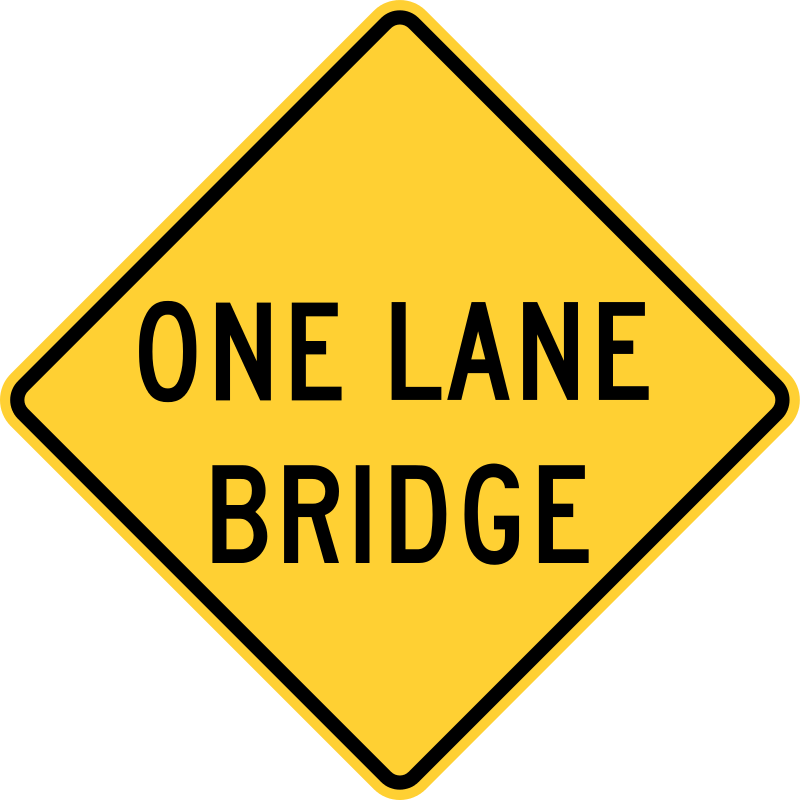
What should drivers do when they see this sign?
A)Make sure the bridge is clear of oncoming traffic before they cross.
B)Look to the left and right for other traffic.
C)Allow others to merge smoothly.
6.
This road sign means:
A)Slow down or stop
B)Stop
C)Road narrows ahead
7.
It's 10 AM. This sign tells you that:
A)you are allowed to park until 5:30 PM.
B)you must display a special permit in order to park here.
C)you are not allowed to park here.
8.
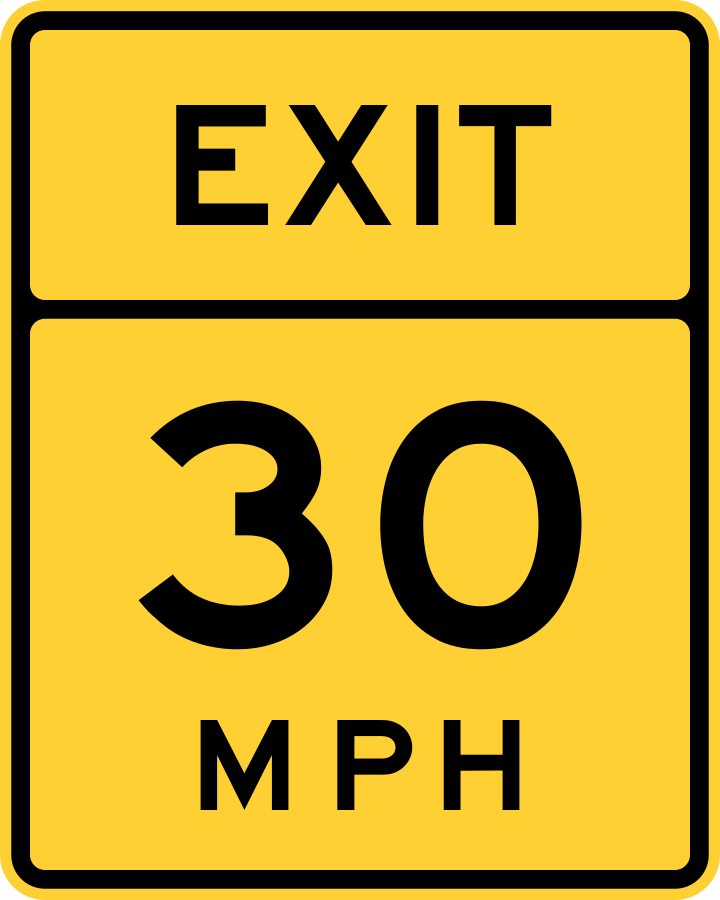
The sign in the picture:
A)shows the highest speed drivers can travel at the exit of the intersection.
B)is used to advise motorists of the appropriate ramp speed at the highway exit point.
C)indicates the minimum ramp speed at the highway exit point.
9.
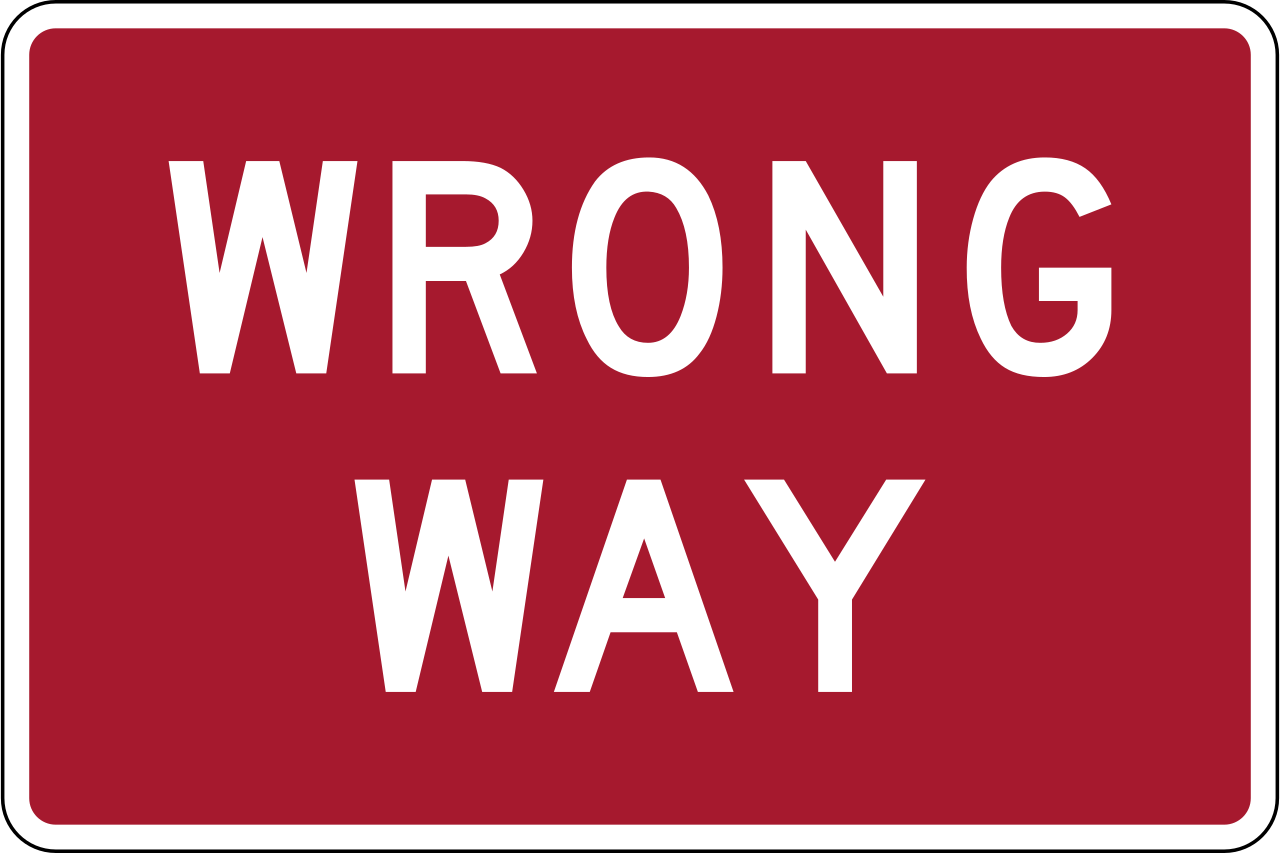
This road sign means:
A)Wrong Way
B)Merging Traffic
C)Curve ahead
10.
This sign means:
A)Not enter
B)Detour to the right
C)The road to the right is for one-way traffic only
11.
A flashing red light:
A)is used at dangerous intersections.
B)means the same thing as a stop sign.
C)All of the above.
12.
When drivers see this road sign:
A)they must come to a complete stop and call the police.
B)they must not drive past this sign.
C)they must turn around immediately.
13.
When you approach this sign, you must:
A)stop if necessary.
B)watch for workers crossing the road.
C)None of the above.
14.
What is the meaning of orange traffic signs?
A)Yield.
B)Warning of school, pedestrian, and bicycling activity.
C)Construction and maintenance warning.
15.
This sign means:
A)Railroad crossing
B)No Passing Zone
C)The road ends ahead
16.
This sign means:
A)U-turns are not allowed.
B)Parking is not allowed.
C)No parking on pavement.
17.
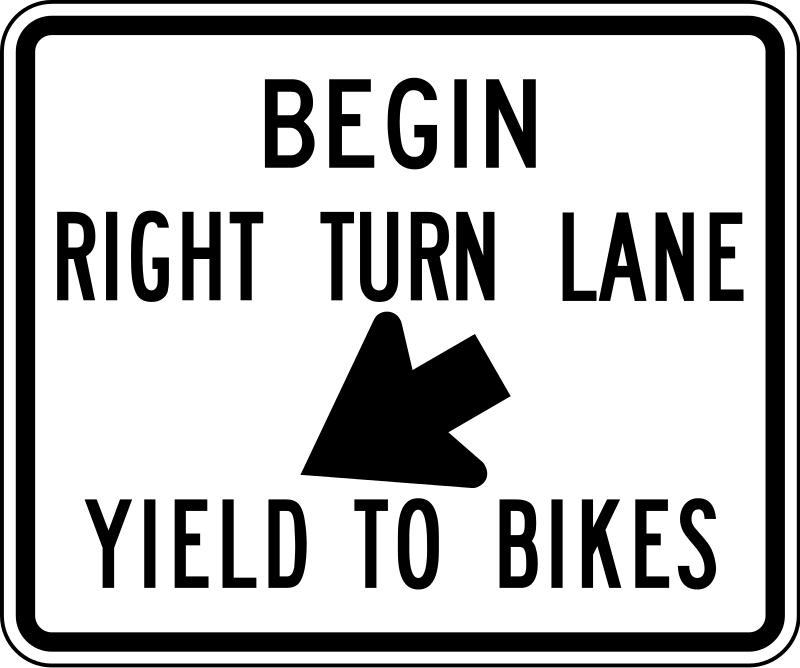
What does this road sign indicate?
A)Drivers have the right of way over bikes turning left.
B)Vehicles turning left must yield to bikes entering a right turn lane.
C)Motor vehicles entering an exclusive right-turn lane must weave across bicycle traffic in bicycle lanes.
18.
This sign means:
A)The road will curve to the right.
B)Left turns are not allowed at the intersection.
C)Do not turn right.
19.
What do pennant-shaped signs indicate?
A)A school crossing
B)Yield
C)A No Passing Zone
20.
__________ are blue with white letters and symbols.
A)Warning signs
B)Service signs
C)Destination signs (guide signs)
21.
Before passing another vehicle, you should signal:
A)early enough so other drivers know your intention.
B)after changing lanes.
C)at any time.
D)just before changing lanes.
22.
Your first response to reduced visibility should be:
A)to look for road edge markings to guide you.
B)to turn on your windshield wipers.
C)to reduce your speed.
D)to turn on your headlights.
23.
You are driving and you are feeling drowsy. You should:
A)avoid drinking coffee.
B)turn on the radio to keep you awake.
C)find a safe place to stop for a break.
24.
If the entrance lane is too short to allow acceleration to highway speed, you should:
A)go to the next entrance ramp.
B)stop and wait for a large gap in traffic, then enter the highway and accelerate quickly.
C)merge into highway traffic as soon as possible.
25.
At a stop sign there is no stop line, you must stop:
A)before you enter the intersection.
B)before you enter the crosswalk.
C)after you enter the crosswalk.
26.
What should you do if your brakes fail?
A)Hook your shoe under the pedal and see if you can free it.
B)Turn on your cruise control.
C)Try pumping the brake pedal to increase pressure.
27.
The traffic light is green and you want to drive straight through an intersection. If a car is already in the intersection and is making a turn, you must:
A)enter the intersection and then stop.
B)drive through the intersection. You have the right-of-way.
C)let that car complete its turn before you enter the intersection.
28.
Blind spots are:
A)Dangerous intersection where the maximum speed limit is 15 MPH or less.
B)At night, the darkest areas of a road, where emergency flashers should be used.
C)Areas to the side or rear of a vehicle that the driver cannot see with use of mirrors.
29.
When entering a highway from an entrance ramp, drivers should:
A)enter slowly to avoid other vehicles.
B)stop first, then gradually enter traffic.
C)accelerate to the speed of traffic.
D)drive above the speed of traffic to get ahead.
30.
When driving in fog, drivers should use:
A)low beam headlights.
B)parking lights.
C)high beam headlights.
31.
A steady green light at intersections means:
A)You may drive through the intersection if the road is clear
B)You must increase your speed
C)You may not turn right
32.
A thumping sound can be a warning:
A)that a tire blowout is about to occur.
B)of a steering failure.
C)of a brake failure.
33.
Hydroplaning is a situation in which:
A)your tires throw water to the rear, causing problems for the vehicles behind.
B)the tires of the car ahead cause sheets of water to splash on your vehicle.
C)one of your tires goes flat, causing the others to skid.
D)your tires ride up on a thin surface of water, losing contact with the pavement, and resulting in sudden loss of control
34.
If another vehicle is approaching you head-on in your lane, you should _______, sound your horn and brake.
A)steer right
B)None of the other answers is correct.
C)steer left
D)stay in the center of your lane
35.
For protection, motorcyclists are required to:
A)keep their headlights and taillights on at all times.
B)signal turns, lane changes and stops.
C)wear approved helmets.
36.
Your BAC depends on:
A)how fit you are.
B)the type of beverage you drink.
C)the amount of alcohol you drink.
37.
On slippery roads, drivers should:
A)leave more space in front of their vehicle.
B)increase their speed to avoid hydroplaning.
C)come to a complete stop.
38.
When you reach an intersection with a stop sign, you should:
A)follow the vehicle ahead of you.
B)stop, look right, then left, then right again.
C)stop, look left, then right, then left again.
D)check your rearview mirror, look left, then right, then proceed.
39.
A driver who approaches an intersection:
A)must yield the right-of-way to traffic already in the intersection.
B)must drive straight through the intersection, even if another vehicle is already in the intersection.
C)has the right-of-way over traffic already in the intersection.
40.
Who is most at risk?
A)Drivers who are fatigued.
B)Drivers who are driving on long, boring roads.
C)All of the above.
ANSWER KEYCheck answers after completing the test.