DriveQuiz drivequiz.com

NY DMV PERMİT PRACTİCE TEST 8

New York
Duration: 18 min
|
Questions: 20
Student Name:
Date:
Correct:      Incorrect:      Score:      
1.
When a hazard is seen ahead, reaction distance:
A) is the sum of perception distance and braking distance.
B) equals total stopping distance minus perception distance.
C) is how far a vehicle will continue to travel, in ideal conditions, before the driver hits the brakes.
2.
The NYS law requires drivers to use their headlights when visibility is less than:
A) 200 feet
B) 3,000 feet
C) 1,000 feet
D) 500 feet
3.
Blind spots are:
A) Dangerous intersection where the maximum speed limit is 15 MPH or less.
B) At night, the darkest areas of a road, where emergency flashers should be used.
C) Areas to the side or rear of a vehicle that the driver cannot see with use of mirrors.
4.
If traffic on the other side of an intersection is backed up and you cannot get completely through, you must:
A) enter the intersection and try to avoid blocking it.
B) enter the intersection and proceed with caution.
C) wait until traffic ahead is clear.
5.
When following a motorcycle, drivers must remember that motorcycles can ____________ than other vehicles.
A) accelerate much faster
B) stop much more quickly
C) stop much more slowly
6.
At night, headlights cover about ___feet ahead
A) 500
B) 100
C) 350
D) 150
7.
What color are front fog lights?
A) Amber or white.
B) Red.
C) Red or amber.
D) White or red.
8.
What should you do if one of your tires blows out?
A) Hold the steering wheel tight and brake immediately to avoid the risk of skidding.
B) Leave the road immediately.
C) Hold the steering wheel tight and slowly take your foot off the gas pedal.
9.
What is the most important rule to remember in any emergency?
A) Do not panic.
B) Run away.
C) Call the police.
10.
You can pass on the right:
A) when a vehicle ahead makes a right turn.
B) when a vehicle ahead makes a left turn.
C) when a vehicle that is approaching from the opposite direction is prepared to turn left.
11.
Drivers can not pass a vehicle on the left if:
A) they approach the top of a hill on a two-way road and can not see over it.
B) they can not safely return to the right lane before they reach a solid yellow center line for the right lane.
C) All of the above.
12.
The bridge ahead has narrower lanes or shoulders than the preceding road. Use caution when meeting oncoming vehicles.
This sign warns drivers of:
A) low clearance.
B) a narrow bridge ahead.
C) a low place in the road.
13.
What type of pavement marking shows you which lane you must use for a turn?
A) Edge line
B) Diamond
C) Crosswalk Lines
D) Arrows
14.
You can park in parking spaces for motorists with disabilities:
A) if you have a permit or vehicle plates AND the disabled person is in the vehicle.
B) only if the person who received the permit or vehicle plates is not in the vehicle.
C) even if if the person who received the permit or vehicle plates is not in the vehicle.
D) None of the above.
15.
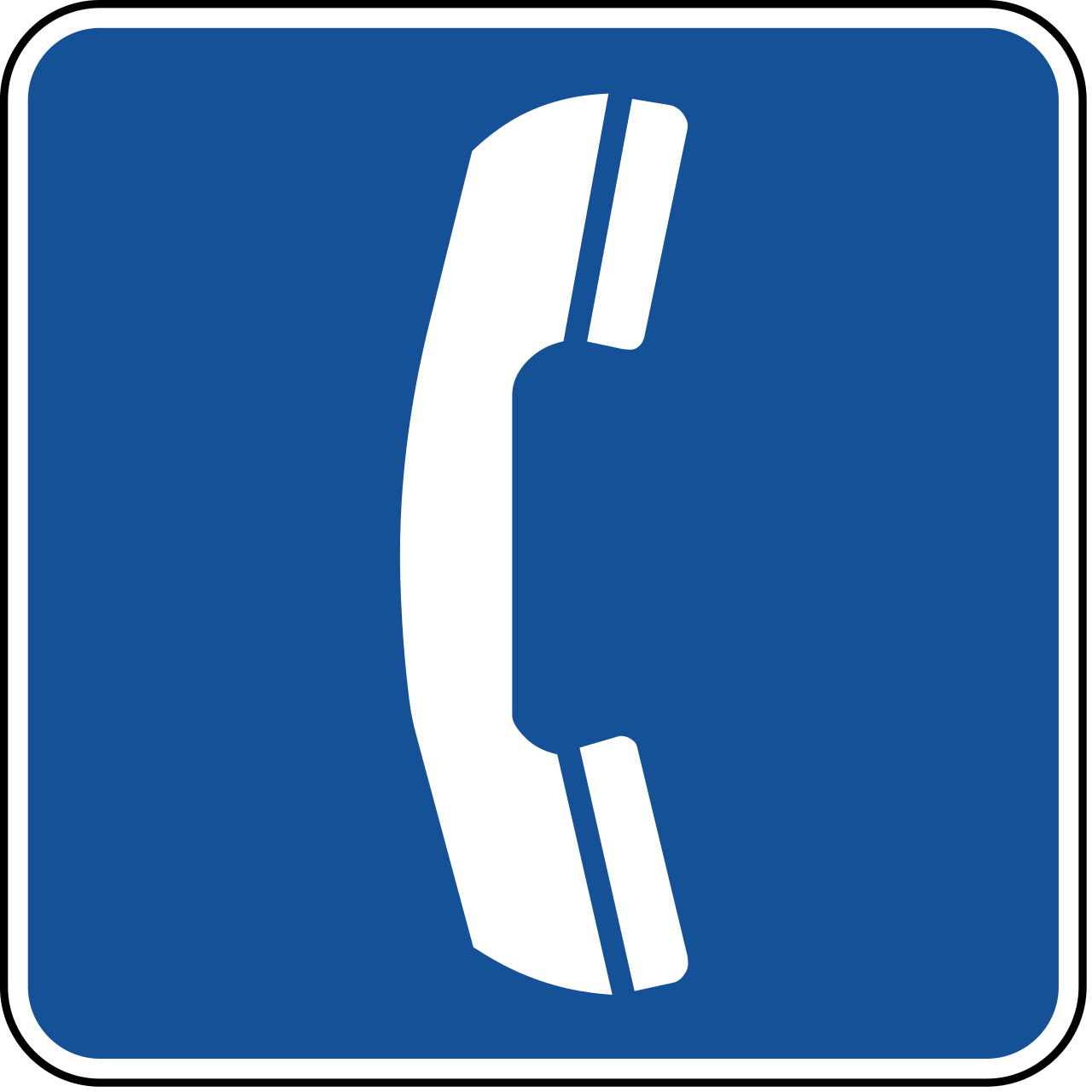
Blue motorist service sign indicating the availability of a public emergency telephone along the highway.
This sign indicates:
A) Phone service ahead
B) Emergency line available
C) Cell phone shop ahead
16.
Flashing Upraised Hand signal indicates pedestrians should finish crossing if already in the crosswalk, but not start crossing.
What does the flashing signal in the picture indicate?
A) The same thing as a stop sign.
B) Pedestrians should finish crossing the street if started.
C) Pedestrians should start crossing the street.
17.
Which of the following is NOT true about roundabouts?
A) They improve traffic flow.
B) Traffic signals found at roundabouts reduce traffic crashes.
C) They slow vehicle speed.
D) All of the above.
18.
The maximum legal speed under ideal driving conditions is 50 miles per hour. Always adjust speed downward for adverse weather, traffic, or road conditions.
This sign indicates the _______________ vehicles can safely travel in this area.
A) suggested speed
B) maximum speed
C) minimum speed
19.
What is a likely effect when you take another drug while you drink alcohol?
A) The effects of the alcohol and the drug are enhanced.
B) There are no effects, unless the drug is prescription only.
C) If the drug is over-the-counter, there are no effects.
20.
Driving While Ability Impaired (DWAI) is a:
A) traffic infraction.
B) a class E felony.
C) a misdemeanor.
D) criminal infraction.
ANSWER KEY Check answers after completing the test.
1 C
2 C
3 C
4 C
5 B
6 C
7 A
8 C
9 A
10 B
11 C
12 B
13 D
14 A
15 A
16 B
17 B
18 B
19 A
20 A