DriveQuiz drivequiz.com

NY DMV PERMİT PRACTİCE TEST 13

New York
Duration: 18 min
|
Questions: 20
Student Name:
Date:
Correct:      Incorrect:      Score:      
1.
For better visibility during rain, fog or snow, use:
A) high beam headlights.
B) emergency flashers.
C) low beam headlights.
D) daytime lights.
2.
Drivers who drive while intoxicated or impaired by drugs and cause the death of a child less than 16 years of age in the vehicle may be charged with a class B felony, punishable by up to ________ in State prison.
A) 50 years
B) 10 years
C) 2 years
D) 25 years
3.
What does it mean If an oncoming driver flashes headlights at you during a period of low visibility?
A) Your headlights are too bright. You should turn them off.
B) Your vehicle was difficult to see. You should turn on your headlights.
C) Your headlights are too bright. You should use parking lights instead.
4.
As you drive on the expressway, make sure:
A) you cut off vehicles behind you when you change lanes.
B) to signal all lane changes.
C) your directional signal goes off before you change lanes.
5.
If the entrance lane is too short to allow acceleration to expressway speed, you should:
A) stop and wait for a large space in traffic.
B) enter the expressway and accelerate quickly.
C) reduce your speed to 15 MPH or less and blend with traffic.
6.
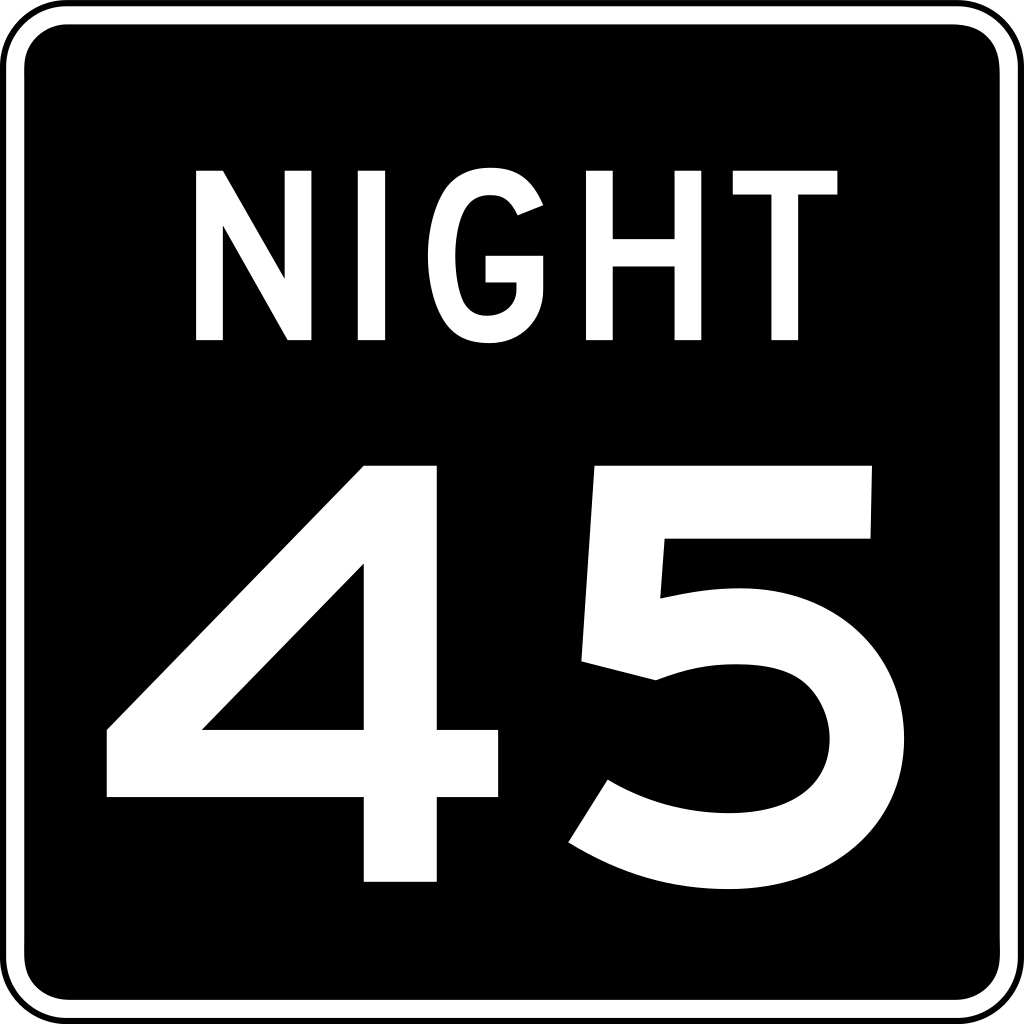
Indicates a lower maximum legal speed limit that applies only during nighttime hours for safety.
This sign means:
A) Take route 45 if you are driving at night.
B) The night-time speed limit is 45 MPH.
C) The minimum speed limit is 45 MPH.
7.
The traffic light is green and you want to drive straight through an intersection. If a car is already in the intersection and is making a turn, you must:
A) enter the intersection and then stop.
B) drive through the intersection. You have the right-of-way.
C) let that car complete its turn before you enter the intersection.
8.
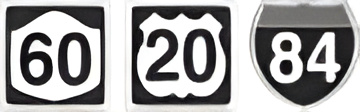
Interstate or State Route numbered highway marker used for route navigation and guide information.
These are:
A) route signs.
B) miles-left signs.
C) speed limit signs.
9.
In New York State, leaving the scene of an incident that involves a fatality or personal injury is:
A) a criminal violation.
B) permitted only if you were not directly involved in the crash.
C) a traffic violation.
D) permitted only if you did not cause the crash.
10.
A low point or depression in the roadway is ahead. Slow down to prevent vehicle undercarriage scraping or loss of control.
What does this ‘DIP’ sign indicate?
A) Downgrade ahead. Drivers should go slowly.
B) Police DIPartment ahead.
C) There is a Drive-In Parking ahead.
D) There is a low place in the road.
11.
When you perform rescue breathing, you should:
A) look for the victim's chest to rise.
B) give one breath every fifteen seconds.
C) never press the victim’s nostrils together.
D) not stop rescue-breathing, even if the victim can breath.
12.
You are entering a roadway from a private road, and you need to turn left. You have to yield to:
A) vehicles from the right.
B) vehicles from the left.
C) vehicles from both directions.
13.
If you get on a wrong expressway exit, you must:
A) get off at the next exit and look for signs that tell you how to return to the expressway.
B) use the the exit ramp to accelerate to expressway speed and blend with traffic.
C) drive in reverse to return to the expressway.
14.
What should you do if your headlights suddenly go out?
A) Brake immediately and activate your emergency lights.
B) Use your emergency lights, parking lights or directional signals.
C) Ease your foot off the gas pedal and brake gently.
15.
What is the average total stopping distance of a tractor+trailer with hot brakes?
A) 193 feet
B) 683 feet
C) 243 feet
D) 430 feet
16.
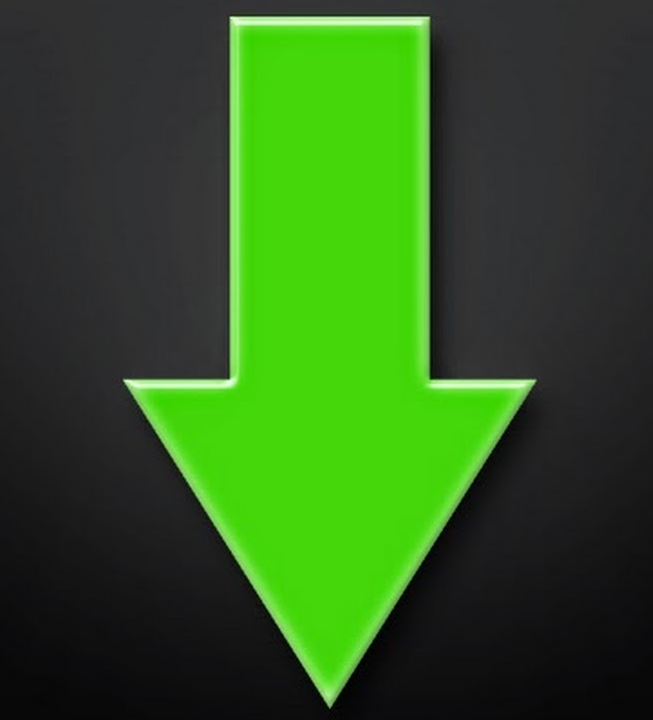
Protected turn in the direction of the arrow. Oncoming traffic is stopped by a red light; you may turn safely.
Vehicles may travel in lanes beneath the green arrow signal, but drivers must:
A) never change lane.
B) prepare to leave the lane safely.
C) also obey all other signs and signals.
D) turn left if they can.
17.
When you make a left turn from a two-way road into a four-lane highway, you must:
A) enter the left lane, to the right of the center line.
B) enter the right lane, to the left of the center line.
C) go straight through the intersection, and then make the turn.
18.
If you see a “lane closed ahead” sign you should:
A) make a U-turn. You are on the wrong side of the road.
B) merge into the correct lane when it is safe.
C) speed to the end of the closed lane and try to get into the other lane.
19.
Arrows on the roadway:
A) show which lanes you must use.
B) indicate reserved lanes.
C) indicate HOV lanes.
20.
If cars approaching from opposite directions reach an intersection at the same time:
A) a car that moves straight must yield to cars that turn left.
B) a car that turns left must yield to cars that move straight or turn right.
C) a car that turns right must yield to cars that move straight or turn left.
ANSWER KEY Check answers after completing the test.
1 C
2 D
3 B
4 B
5 A
6 B
7 C
8 A
9 A
10 D
11 A
12 C
13 A
14 B
15 D
16 C
17 A
18 B
19 A
20 B