←
Back to Test
Hide Answer Key
Print / Save as PDF
Print / PDF
drive
quiz
.com
NV DMV PERMİT PRACTİCE TEST 6
Nevada
Duration: 45 min
|
Questions: 50
Student Name:
Date:
Correct:
Incorrect:
Score:
1.
Drivers may pass on a two-lane roadway marked with a single solid yellow line on their side of the center line.
A)
False
B)
True
2.
When a traffic signal light turns green, you should:
A)
back up slowly.
B)
yield the right-of-way to pedestrians.
C)
yield the right-of-way to larger vehicles.
D)
wait 5 seconds before proceeding.
3.
This road sign means:
A)
Merging traffic from the right
B)
Sharp curves ahead
C)
Intersection ahead
4.
To avoid the risk of being involved in an alcohol-related crash, you should:
A)
decide before you start drinking that you are not going to drive.
B)
say 'No, thanks' if someone offers you alcohol.
C)
call a taxi if you've been drinking.
D)
All of the above.
5.
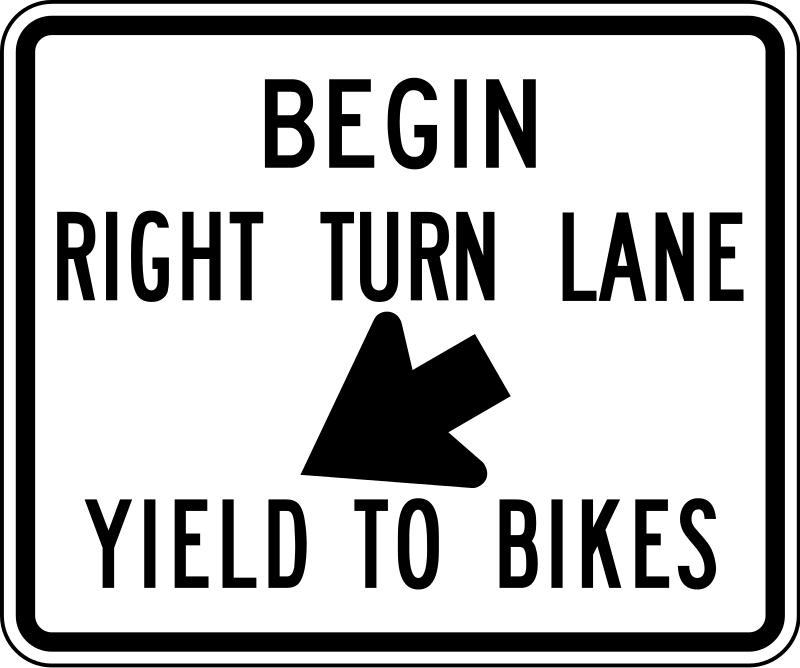
What does this road sign indicate?
A)
Drivers have the right of way over bikes turning left.
B)
Vehicles turning left must yield to bikes entering a right turn lane.
C)
Motor vehicles entering an exclusive right-turn lane must weave across bicycle traffic in bicycle lanes.
6.
Warning signs normally are:
A)
rectangles.
B)
triangles.
C)
diamond-shaped.
7.
What should drivers do in case of a brake failure?
A)
Shift to a lower gear.
B)
Tie a white cloth on the left door handle.
C)
Brake lightly.
8.
A thumping sound can be a warning:
A)
that a tire blowout is about to occur.
B)
of a steering failure.
C)
of a brake failure.
9.
Drivers can not pass a vehicle on the left if:
A)
they approach the top of a hill on a two-way road and can not see over it.
B)
they can not safely return to the right lane before they reach a solid yellow center line for the right lane.
C)
All of the above.
10.
To avoid having to make an emergency stop while driving in traffic, drivers should:
A)
drive in the right lane only.
B)
look ahead and maintain a safe following distance.
C)
sound their horn to warn other drivers.
D)
drive slower than the flow of traffic.
11.
Which of the following does NOT affect the distance that it takes to stop your vehicle?
A)
Perception time.
B)
Braking distance.
C)
Reaction distance.
D)
Steering ability.
12.
At night, it is hardest to see:
A)
street lights.
B)
pedestrians.
C)
other motorists.
D)
road signs.
13.
When in a motor vehicle on a highway, it is:
A)
illegal to drink from, but permissible to transport, open containers of alcohol in the passenger compartment.
B)
illegal to possess an open container of alcohol in the passenger compartment.
C)
acceptable to drink alcoholic beverages if you are not driving.
D)
permissible to drink a moderate amount of alcohol when driving with a passenger.
14.
This road sign means:
A)
Curves ahead
B)
Divided highway ahead
C)
Divided highway ends
15.
After parking, are you allowed to open a door on the road side of your vehicle?
A)
Yes, always.
B)
Yes, but only if it does not interfere with bicyclists and other traffic.
C)
No, never.
16.
When you make a left turn from a two-way road into a four-lane highway, you must:
A)
enter the left lane, to the right of the center line.
B)
enter the right lane, to the left of the center line.
C)
go straight through the intersection, and then make the turn.
17.
A speed limit is the __________ speed at which a vehicle may legally travel on the road under ideal conditions.
A)
maximum
B)
minimum
C)
suggested
D)
None of the above.
18.
This road sign means:
A)
No left turn
B)
No U-turn
C)
Detour ahead
19.
At a light rail intersection, you should always:
A)
share the road with pedestrians and bicyclists.
B)
look both ways before crossing the tracks.
C)
be alert and obey all traffic signals.
D)
All of the above.
20.
Your blind spot is the area of the road:
A)
you see in your rearview mirror.
B)
directly behind your vehicle.
C)
you cannot see without moving your head.
D)
you see in your side mirror.
21.
When driving in bad weather, drivers should:
A)
decrease the following distance.
B)
increase their speed to get to their destination more quickly.
C)
increase the following distance.
D)
None of the above.
22.
Following another vehicle too closely is known as:
A)
speedgating.
B)
closetailing.
C)
tailgating.
23.
If another car has stopped in an adjacent lane in the same direction of travel, you should:
A)
speed up and pass the vehicle on the right.
B)
pass the car on the left.
C)
be careful in case the other vehicle has stopped for a pedestrian.
D)
tap your horn to let the other driver know you are passing.
24.
Doing all you can to prevent crashes is called:
A)
Anti-Collision Driving
B)
Crash-Prevention Driving
C)
Defensive Driving
D)
ABS Driving
25.
If driving in foggy weather, drivers should turn on their high-beams to increase the field of vision.
A)
True
B)
False
26.
When you prepare to make a left turn from a one-way road into a one-way road, you must:
A)
move into the right lane, or to the left side of a single lane.
B)
move into the right lane, or to the right side of a single lane.
C)
move into the left lane, or to the left side of a single lane.
27.
When children are close, what should you do before you back out of a driveway?
A)
Rely on your mirrors.
B)
Get out of the car and check behind the car.
C)
Look through your back window for children.
28.
Blind spots around a large vehicle are _________________ than the blind spots around a car.
A)
larger and deeper
B)
less dangerous
C)
narrower and shorter
29.
Two solid yellow lines on the pavement mean:
A)
passing is not allowed.
B)
passing is allowed during daylight only.
C)
passing is allowed for both drivers.
D)
passing is allowed if you are at the top of a hill.
30.
If your car breaks down on the highway, you should:
A)
use your four-way flashers to warn other drivers.
B)
sound your horn to warn passing vehicles.
C)
flash your headlights at oncoming traffic.
D)
stop in the right lane.
31.
This sign means:
A)
The highway ahead is divided into two one-way roadways.
B)
Roundabout ahead. Slow down.
C)
The divided highway on which drivers are traveling ends ahead.
32.
If you stop at a railroad crossing with more than one track:
A)
proceed with caution until you see a train.
B)
go through when one of the tracks is free.
C)
go through as soon as the first train passes.
D)
wait until you have a clear view of both tracks.
33.
This road sign means:
A)
Winding Road Ahead
B)
No turns are allowed on this road
C)
Right lane closed
D)
Do Not Enter
34.
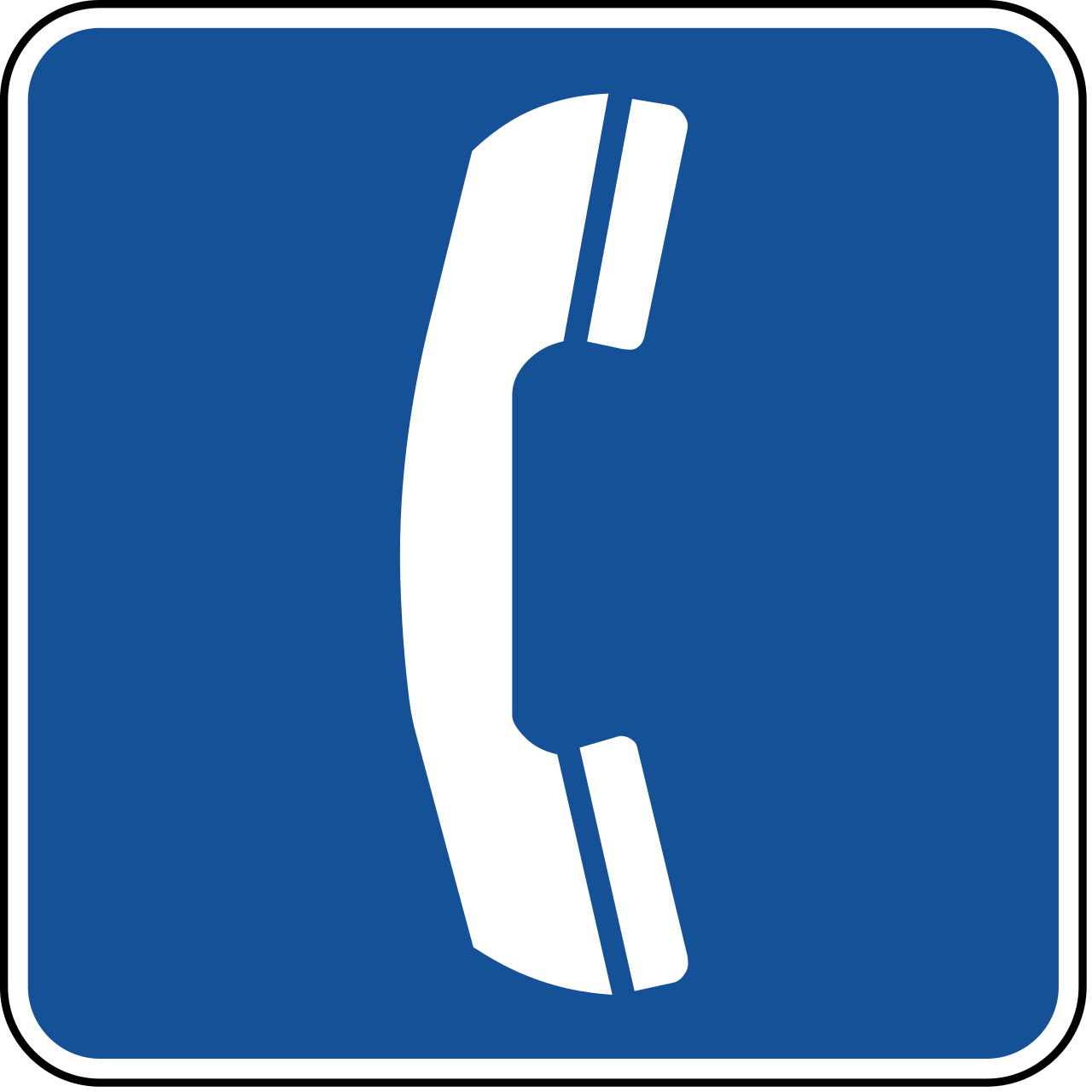
This sign indicates:
A)
Phone service ahead
B)
Emergency line available
C)
Cell phone shop ahead
35.
What should drivers do when the red lights begin to flash?
A)
Stop.
B)
Yield.
C)
Slow down.
36.
As you approach an intersection, the traffic light changes from green to yellow. You should:
A)
apply the brakes sharply and come to a complete stop.
B)
be prepared to stop before the intersection.
C)
be prepared to stop in the middle of the intersection.
D)
speed up to beat the red light.
37.
This road sign means:
A)
Winding road
B)
Side road ahead
C)
Slippery when wet
38.
This road sign means:
A)
You must come to a complete stop
B)
Do not enter
C)
Slow down, stop if necessary and yield the right-of-way
D)
Merging traffic
39.
At intersections where two or more drivers stop at STOP signs at the same time and they are at right angles:
A)
the driver on the left must yield to the driver on the right.
B)
the driver who is late for work has the right-of-way.
C)
the driver on the right must yield to the driver on the left.
40.
When driving at night, you should slow down and:
A)
use high beams whenever possible, but never when there's oncoming traffic.
B)
use high beams until other drivers dim their lights.
C)
follow the vehicle ahead more closely to avoid glare from oncoming headlights.
D)
come to a complete stop whenever there's oncoming traffic.
41.
It's 10 AM. This sign tells you that:
A)
you are allowed to park until 5:30 PM.
B)
you must display a special permit in order to park here.
C)
you are not allowed to park here.
42.
You may park or stop along the shoulder of the freeway:
A)
if you need to check your smartphone for directions.
B)
only if you have an emergency.
C)
if no part of your vehicle is on the road.
D)
as long as you turn on your emergency flashers.
43.
When passing other vehicles, drivers should:
A)
make sure the passing lane is clear of traffic, and check behind and to the left to make sure another vehicle is not attempting to pass.
B)
pass the vehicle as slowly as possible.
C)
apply the brake and slow down.
D)
All of the above.
44.
If an aggressive driver is behind you:
A)
sound your horn and move to the left lane.
B)
slow down and confront the aggressive driver.
C)
try to get out of the aggressive driver’s way.
D)
increase you speed and flash your brake lights.
45.
Which signs have black letters on a white background?
A)
Warning signs (diamond)
B)
Regulatory signs (vertical rectangle)
C)
Guide signs (horizontal rectangle)
46.
When approaching any intersection or driveway, drivers should:
A)
look both ways and be ready to stop.
B)
pass other vehicles and then stop.
C)
drive at the fastest speed just before entering the intersection.
47.
What should you do if one of your tires blows out?
A)
Hold the steering wheel tight and brake immediately to avoid the risk of skidding.
B)
Leave the road immediately.
C)
Hold the steering wheel tight and slowly take your foot off the gas pedal.
48.
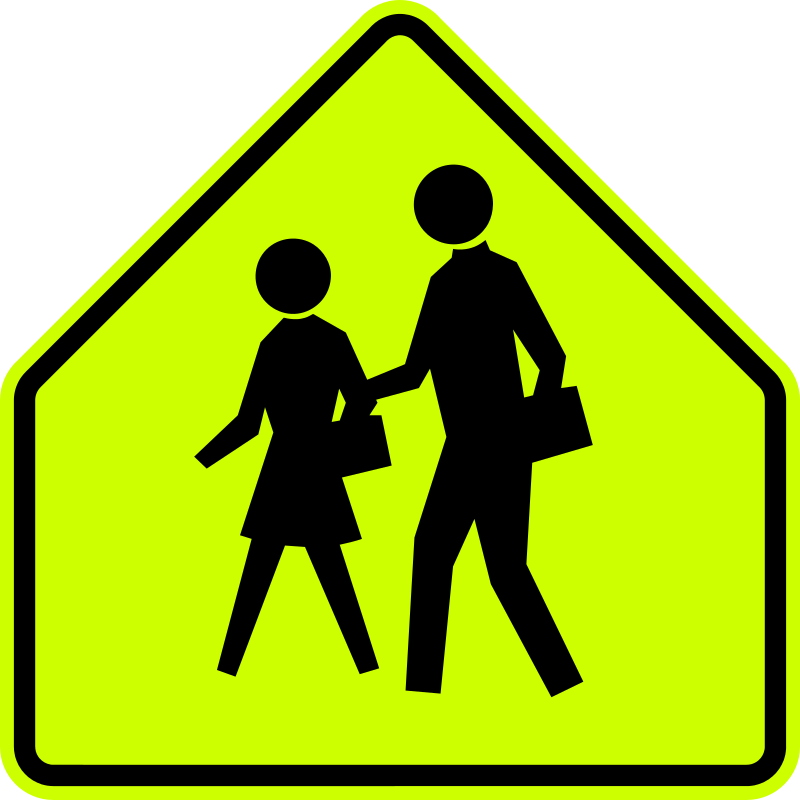
This sign means:
A)
Business area nearby. Watch for business people.
B)
There is a work zone ahead. Watch for workers.
C)
The driver is near a school and should watch for children.
49.
A common mistake that drivers make is driving without adequate rest.
A)
False
B)
True
50.
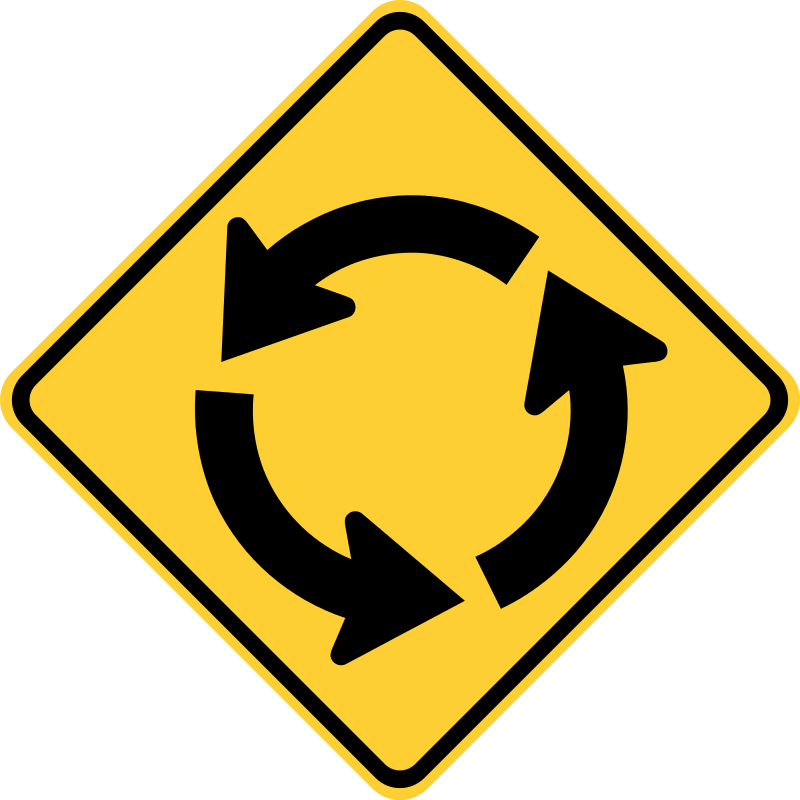
This road sign:
A)
warns drivers of a sharp turn left. Drivers should slow their speed and keep to the left.
B)
provides an advance notice of a roundabout.
C)
warns drivers that U-turns are not permitted.
D)
is a no-right-turns sign.
ANSWER KEY
Check answers after completing the test.
1
A
2
B
3
A
4
D
5
C
6
C
7
A
8
A
9
C
10
B
11
D
12
B
13
B
14
C
15
B
16
A
17
A
18
B
19
D
20
C
21
C
22
C
23
C
24
C
25
B
26
C
27
B
28
A
29
A
30
A
31
A
32
D
33
A
34
A
35
A
36
B
37
C
38
C
39
A
40
A
41
C
42
B
43
A
44
C
45
B
46
A
47
C
48
C
49
B
50
B