←
Back to Test
Hide Answer Key
Print / Save as PDF
Print / PDF
drive
quiz
.com
NV DMV PERMİT PRACTİCE TEST 5
Nevada
Duration: 45 min
|
Questions: 50
Student Name:
Date:
Correct:
Incorrect:
Score:
1.

This sign tells drivers that:
A)
left and right turns are not allowed.
B)
a divided highway is ahead.
C)
they cannot go straight ahead.
2.
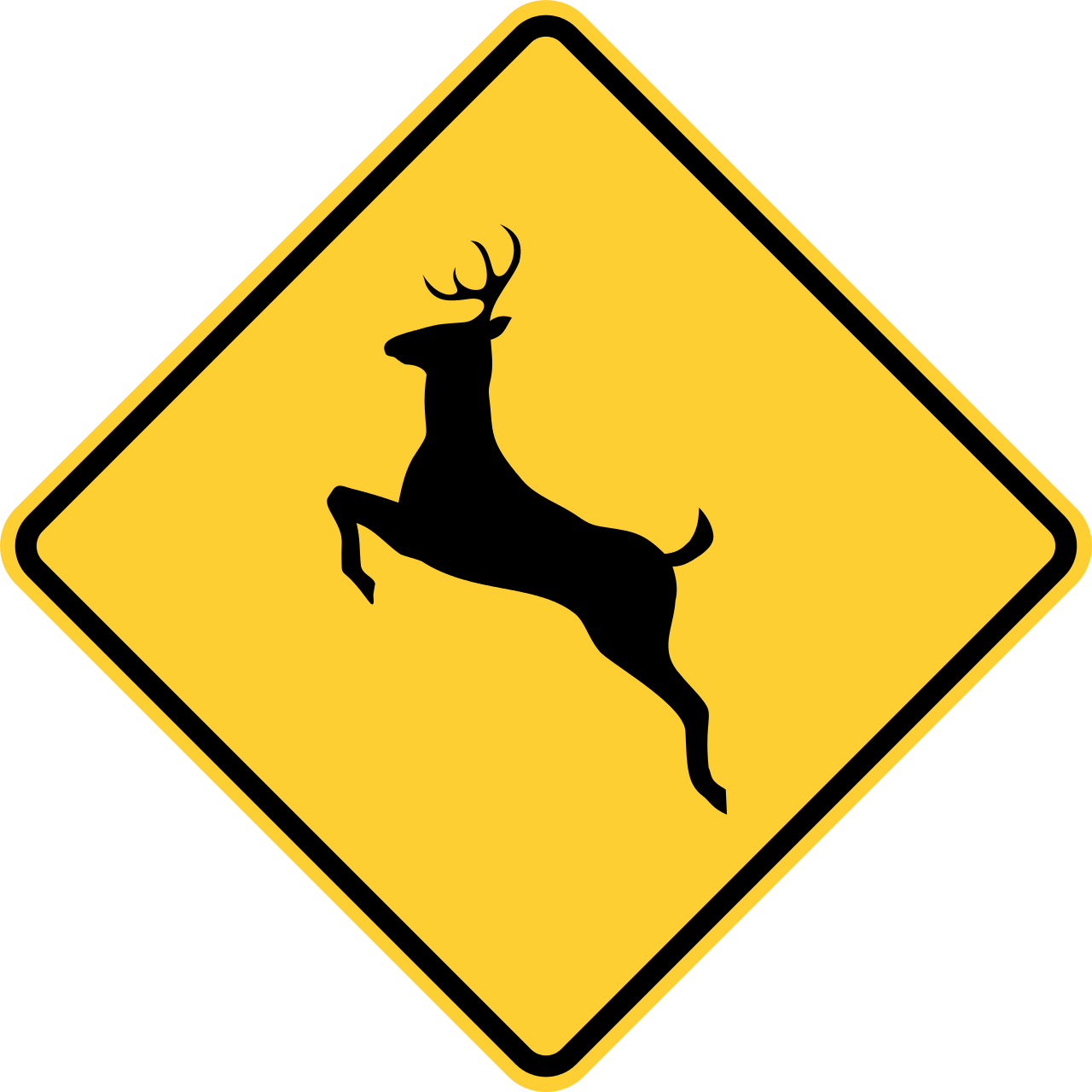
When they see this road sign, drivers should:
A)
drive carefully because the animal pictured on the sign is extremely rare in the area.
B)
watch for this species crossing the road.
C)
park in the zoo area.
3.
If you stop along the road at night:
A)
turn on your emergency flashers and leave your low beams on.
B)
turn off your emergency lights and leave your high beams on.
C)
turn on your headlights only.
D)
turn off all your lights.
4.
This road sign means:
A)
The left lane ends soon
B)
one-way street ahead.
C)
The right lane ends soon
D)
Highway entrance ramp ahead
5.
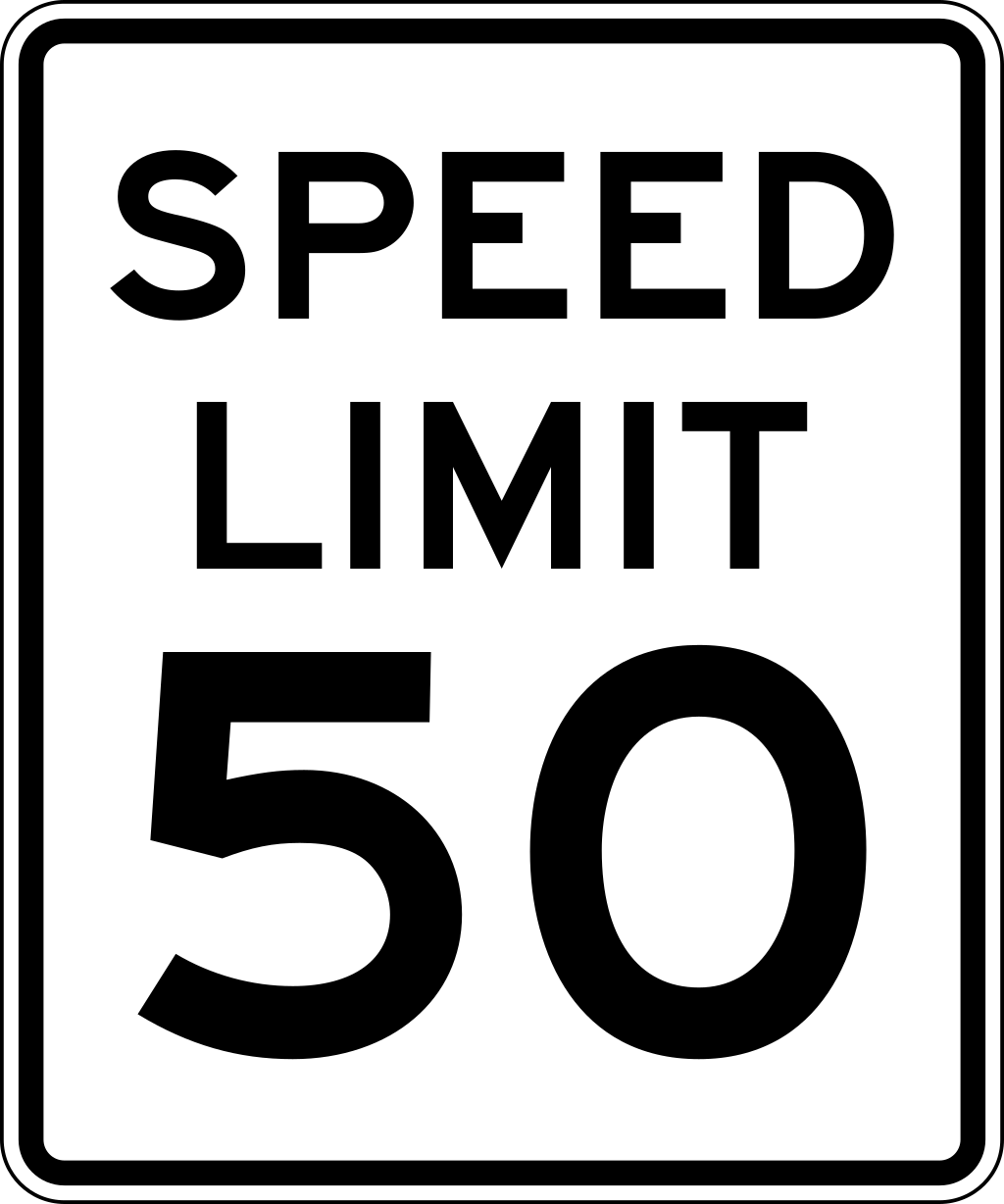
Which shape is a speed limit sign?
A)
Round
B)
Pentagon
C)
Vertical rectangle
6.
This sign indicates:
A)
a side road.
B)
a cross road.
C)
a church zone ahead.
7.
When you make a left turn from a one-way road into a two-way road, you must:
A)
enter the two-way road to the left of its center line.
B)
make a U-turn into the two-way road.
C)
enter the two-way road to the right of its center line.
8.
If you are blinded by headlights on an approaching vehicle, you should:
A)
avoid looking directly at the bright lights.
B)
glance toward the side of the road, then look quickly ahead to determine the other vehicle’s position.
C)
All of the above.
9.
You can pass on the right:
A)
when a vehicle ahead makes a right turn.
B)
when a vehicle ahead makes a left turn.
C)
when a vehicle that is approaching from the opposite direction is prepared to turn left.
10.
For protection, motorcyclists are required to:
A)
keep their headlights and taillights on at all times.
B)
signal turns, lane changes and stops.
C)
wear approved helmets.
11.
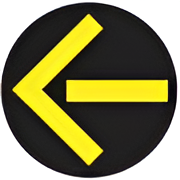
What does a yellow arrow signal mean?
A)
The same as the yellow light, but applies only to movement in the direction of the arrow.
B)
The same as a green light.
C)
Vehicles moving in all directions must stop if they can. The light will soon be red.
12.
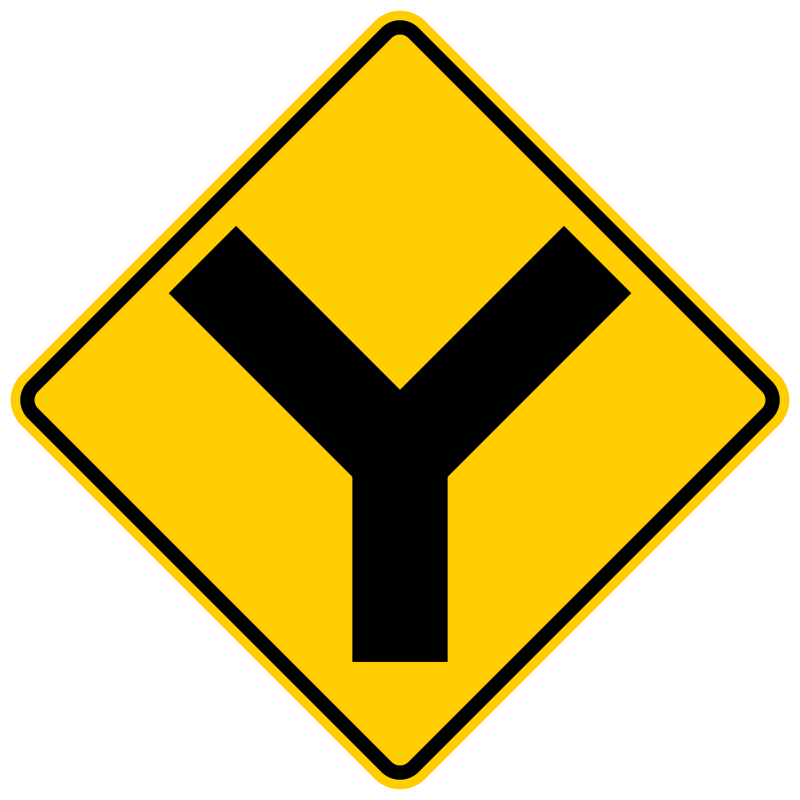
This road sign means:
A)
The road ends ahead
B)
A four-way intersection is ahead
C)
“Y” intersection ahead
D)
A road joins from the right
13.
Which of the following is true about the Anti-Locking Brake System?
A)
It prevents skidding.
B)
It allows drivers to steer during an emergency braking situation.
C)
All of the above.
14.
Road signs that point out scenic areas and parks are:
A)
brown and white.
B)
black and orange.
C)
green and white.
15.
Two drivers reach an uncontrolled intersection at the same time. Who has the right of way?
A)
The driver on the left.
B)
No one.
C)
The driver on the right.
16.
A flashing yellow light means:
A)
The light will soon change from green to red.
B)
Drive with caution.
C)
Yield the right-of-way to other traffic at the intersection.
17.
If an officer believes you are driving under the influence and asks you to take an alcohol or drug test:
A)
you can refuse to be take the test as stated by the Implied Consent Law.
B)
you can refuse to be tested only if it is your first offense.
C)
you cannot refuse to take the test.
D)
None of the above.
18.
Select the most effective safety restraint(s) in a traffic crash.
A)
Lap and shoulder belt only
B)
Air bag only
C)
Pumping brakes.
D)
A combination of lap/shoulder belt and air bag.
19.
Never make a U-turn from:
A)
the lane you’re in.
B)
the right lane.
C)
the left part of the lane nearest to the centerline of the roadway.
20.
This sign indicates the _______________ vehicles can safely travel in this area.
A)
suggested speed
B)
maximum speed
C)
minimum speed
21.
This road sign warns drivers that:
A)
the road surface ahead changes to a low-type surface or earth road.
B)
vehicles must leave the pavement immediately.
C)
the dirt on the side of the road is soft.
22.
This sign tells drivers that:
A)
they must make a left turn at the intersection.
B)
U-turns are not allowed.
C)
they must not make a right turn.
D)
None of the above.
23.
This road sign means:
A)
Stop before turning right
B)
4-way stop ahead
C)
Lane closed for traffic
D)
There is a traffic signal ahead
24.
If the entrance lane is too short to allow acceleration to highway speed, you should:
A)
go to the next entrance ramp.
B)
stop and wait for a large gap in traffic, then enter the highway and accelerate quickly.
C)
merge into highway traffic as soon as possible.
25.
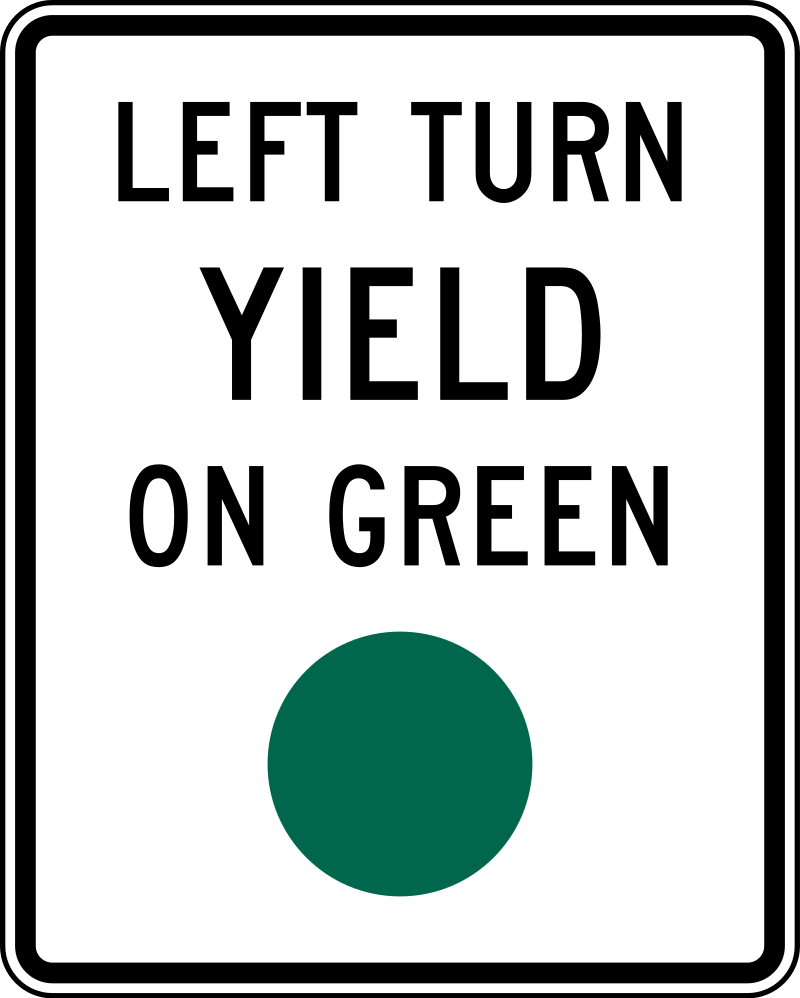
This white sign means you:
A)
may turn left on a green light when it is safe to do so.
B)
may turn left only on a green arrow.
C)
must wait for the solid green light before you turn left.
26.
A steady green light at intersections means:
A)
You may drive through the intersection if the road is clear
B)
You must increase your speed
C)
You may not turn right
27.
This sign means:
A)
A road crosses the main highway ahead.
B)
The divided highway on which drivers are traveling ends ahead.
C)
Drivers are coming to a point where another traffic lane joins the one they are on.
28.
If your front wheels start to skid, the first thing you should do is:
A)
Take your foot off the gas pedal and shift to neutral.
B)
Immediately turn in the direction you want to go.
C)
Speed up, pump your brakes and steer in the direction the vehicle is trying to go.
29.
When driving in icy or snowy conditions, to avoid crashes drivers should:
A)
get off the highway as quickly as possible.
B)
reduce speed and increase following distance.
C)
add extra weight to the vehicle to improve traction.
D)
engage 4 wheel drive on the vehicle.
30.
Drivers should allow a larger space cushion when stopping:
A)
at a stop sign.
B)
on an up-hill.
C)
at an intersection.
D)
at a yield sign.
31.
Does a vehicle prepared to enter a traffic circle or rotary have right-of-way over vehicles in the circle?
A)
Yes, but only if they are entering the rotary from the right lane.
B)
No. Vehicles already in the circle have the right-of-way.
C)
Only if the light is green.
D)
Yes.
32.
Aggressive drivers:
A)
run stop signs.
B)
are high risk drivers.
C)
tailgate other vehicles and make improper lane changes.
D)
All of the above.
33.
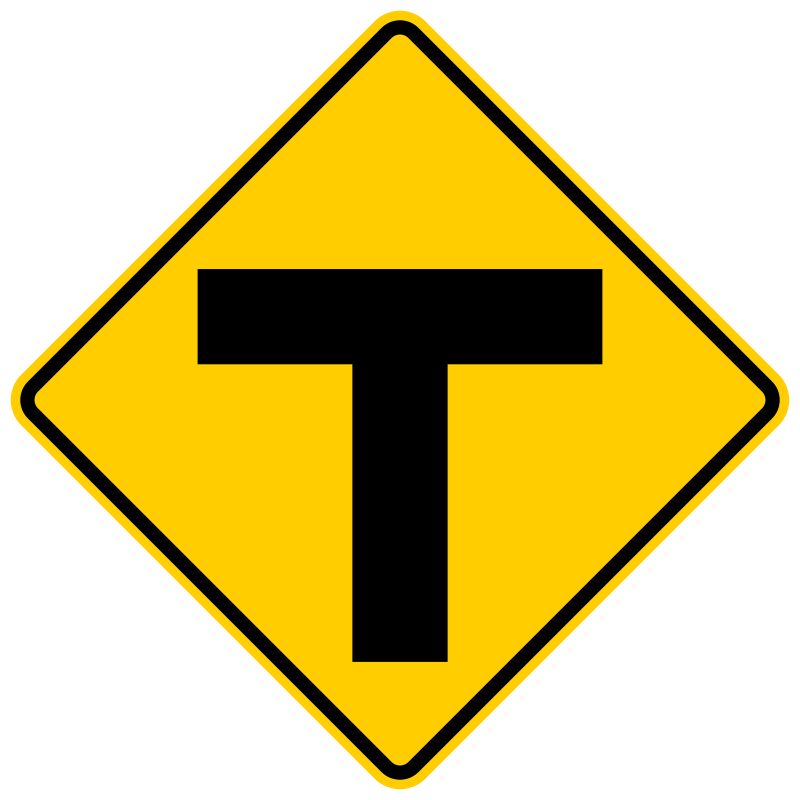
This road sign means:
A)
Side road
B)
T-intersection ahead
C)
Keep right
D)
Left lane must turn left
34.
The yield sign is ___ and white, with ___ letters.
A)
yellow; black
B)
red; red
C)
red; white
35.
This sign means:
A)
Narrow bridge ahead. Slow down and drive with caution.
B)
Do not to enter if your vehicle is taller than the height listed on the sign.
C)
No passing zone ahead.
36.
With conventional brakes, the correct way to stop in an emergency situation where traction is lost and the car slides is by pumping the brakes.
A)
True
B)
False
37.
Drivers are required to stop:
A)
when a traffic officer orders them to stop.
B)
where there is a red light.
C)
at an intersection with a stop sign.
D)
All of the above.
38.
This road sign is:
A)
a speed reduction sign.
B)
a warning sign.
C)
a regulatory sign.
39.
What is the main reason night driving is more difficult than daytime driving?
A)
The use of headlight is required by law.
B)
Reduced visibility.
C)
Driving within the range.
40.
Alcohol causes:
A)
poor judgment.
B)
loss of concentration.
C)
reduced perception.
D)
All of the above.
41.
Drivers who eat and drink while driving:
A)
have no driving errors.
B)
may have trouble controlling their vehicles.
C)
must yield the right-of-way.
D)
tend to be more aggressive.
42.
To enter a freeway:
A)
signal, yield, and enter at the same speed that traffic is moving.
B)
drive slowly so you can check traffic.
C)
signal and enter the freeway. You have the right-of-way.
D)
make a complete stop before entering the freeway.
43.
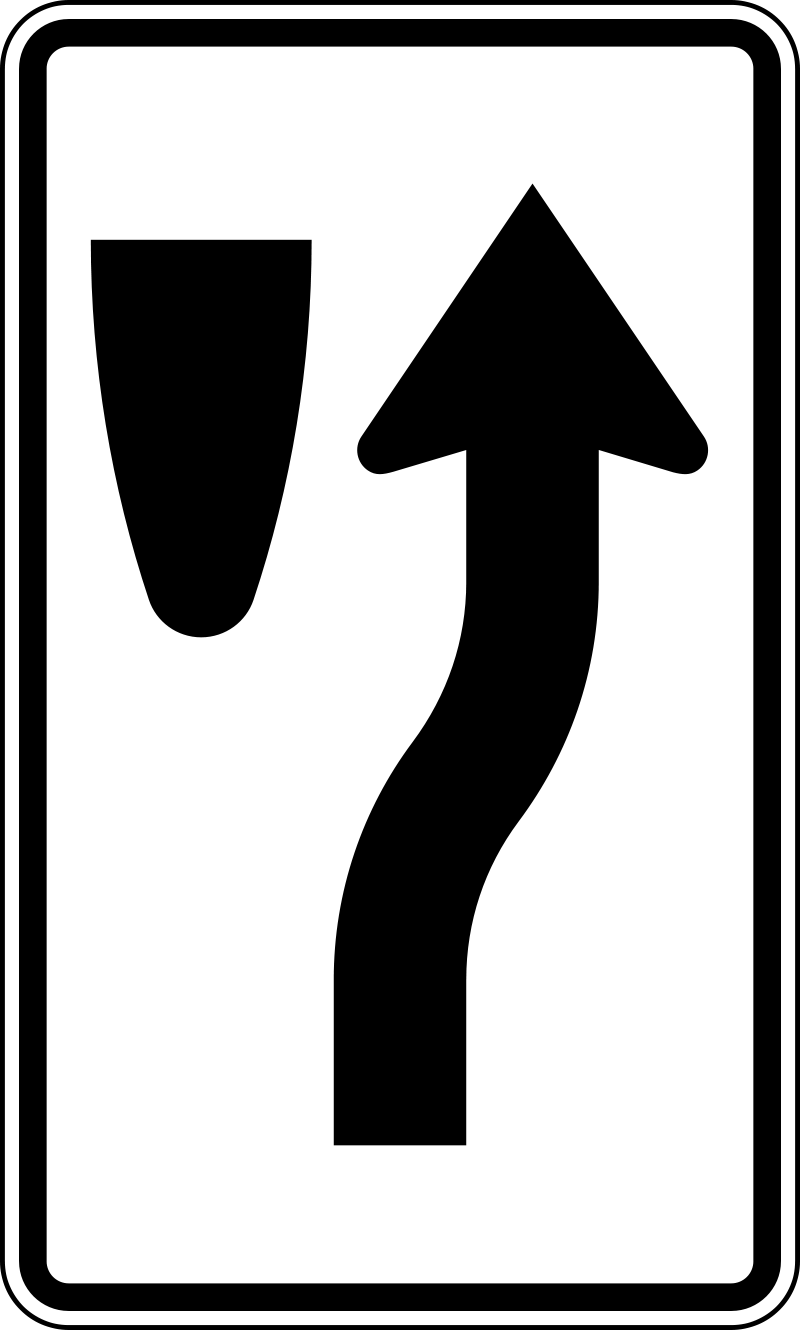
This sign tells drivers that:
A)
there is a right turn ahead.
B)
they must stay on the right side of the divider
C)
a divided highway ends ahead.
44.
When they see this sign, drivers:
A)
should be prepared to make sharp turns at a high speed.
B)
need to be prepared to turn right and then left quickly.
C)
should not speed up or brake quickly.
45.
When driving in heavy rain, drivers should use:
A)
parking lights.
B)
low beam headlights.
C)
high beam headlights.
46.
To check your blind spot before changing lanes:
A)
look into the right side mirror.
B)
look into the rearview mirror.
C)
look over your shoulder in the direction you plan to move.
D)
look into the left side mirror.
47.
A pedestrian in the crosswalk when the 'DON’T WALK' signal begins flashing must:
A)
stop immediately.
B)
go back and wait the “WALK” light
C)
finish crossing the street.
48.
When driving behind a motorcycle, drivers must:
A)
remembers that motorcyclists have the right to use a complete traffic lane.
B)
pass the motorcycle in the same lane.
C)
drive on the shoulder beside the motorcycle.
D)
share the lane with the motorcycle.
49.
Regulation signs normally are:
A)
white triangles.
B)
green rectangles.
C)
white rectangles.
50.
If your turn signals fail, you should use _____ to indicate your intention to turn.
A)
your emergency flashers
B)
your horn
C)
your high beams
D)
hand signals
ANSWER KEY
Check answers after completing the test.
1
C
2
B
3
A
4
C
5
C
6
B
7
C
8
C
9
B
10
C
11
A
12
C
13
C
14
A
15
C
16
B
17
C
18
D
19
B
20
B
21
A
22
C
23
D
24
B
25
A
26
A
27
C
28
A
29
B
30
B
31
B
32
D
33
B
34
B
35
B
36
A
37
D
38
C
39
B
40
D
41
B
42
A
43
B
44
C
45
B
46
C
47
C
48
A
49
C
50
D