DriveQuiz drivequiz.com

NM DMV PERMİT PRACTİCE TEST 19

New Mexico
Duration: 23 min
|
Questions: 25
Student Name:
Date:
Correct:      Incorrect:      Score:      
1.
A pedestrian starts to cross in front of your vehicle. You should:
A) sound your horn and proceed with caution.
B) slow down.
C) speed up and pass in front of the pedestrian.
D) stop until the person is out of the crosswalk.
2.
If you stop along the road at night:
A) turn on your emergency flashers and leave your low beams on.
B) turn off your emergency lights and leave your high beams on.
C) turn on your headlights only.
D) turn off all your lights.
3.
Slow down and give right-of-way to all oncoming vehicles, cyclists, and pedestrians. Stop completely if necessary before entering the intersection or merging.
This road sign means:
A) Slow down and yield to traffic on main road when merging
B) Always come to a complete stop
C) Lane reduction ahead
D) You must come to a complete stop and yield right-of-way
4.
There are two traffic lanes in your direction. You are driving in the left lane and many vehicles are passing you on the right, and the driver behind you wishes to drive faster. You should:
A) stay in your lane and maintain your current speed.
B) drive onto the left shoulder to let the other driver pass.
C) move over into the right lane when safe to do so.
5.
To be able to turn quickly, your hands should be:
A) placed outside of the steering wheel on opposite sides
B) next to each other on the top of the steering wheel.
C) on the steering wheel, so they are at the 6 and 12 o'clock positions.
6.
Where must a pedestrian walk when there are no sidewalks?
A) On the side of the road, in the same direction of traffic.
B) In the middle of the road, facing oncoming traffic.
C) On the side of the road, facing the traffic.
7.
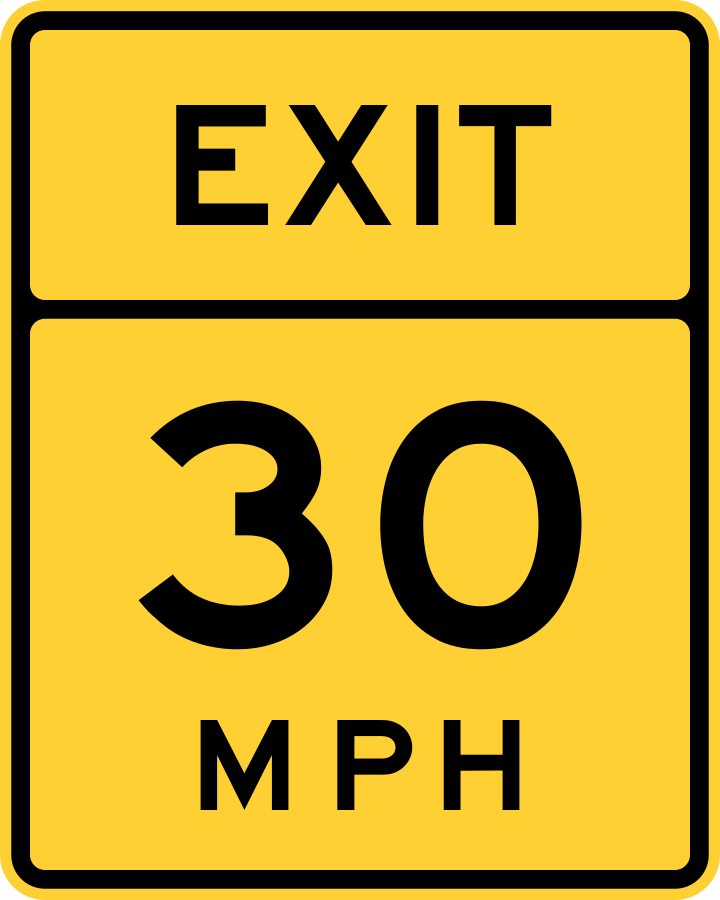
Recommends a safe speed of 30 MPH for negotiating the freeway exit ramp deceleration lane.
The sign in the picture:
A) shows the highest speed drivers can travel at the exit of the intersection.
B) is used to advise motorists of the appropriate ramp speed at the highway exit point.
C) indicates the minimum ramp speed at the highway exit point.
8.
Continuous hard braking on ice and snow often:
A) is the best option during winter.
B) keeps the brakes from freezing.
C) causes the front wheels to lock.
9.
You can reduce the chance of a collision with a large vehicle if you:
A) delay near it.
B) cut abruptly in front of it.
C) pay close attention to the turn signals.
10.
The use of alcohol and/or drugs affects:
A) concentration and reaction time.
B) alertness and judgement.
C) All of the above.
11.
An octagonal sign means that drivers must:
A) respect the posted speed limit.
B) come to a complete stop at the marked stop line.
C) be aware possible hazards ahead.
12.
Which of the following is a defensive driving skill/technique?
A) Maintain the correct speed.
B) Do not drive if you are very weary.
C) All of the above.
13.
To avoid hydroplaning, drivers should:
A) slow down.
B) apply the brakes firmly.
C) drive at a constant speed.
14.
Warns that a one-way street or divided highway is ending, and you are entering a roadway with oncoming traffic in the opposing lane. Stay to the right.
This sign warns ____________ ahead.
A) of two-way traffic
B) of a reduction of lanes
C) that a divided highway ends
15.
From top to bottom, traffic lights are:
A) green, red and yellow.
B) green, yellow and red.
C) red, yellow and green.
16.
As you drive on the expressway, make sure:
A) you cut off vehicles behind you when you change lanes.
B) to signal all lane changes.
C) your directional signal goes off before you change lanes.
17.
You may not turn right (or left from a one-way onto a one-way) while the traffic signal is red. Wait for the green signal before turning.
This sign tells drivers:
A) they must wait for the traffic signal to turn green before turning right or left.
B) they may not turn right or left during the red light.
C) All of the above.
18.
Slow down and give right-of-way to all oncoming vehicles, cyclists, and pedestrians. Stop completely if necessary before entering the intersection or merging.
This road sign means:
A) Slow down and be prepared to stop if necessary
B) You must come to a complete stop
C) You may proceed at regular speed through the intersection
D) Wrong Way
19.
When riding in a vehicle equipped with air bags is, children ages 12 and under are safer:
A) buckled up in the back seat.
B) in the bed of a pick-up truck.
C) buckled up in the front seat.
20.
When passing other vehicles, drivers should:
A) make sure the passing lane is clear of traffic, and check behind and to the left to make sure another vehicle is not attempting to pass.
B) pass the vehicle as slowly as possible.
C) apply the brake and slow down.
D) All of the above.
21.
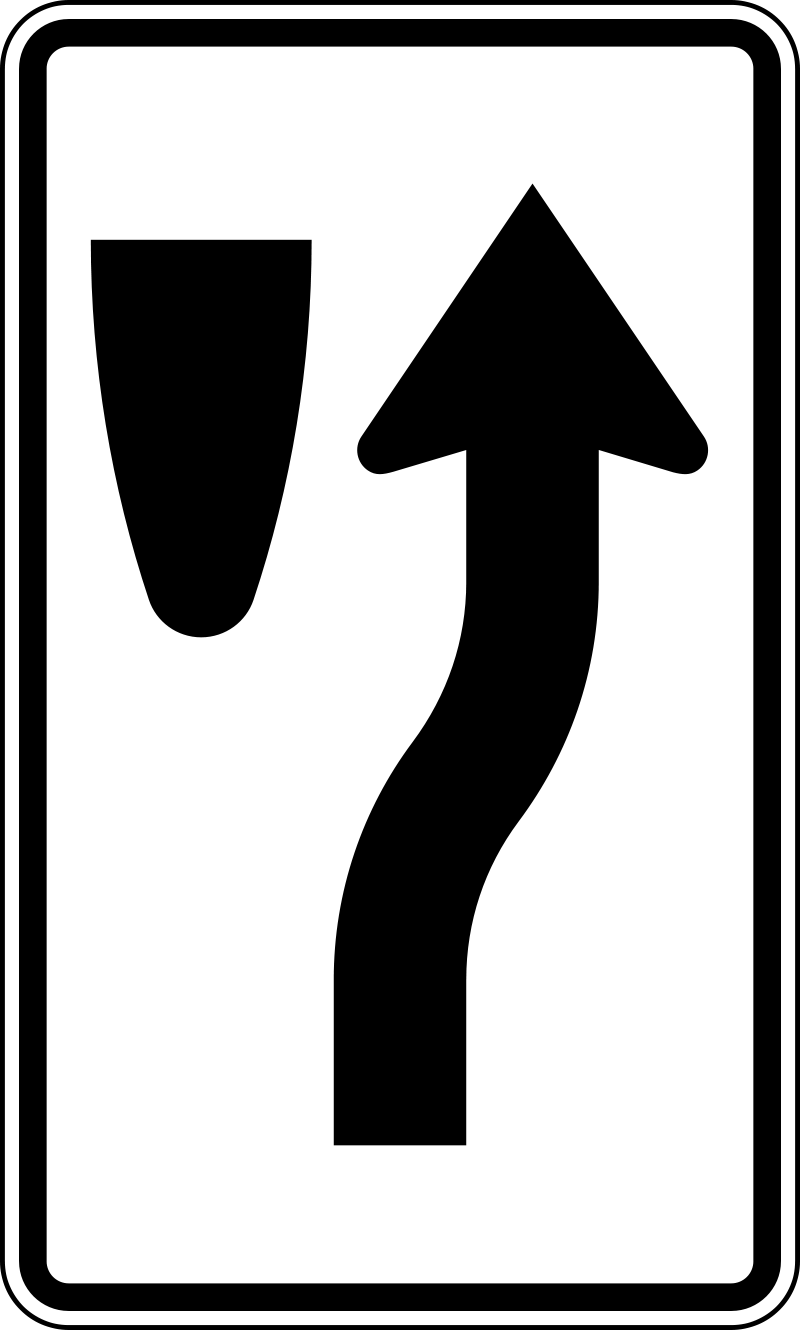
Drivers must pass to the right side of a traffic island, median barrier, or highway divider.
This road sign means:
A) Stop sign ahead
B) Keep to the side indicated by the arrow
C) Side road
D) Low shoulder
22.
The road makes a sharp 90-degree right turn ahead. Slow down considerably before entering the turn.
This sign warns drivers of:
A) a side road.
B) a sharp turn.
C) a cross road.
23.
When following another vehicle at night, drivers should use:
A) low beam headlights.
B) emergency flashers.
C) high beam headlights.
24.
The road curves gradually to the right ahead. Reduce speed before entering the curve.
This road sign means:
A) Wrong Way
B) Merging Traffic
C) Curve ahead
25.
Before passing a vehicle or changing lanes, remember to:
A) only pass or change lanes if the change can be completed without speeding.
B) signal your return to the left lane.
C) sound your horn as you pass.
ANSWER KEY Check answers after completing the test.
1 D
2 A
3 A
4 C
5 A
6 C
7 B
8 C
9 C
10 C
11 B
12 C
13 A
14 A
15 C
16 B
17 C
18 A
19 A
20 A
21 B
22 B
23 A
24 C
25 A