DriveQuiz drivequiz.com

NJ DMV PERMİT PRACTİCE TEST 7

New Jersey
Duration: 45 min
|
Questions: 50
Student Name:
Date:
Correct:      Incorrect:      Score:      
1.
What is the slow moving vehicle symbol?
A) A reflective yellow diamond
B) A reflective white triangle
C) A reflective orange triangle
2.
Driver arm extended downward out the left window with palm facing rearward signals an intention to slow down or stop completely.
This signal means:
A) Stop
B) Move to the left
C) Slow down
D) Proceed
3.
You ________ traffic headed toward you when you turn left.
A) must not yield to
B) must interrupt
C) must yield to
4.
Blind spots around a large vehicle are _________________ than the blind spots around a car.
A) larger and deeper
B) less dangerous
C) narrower and shorter
5.
Hydroplaning is a situation in which:
A) your tires throw water to the rear, causing problems for the vehicles behind.
B) the tires of the car ahead cause sheets of water to splash on your vehicle.
C) one of your tires goes flat, causing the others to skid.
D) your tires ride up on a thin surface of water, losing contact with the pavement, and resulting in sudden loss of control
6.
Aggressive driving includes:
A) quick lane changes without a signal.
B) chasing or challenging other drivers.
C) All of the above.
7.
A signalized intersection is ahead. Prepare to stop if the light turns yellow or red.
This sign means:
A) No traffic signal ahead
B) Traffic signal ahead
C) Open intersection ahead
8.
Designated school crosswalk location. You must yield to all schoolchildren and pedestrians in the crossing.
When they approach this sign, drivers must:
A) slow down and watch for children crossing the road.
B) obey signals from crossing guards.
C) stop if necessary.
D) All of the above.
9.
A speed limit is the __________ speed at which a vehicle may legally travel on the road under ideal conditions.
A) maximum
B) minimum
C) suggested
D) None of the above.
10.
A steady yellow light at an intersection means:
A) Proceed with caution through the intersection
B) Slow down and be prepared to stop
C) Immediately come to a complete stop
D) Yield to other vehicles
11.
What is the main reason night driving is more difficult than daytime driving?
A) The use of headlight is required by law.
B) Reduced visibility.
C) Driving within the range.
12.
Drinking alcohol while taking drugs:
A) reduces the effects of the alcohol.
B) reduces the effects of the drug or medicine.
C) has no effect, they are different substances.
D) could multiply the effects of the alcohol.
13.
Who is most at risk?
A) Drivers who have overslept.
B) Drivers who are driving long distances without rest breaks.
C) Experienced drivers.
14.
Warns that a one-way street or divided highway is ending, and you are entering a roadway with oncoming traffic in the opposing lane. Stay to the right.
This sign warns ____________ ahead.
A) of two-way traffic
B) of a reduction of lanes
C) that a divided highway ends
15.
Slower-moving vehicles must stay in the right-hand lane to allow faster traffic to pass safely on multi-lane highways.
This road sign is:
A) a speed reduction sign.
B) a warning sign.
C) a regulatory sign.
16.
Warns of an extremely sharp 180-degree curve ahead. Decelerate significantly before entering the turn.
This sign means:
A) Hairpin corner ahead.
B) Warning: U-turn ahead.
C) Sharp right turn ahead.
17.
The road curves gradually to the right ahead. Reduce speed before entering the curve.
This sign means:
A) The road will curve to the right.
B) Left turns are not allowed at the intersection.
C) Do not turn right.
18.
If you are pulled over by law enforcement, you should:
A) stay in the driver’s seat with both hands clearly in sight on the steering wheel.
B) unbuckle your seat belt and lower your window.
C) get out of your vehicle and walk toward the patrol car.
D) turn off on your interior light if stopped at night.
19.
When you need to enter a freeway exit ramp:
A) don't slow down on the freeway itself. Wait until you are in the deceleration lane.
B) pass slower vehicles on the right.
C) slow down before entering the exit ramp.
D) don't slow down on the freeway itself, and maintain your speed once in the exit ramp.
20.
While driving, it is important to slow down:
A) when the road is wet.
B) on narrow roads.
C) at intersections.
D) All of the above.
21.
Drivers are required to stop:
A) when a traffic officer orders them to stop.
B) where there is a red light.
C) at an intersection with a stop sign.
D) All of the above.
22.
When driving at night with no other vehicles ahead, a driver should use:
A) high beam lights.
B) low-beam lights.
C) parking lights.
23.
When a hazard is seen ahead, reaction distance:
A) is the sum of perception distance and braking distance.
B) equals total stopping distance minus perception distance.
C) is how far a vehicle will continue to travel, in ideal conditions, before the driver hits the brakes.
24.
A thumping sound can be a warning:
A) that a tire blowout is about to occur.
B) of a steering failure.
C) of a brake failure.
25.
If you are blinded by headlights on an approaching vehicle, you should:
A) avoid looking directly at the bright lights.
B) glance toward the side of the road, then look quickly ahead to determine the other vehicle’s position.
C) All of the above.
26.
Which signs have black letters on a white background?
A) Warning signs (diamond)
B) Regulatory signs (vertical rectangle)
C) Guide signs (horizontal rectangle)
27.
A broken white line:
A) means passing or crossing is prohibited in that lane.
B) separates two lanes traveling in the same direction.
C) marks the right edge of the roadway.
28.
Keeping a space cushion between you and the other vehicles around you is important because it:
A) gives you time to react to situations.
B) prevents distractions from other vehicles.
C) keeps other drivers alert.
D) keeps traffic flowing at a safe pace.
29.
To avoid being in a truck driver’s blind spot, you should:
A) never pass the truck and put your headlights on.
B) avoid driving on either side of the truck and don’t tailgate.
C) flash your lights.
D) sound your horn.
30.
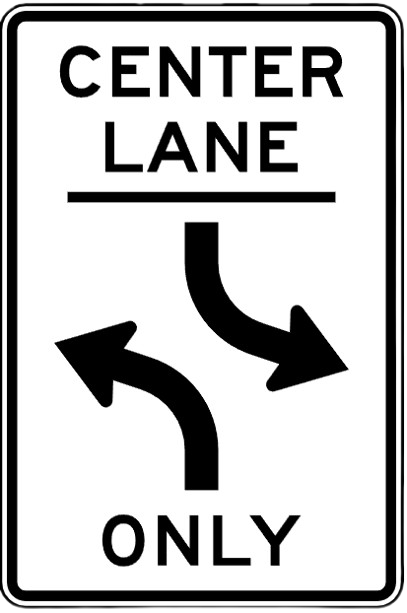
Indicates a two-way left-turn lane in the center of the road. Must only be used to make left turns or U-turns (where permitted), not for regular travel or passing.
This road sign means:
A) Vehicles may only travel in the center lane.
B) The center lane is shared for left turns in both directions of travel.
C) The center lane in both directions of travel will soon turn left.
31.
Indicates that traffic is permitted to pass on either the left or the right side of an island, median, or obstruction.
This sign tells drivers that:
A) left and right turns are not allowed.
B) a divided highway is ahead.
C) they cannot go straight ahead.
32.
Another road crosses the highway ahead. Look left and right for crossing or entering vehicles.
This road sign means:
A) Church ahead
B) Intersection ahead
C) Do not enter
D) Side road
33.
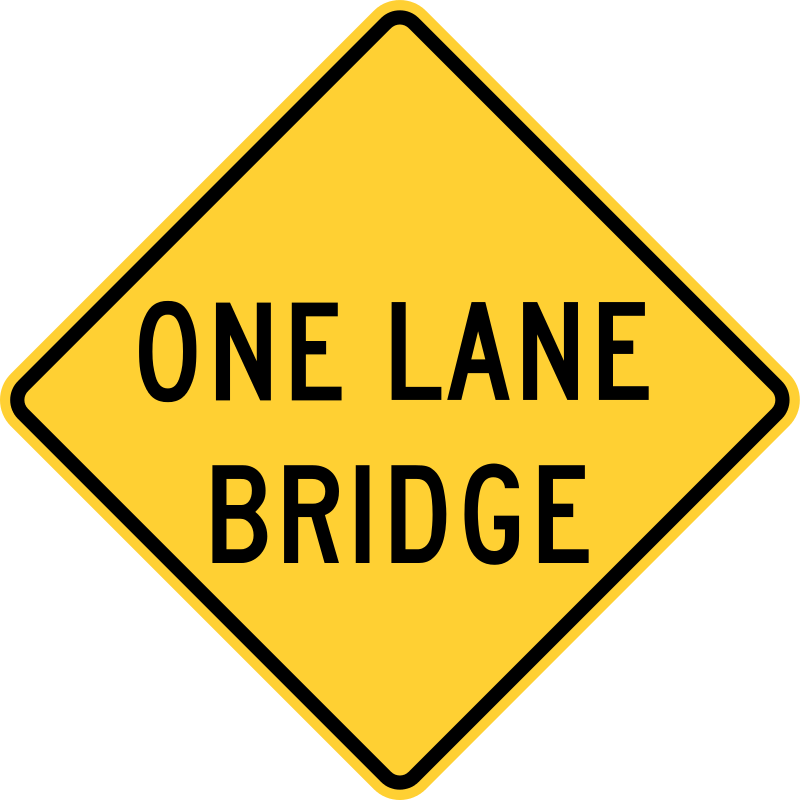
The bridge width allows only one vehicle to cross at a time. The vehicle reaching the bridge first has right-of-way; opposing traffic must wait.
What should drivers do when they see this sign?
A) Make sure the bridge is clear of oncoming traffic before they cross.
B) Look to the left and right for other traffic.
C) Allow others to merge smoothly.
34.
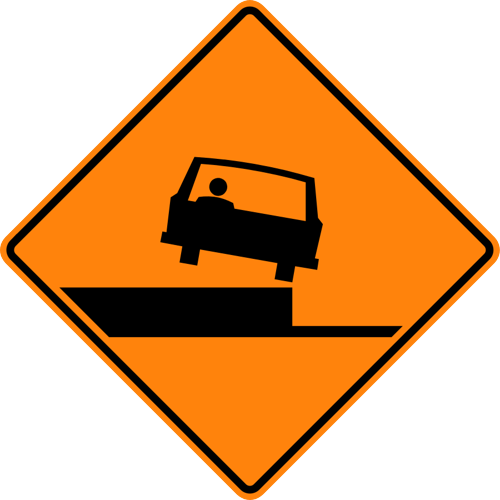
The unpaved shoulder of the road is significantly lower than the paved travel lane. Maintain a firm grip on the steering wheel if tires drift off.
This road sign means:
A) Low shoulder
B) Stop ahead
C) Tow away zone
D) Buggy warning
35.
Parking, standing, or stopping is prohibited at all times in this designated zone except for emergency vehicles.
This sign means:
A) U-turns are not allowed.
B) Parking is not allowed.
C) No parking on pavement.
36.
If you missed your exit on a freeway, you should:
A) use the right turn signal, check your mirrors and move to the right.
B) None of the above.
C) go to the next exit and come back to the exit you missed.
D) make a quick U-turn from your lane of travel.
37.
Parking is not allowed:
A) in an intersection, unless permitted by signs.
B) within 300 feet of a pedestrian safety area.
C) on public roads
38.
Parking is not allowed:
A) on the road side of a parked vehicle.
B) in a tunnel.
C) All of the above.
39.
When drivers see the ‘Wrong Way’ sign:
A) they are going the wrong way on an expressway exit ramp.
B) they must drive past this sign and reach the next intersection.
C) they must not leave the pavement except in an emergency.
40.
At a light rail intersection, you should always:
A) share the road with pedestrians and bicyclists.
B) look both ways before crossing the tracks.
C) be alert and obey all traffic signals.
D) All of the above.
41.
A sharp curve is ahead with a recommended safe speed plate. Slow down before entering the curve to prevent vehicle rollover.
This road sign means:
A) Merge, then slow down to the safe speed indicated
B) The road ahead curves right; slow down to indicated speed
C) Winding road ahead; slow down to the indicated speed
D) Divided highway begins. Slow down to the safe speed indicated
42.
After you stop for a school bus, you must:
A) turn off your engine.
B) pass the bus before the red lights stop flashing.
C) None of the above.
43.
To avoid the risk of being involved in an alcohol-related crash, you should:
A) decide before you start drinking that you are not going to drive.
B) say 'No, thanks' if someone offers you alcohol.
C) call a taxi if you've been drinking.
D) All of the above.
44.
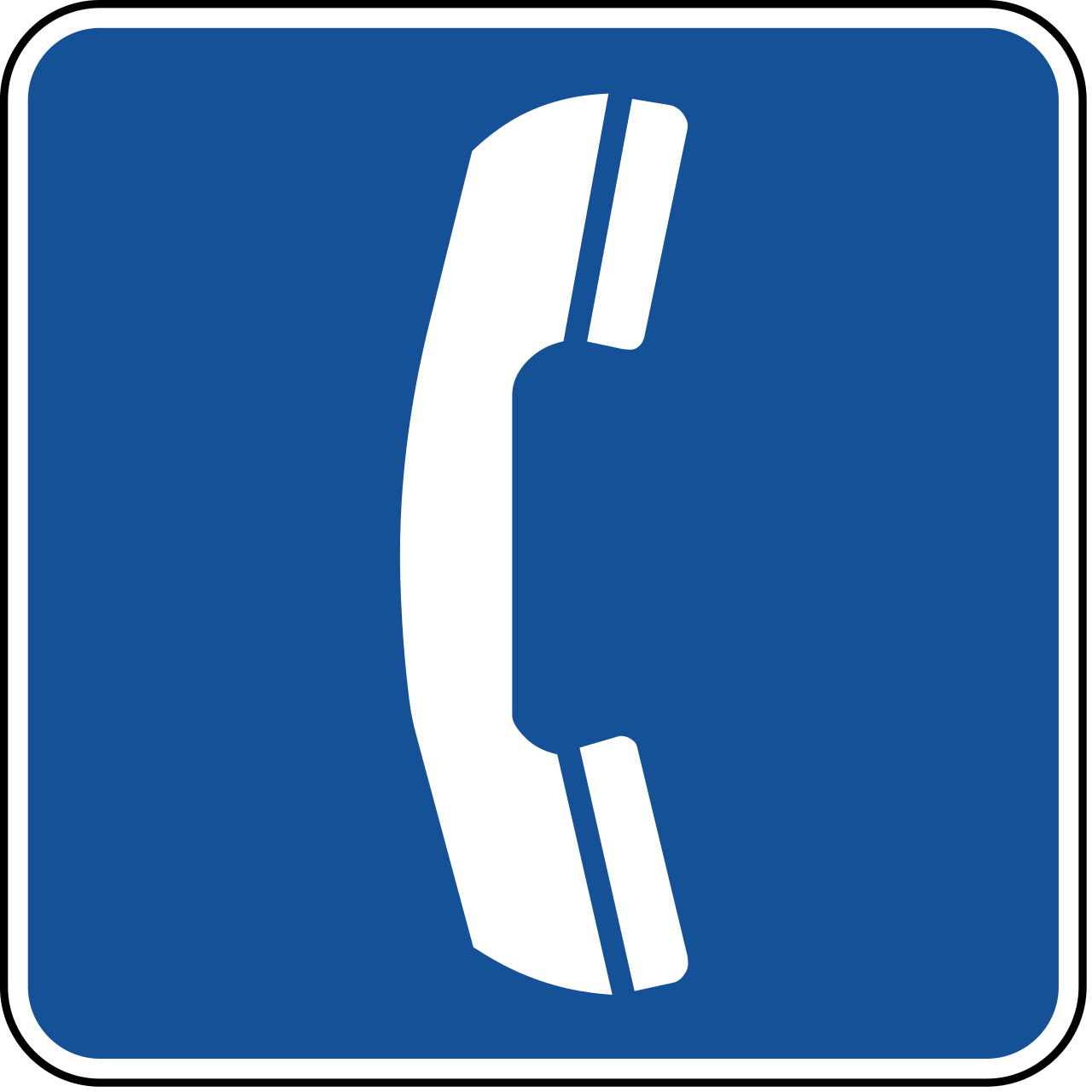
Blue motorist service sign indicating the availability of a public emergency telephone along the highway.
This sign indicates:
A) Phone service ahead
B) Emergency line available
C) Cell phone shop ahead
45.
A steady green light at intersections means:
A) You may drive through the intersection if the road is clear
B) You must increase your speed
C) You may not turn right
46.
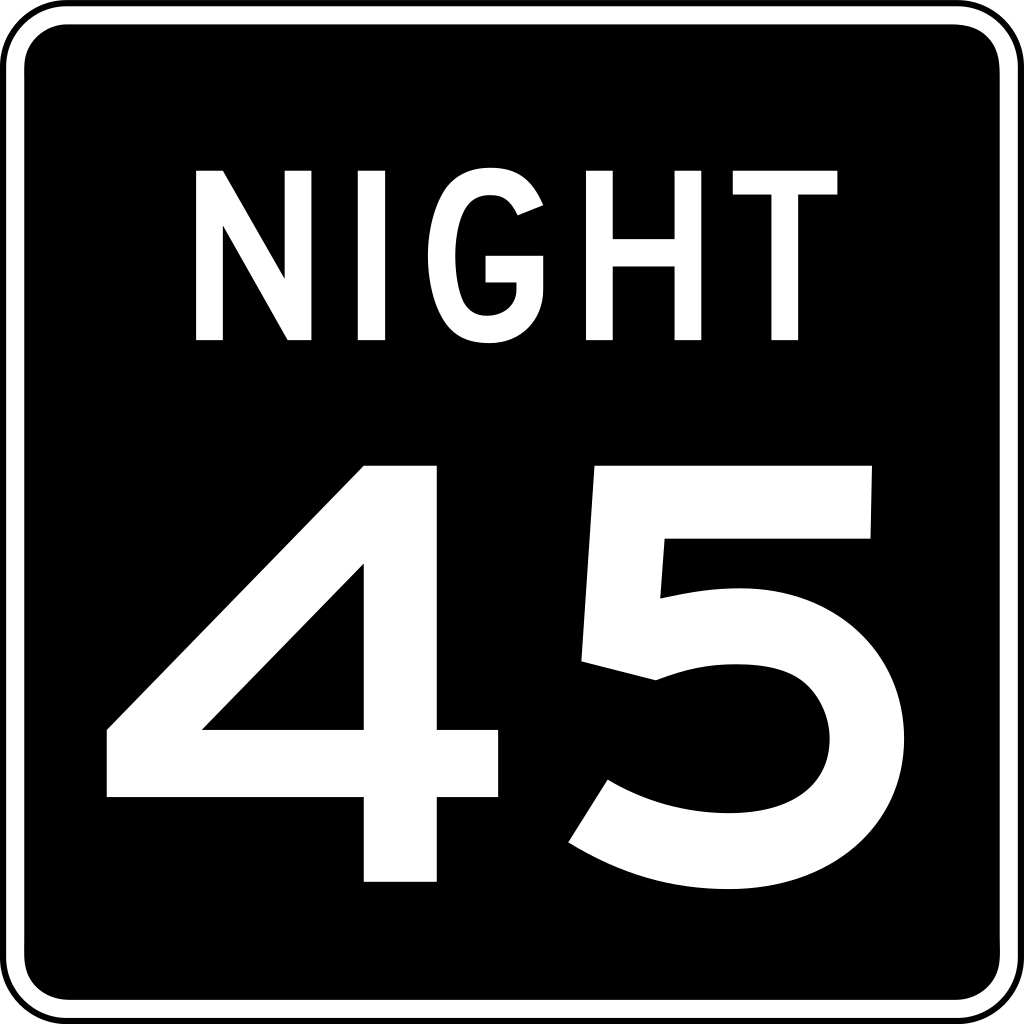
Indicates a lower maximum legal speed limit that applies only during nighttime hours for safety.
This sign means:
A) Take route 45 if you are driving at night.
B) The night-time speed limit is 45 MPH.
C) The minimum speed limit is 45 MPH.
47.
The roadway becomes particularly slippery during wet or rainy conditions. Reduce your speed, increase following distance, and avoid abrupt braking or steering.
The minimum speed limit is 45 MPH.
A) Slow down, slippery when wet
B) Steep grade ahead
C) Winding road ahead
D) Wrong Way
48.
Flashing Upraised Hand signal indicates pedestrians should finish crossing if already in the crosswalk, but not start crossing.
A pedestrian in the crosswalk when the 'DON’T WALK' signal begins flashing must:
A) stop immediately.
B) go back and wait the “WALK” light
C) finish crossing the street.
49.
Road signs that point out scenic areas and parks are:
A) brown and white.
B) black and orange.
C) green and white.
50.
Yellow diamond warning that pedestrians may be crossing ahead. Exercise caution and yield.
This road sign means:
A) Pedestrian crossing
B) School zone
C) School crossing
ANSWER KEY Check answers after completing the test.
1 C
2 A
3 C
4 A
5 D
6 C
7 B
8 D
9 A
10 B
11 B
12 D
13 B
14 A
15 C
16 A
17 A
18 A
19 A
20 D
21 D
22 A
23 C
24 A
25 C
26 B
27 B
28 A
29 B
30 B
31 C
32 B
33 A
34 A
35 B
36 C
37 A
38 C
39 A
40 D
41 B
42 C
43 D
44 A
45 A
46 B
47 A
48 C
49 A
50 A