DriveQuiz drivequiz.com

NJ DMV PERMİT PRACTİCE TEST 3

New Jersey
Duration: 45 min
|
Questions: 50
Student Name:
Date:
Correct:      Incorrect:      Score:      
1.
In heavy rain, tires can begin to ride on the water that is on top of the road pavement. This is called:
A) rideplaning.
B) hydroplaning.
C) pavement-planing.
D) waterplaning.
2.
On slippery roads, drivers should:
A) slow down.
B) increase their speed to avoid hydroplaning.
C) not drive faster than 25 MPH.
D) go faster.
3.
Slow down and give right-of-way to all oncoming vehicles, cyclists, and pedestrians. Stop completely if necessary before entering the intersection or merging.
This road sign means:
A) Slow down and be prepared to stop if necessary
B) You must come to a complete stop
C) You may proceed at regular speed through the intersection
D) Wrong Way
4.
Drivers should use the horn:
A) if a driver is moving slowly, and you want them to drive faster.
B) only when necessary, to avoid collisions.
C) when feeling angry or upset.
D) to alert other drivers that they made a mistake.
5.
If your windshield wipers stop suddenly during rain you should:
A) brake and pull off the road.
B) roll down the driver's side window and put your head out so you can see ahead.
C) slow down.
D) All of the above.
6.
Parking is permitted only during specified hours and days as posted on the sign. Vehicles parked outside these hours are subject to ticketing or towing.
This sign means:
A) You can only park between 8:30 AM and 5:30 PM.
B) Parking is not allowed at 8:30 AM and at 5:30 PM
C) No parking between 8:30 AM and 5:30 PM.
7.
Highway hypnosis is a driving condition that can result from:
A) heavy traffic.
B) staring at the roadway for long periods of time.
C) travelling on HOV lanes.
D) frequent rest stops.
8.
The roadway becomes particularly slippery during wet or rainy conditions. Reduce your speed, increase following distance, and avoid abrupt braking or steering.
This road sign means:
A) Traffic increases ahead
B) Steep grade ahead
C) Winding road ahead
D) Slippery road ahead
9.
When parking on a public road, drivers should:
A) move as far away from traffic as possible.
B) always park on the left side of the roadway.
C) All of the above.
10.
When changing lanes, you should not:
A) signal your intentions early.
B) check your side and rear view mirrors.
C) use the inside rearview mirror to check for blind spots
D) check to see if other drivers are moving into the same lane.
11.
you should:
A) drive slower than the flow of traffic.
B) drive with the flow of traffic.
C) maintain a constant speed.
D) drive faster than the flow of traffic.
12.
Another road crosses the highway ahead. Look left and right for crossing or entering vehicles.
This road sign means:
A) Crossroads ahead
B) Side Road
C) Turn right or go through
D) Flagger ahead
13.
A signalized intersection is ahead. Prepare to stop if the light turns yellow or red.
This road sign means:
A) Stop before turning right
B) 4-way stop ahead
C) Lane closed for traffic
D) There is a traffic signal ahead
14.
What is the most important rule to remember in any emergency?
A) Do not panic.
B) Run away.
C) Call the police.
15.
A flashing yellow light means:
A) Merging traffic ahead
B) Pedestrian crossing
C) Come to a full stop
D) Proceed with caution
16.
The median divider ends ahead, and you are returning to a two-way, two-lane undivided roadway. Watch for oncoming traffic on your left.
This road sign means:
A) Curves ahead
B) Divided highway ahead
C) Divided highway ends
17.
Passing is prohibited:
A) when a school bus is stopped to load or unload children on a public road.
B) at intersections.
C) whenever a solid line marks the left side of your lane.
D) All of the above.
18.
To check your blind spot before changing lanes:
A) look into the right side mirror.
B) look into the rearview mirror.
C) look over your shoulder in the direction you plan to move.
D) look into the left side mirror.
19.
Which of the following must you obey over the others?
A) A flashing red light.
B) A stop sign.
C) A steady red light.
D) A police officer.
20.
In the following situations, drivers should increase their following interval:
A) When following vehicles that are required to come to a stop at railroad crossings.
B) When it is hard to see ahead because of bad weather.
C) All of the above.
21.
All New Jersey driver license applicants must complete 6 Point ID Verification by presenting documents that prove:
A) legal presence in the U.S.
B) their age.
C) their identity.
D) All of the above.
22.
When you pass another vehicle, before you return to the right lane, you must:
A) look at your interior rear-view mirror.
B) signal.
C) All of the above.
23.
A flashing red light means:
A) The same as a STOP sign.
B) The light will soon change to steady red.
C) Drive with caution.
24.
Which shape is a speed limit sign?
A) Round
B) Pentagon
C) Vertical rectangle
25.
At intersections marked with stop lines, drivers must:
A) come to a complete stop.
B) slow down and enter the intersection.
C) signal other vehicles to stop.
26.
As you drive, you must turn your headlights on:
A) one-half hour before sunrise.
B) one-half hour after sunset.
C) when the road ahead is clear.
D) All of the above.
27.
When driving on major highways you should:
A) be ready to react to road hazards.
B) stay alert.
C) keep your eyes moving.
D) All of the above.
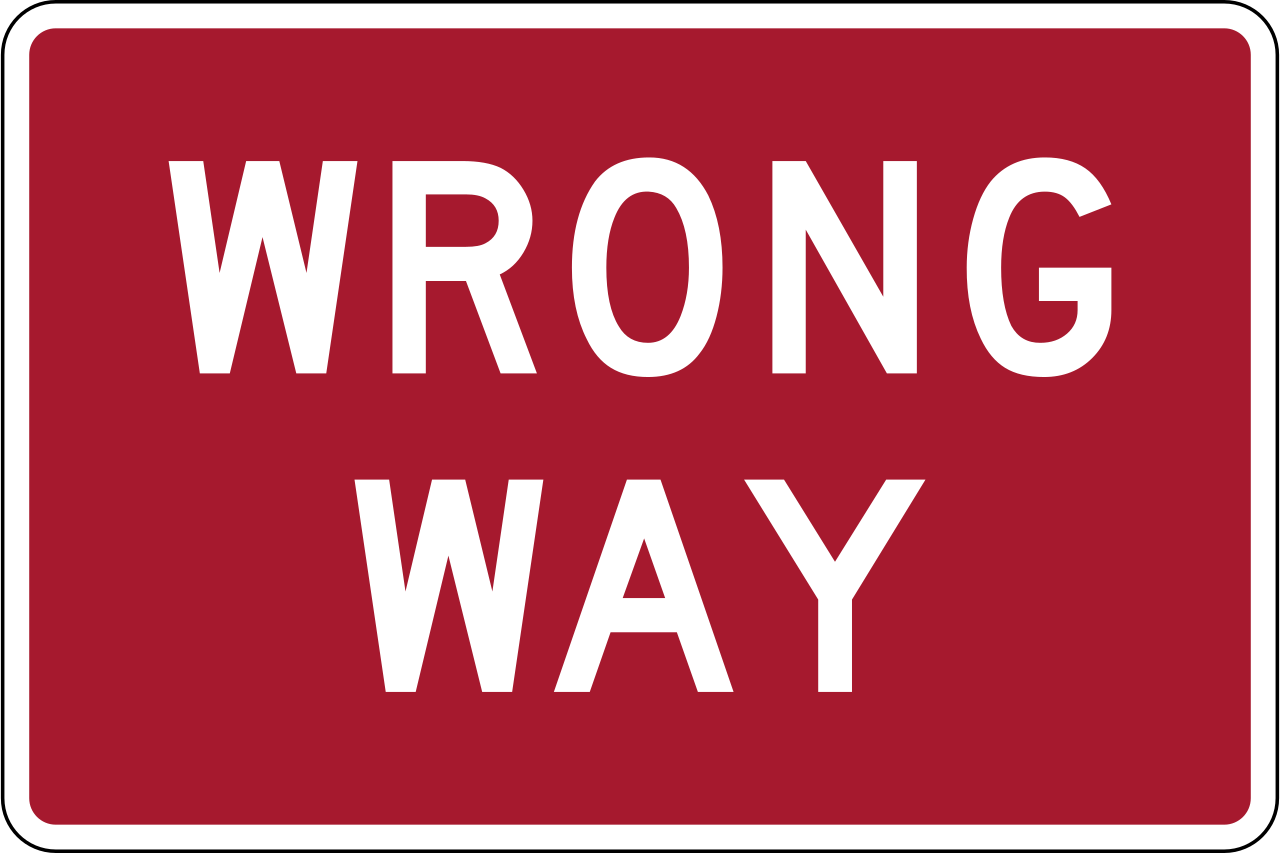
28.
You are driving against the legal flow of traffic on a one-way street or freeway ramp. Immediately pull over, stop safely, and turn around when clear.
When drivers see this road sign:
A) they must come to a complete stop and call the police.
B) they must not drive past this sign.
C) they must turn around immediately.
29.
The roadway becomes particularly slippery during wet or rainy conditions. Reduce your speed, increase following distance, and avoid abrupt braking or steering.
This sign means:
A) The road will curve to the right, then to the left.
B) Road slippery when wet. Drive slowly.
C) Winding road ahead. Drive with caution.
30.
Blue service guide sign indicating that emergency medical and hospital facilities are located in the direction of the arrow.
What does this road sign indicate?
A) Hospital service
B) Area reserved for people with disabilities
C) Interstate highway
31.
From top to bottom, traffic lights are:
A) green, red and yellow.
B) green, yellow and red.
C) red, yellow and green.
32.
A red traffic sign means?
A) Construction warning.
B) Railroad crossing.
C) Stop.
33.
Arrows on the roadway:
A) show which lanes you must use.
B) indicate reserved lanes.
C) indicate HOV lanes.
34.
A side road enters the highway from the right or left. Watch for traffic turning onto or crossing your lane.
This is:
A) a side road sign.
B) a merging traffic sign.
C) a right curve sign.
35.
You are stopped at a stop sign and you are going to go straight through the intersection. A car on the cross road has stopped at a stop sign on your right and is going to go straight. Who has the right-of-way?
A) Whoever enters the intersection first.
B) You.
C) The car on your right.
36.
Blind spots are:
A) Dangerous intersection where the maximum speed limit is 15 MPH or less.
B) At night, the darkest areas of a road, where emergency flashers should be used.
C) Areas to the side or rear of a vehicle that the driver cannot see with use of mirrors.
37.
When exiting a highway, you should slow down:
A) when you first see the exit sign.
B) before moving into the exit lane.
C) once you have moved into the exit lane.
D) once you see the toll booth.
38.
Right turns are strictly prohibited at this intersection under all circumstances.
This road sign means:
A) No left turn
B) No right turn
C) No U-turns
39.
When the driver behind you wants to pass, you should:
A) change lanes.
B) speed up.
C) use your brake lights.
D) slow down to allow room for the other driver to complete the pass safely.
40.
If an aggressive driver is behind you:
A) sound your horn and move to the left lane.
B) slow down and confront the aggressive driver.
C) try to get out of the aggressive driver’s way.
D) increase you speed and flash your brake lights.
41.
You may not pass another vehicle on either side of a _______ centerline.
A) solid or broken yellow
B) single broken white
C) double solid yellow
D) single broken yellow
42.
What should you do if your vision through the windshield becomes blocked?
A) Pull your vehicle off the road and park it.
B) Turn on your emergency lights.
C) Open the side window so you can see.
D) All of the above.
43.
What is the meaning of orange traffic signs?
A) Yield.
B) Warning of school, pedestrian, and bicycling activity.
C) Construction and maintenance warning.
44.
You should use turn signals to indicate your intention with sufficient time to allow other drivers to see the signal:
A) if it’s raining.
B) AFTER you move.
C) BEFORE you move.
45.
While inside the roundabout, you should:
A) remain in your lane until you are ready to exit.
B) change lanes before you check for vehicles behind you.
C) use your left turn signal if you are in position to exit now.
46.
Road signs that direct drivers to services are:
A) brown and white.
B) blue and white.
C) green and white.
47.
The roadway becomes particularly slippery during wet or rainy conditions. Reduce your speed, increase following distance, and avoid abrupt braking or steering.
When they see this sign, drivers:
A) should be prepared to make sharp turns at a high speed.
B) need to be prepared to turn right and then left quickly.
C) should not speed up or brake quickly.
48.
Designated school crosswalk location. You must yield to all schoolchildren and pedestrians in the crossing.
When you approach this sign, you must:
A) stop if necessary.
B) watch for workers crossing the road.
C) None of the above.
49.
You may park or stop along the shoulder of the freeway:
A) if you need to check your smartphone for directions.
B) only if you have an emergency.
C) if no part of your vehicle is on the road.
D) as long as you turn on your emergency flashers.
50.
When entering a highway from an entrance ramp, drivers should:
A) enter slowly to avoid other vehicles.
B) stop first, then gradually enter traffic.
C) accelerate to the speed of traffic.
D) drive above the speed of traffic to get ahead.
ANSWER KEY Check answers after completing the test.
1 B
2 A
3 A
4 B
5 D
6 C
7 B
8 D
9 A
10 C
11 B
12 A
13 D
14 A
15 D
16 C
17 D
18 C
19 D
20 C
21 D
22 C
23 A
24 C
25 A
26 D
27 D
28 C
29 B
30 A
31 C
32 C
33 A
34 A
35 C
36 C
37 C
38 B
39 D
40 C
41 C
42 D
43 C
44 C
45 A
46 B
47 C
48 A
49 B
50 C