DriveQuiz drivequiz.com

NH DMV PERMİT PRACTİCE TEST 6

New Hampshire
Duration: 36 min
|
Questions: 40
Student Name:
Date:
Correct:      Incorrect:      Score:      
1.
If you arrive at an uncontrolled intersection at the same time as another vehicle:
A) the car on the left has the right-of-way.
B) the car on the right should yield to the car on the left.
C) the car on the left should yield to the car on the right.
D) any vehicle already in the intersection should yield to the car on the right.
2.
A side road enters the highway from the right or left. Watch for traffic turning onto or crossing your lane.
This is:
A) a side road sign.
B) a merging traffic sign.
C) a right curve sign.
3.
To drive defensively, you must:
A) anticipate errors by other drivers.
B) assume that a driver who approaches a STOP sign on a side road is actually going to stop.
C) not check behind you through your mirrors.
4.
You should increase your following distance when:
A) exiting a freeway.
B) following a motorcycle.
C) driving behind a large vehicle that blocks your vision.
D) All of the above.
5.
The roadway becomes particularly slippery during wet or rainy conditions. Reduce your speed, increase following distance, and avoid abrupt braking or steering.
This sign indicates:
A) Warning: drunk drivers.
B) Winding road. Drive with caution.
C) The road may be slippery when wet. Drive slowly.
6.
A sharp curve is ahead with a recommended safe speed plate. Slow down before entering the curve to prevent vehicle rollover.
This sign indicates that:
A) the highest safe speed drivers should travel around the curve ahead is 25 MPH.
B) the safe speed around the curve ahead is at least 25 MPH.
C) drivers may not turn right if traveling at 25 MPH or less.
7.
When changing lanes, __________ to be sure no one is in the 'blind spot'.
A) check your right mirror
B) slow down gradually
C) check your left mirror
D) glance over your shoulder
8.
Drivers may need more space in front of their vehicle:
A) when following motorcycles.
B) when carrying a heavy load or pulling a trailer.
C) All of the above.
9.
If you get on a wrong expressway exit, you must:
A) get off at the next exit and look for signs that tell you how to return to the expressway.
B) use the the exit ramp to accelerate to expressway speed and blend with traffic.
C) drive in reverse to return to the expressway.
10.
Prohibits drivers from making a 180-degree turn to travel in the opposite direction at this intersection or stretch of road.
This road sign means:
A) Left turns are not allowed where this sign is displayed.
B) Drivers cannot make a complete turn to go in the opposite direction.
C) Vehicles turning left must make a U-turn.
11.
If you are pulled over by law enforcement, you should:
A) stay in the driver’s seat with both hands clearly in sight on the steering wheel.
B) unbuckle your seat belt and lower your window.
C) get out of your vehicle and walk toward the patrol car.
D) turn off on your interior light if stopped at night.
12.
When approaching a curve, remember to:
A) accelerate slightly before entering the curve.
B) drive at the posted speed limit throughout the curve.
C) slow down before entering the curve.
D) drive at the posted speed limit as you enter the curve, then slow down gradually.
13.
Which of the following is true about the Anti-Locking Brake System?
A) It prevents skidding.
B) It allows drivers to steer during an emergency braking situation.
C) All of the above.
14.
The road ahead is divided by a median strip or physical barrier into two separate one-way roadways. Keep to the right of the divider.
This road sign means:
A) Keep left
B) Divided highway begins
C) Lane ends
15.
What are some telltale signs of a drunk driver?
A) Sudden stops.
B) Weaving between lanes.
C) Driving slower than the normal flow of traffic.
D) All of the above.
16.
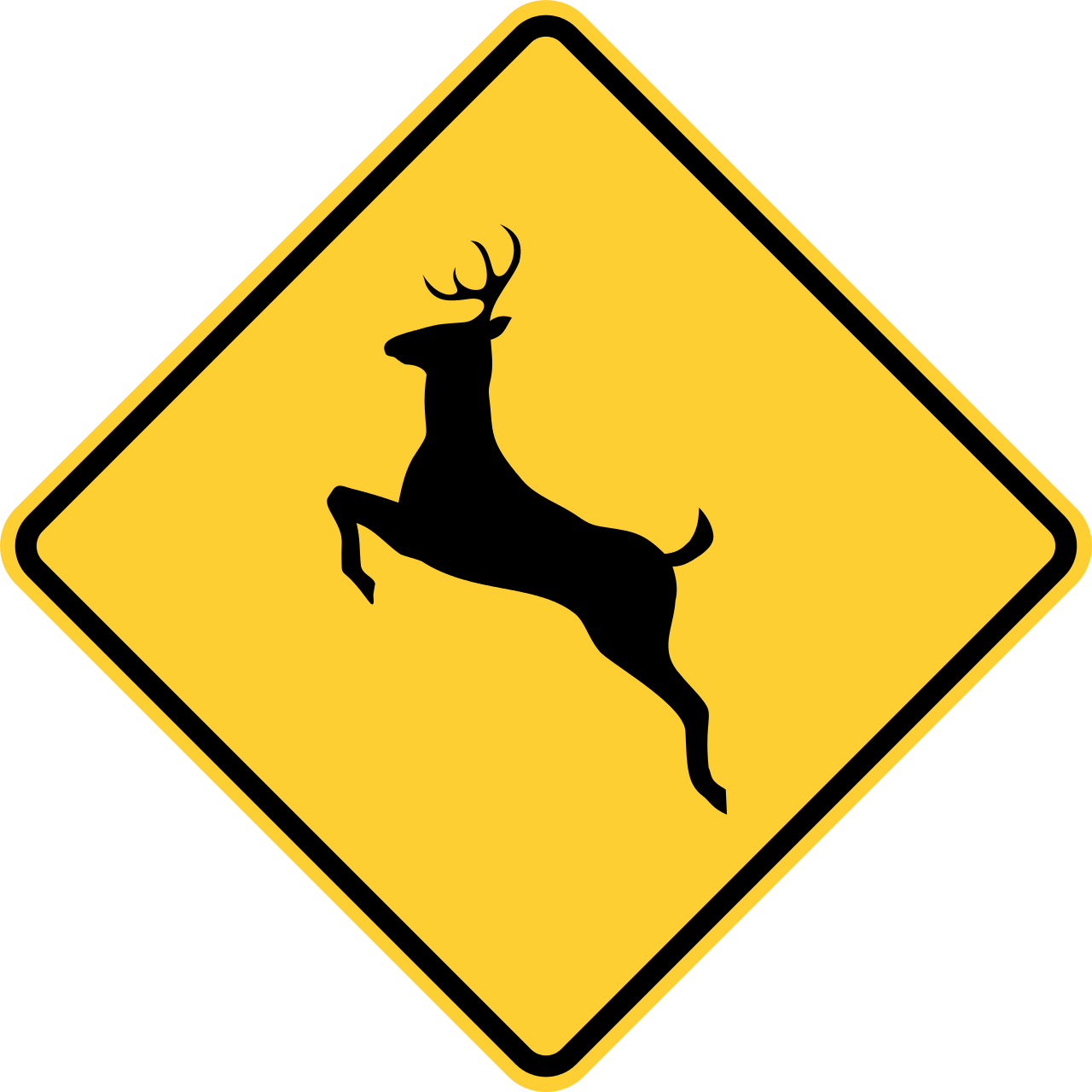
Wildlife and deer frequently cross in this area, especially at dawn and dusk. Scan the roadside and be prepared to brake safely.
When they see this road sign, drivers should:
A) drive carefully because the animal pictured on the sign is extremely rare in the area.
B) watch for this species crossing the road.
C) park in the zoo area.
17.
If another vehicle passes you on the left, you must:
A) increase your speed slightly and keep to the right.
B) decrease your speed, then pull over to the right and stop.
C) decrease your speed slightly and keep to the right.
18.
The most common cause of traffic crashes is:
A) human error.
B) bad road conditions.
C) wet pavement.
D) bad weather.
19.
The roadway ahead is narrowing or a lane is ending. Merge smoothly into the continuing lane.
This road sign means:
A) Narrow bridge
B) Yield right-of-way
C) Freeway on ramp
D) Roadway narrows or lane ends
20.
Warns drivers that two separate lanes moving in the same direction are merging into one. Drivers in the right lane must adjust speed and merge smoothly with existing traffic.
This road sign means:
A) Lane shifting
B) Traffic is entering from another road, drive with caution
C) Stop for other traffic
D) Yield right-of-way
21.
When a ‘Road Closed’ sign is displayed, drivers must:
A) make a U-turn.
B) look for a detour or another route.
C) come to a complete stop and wait for the lights to turn green.
22.
A steady yellow light means:
A) Be prepared to stop for the red light.
B) Drive with caution.
C) Be prepared to go. The light will soon be green.
23.
The road makes a sharp 90-degree right turn ahead. Slow down considerably before entering the turn.
This sign warns drivers of:
A) a side road.
B) a sharp turn.
C) a cross road.
24.
In general, you should pass vehicles going in the same direction as you are going:
A) only if the other driver signals it is safe.
B) whenever you have the opportunity to do so.
C) on the right.
D) on the left.
25.
The road makes a sharp 90-degree right turn ahead. Slow down considerably before entering the turn.
This road sign means:
A) School zone ahead
B) Side road
C) Construction zone ahead
D) Sharp turn, slow down
26.
A flashing yellow traffic signal means:
A) Slow down and be alert at the upcoming intersection.
B) The same thing as a stop sign.
C) Stop and proceed when a green light appears.
D) No right turn.
27.
On what three conditions does your blood alcohol content (BAC) depend?
A) Your weight. How much alcohol you drink. How much time passes between drinks.
B) Your weight. The type of beverage you drink. How fit you are.
C) Your height. How much alcohol you drink. The type of beverage you drink.
28.
A road is likely to be most slippery:
A) when tire marks have been left by other vehicles.
B) in cold, dry weather.
C) when icy and the temperature is near freezing.
D) in spring.
29.
Drivers must yield for emergency vehicles:
A) Never.
B) only when other vehicles yield.
C) when they see a flashing red or blue light or hear a siren.
D) None of the above.
30.
None of the above.
A) Yes, but only if oncoming vehicles or bicycles are at least 10 feet away.
B) Yes, always.
C) No, never.
D) Yes, but only if it does not interfere with bicyclists and other traffic.
31.
You arrive at the same time as another vehicle at an intersection has no traffic signs or signals. You should:
A) slow down and yield to the vehicle on the right.
B) speed up and get through the intersection.
C) sound your horn and drive through the intersection with extreme caution.
D) drive through the intersection and make the other vehicle stop.
32.
One broken line indicates:
A) You can pass other vehicles and change lanes, if it is safe.
B) You can not pass other vehicles or go across the line.
C) You can change lanes, but only when traffic conditions or obstructions in the road make it necessary.
33.
Warns that a one-way street or divided highway is ending, and you are entering a roadway with oncoming traffic in the opposing lane. Stay to the right.
This sign warns ____________ ahead.
A) of two-way traffic
B) of a reduction of lanes
C) that a divided highway ends
34.
What is the meaning of red traffic signs?
A) High emphasis warning.
B) Stop, do not enter or wrong way.
C) Regulatory.
35.
Indicates an upcoming bicycle crossing or shared road zone. Always leave at least 3 feet of clearance when passing cyclists.
This road sign means:
A) Yield right-of-way to bicycles
B) Bicycles cross or ride beside traffic
C) Yield to motorcyles, but not to bicycles
D) Bicycles have the same rights as other vehicles
36.
If your gas pedal is stuck, you should:
A) hook your shoe under the pedal and see if you can free it. If not, shift into neutral and use the brake to slow your vehicle and get off the road.
B) ease your foot off the gas pedal and brake gently.
C) turn off the ignition if your vehicle has power steering.
37.
Warns of an extremely sharp 180-degree curve ahead. Decelerate significantly before entering the turn.
This sign means:
A) Hairpin corner ahead.
B) Warning: U-turn ahead.
C) Sharp right turn ahead.
38.
Another road crosses the highway ahead. Look left and right for crossing or entering vehicles.
This road sign means:
A) Crossroads ahead
B) Side Road
C) Turn right or go through
D) Flagger ahead
39.
You are coming to an intersection and have a green light. Pedestrians are crossing against the red. You should:
A) claim your right-of-way and proceed with caution.
B) honk your horn.
C) speed up and pass in front of the pedestrians.
D) stop to let pedestrians cross safely.
40.
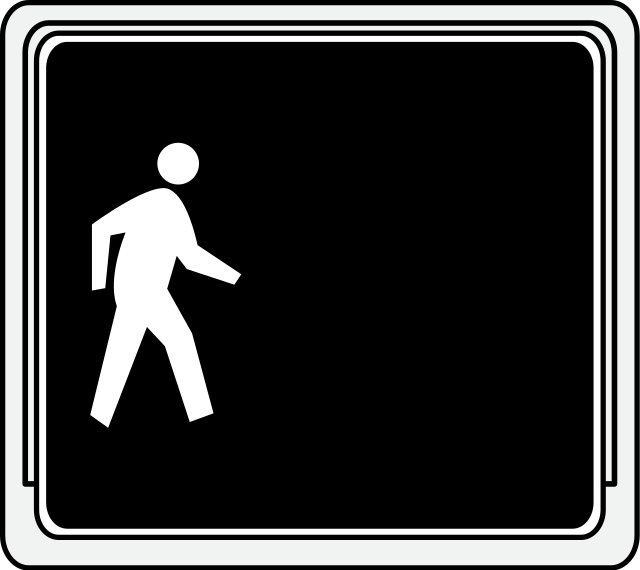
Illuminated white walking person indicates pedestrians have right-of-way to begin crossing the street in the designated crosswalk.
What does the pictured signal indicate?
A) A pedestrian may begin crossing the street.
B) Pedestrians may turn right.
C) A pedestrian may not not begin crossing the street.
ANSWER KEY Check answers after completing the test.
1 C
2 A
3 A
4 D
5 C
6 A
7 D
8 C
9 A
10 B
11 A
12 C
13 C
14 B
15 D
16 B
17 C
18 A
19 D
20 B
21 B
22 A
23 B
24 D
25 D
26 A
27 A
28 C
29 C
30 D
31 A
32 A
33 A
34 B
35 B
36 A
37 A
38 A
39 D
40 A