DriveQuiz drivequiz.com

NH DMV PERMİT PRACTİCE TEST 5

New Hampshire
Duration: 36 min
|
Questions: 40
Student Name:
Date:
Correct:      Incorrect:      Score:      
1.
When you see an emergency vehicle with flashing lights behind you, you must:
A) slow down and keep moving.
B) drive to the right edge of the road and slow down.
C) pull over to the right and stop.
D) stop as quickly as you can.
2.
A vehicle is stopped at a crosswalk to permit a pedestrian to cross the roadway. The driver of the vehicle approaching from the rear should:
A) sound the horn.
B) overtake and pass the stopped vehicle.
C) not overtake and pass the stopped vehicle.
3.
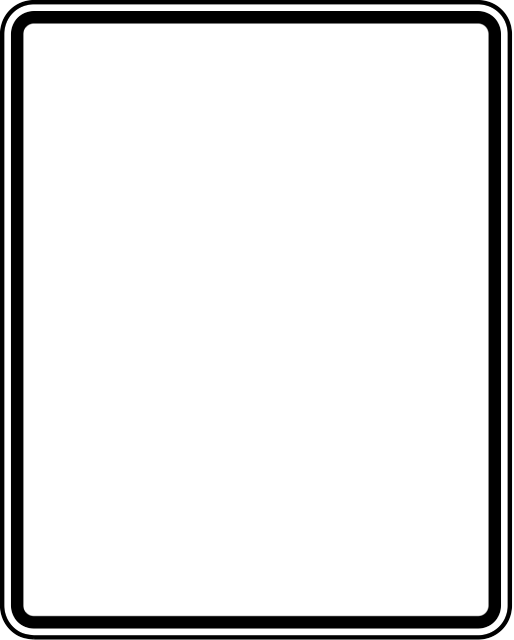
Standard rectangular shape used for general regulatory instructions and speed limits.
Vertical rectangles tell drivers:
A) the law.
B) what is not allowed.
C) the direction they should travel.
4.
A steep downhill grade is ahead. Trucks and heavy vehicles should downshift to a lower gear to prevent brake overheating.
This road sign means:
A) Truck stop ahead
B) No trucks allowed
C) Hill or downgrade up ahead
5.
Standard yellow warning sign outline used across the US for all caution, hazard, and roadway change notifications.
This sign is a:
A) regulatory sign.
B) warning sign.
C) guide sign.
6.
Left turns on a red light are allowed:
A) from a one-way street into a one-way street.
B) Never.
C) at intersections, after stopping, if the way is clear.
7.
Right turns are strictly prohibited at this intersection under all circumstances.
This sign tells drivers that:
A) they must make a left turn at the intersection.
B) U-turns are not allowed.
C) they must not make a right turn.
D) None of the above.
8.
When you need to change lanes, it is important to:
A) make sure the lane you are about to enter is clear.
B) signal your intentions ahead of time.
C) check your blind spots.
D) All of the above.
9.
If you stop along the road at night:
A) turn on your emergency flashers and leave your low beams on.
B) turn off your emergency lights and leave your high beams on.
C) turn on your headlights only.
D) turn off all your lights.
10.
Which of the following is NOT true about ABS?
A) It improves the vehicle stability.
B) It helps increase your stopping distance.
C) It improves the steering ability.
11.
Slower-moving vehicles must stay in the right-hand lane to allow faster traffic to pass safely on multi-lane highways.
This road sign is:
A) a speed reduction sign.
B) a warning sign.
C) a regulatory sign.
12.
You must come to a full stop at a yield sign:
A) Always.
B) Never.
C) If traffic conditions require it.
13.
If the entrance lane is too short to allow acceleration to expressway speed, you should:
A) stop and wait for a large space in traffic.
B) enter the expressway and accelerate quickly.
C) reduce your speed to 15 MPH or less and blend with traffic.
14.
To enter a freeway:
A) signal, yield, and enter at the same speed that traffic is moving.
B) drive slowly so you can check traffic.
C) signal and enter the freeway. You have the right-of-way.
D) make a complete stop before entering the freeway.
15.
You have been involved in a minor traffic collision with a parked vehicle and you can't find the owner. You must:
A) stay until the police arrive.
B) leave a note on the vehicle and report the accident with no delay.
C) wait for the owner to return.
D) call your insurance company within 14 days.
16.
What is the purpose of minimum speed limits?
A) To keep a smooth traffic flow.
B) To halt the traffic flow.
C) To allow emergency vehicles with red flashing lights to safely pass other vehicles.
17.
When you leave your vehicle unattended, you must:
A) lock the ignition and remove the ignition key.
B) set the parking brake.
C) turn off the engine.
D) All of the above.
18.
A flashing yellow light means:
A) The light will soon change from green to red.
B) Drive with caution.
C) Yield the right-of-way to other traffic at the intersection.
19.
Vehicle stopping distance never depends on:
A) the condition of your vehicle's brakes.
B) your own reaction time.
C) the time of day.
D) the condition and type of vehicle tires.
20.
The roadway ahead is narrowing or a lane is ending. Merge smoothly into the continuing lane.
This sign warns drivers that:
A) there is a one lane bridge ahead.
B) the right lane ends.
C) the road ahead is narrow.
21.
Warns of two consecutive curves in opposite directions (e.g., curves right then left). Slow down to maintain control.
This road sign means:
A) A road joins from the left
B) The road ahead turns sharply right then sharply left
C) Sharp right turn
D) Winding road ahead
22.
Blind spots around a large vehicle are _________________ than the blind spots around a car.
A) larger and deeper
B) less dangerous
C) narrower and shorter
23.
When parked facing down hill, your wheels should be turned:
A) toward the curb.
B) in any direction.
C) parallel to the curb.
D) away from the curb.
24.
Warns of a traffic signal ahead that may not yet be visible due to a curve or hill. Be prepared to slow down and stop if the light changes.
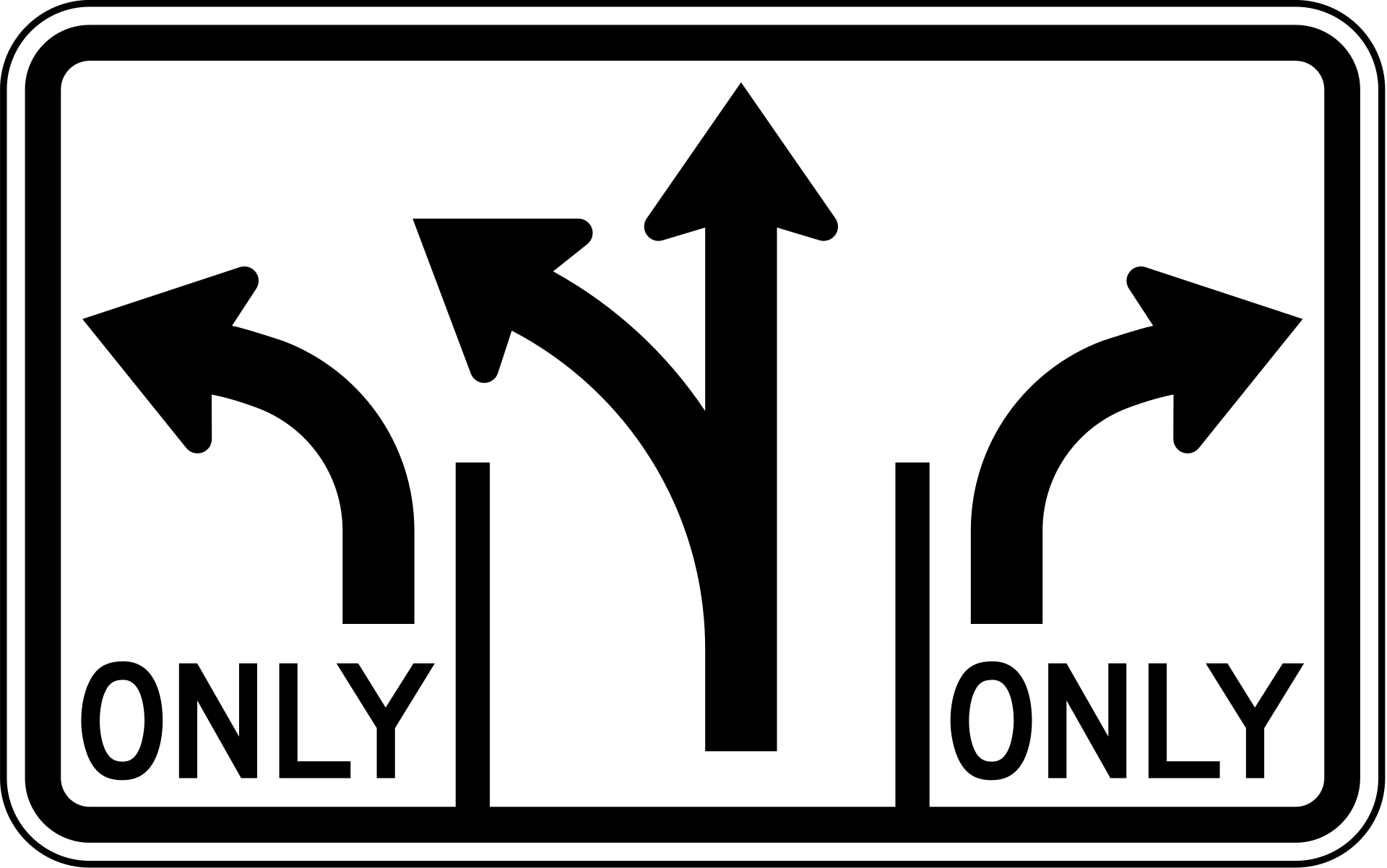
This regulatory sign tells drivers that:
A) traffic in the left lane must turn left at the intersection ahead.
B) all vehicles must turn left immediately.
C) traffic in the right lane must go straight.
25.
Pentagonal signs are used to indicate:
A) possible hazards on roadways.
B) no passing zones.
C) school crossings.
26.
Are drivers allowed to exceed the speed limit to pass other vehicles?
A) Yes, but only by 10 MPH or less.
B) No.
C) Yes, but only if they drive with caution.
27.
For protection, motorcyclists are required to:
A) keep their headlights and taillights on at all times.
B) signal turns, lane changes and stops.
C) wear approved helmets.
28.
Where are yield signs usually placed?
A) At intersections, if there is no marked stop line.
B) Where auxiliary roads lead into major roads.
C) Where major roads lead into auxiliary roads.
29.
Before turning left, it is important to:
A) swing to the right side of your lane.
B) sound your horn to warn the other drivers.
C) yield to oncoming vehicles.
D) flash your headlights to alert the other drivers.
30.
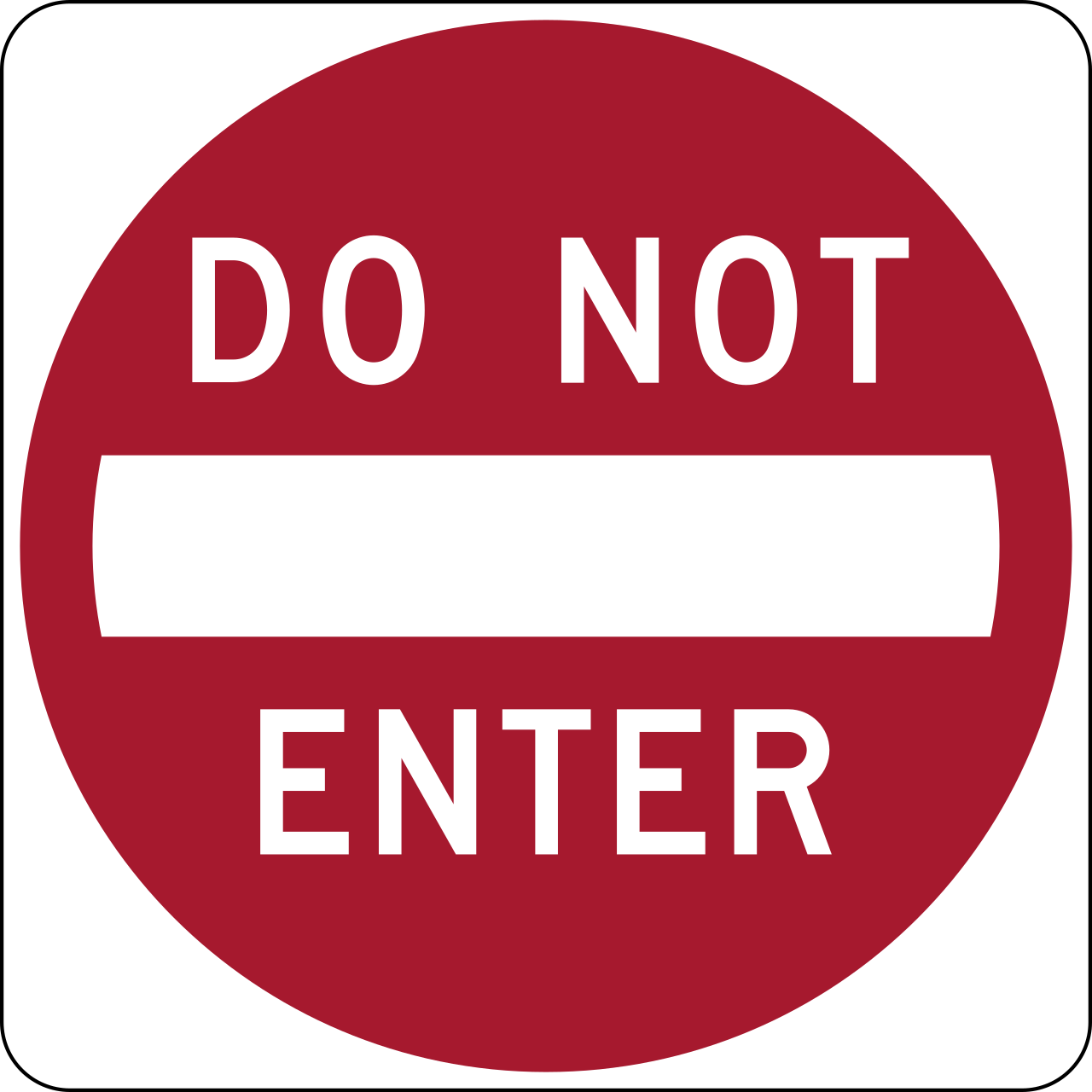
Marks a roadway or ramp where vehicular traffic is strictly forbidden to enter from your direction (such as freeway off-ramps or one-way streets).
This sign indicates:
A) that you must not drive past this sign.
B) that you must yield the right-of-way.
C) the entrance to a construction site.
D) the entrance to a dead-end street.
31.
What should drivers do when the red lights begin to flash?
A) Stop.
B) Yield.
C) Slow down.
32.
You are stopped behind other vehicles waiting at a stop sign. When the intersection is clear:
A) you may follow the vehicle ahead without stopping again.
B) you may proceed with caution through the intersection without stopping if there is no other traffic.
C) you must stop again at the stop sign.
D) you must proceed through the intersection without stopping again.
33.
You are approaching an intersection with a yellow flashing light. You should:
A) stop and wait for the light to change.
B) speed up to beat the red light.
C) prepare to stop; the light is about to turn red.
D) proceed with caution through the intersection.
34.
___________ are the most frequent fatality in work zone crashes.
A) Motorcyclists
B) Construction workers
C) Drivers and their passengers
D) Bicyclists
35.
As you approach an intersection, the traffic light changes from green to yellow. You should:
A) apply the brakes sharply and come to a complete stop.
B) be prepared to stop before the intersection.
C) be prepared to stop in the middle of the intersection.
D) speed up to beat the red light.
36.
To avoid being in a truck driver’s blind spot, you should:
A) never pass the truck and put your headlights on.
B) avoid driving on either side of the truck and don’t tailgate.
C) flash your lights.
D) sound your horn.
37.
On slippery roads, drivers should:
A) leave more space in front of their vehicle.
B) increase their speed to avoid hydroplaning.
C) come to a complete stop.
38.
When you see an emergency vehicle with flashing lights, you must:
A) stop exactly where you are.
B) pull to the curb and stop.
C) speed up and take the nearest exit.
D) slow down and keep moving in your lane.
39.
Parking is not allowed:
A) on the road side of a parked vehicle.
B) in a tunnel.
C) All of the above.
40.
When you are involved in an accident, you should:
A) call the police.
B) help the injured.
C) stop immediately.
D) All of the above.
ANSWER KEY Check answers after completing the test.
1 C
2 C
3 A
4 C
5 B
6 A
7 C
8 D
9 A
10 B
11 C
12 C
13 A
14 A
15 B
16 A
17 D
18 B
19 C
20 B
21 B
22 A
23 A
24 A
25 C
26 B
27 C
28 B
29 C
30 A
31 A
32 C
33 D
34 C
35 B
36 B
37 A
38 B
39 C
40 D