DriveQuiz drivequiz.com

NH DMV PERMİT PRACTİCE TEST 4

New Hampshire
Duration: 36 min
|
Questions: 40
Student Name:
Date:
Correct:      Incorrect:      Score:      
1.
What is the first thing you should do if your wheels move off the pavement?
A) Pull the steering wheel back.
B) Pull over to the right and sound your horn to warn the other drivers.
C) Ease your foot off the gas pedal and brake gently.
2.
Right turns are strictly prohibited at this intersection under all circumstances.
This road sign means:
A) No left turn
B) No right turn
C) No U-turns
3.
Drowsy drivers:
A) are typically older drivers.
B) are at risk of being involved in a crash.
C) should drink coffee to stay awake.
D) can stay awake by opening a window.
4.
Before crossing any railroad tracks, you must:
A) look and listen for trains.
B) make sure there is room for your vehicle on the other side.
C) All of the above.
5.
Parking, standing, or stopping is prohibited at all times in this designated zone except for emergency vehicles.
This road sign means:
A) No parking
B) Yield
C) No left turn
D) Divided highway
6.
When a stop is required at an intersection with no stop line or crosswalk:
A) Drivers should stop only at a place where the driver can see at least 100 feet on either side.
B) Drivers are required to slow down to make sure crossing traffic is clear.
C) Drivers are not required to stop.
D) Drivers should stop at the point nearest the intersecting roadway where the driver has a view of approaching traffic on the intersecting roadway before actually entering the roadway.
7.
A steep downhill grade is ahead. Trucks and heavy vehicles should downshift to a lower gear to prevent brake overheating.
This road sign means:
A) Do not pass trucks
B) Truck must back up
C) Steep downgrade ahead
8.
When driving in icy or snowy conditions, to avoid crashes drivers should:
A) get off the highway as quickly as possible.
B) reduce speed and increase following distance.
C) add extra weight to the vehicle to improve traction.
D) engage 4 wheel drive on the vehicle.
9.
How can you prevent fatigue on a long trip?
A) Plan to drive long trips with a companion.
B) Get enough sleep.
C) All of the above.
10.
A red traffic signal light means that you must:
A) when there is no stop line, stop before entering any crosswalk.
B) stop at the stop line.
C) where there is no stop line or crosswalk, stop before entering the intersection.
D) All of the above.
11.
When driving on wet roads, you should remember:
A) driving on wet roads can cause hydroplaning.
B) you should give yourself additional time to stop.
C) to stay farther behind the vehicle ahead of you.
D) All of the above.
12.
The road curves gradually to the right ahead. Reduce speed before entering the curve.
This sign means:
A) The road will curve to the right.
B) Left turns are not allowed at the intersection.
C) Do not turn right.
13.
What is the most important rule to remember in any emergency?
A) Do not panic.
B) Run away.
C) Call the police.
14.
A large vehicle is backing up to unload goods. You should:
A) enter one of the blind spots and wait.
B) try to pass close behind.
C) be patient and wait until the large vehicle has completed its backup maneuver.
15.
When driving through a curve, you should:
A) speed up as you enter, slow down as you exit.
B) stay near the right of your lane.
C) maintain constant speed.
D) slow as you enter, speed up as you exit.
16.
Driver arm extended downward out the left window with palm facing rearward signals an intention to slow down or stop completely.
This signal means:
A) Stop
B) Move to the left
C) Slow down
D) Proceed
17.
Reflective orange triangle displayed on vehicles traveling at 25 MPH or slower (such as farm tractors or construction machinery). Approach with caution and pass safely.
The sign in the picture:
A) is a Construction and Maintenance Traffic Control sign.
B) is found at most intersections and indicates that drivers must yield to other vehicles.
C) is displayed on the rear of slow moving vehicles.
18.
The roadway ahead is narrowing or a lane is ending. Merge smoothly into the continuing lane.
This sign means:
A) divided highway ahead.
B) narrow bridge ahead.
C) road construction.
D) lane ends, merge left.
19.
A yellow arrow means:
A) Do not go in the direction of the arrow.
B) If you intend to turn in the direction of the arrow, be prepared to stop.
C) The same as a steady yellow light.
20.
Designated school crosswalk location. You must yield to all schoolchildren and pedestrians in the crossing.
At a school crossing, drivers should:
A) always stop, whether there’s a stop sign or not.
B) always sound their horn and stay alert.
C) watch for children and be ready to stop.
21.
Destination signs are ______ with ____ letters and symbols.
A) green; white
B) blue; white
C) white; black
22.
To reduce their chances of colliding with an animal, drivers should:
A) scan the sides of the road to watch for the reflection of vehicle headlights in the eyes of animals.
B) look well down the road and far off to each side.
C) All of the above.
23.
Drinking alcohol while taking drugs:
A) reduces the effects of the alcohol.
B) reduces the effects of the drug or medicine.
C) has no effect, they are different substances.
D) could multiply the effects of the alcohol.
24.
When driving on slick roads, drivers should:
A) accelerate quickly.
B) take turns more slowly.
C) use alternate routes.
D) drive as they would on dry roads.
25.
The minimum drinking age in this State is ____ years.
A) 20
B) 21
C) 9
D) 18
26.
You can reduce the chance of a collision with a large vehicle if you:
A) delay near it.
B) cut abruptly in front of it.
C) pay close attention to the turn signals.
27.
Your first response to reduced visibility should be:
A) to look for road edge markings to guide you.
B) to turn on your windshield wipers.
C) to reduce your speed.
D) to turn on your headlights.
28.
From top to bottom, traffic lights are:
A) green, red and yellow.
B) green, yellow and red.
C) red, yellow and green.
29.
A side road enters the highway from the right or left. Watch for traffic turning onto or crossing your lane.
This road sign means:
A) All traffic must turn right
B) Two one-way roads merge ahead
C) A side road enters ahead
D) No right turn
30.
Regulation signs normally are ____ rectangles with ____ letters or symbols.
A) yellow; black
B) white; black
C) green; white
31.
When an approaching driver at night blinds you by failing to dim their high beams, you should look:
A) straight down the middle of the road.
B) towards the left side of the road.
C) None of the other answers is correct.
D) towards the right side of the road.
32.
A vehicle that enters a road from a driveway:
A) has the right-of-way.
B) must yield to traffic approaching from the right, while it has the right-of-way over vehicles approaching from the left.
C) must stop and yield the right-of-way to traffic on the roadway and to pedestrians.
33.
Drivers can proceed through an intersection with a stop sign, but no stop line or crosswalk:
A) after slowing down to at least 15 MPH before proceeding.
B) after coming to a complete stop, when it is safe to proceed.
C) after stopping at least 50 feet prior to the intersection.
D) after slowing down to ensure there is no cross-traffic.
34.
The yield sign is ___ and white, with ___ letters.
A) yellow; black
B) red; red
C) red; white
35.
On a road with two or more lanes in the same direction, you approach an emergency vehicle that is stopped with its warning lights on. You must:
A) slow down. If possible, change lanes.
B) pass the emergency vehicle as quickly as possible.
C) drive to the right side of the road and stop.
D) maintain your current speed and stay in your lane.
36.
To avoid becoming an aggressive driver, you should:
A) Adjust your schedule to drive during times with the most highway traffic.
B) Allow enough travel time to reach your destination on schedule.
C) Listen to heavy metal music.
37.
Flashing Upraised Hand signal indicates pedestrians should finish crossing if already in the crosswalk, but not start crossing.
A pedestrian in the crosswalk when the 'DON’T WALK' signal begins flashing must:
A) stop immediately.
B) go back and wait the “WALK” light
C) finish crossing the street.
38.
When driving on a wet road:
A) as you drive faster, your tires may lose traction.
B) you must be aware that the pavement gets even more slippery when it's been raining for long periods of time.
C) you should follow the vehicle ahead of you more closely.
D) as you decrease your speed, the road becomes more slippery.
39.
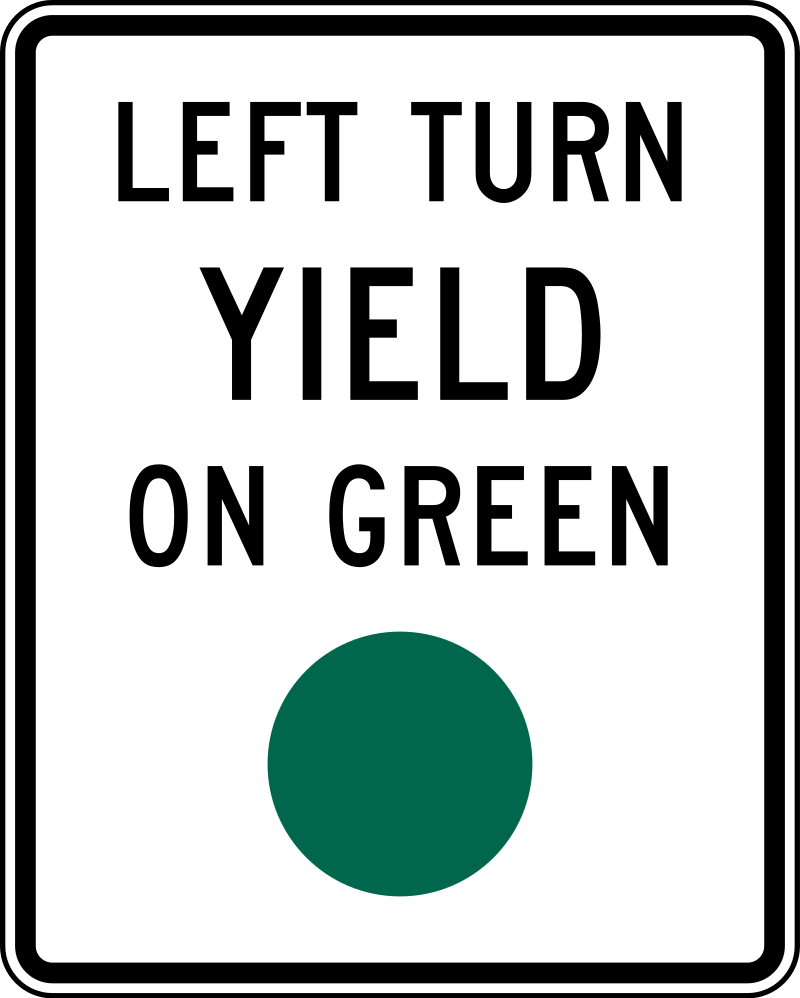
When turning left at a circular green light, you must yield right-of-way to oncoming traffic and pedestrians before completing your turn.
This white sign means you:
A) may turn left on a green light when it is safe to do so.
B) may turn left only on a green arrow.
C) must wait for the solid green light before you turn left.
40.
Another road crosses the highway ahead. Look left and right for crossing or entering vehicles.
This road sign means:
A) Crossroad
B) Hospital parking ahead
C) Merge
ANSWER KEY Check answers after completing the test.
1 C
2 B
3 B
4 C
5 A
6 D
7 C
8 B
9 C
10 D
11 D
12 A
13 A
14 C
15 D
16 A
17 C
18 D
19 B
20 C
21 A
22 C
23 D
24 B
25 B
26 C
27 C
28 C
29 C
30 B
31 D
32 C
33 B
34 B
35 A
36 B
37 C
38 A
39 A
40 A