When parking uphill on a road with a curb, turn the front wheels:
A)towards the curb.
B)parallel to the curb.
C)straight ahead.
D)away from the curb.
2.
At night, it is hardest to see:
A)street lights.
B)pedestrians.
C)other motorists.
D)road signs.
3.
Service signs are ____ with ____ letters and symbols.
A)blue; white
B)white; black
C)green; white
4.
When other drivers around you are acting in anger, you should:
A)slow down or move over safely.
B)distance yourself from the situation.
C)avoid making eye contact.
D)All of the above.
5.
When there is a _______ at an intersection, you should come to a complete stop, yield to cross traffic/pedestrians, and then proceed when clear.
A)a solid green light
B)a solid red light
C)a flashing red light
D)a flashing yellow light
6.
Broken white lines can be crossed over:
A)when it is safe to change lanes.
B)only when passing another car.
C)at any time.
D)only in passing zones.
7.
When changing lanes, you should not:
A)signal your intentions early.
B)check your side and rear view mirrors.
C)use the inside rearview mirror to check for blind spots
D)check to see if other drivers are moving into the same lane.
8.
When the road is slippery, you should:
A)brake suddenly carefully.
B)pump your brakes.
C)press your brakes in slow, steady strokes.
9.
When approaching someone using a white cane, you should proceed with caution because:
A)the pedestrian might be using a guide dog.
B)the pedestrian might be blind.
C)the pedestrian is deaf.
D)the pedestrian is blind.
10.
__________ limit(s) your concentration, perception, judgment, and memory.
A)Even the smallest amount of alcohol
B)Only a blood alcohol level greater than .05
C)Alcohol does not
D)Only a blood alcohol level greater than the legal limit
11.
If you begin to feel drowsy while driving, you should:
A)open your window.
B)get some coffee.
C)get an energy drink.
D)stop driving.
12.
This road sign means:
A)No left turn
B)No U-turn
C)Detour ahead
13.
If another vehicle is approaching you head-on in your lane, you should _______, sound your horn and brake.
A)steer right
B)None of the other answers is correct.
C)steer left
D)stay in the center of your lane
14.
What should you do if your brakes fail?
A)Hook your shoe under the pedal and see if you can free it.
B)Turn on your cruise control.
C)Try pumping the brake pedal to increase pressure.
15.
This sign indicates that the road ahead:
A)turns sharply right, then left.
B)is a divided highway.
C)curves right, then left.
D)curves right.
16.
The amount of space you need to cross traffic depends on the:
A)road and weather conditions and oncoming traffic.
B)number of cars behind you.
C)presence of a yield sign.
D)number of cars in front of you.
17.
This road sign means:
A)Traffic increases ahead
B)Steep grade ahead
C)Winding road ahead
D)Slippery road ahead
18.
This road sign means:
A)Yield the right-of-way to oncoming vehicles
B)Stop if necessary
C)You must make a complete stop
D)Slow down or stop
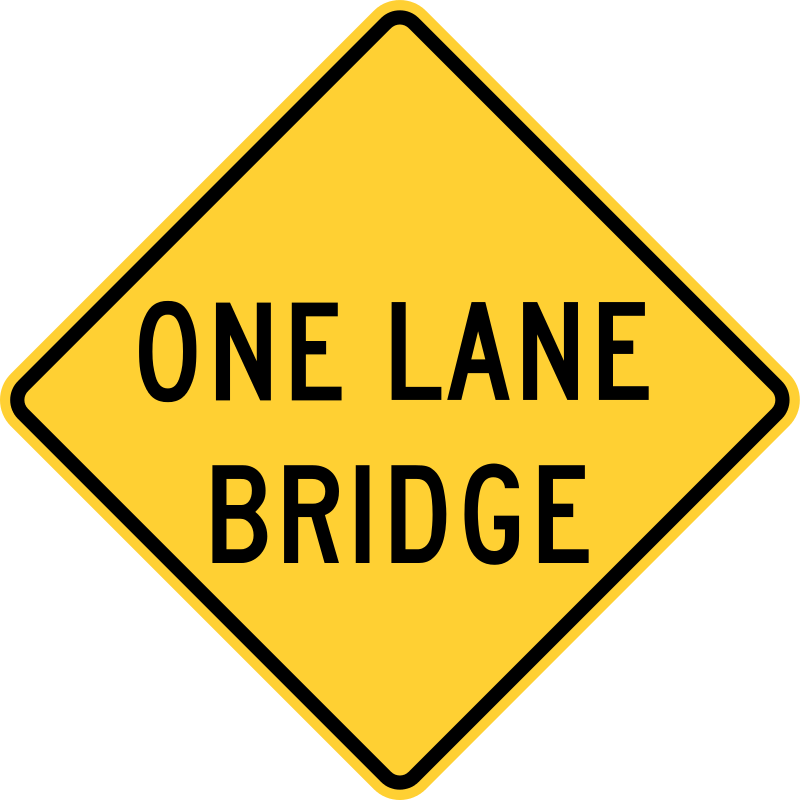
19.
This sign warns that:
A)traffic must merge left.
B)the bridge ahead is wide enough for only one vehicle at a time.
C)traffic must merge right.
20.
When you approach this sign, you must:
A)stop if necessary.
B)watch for workers crossing the road.
C)None of the above.
21.
An orange-colored sign means:
A)Railroad crossing ahead
B)School zone ahead
C)Construction zone ahead
D)You must change lanes ahead
22.
A green arrow used to control turns from a specific traffic lane:
A)means the same as a circular green light, but you must go only in the direction indicated by the arrow.
B)is used only on one-way streets.
C)provide directional and mileage information to specific destinations.
D)means that you may go only if the green arrow is accompanied by a green light.
23.
The first sign drivers see when approaching a highway-rail intersection is usually:
A)a crossbuck sign.
B)an advance warning sign.
C)a speed limit sign.
24.
A driver who approaches an intersection:
A)must yield the right-of-way to traffic already in the intersection.
B)must drive straight through the intersection, even if another vehicle is already in the intersection.
C)has the right-of-way over traffic already in the intersection.
25.
A flashing red traffic light:
A)has the same meaning as a yield sign.
B)is used to indicate a pedestrian crossing.
C)has the same meaning as a stop sign.
D)indicates that you should drive with caution.
26.
When you are in a line of traffic that is crossing a railroad track that has no signals or gates:
A)you may pass slower drivers crossing the track.
B)before you start to cross, you need to make sure there is space to get all the way across the tracks without stopping.
C)you have the right of way and do not need to check for trains.
D)All of the above.
27.
A steady green light at intersections means:
A)You may drive through the intersection if the road is clear
B)You must increase your speed
C)You may not turn right
28.
This is the shape and color of a ________ sign.
A)yield
B)stop
C)do not enter
29.
You may not park:
A)on a hill.
B)on a crosswalk or marked bicycle lane.
C)in a parking lot.
D)within 200 feet of an elementary school.
30.
When drivers come to this sign, they must:
A)be ready to stop at the stop sign.
B)warn other drivers that a stop sign is ahead.
C)brake sharply and come to a complete stop.
31.
What should drivers do when they see this sign?
A)Make sure the bridge is clear of oncoming traffic before they cross.
B)Look to the left and right for other traffic.
C)Allow others to merge smoothly.
32.
You should never depend on your mirrors when you prepare to change lanes. Why?
A)Mirrors leave “blind spots” behind both sides of vehicles.
B)Mirrors need to be adjusted.
C)Mirrors are useless.
33.
What does this road sign indicate?
A)Hospital service
B)Area reserved for people with disabilities
C)Interstate highway
34.
Regulatory signs are:
A)Suggestions
B)Warnings
C)Law
35.
On a green arrow, drivers must:
A)wait three seconds before proceeding.
B)yield to any vehicle, bicycle, or pedestrian in the intersection.
C)yield to pedestrians only in the intersection.
36.
If you miss your exit from an interstate expressway, you should:
A)go to the next exit and come back to the exit you missed.
B)use the right turn signal, check your mirrors and move to the right.
C)pull over to the right and back up with caution until you reach the exit ramp.
D)make a quick U-turn from your lane of travel.
37.
When approaching any intersection or driveway, drivers should:
A)look both ways and be ready to stop.
B)pass other vehicles and then stop.
C)drive at the fastest speed just before entering the intersection.
38.
Which of the following is a common cause of a traffic collisions?
A)Following too closely.
B)Excessive speed for conditions.
C)Distracted driving.
D)All of the above.
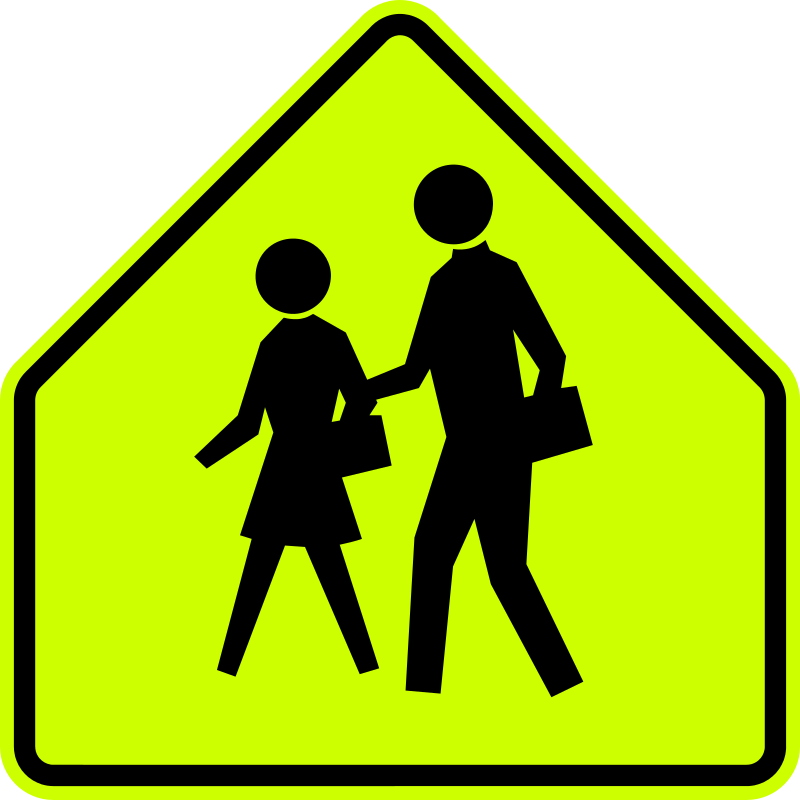
39.
This warning sign means:
A)You are approaching a school
B)Watch out for children crossing the street
C)Slow down, drive with caution and watch for children
D)All of the above.
40.
You are stopped at a stop sign and you are going to go straight through the intersection. A car on the cross road has stopped at a stop sign on your right and is going to go straight. Who has the right-of-way?
A)Whoever enters the intersection first.
B)You.
C)The car on your right.
ANSWER KEYCheck answers after completing the test.