DriveQuiz drivequiz.com

NH DMV PERMİT PRACTİCE TEST 15

New Hampshire
Duration: 36 min
|
Questions: 40
Student Name:
Date:
Correct:      Incorrect:      Score:      
1.
Warns that a one-way street or divided highway is ending, and you are entering a roadway with oncoming traffic in the opposing lane. Stay to the right.
This road sign means:
A) Divided highway ahead
B) Two-way traffic ahead
C) Four-lane traffic ahead
2.
Indicates that traffic is permitted to pass on either the left or the right side of an island, median, or obstruction.
This sign tells drivers that:
A) left and right turns are not allowed.
B) a divided highway is ahead.
C) they cannot go straight ahead.
3.
A traffic sign with a red circle around and a slash over a symbol means:
A) the maneuver shown by the symbol is not allowed.
B) Do not drive faster than the posted speed limit.
C) the maneuver shown on the sign should be executed with extreme caution.
4.
When two cars arrive at an intersection with no signs or signals at the same time, which car has the right-of-way?
A) The car that is traveling faster.
B) The car approaching from the right.
C) The car approaching from the left.
D) The car in which the driver sounds the horn.
5.
When driving near light rail vehicles, drivers should:
A) never drive around lowered crossing gates.
B) expect trains on any track at any time.
C) always obey signs and traffic signals.
D) All of the above.
6.
Your BAC depends on:
A) how fit you are.
B) the type of beverage you drink.
C) the amount of alcohol you drink.
7.
What is the slow moving vehicle symbol?
A) A reflective yellow diamond
B) A reflective white triangle
C) A reflective orange triangle
8.
Drive below the posted speed limit when:
A) anything makes conditions less than perfect.
B) you are on a four lane road.
C) entering a highway where there are other cars.
D) others drive below the speed limit.
9.
You reach an intersection that is not controlled at the same time as a driver on your right, and both of you prepare to go straight. Who has the right-of-way?
A) You.
B) No one.
C) The other driver.
10.
If two vehicles arrive at a four-way stop at the same time:
A) both vehicles must stop.
B) the vehicle on the left must yield to the vehicle on the right.
C) the driver on the left must signal the driver on the right to go.
D) the vehicle on the right must yield to the vehicle on the left.
11.
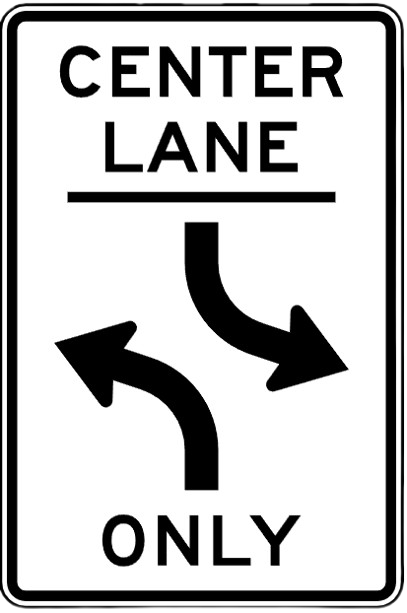
Indicates a two-way left-turn lane in the center of the road. Must only be used to make left turns or U-turns (where permitted), not for regular travel or passing.
This sign means:
A) The center lane is shared for left turns.
B) Left turns in both directions of travel are not permitted.
C) Vehicles may only turn left.
12.
To practice defensive driving you should:
A) always leave yourself a way out.
B) look well ahead of your vehicle and be aware of developing traffic situations around you.
C) maintain a proper following distance.
D) All of the above.
13.
If another car has stopped in an adjacent lane in the same direction of travel, you should:
A) speed up and pass the vehicle on the right.
B) pass the car on the left.
C) be careful in case the other vehicle has stopped for a pedestrian.
D) tap your horn to let the other driver know you are passing.
14.
If your turn signals fail, you should use _____ to indicate your intention to turn.
A) your emergency flashers
B) your horn
C) your high beams
D) hand signals
15.
When a school bus is stopped with its red lights flashing:
A) drivers only need to stop if children are present.
B) drivers don't need to stop unless they are in a school zone.
C) drivers may not pass while the red lights are flashing.
D) you never need to stop.
16.
If you hear a thumping sound while driving, you should:
A) hook your shoe under the gas pedal and see if you can free it.
B) get off the road and check your tires.
C) try your emergency lights.
17.
What should you do if your headlights suddenly go out?
A) Brake immediately and activate your emergency lights.
B) Use your emergency lights, parking lights or directional signals.
C) Ease your foot off the gas pedal and brake gently.
18.
The maximum legal speed under ideal driving conditions is 50 miles per hour. Always adjust speed downward for adverse weather, traffic, or road conditions.
This sign indicates the _______________ vehicles can safely travel in this area.
A) suggested speed
B) maximum speed
C) minimum speed
19.
When driving behind a motorcycle, drivers must:
A) remembers that motorcyclists have the right to use a complete traffic lane.
B) pass the motorcycle in the same lane.
C) drive on the shoulder beside the motorcycle.
D) share the lane with the motorcycle.
20.
Proceed with caution. You do not need to stop unless pedestrians or hazards are present in the intersection.
A flashing yellow light:
A) warns drivers to proceed with caution.
B) is used at dangerous intersections.
C) All of the above.
21.
Right turns are strictly prohibited at this intersection under all circumstances.
This road sign means:
A) Right turn is not permitted
B) Left turns are permitted
C) You may turn right after yielding the right-of-way to oncoming traffic
22.
It is illegal to drive below the speed limit:
A) when the pavement is wet.
B) only in residential areas.
C) when driving slowly disrupts the normal flow of traffic.
D) only in rural areas.
23.
An inattentive driver:
A) carries on an eye-contact conversation with a passenger while driving.
B) gazes at objects off the roadway while driving.
C) daydreams.
D) All of the above.
24.
At a stop sign there is no stop line or crosswalk. You must stop:
A) before you enter the intersection.
B) at the next crosswalk.
C) after you enter the intersection, if you have a clear view of traffic on the intersecting roadway.
25.
A broken yellow line alongside a solid yellow line means:
A) Passing is permitted on the side of the broken yellow line
B) Passing is not permitted in either direction
C) Passing on the right is permitted in either direction
26.
Road signs that point out scenic areas and parks are:
A) brown and white.
B) black and orange.
C) green and white.
27.
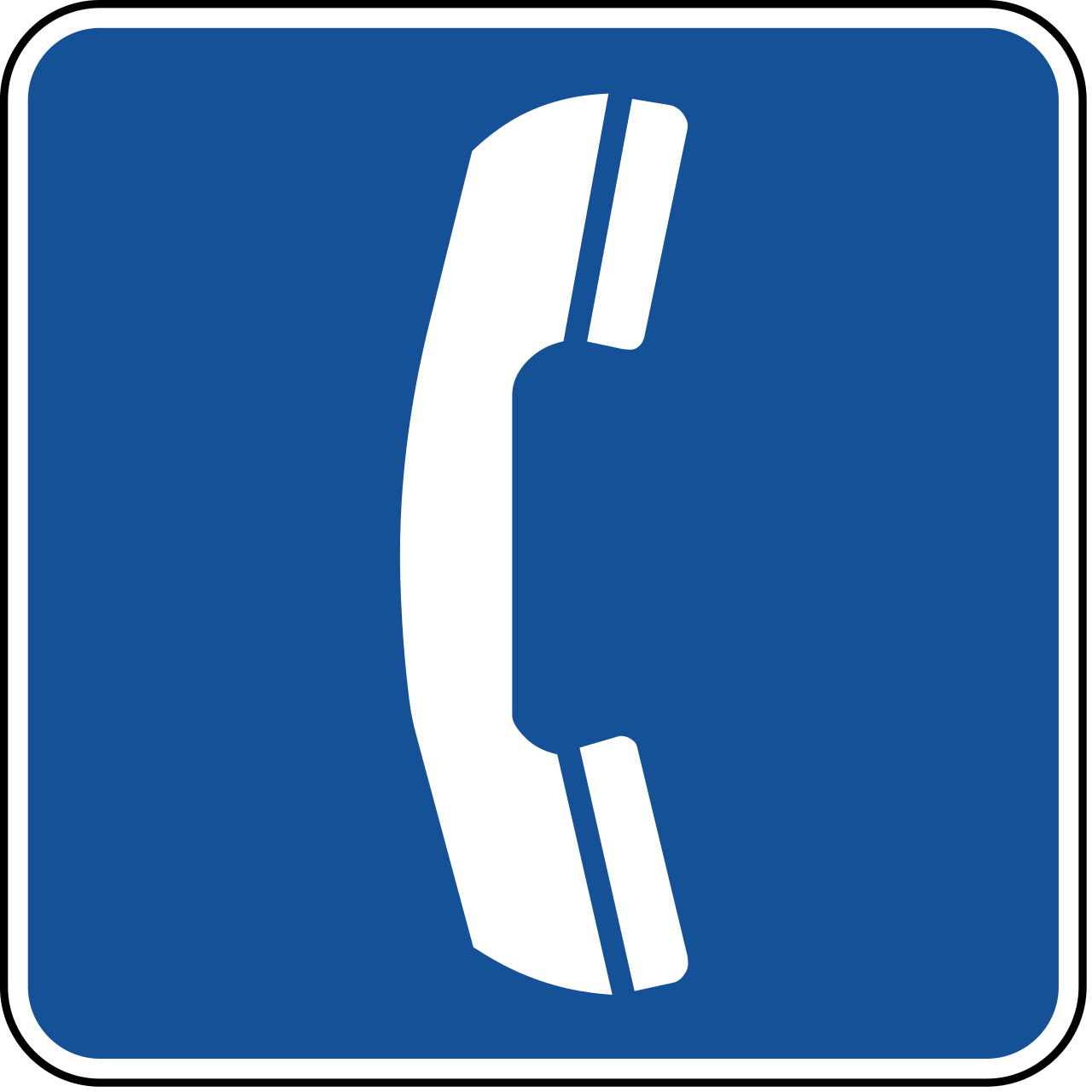
Blue motorist service sign indicating the availability of a public emergency telephone along the highway.
This sign indicates:
A) Phone service ahead
B) Emergency line available
C) Cell phone shop ahead
28.
Alerts drivers to an upcoming crosswalk where pedestrians frequently cross. Slow down and yield right-of-way to anyone in or about to enter the roadway.
This road sign means:
A) Railroad Crossing
B) One Way
C) Limited parking
29.
When driving in winter, you should NOT:
A) use snow tires on all four wheels of your vehicle.
B) use cruise control.
C) drive on interstate roads.
D) check your vehicle's antifreeze level and windshield washer fluid.
30.
The road makes a sharp 90-degree right turn ahead. Slow down considerably before entering the turn.
This road sign means:
A) One way
B) No right turn
C) Exit
D) Sharp right turn ahead
31.
You may not pass another vehicle on either side of a _______ centerline.
A) solid or broken yellow
B) single broken white
C) double solid yellow
D) single broken yellow
32.
The traffic light is green and you want to drive straight through an intersection. If a car is already in the intersection and is making a turn, you must:
A) enter the intersection and then stop.
B) drive through the intersection. You have the right-of-way.
C) let that car complete its turn before you enter the intersection.
33.
What is the first thing you should do if your wheels move off the pavement?
A) Pull the steering wheel back.
B) Pull over to the right and sound your horn to warn the other drivers.
C) Ease your foot off the gas pedal and brake gently.
34.
Drivers can not pass a vehicle on the left if:
A) they approach the top of a hill on a two-way road and can not see over it.
B) they can not safely return to the right lane before they reach a solid yellow center line for the right lane.
C) All of the above.
35.
The road ahead is divided by a median strip or physical barrier into two separate one-way roadways. Keep to the right of the divider.
This road sign means:
A) Divided highway ahead
B) Merging traffic
C) Flagger ahead
36.
When entering a highway from an entrance ramp, drivers should:
A) enter slowly to avoid other vehicles.
B) stop first, then gradually enter traffic.
C) accelerate to the speed of traffic.
D) drive above the speed of traffic to get ahead.
37.
When you get in a car to drive, the first thing you should do is:
A) check your rear view mirror.
B) adjust the steering wheel.
C) adjust your seat belt.
D) adjust your seat.
38.
Warns drivers that two separate lanes moving in the same direction are merging into one. Drivers in the right lane must adjust speed and merge smoothly with existing traffic.
This sign means:
A) A road crosses the main highway ahead.
B) The divided highway on which drivers are traveling ends ahead.
C) Drivers are coming to a point where another traffic lane joins the one they are on.
39.
Alcohol:
A) makes you less aware of what is happening to your driving abilities.
B) makes it easier to make correct decisions.
C) improves your reaction time.
40.
When changing lanes on an interstate, drivers should:
A) use cruise control to increase traction whenever possible.
B) signal and check mirrors and blind spots.
C) change lanes often.
D) stop in the breakdown lane if they are tired.
ANSWER KEY Check answers after completing the test.
1 B
2 C
3 A
4 B
5 D
6 C
7 C
8 A
9 C
10 B
11 A
12 D
13 C
14 D
15 C
16 B
17 B
18 B
19 A
20 C
21 A
22 C
23 D
24 A
25 A
26 A
27 A
28 A
29 B
30 D
31 C
32 C
33 C
34 C
35 A
36 C
37 D
38 C
39 A
40 B