DriveQuiz drivequiz.com

NH DMV PERMİT PRACTİCE TEST 12

New Hampshire
Duration: 36 min
|
Questions: 40
Student Name:
Date:
Correct:      Incorrect:      Score:      
1.

Right turns are strictly prohibited at this intersection under all circumstances.
This road sign means:
A) No left turn
B) No right turn
C) No U-turns
2.
When a hazard is seen ahead, reaction distance:
A) is the sum of perception distance and braking distance.
B) equals total stopping distance minus perception distance.
C) is how far a vehicle will continue to travel, in ideal conditions, before the driver hits the brakes.
3.
Drivers must yield the right-of-way to pedestrians when:
A) pedestrians are crossing the road in marked crosswalks.
B) All of the above.
C) the driver is turning a corner and pedestrians are crossing with the light.
4.
Object marker used to mark obstacles or bridge abutments near the edge of the road to alert drivers at night.
When they see a yellow X signal, drivers should:
A) come to a complete stop at the marked stop line.
B) turn off the ignition.
C) prepare to leave the lane safely.
5.
You are approaching a railroad crossing and the crossing signals are flashing. You should:
A) look for a train, then speed up.
B) slow down and look for a train.
C) do what the approaching vehicle does.
D) stop and look for a train.
6.
Your car stalls on the tracks at a railroad crossing, and a collision with a train is imminent. After getting yourself and your passengers out of the car, you should:
A) run toward the train but stay off the tracks.
B) signal the train to stop.
C) cross the tracks.
7.
To keep your vehicle from rolling into traffic when parked on a hill, if you are facing uphill you should:
A) turn the front wheels away from the curb or edge of the road.
B) turn the back wheels towards the curb or edge of the road.
C) set the parking brake and keep the front wheels straight.
D) turn the front wheels towards the curb or edge of the road.
8.
The roadway becomes particularly slippery during wet or rainy conditions. Reduce your speed, increase following distance, and avoid abrupt braking or steering.
This sign means:
A) The road will curve to the right, then to the left.
B) Road slippery when wet. Drive slowly.
C) Winding road ahead. Drive with caution.
9.
When a traffic signal light turns green, you should:
A) back up slowly.
B) yield the right-of-way to pedestrians.
C) yield the right-of-way to larger vehicles.
D) wait 5 seconds before proceeding.
10.
If you drive much slower than the posted speed limit you:
A) are a defensive driver.
B) might cause a crash.
C) always have the right of way.
D) are driving safely and can avoid tailgaters.
11.
The road ahead is divided by a median strip or physical barrier into two separate one-way roadways. Keep to the right of the divider.
This road sign means:
A) Divided highway ahead - stay to the right
B) Do not enter
C) Do not pass
12.
To drive more safely at night:
A) don’t drive when you are tired.
B) make sure your headlights are working properly.
C) increase following distance.
D) All of the above.
13.
What can you do to prevent skids on snow and ice?
A) Allow the wheels to keep turning.
B) Brake early and gently.
C) All of the above.
14.
When you come to an intersection with a flashing red light, you must:
A) stop at the intersection, then proceed when safe and observe the right-of-way rules.
B) slow down and drive carefully through the intersection.
C) stop at the intersection and wait for a flashing green light.
D) stop only if cars are approaching the intersection.
15.
A broken white line:
A) means passing or crossing is prohibited in that lane.
B) separates two lanes traveling in the same direction.
C) marks the right edge of the roadway.
16.
Highway hypnosis is a driving condition that can result from:
A) heavy traffic.
B) staring at the roadway for long periods of time.
C) travelling on HOV lanes.
D) frequent rest stops.
17.
Slow down and give right-of-way to all oncoming vehicles, cyclists, and pedestrians. Stop completely if necessary before entering the intersection or merging.
This road sign means:
A) Slow down and yield to traffic on main road when merging
B) Always come to a complete stop
C) Lane reduction ahead
D) You must come to a complete stop and yield right-of-way
18.
A signalized intersection is ahead. Prepare to stop if the light turns yellow or red.
This road sign means:
A) Stop before turning right
B) 4-way stop ahead
C) Lane closed for traffic
D) There is a traffic signal ahead
19.
Before passing another vehicle, you should signal:
A) early enough so other drivers know your intention.
B) after changing lanes.
C) at any time.
D) just before changing lanes.
20.
Drivers can not pass a vehicle on the left if:
A) they approach the top of a hill on a two-way road and can not see over it.
B) they can not safely return to the right lane before they reach a solid yellow center line for the right lane.
C) All of the above.
21.
Where must a pedestrian walk when there are no sidewalks?
A) On the side of the road, in the same direction of traffic.
B) In the middle of the road, facing oncoming traffic.
C) On the side of the road, facing the traffic.
22.
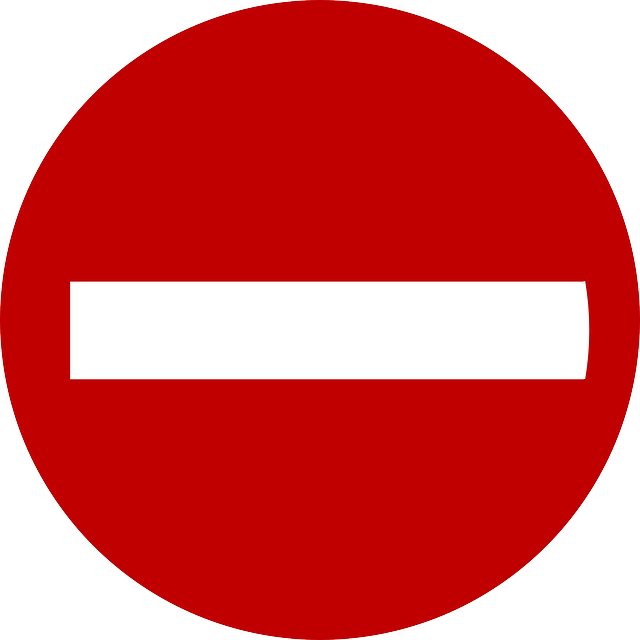
Indicates you have entered an exit ramp or one-way street in the incorrect direction. Stop immediately and safely turn around.
This road sign means:
A) No left turn
B) Lane ends
C) Do not enter
23.
The roadway ahead is narrowing or a lane is ending. Merge smoothly into the continuing lane.
This road sign means:
A) The left lane ends soon
B) one-way street ahead.
C) The right lane ends soon
D) Highway entrance ramp ahead
24.
Drivers who are 21 years of age or older considered to be driving under the influence if their blood alcohol concentration (BAC) is:
A) .02 or more.
B) .04 or more.
C) .88 or more.
D) .08 or more.
25.
If your wheels drop off the pavement onto the shoulder of the road, you should:
A) maintain your current speed and turn onto the pavement.
B) slow down and carefully turn back onto the pavement.
C) stop your car on the side of the road.
D) immediately come to a complete stop, then quickly turn back onto the pavement.
26.
Parking is not allowed:
A) in an intersection, unless permitted by signs.
B) within 300 feet of a pedestrian safety area.
C) on public roads
27.
Another road crosses the highway ahead. Look left and right for crossing or entering vehicles.
This sign indicates:
A) a side road.
B) a cross road.
C) a church zone ahead.
28.
When the driver behind you wants to pass, you should:
A) change lanes.
B) speed up.
C) use your brake lights.
D) slow down to allow room for the other driver to complete the pass safely.
29.
Doing all you can to prevent crashes is called:
A) Anti-Collision Driving
B) Crash-Prevention Driving
C) Defensive Driving
D) ABS Driving
30.
Drivers should be aware that a motorcyclist may:
A) decrease speed and rise off the seat when approaching a railroad crossing.
B) quickly change speed or lane position.
C) All of the above.
31.
__________________ give you right-of-way to make a left turn.
A) A green arrow pointing left
B) A flashing red light
C) A flashing yellow light
D) A solid green light
32.
A sharp curve is ahead with a recommended safe speed plate. Slow down before entering the curve to prevent vehicle rollover.
This road sign means:
A) Merge, then slow down to the safe speed indicated
B) The road ahead curves right; slow down to indicated speed
C) Winding road ahead; slow down to the indicated speed
D) Divided highway begins. Slow down to the safe speed indicated
33.
Gauging the speed of a motorcycle may be difficult because:
A) motorcycles take up less of your field of vision.
B) motorcycles often slow down by downshifting.
C) many motorcyclists do not activate the brake light.
34.
If another car is in danger of hitting you, you should:
A) flash your brake lights.
B) sound your horn.
C) use your emergency lights.
D) flash your headlights.
35.
You must yield to other drivers:
A) when it helps to prevent collisions.
B) when they are driving a truck.
C) when the other drivers are on your left and you have reached an unmarked intersection at the same time.
D) when your traffic signal is a green.
36.
On average, how long does it take your body to remove the alcohol contained in 5 ounces of wine?
A) one hour.
B) 30 minutes.
C) 3 hours.
37.
Indicates a series of three or more consecutive sharp turns or curves ahead. Reduce speed and maintain lane control.
This road sign means:
A) Winding Road Ahead
B) No turns are allowed on this road
C) Right lane closed
D) Do Not Enter
38.
Slow down and give right-of-way to all oncoming vehicles, cyclists, and pedestrians. Stop completely if necessary before entering the intersection or merging.
The yield sign means:
A) Go. The light will soon be red.
B) If the way is clear, you may move forward slowly without stopping.
C) Stop if you can.
39.
Two drivers reach an uncontrolled intersection at the same time. Who has the right of way?
A) The driver on the left.
B) No one.
C) The driver on the right.
40.
The following symptoms are associated with drowsy driving:
A) You continue to yawn.
B) You don’t remember driving the last few miles.
C) All of the above.
ANSWER KEY Check answers after completing the test.
1 B
2 C
3 B
4 C
5 D
6 A
7 A
8 B
9 B
10 B
11 A
12 D
13 C
14 A
15 B
16 B
17 A
18 D
19 A
20 C
21 C
22 C
23 C
24 D
25 B
26 A
27 B
28 D
29 C
30 C
31 A
32 B
33 A
34 B
35 A
36 A
37 A
38 B
39 C
40 C