DriveQuiz drivequiz.com

NH DMV PERMİT PRACTİCE TEST 11

New Hampshire
Duration: 36 min
|
Questions: 40
Student Name:
Date:
Correct:      Incorrect:      Score:      
1.
Drivers should always signal when:
A) pulling into traffic from a parking area or alley.
B) changing lanes.
C) pulling out of a parking space.
D) All of the above.
2.
When the pavement is marked with a double yellow line, drivers may pass other vehicles:
A) None of the other answers is correct.
B) only if there are no oncoming vehicles.
C) only if the vehicle ahead is driving 10 mph or more under the speed limit.
D) Never.
3.
When exiting a highway, you should slow down:
A) when you first see the exit sign.
B) before moving into the exit lane.
C) once you have moved into the exit lane.
D) once you see the toll booth.
4.
Drivers should use the horn:
A) if a driver is moving slowly, and you want them to drive faster.
B) only when necessary, to avoid collisions.
C) when feeling angry or upset.
D) to alert other drivers that they made a mistake.
5.
When you drive near parks and playgrounds, you should expect children:
A) not to cross unless they are with an adult.
B) to know when it is safe to cross.
C) to stop at the curb before crossing the street.
D) to suddenly run into the street.
6.
Slow down and give right-of-way to all oncoming vehicles, cyclists, and pedestrians. Stop completely if necessary before entering the intersection or merging.
The yield sign means:
A) Drive with caution in wet weather.
B) You must come to a complete stop.
C) Slow down and give vehicles crossing your path the right-of-way.
7.
Another road crosses the highway ahead. Look left and right for crossing or entering vehicles.
This road sign means:
A) You must turn right
B) Railroad crossing
C) Crossroad ahead
D) 4-way stop
8.
To check your blind spot before changing lanes:
A) look into the right side mirror.
B) look into the rearview mirror.
C) look over your shoulder in the direction you plan to move.
D) look into the left side mirror.
9.
Distracted driving:
A) causes the driver to react more slowly to hazards.
B) is only dangerous for inexperienced drivers.
C) usually causes the driver to drive slower.
D) is never dangerous.
10.
A side road enters the highway from the right or left. Watch for traffic turning onto or crossing your lane.
This road sign warns drivers that:
A) left turns are not allowed at the intersection.
B) the road will make a sharp turn to the right.
C) another road enters the highway from the direction shown.
11.
Before a school bus stops to load passengers, the driver will usually flash:
A) yellow warning lights.
B) red warning lights.
C) red lights.
12.
In case of skidding, drivers should NOT:
A) take their foot off the gas pedal.
B) pump the brakes gently if they are about to hit something.
C) tap the gas pedal with their foot.
13.
When following motorcycles, drivers should:
A) reduce the minimum following distance.
B) try to pass them as they have different braking capabilities than other motor vehicles.
C) keep more space in front of their vehicle.
14.
What is the meaning of blue traffic signs?
A) A blue background indicates a regulatory sign.
B) They give directional information.
C) Blue indicates road user services.
15.
Parking is permitted only during specified hours and days as posted on the sign. Vehicles parked outside these hours are subject to ticketing or towing.
It's 10 AM. This sign tells you that:
A) you are allowed to park until 5:30 PM.
B) you must display a special permit in order to park here.
C) you are not allowed to park here.
16.
Indicates that traffic is permitted to pass on either the left or the right side of an island, median, or obstruction.
This road sign tells drivers that:
A) they must change lane immediately.
B) they must turn either to the right or left.
C) the one-way street or roadway ahead ends.
D) None of the above.
17.
After you stop for a school bus, you must:
A) turn off your engine.
B) pass the bus before the red lights stop flashing.
C) None of the above.
18.
Two motorcyclists are allowed to:
A) ride side-by-side in a single lane.
B) share the lane with another vehicle.
C) race on empty roads.
19.
At intersections where two or more drivers stop at STOP signs at the same time and they are at right angles:
A) the driver on the left must yield to the driver on the right.
B) the driver who is late for work has the right-of-way.
C) the driver on the right must yield to the driver on the left.
20.
What do warning signs mean?
A) Danger ahead.
B) Drivers are approaching a location where there is a special rule.
C) All of the above.
21.
_________________ your mirrors when you prepare to change lanes.
A) Never depend on
B) Never use
C) Always rely on
22.
Night driving can be more difficult because:
A) the ratio of motorcyles to cars is much higher at night.
B) vehicle operators tend to drive faster at night.
C) speed limits do not apply at night.
D) visibility is reduced.
23.
When parking on a public road, drivers should:
A) move as far away from traffic as possible.
B) always park on the left side of the roadway.
C) All of the above.
24.
Which of the following drugs could affect your ability to drive?
A) A cold remedy.
B) Marijuana.
C) All of the above.
25.
Double solid yellow lines mean:
A) the lane to the right may pass.
B) passing is not permitted in either direction.
C) the lane to the left may pass.
D) passing is permitted in either direction.
26.
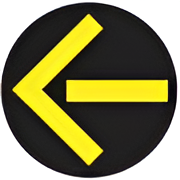
A yellow arrow used to control turns from a specific traffic lane:
A) is never used as a traffic signal.
B) is warning the traffic a green arrow is about to be shown.
C) means the same as a circular yellow light for the lane of traffic indicated by the arrow.
D) means that you may go in the direction indicated by the arrow.
27.
Drivers should always look carefully for motorcycles before changing lanes because:
A) motorcycles are not permitted to share traffic lanes.
B) motorcycles are smaller and harder to see.
C) motorcycles always have the right-of-way at intersections.
D) All of the above.
28.
Yellow diamond warning that pedestrians may be crossing ahead. Exercise caution and yield.
This road sign means:
A) Pedestrian crossing
B) School zone
C) School crossing
29.
What should you do when another car is trying to pass you?
A) yield the right-of-way to the other driver.
B) speed up.
C) After checking for oncoming traffic, adjust your speed to allow safe passing.
D) pull off the road to allow safe passing.
30.
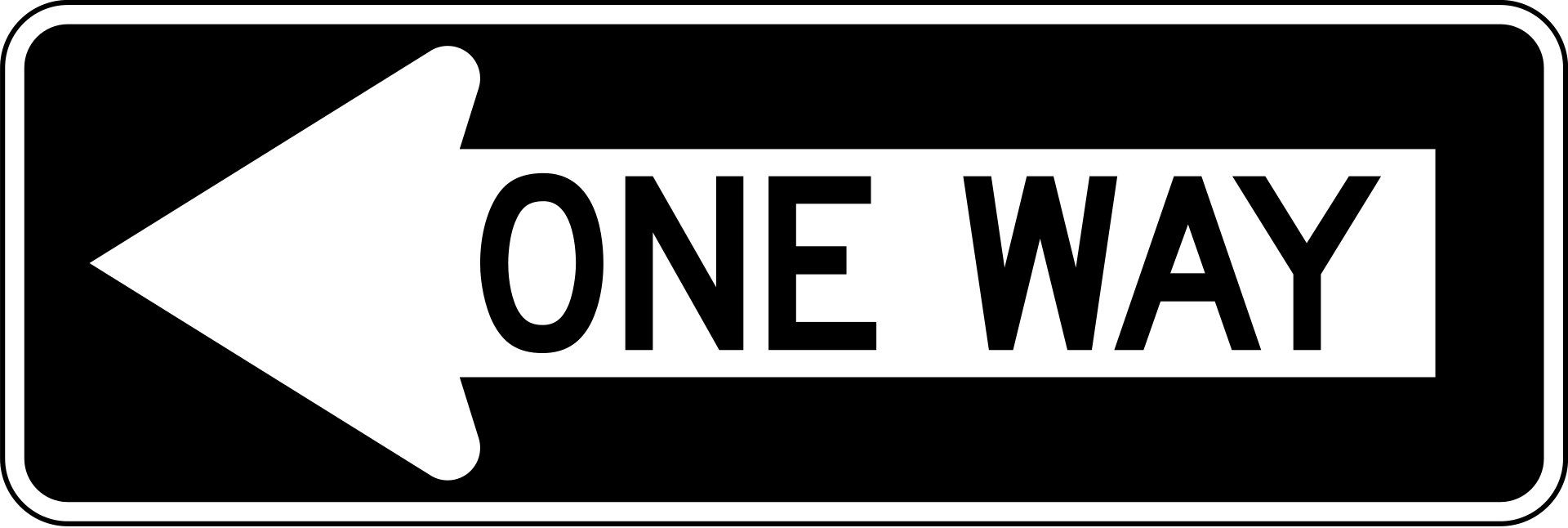
Traffic flows only in the direction indicated by the arrow. Never drive in the opposing direction.
This road sign means:
A) Traffic flows only in the direction of the arrow
B) Turn right or left
C) No right turn
D) Sharp curve ahead
31.
What is the only effective method to reduce your BAC?
A) Eating before or while you drink.
B) Not drinking over a period of time.
C) Drinking coffee.
32.
When passing you should NOT:
A) leave less than 4 feet of space between your vehicle and the vehicle you are passing.
B) signal left to let others know that you will be pulling out.
C) look in your rearview mirrors and glance over your shoulder before pulling out to pass.
D) go far enough past the vehicle you are passing so that you can see the vehicle in your inside rearview mirror.
33.
Defensive driving is a driving technique in which you as a driver:
A) identify dangerous driving situations and take action to avoid an accident.
B) defend against poor drivers by getting ahead of them in traffic.
C) defend against accidents by driving your vehicle fast enough to stay ahead of traffic congestion.
D) defend yourself against accidents by following close to the vehicle ahead.
34.
When you approach a railroad crossing without flashing warning signals or crossing gates, you should:
A) always stop.
B) cross the tracks as slowly as possible.
C) yield to all trains at the crossing.
D) speed up to beat the train.
35.
Unprotected left turns are allowed. You may turn left after yielding to oncoming traffic and pedestrians crossing the street.
What does a yellow arrow signal mean?
A) The same as the yellow light, but applies only to movement in the direction of the arrow.
B) The same as a green light.
C) Vehicles moving in all directions must stop if they can. The light will soon be red.
36.
Because many crashes happen when a vehicle is turning left, drivers should:
A) slow down gradually while checking the rear view mirror.
B) move into the left lane of a multilane road.
C) yield to oncoming vehicles, bicyclists and pedestrians.
D) All of the above.
37.
When you are involved in an accident and your vehicle is blocking traffic, you should:
A) not move your vehicle under any circumstances.
B) wait for the police to arrive before moving your vehicle.
C) move your vehicle off of the travelled portion of the roadway, if possible.
D) None of the above.
38.
If you are continually being passed on the right, you should:
A) move into the right lane and allow other vehicles to pass you on the left.
B) move into the left lane and allow other vehicles to pass you on the right.
C) increase your speed immediately.
39.
If the entrance lane is too short to allow acceleration to highway speed, you should:
A) go to the next entrance ramp.
B) stop and wait for a large gap in traffic, then enter the highway and accelerate quickly.
C) merge into highway traffic as soon as possible.
40.
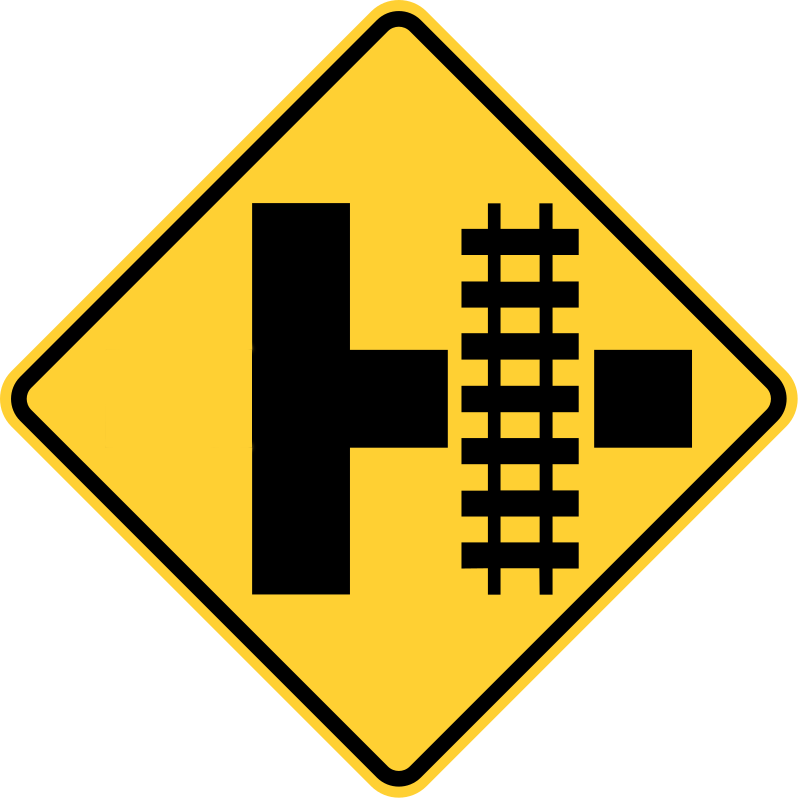
Four-way intersection ahead. Be prepared to yield right-of-way according to traffic control devices.
What does this sign indicate?
A) Parallel railroad crossing (side road)
B) Low ground clearance railroad crossing
C) Parallel railroad crossing (crossroad)
ANSWER KEY Check answers after completing the test.
1 D
2 D
3 C
4 B
5 D
6 C
7 C
8 C
9 A
10 C
11 A
12 C
13 C
14 C
15 C
16 B
17 C
18 A
19 A
20 C
21 A
22 D
23 A
24 C
25 B
26 C
27 B
28 A
29 C
30 A
31 B
32 A
33 A
34 C
35 A
36 D
37 C
38 A
39 B
40 A