B)pass a school bus with flashing red lights and the stop sign arm extended.
C)pass within 100 feet of a railroad crossing.
D)All of the above.
2.
What should you do if your brakes fail?
A)Hook your shoe under the pedal and see if you can free it.
B)Turn on your cruise control.
C)Try pumping the brake pedal to increase pressure.
3.
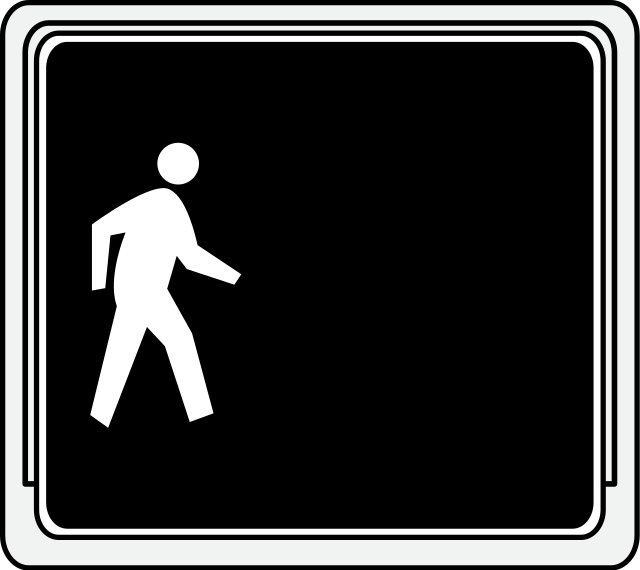
What does the pictured signal indicate?
A)A pedestrian may begin crossing the street.
B)Pedestrians may turn right.
C)A pedestrian may not not begin crossing the street.
4.
Drivers convicted of fleeing in order to avoid arrest for the violation of any Nebraska law can have their license revoked.
A)False
B)True
5.
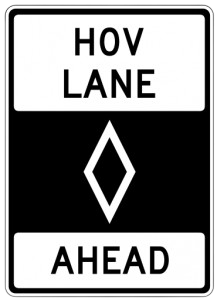
This road sign indicates that:
A)a lane is reserved for certain purposes or certain vehicles.
B)buses and car pools may not travel in the restricted lane.
C)vehicles cannot go straight ahead. Cars must turn either to the right or left.
6.
This sign warns drivers that:
A)they must turn either to the right or left.
B)there is a double curve ahead.
C)there is a winding road ahead.
7.
A broken white line:
A)means passing or crossing is prohibited in that lane.
B)separates two lanes traveling in the same direction.
C)marks the right edge of the roadway.
8.
If driving in foggy weather, drivers should turn on their high-beams to increase the field of vision.
A)True
B)False
9.
To reduce their chances of colliding with an animal, drivers should:
A)scan the sides of the road to watch for the reflection of vehicle headlights in the eyes of animals.
B)look well down the road and far off to each side.
C)All of the above.
10.
BAC is:
A)the acronym for Beer ACcumulation.
B)the number of ounces of alcohol in your blood.
C)the percentage of alcohol in your blood.
11.
When driving on the interstate, drivers should use the left lane:
A)when passing another vehicle.
B)to enter the exit ramp.
C)when driving faster than the speed limit.
12.
When entering an interstate highway, you should check for a gap in traffic in the nearest lane, adjust your speed to match the flow of traffic, signal and:
A)wait for the lane to be clear.
B)merge into that gap when safe.
C)slow down gradually.
13.
The following is true regarding air bags:
A)the driver of a vehicle equipped with air bags should not wear a safety belt.
B)children age 6 and under should always sit in the front seat of a car that is equipped with air bags.
C)when combined with seat belts, air bags provide improved crash protection.
14.
This road sign means:
A)Cars in right lane must slow down
B)Merging traffic ahead
C)Pass only in the right lane
D)No left turn
15.
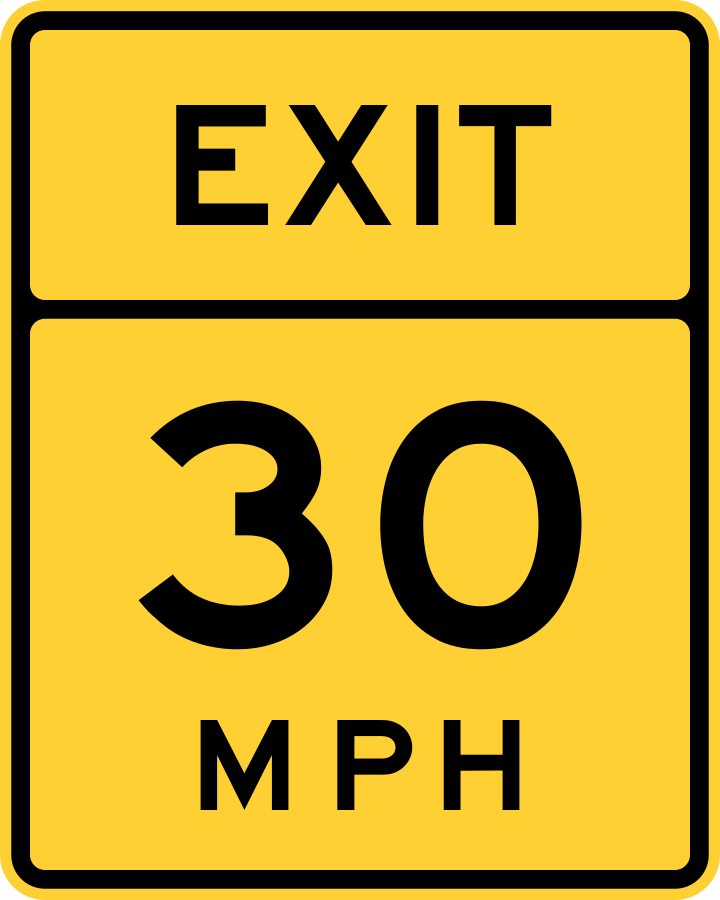
The sign in the picture:
A)shows the highest speed drivers can travel at the exit of the intersection.
B)is used to advise motorists of the appropriate ramp speed at the highway exit point.
C)indicates the minimum ramp speed at the highway exit point.
16.
BAC is expressed in:
A)percentage of alcohol to blood.
B)percentage of blood to alcohol.
C)ounces of alcohol in your blood.
17.
Unless otherwise posted, the speed limit on rural roadways is:
A)45 MPH
B)35 MPH
C)40 MPH
D)50 MPH
18.
Before changing lanes or attempting to pass another vehicle, you should:
A)signal your intention before changing lanes.
B)check your blind spots and, mirrors.
C)All of the above.
19.
As you drive on the expressway, make sure:
A)you cut off vehicles behind you when you change lanes.
B)to signal all lane changes.
C)your directional signal goes off before you change lanes.
20.
This sign means:
A)The road will curve to the right, then to the left.
B)Road slippery when wet. Drive slowly.
C)Winding road ahead. Drive with caution.
21.
This road sign means:
A)Pavement ends
B)Winding road
C)Double curve ahead
22.
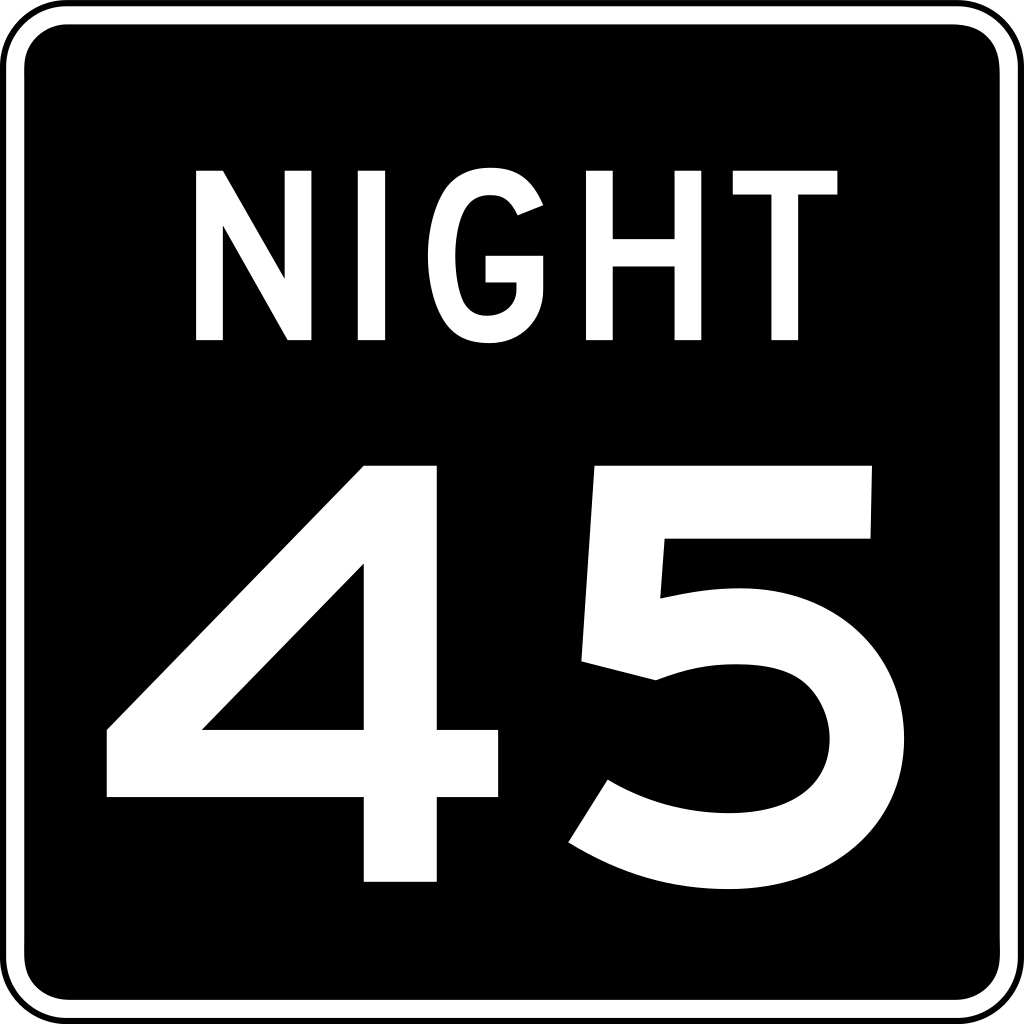
This sign means:
A)Take route 45 if you are driving at night.
B)The night-time speed limit is 45 MPH.
C)The minimum speed limit is 45 MPH.
23.
When they see this sign, drivers should:
A)increase their speed and keep well to the right.
B)slow down and keep well to the right.
C)slow down and keep well to the left.
24.
Your car stalls on the tracks at a railroad crossing, and a collision with a train is imminent. After getting yourself and your passengers out of the car, you should:
A)run toward the train but stay off the tracks.
B)signal the train to stop.
C)cross the tracks.
25.
This sign means:
A)You can only park between 8:30 AM and 5:30 PM.
B)Parking is not allowed at 8:30 AM and at 5:30 PM
C)No parking between 8:30 AM and 5:30 PM.
ANSWER KEYCheck answers after completing the test.