DriveQuiz drivequiz.com

ND DMV PERMİT PRACTİCE TEST 5

North Dakota
Duration: 23 min
|
Questions: 25
Student Name:
Date:
Correct:      Incorrect:      Score:      
1.

Indicates that traffic is permitted to pass on either the left or the right side of an island, median, or obstruction.
This road sign tells drivers that:
A) they must change lane immediately.
B) they must turn either to the right or left.
C) the one-way street or roadway ahead ends.
D) None of the above.
2.
You may pass another vehicle:
A) when there is a solid yellow line on your side.
B) on a curve or a hill.
C) on the shoulder of the highway.
D) None of the above.
3.
It is important for drivers to know that trucks:
A) are easier for the driver to operate.
B) require more space for turning movements.
C) take longer than cars to stop.
D) require less time to pass on an incline than cars.
4.
Drivers must be prepared for anything coming up in the road ahead. They should:
A) scan the road for traffic conditions and possible hazards.
B) drive with the right foot resting lightly on the brake pedal.
C) stare straight ahead at all times.
D) maintain focus toward the left of the road.
5.
When the pavement is marked with a double yellow line, drivers may pass other vehicles:
A) None of the other answers is correct.
B) only if there are no oncoming vehicles.
C) only if the vehicle ahead is driving 10 mph or more under the speed limit.
D) Never.
6.
Prohibits drivers from making a 180-degree turn to travel in the opposite direction at this intersection or stretch of road.
This road sign means:
A) Left turns are not allowed where this sign is displayed.
B) Drivers cannot make a complete turn to go in the opposite direction.
C) Vehicles turning left must make a U-turn.
7.
If your vehicle’s right wheels leave the pavement, you should:
A) maintain your current speed to gain better traction.
B) build up brake pressure by pumping the brake pedal several times.
C) take your foot off the gas and when you are slowed down, ease back on the road when it is safe to do so.
D) immediately come to a complete stop.
8.
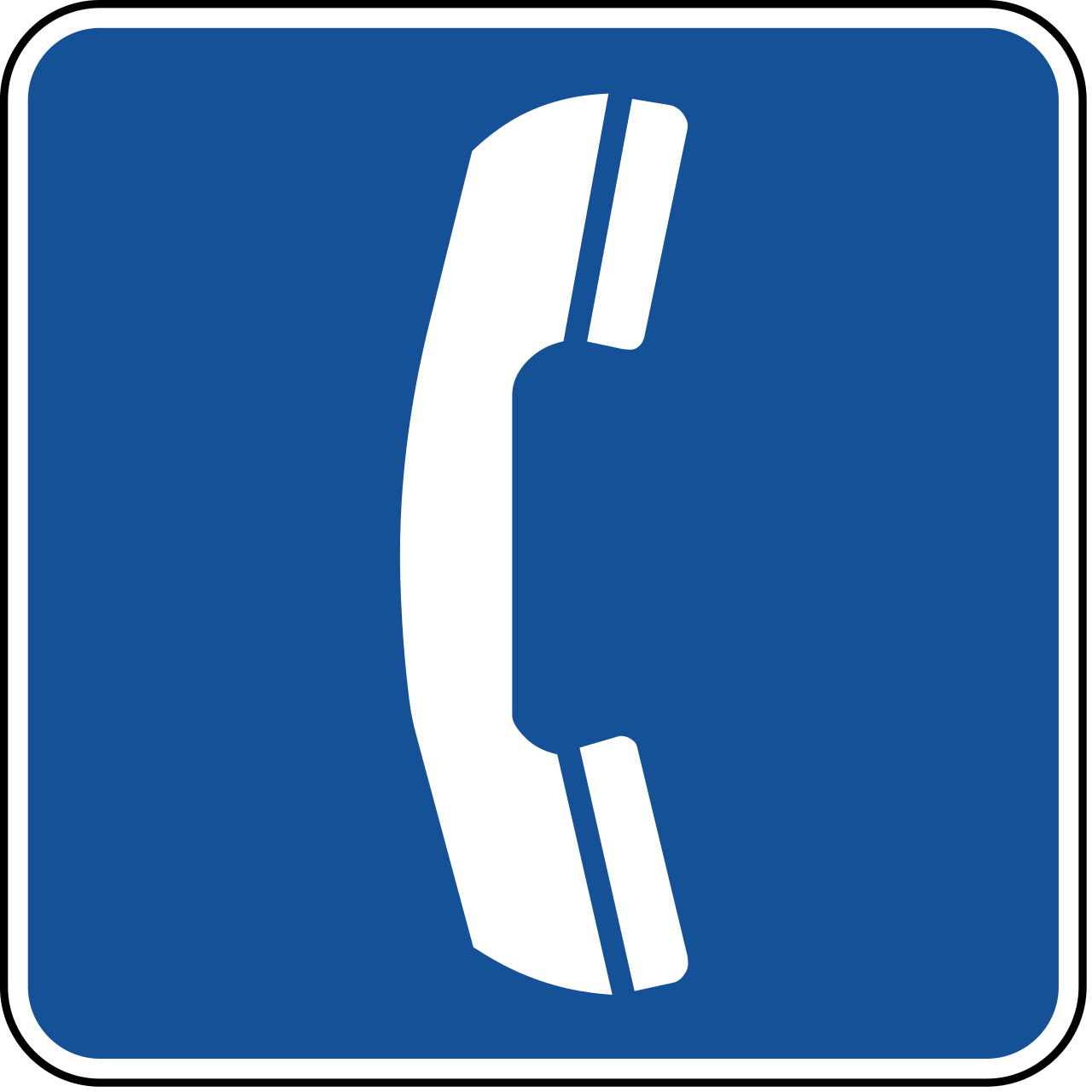
Blue motorist service sign indicating the availability of a public emergency telephone along the highway.
This sign indicates:
A) Phone service ahead
B) Emergency line available
C) Cell phone shop ahead
9.
When changing lanes on a highway, drivers should:
A) glance over their shoulder to check their blind spots.
B) signal the lane change.
C) check the rearview and outside mirrors.
D) All of the above.
10.
The effects of alcohol on driving include:
A) None of the above.
B) Improved coordination
C) Better reflexes
D) Improved judgement
11.
Warns of two consecutive curves in opposite directions (e.g., curves right then left). Slow down to maintain control.
When you see this sign you should:
A) increase your speed and try to pass other vehicles.
B) slow your speed and be prepared to stop.
C) slow your speed and do not pass other vehicles.
12.
When in a motor vehicle on a highway, it is:
A) illegal to drink from, but permissible to transport, open containers of alcohol in the passenger compartment.
B) illegal to possess an open container of alcohol in the passenger compartment.
C) acceptable to drink alcoholic beverages if you are not driving.
D) permissible to drink a moderate amount of alcohol when driving with a passenger.
13.
From top to bottom, traffic lights are:
A) green, red and yellow.
B) green, yellow and red.
C) red, yellow and green.
14.
A red flashing signal means the same as a:
A) stop sign.
B) yield sign.
C) caution sign.
D) red light.
15.
Look over your shoulder to check your blind spot:
A) when changing lanes.
B) when pulling to the right side of the road or away from a curb.
C) on all right and left turns.
D) All of the above.
16.
When other vehicles are approaching an uncontrolled intersection at approximately the same time, you should:
A) maintain your speed and proceed through the intersection.
B) come to a complete stop and wait until there are no vehicles at the intersection.
C) watch for vehicles coming from the right and yield the right-of-way, then proceed when safe.
D) increase your speed and get through the intersection.
17.
The bridge ahead has narrower lanes or shoulders than the preceding road. Use caution when meeting oncoming vehicles.
This road sign means:
A) Low clearance
B) Construction site ahead
C) Pavement is narrowing
D) Narrow bridge ahead
18.
Never make a U-turn from:
A) the lane you’re in.
B) the right lane.
C) the left part of the lane nearest to the centerline of the roadway.
19.
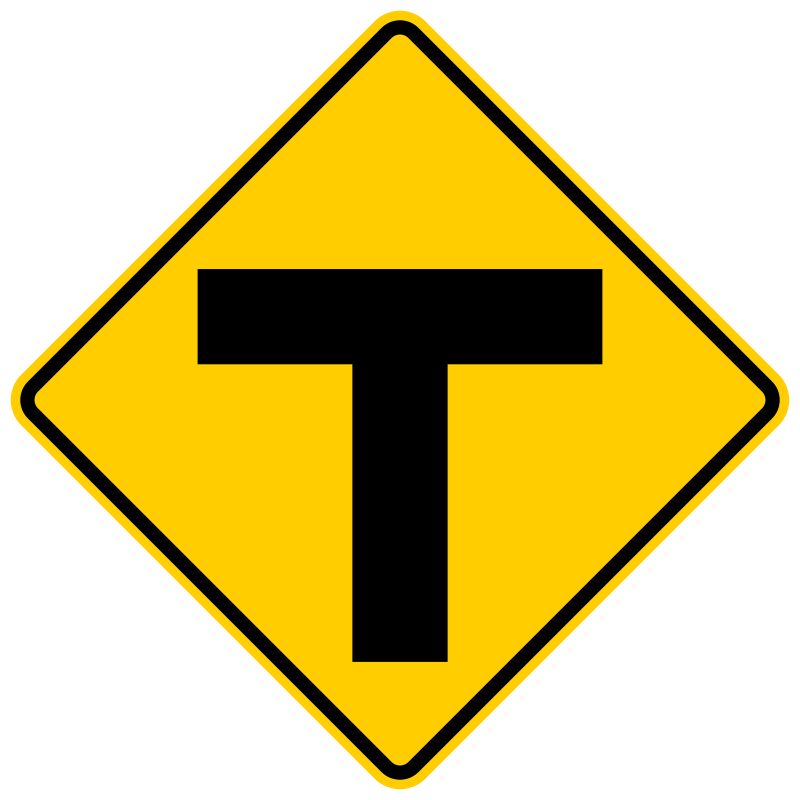
The roadway ends ahead at a T-junction. You must turn either left or right after yielding right-of-way to traffic on the cross street.
This road sign means:
A) Side road
B) T-intersection ahead
C) Keep right
D) Left lane must turn left
20.
When driving on slippery roads, drivers should:
A) increase their following distance.
B) avoid crossing bridges or intersections.
C) brake harder than usual.
D) change lanes quickly.
21.
Flashing Upraised Hand signal indicates pedestrians should finish crossing if already in the crosswalk, but not start crossing.
A pedestrian in the crosswalk when the 'DON’T WALK' signal begins flashing must:
A) stop immediately.
B) go back and wait the “WALK” light
C) finish crossing the street.
22.
Designated school crosswalk location. You must yield to all schoolchildren and pedestrians in the crossing.
When they approach this sign, drivers must:
A) slow down and watch for children crossing the road.
B) obey signals from crossing guards.
C) stop if necessary.
D) All of the above.
23.
The amount of space you need to cross traffic depends on the:
A) road and weather conditions and oncoming traffic.
B) number of cars behind you.
C) presence of a yield sign.
D) number of cars in front of you.
24.
Keeping a space cushion between you and the other vehicles around you is important because it:
A) gives you time to react to situations.
B) prevents distractions from other vehicles.
C) keeps other drivers alert.
D) keeps traffic flowing at a safe pace.
25.
What is the meaning of blue traffic signs?
A) A blue background indicates a regulatory sign.
B) They give directional information.
C) Blue indicates road user services.
ANSWER KEY Check answers after completing the test.
1 B
2 D
3 C
4 A
5 D
6 B
7 C
8 A
9 D
10 A
11 C
12 B
13 C
14 A
15 D
16 C
17 D
18 B
19 B
20 A
21 C
22 D
23 A
24 A
25 C