DriveQuiz drivequiz.com

NC DMV PERMİT PRACTİCE TEST 8

North Carolina
Duration: 34 min
|
Questions: 37
Student Name:
Date:
Correct:      Incorrect:      Score:      
1.
Slow down and give right-of-way to all oncoming vehicles, cyclists, and pedestrians. Stop completely if necessary before entering the intersection or merging.
This road sign means:
A) You must come to a complete stop
B) Do not enter
C) Slow down, stop if necessary and yield the right-of-way
D) Merging traffic
2.
All approaching traffic must stop completely. The first vehicle to reach the intersection and stop has right-of-way; if two vehicles arrive simultaneously, the vehicle on the right goes first.
A four-way stop sign means:
A) traffic from all four directions must stop.
B) if two vehicles reach the intersection at the same time, the driver on the left yields to the driver on the right.
C) All of the above.
3.
A steep downhill grade is ahead. Trucks and heavy vehicles should downshift to a lower gear to prevent brake overheating.
This road sign means:
A) Merging traffic
B) Steep grade ahead
C) Intersection ahead
4.
Indicates a two-way left-turn lane in the center of the road. Must only be used to make left turns or U-turns (where permitted), not for regular travel or passing.
This sign means:
A) The center lane is shared for left turns.
B) Left turns in both directions of travel are not permitted.
C) Vehicles may only turn left.
5.
Another road crosses the highway ahead. Look left and right for crossing or entering vehicles.
This road sign means:
A) Crossroad
B) Hospital parking ahead
C) Merge
6.
Indicates a series of three or more consecutive sharp turns or curves ahead. Reduce speed and maintain lane control.
This sign warns drivers that:
A) they must turn either to the right or left.
B) there is a double curve ahead.
C) there is a winding road ahead.
7.
The road curves gradually to the right ahead. Reduce speed before entering the curve.
This road sign means:
A) Wrong Way
B) Merging Traffic
C) Curve ahead
8.
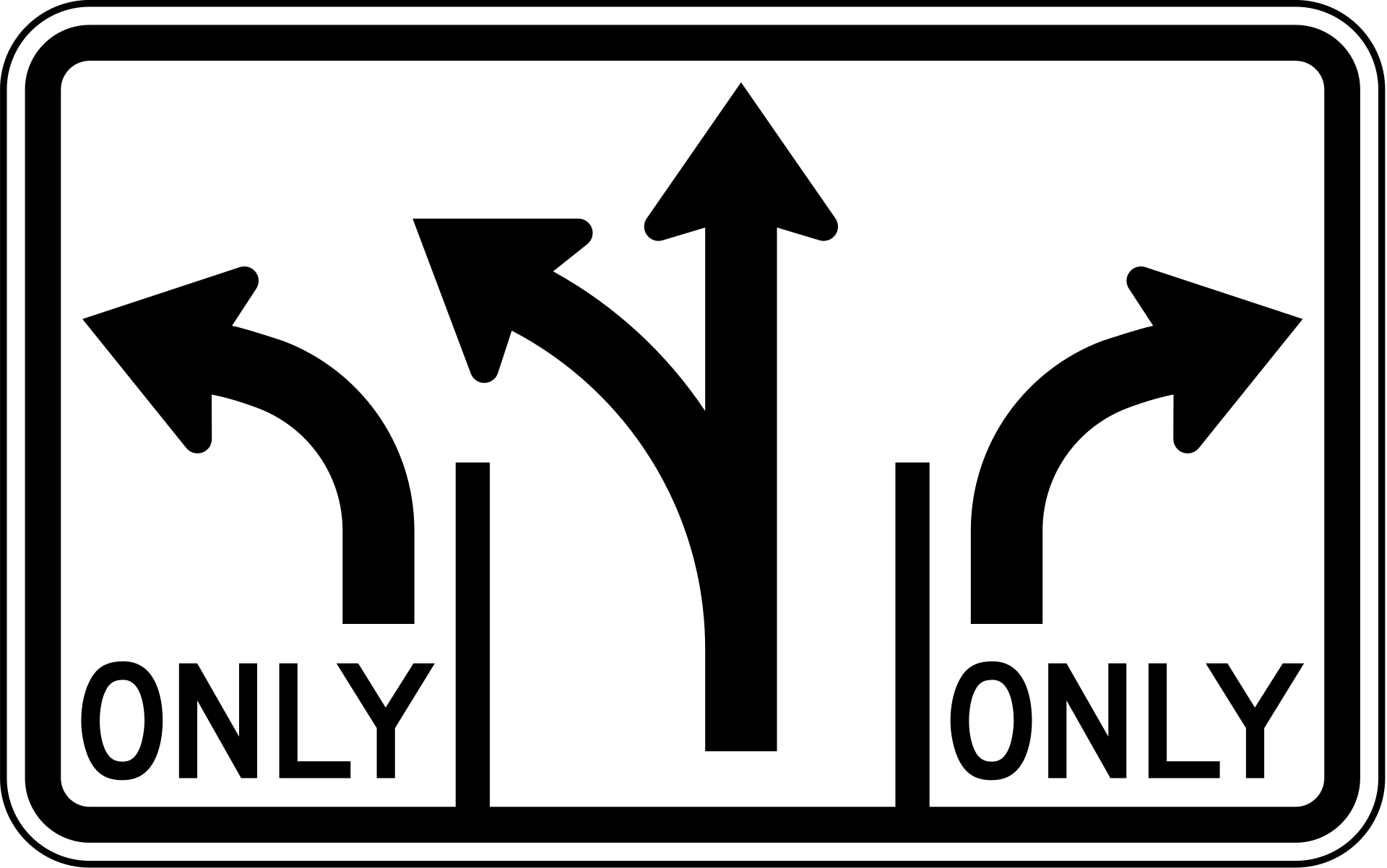
Warns of a traffic signal ahead that may not yet be visible due to a curve or hill. Be prepared to slow down and stop if the light changes.
This regulatory sign tells drivers that:
A) traffic in the left lane must turn left at the intersection ahead.
B) all vehicles must turn left immediately.
C) traffic in the right lane must go straight.
9.
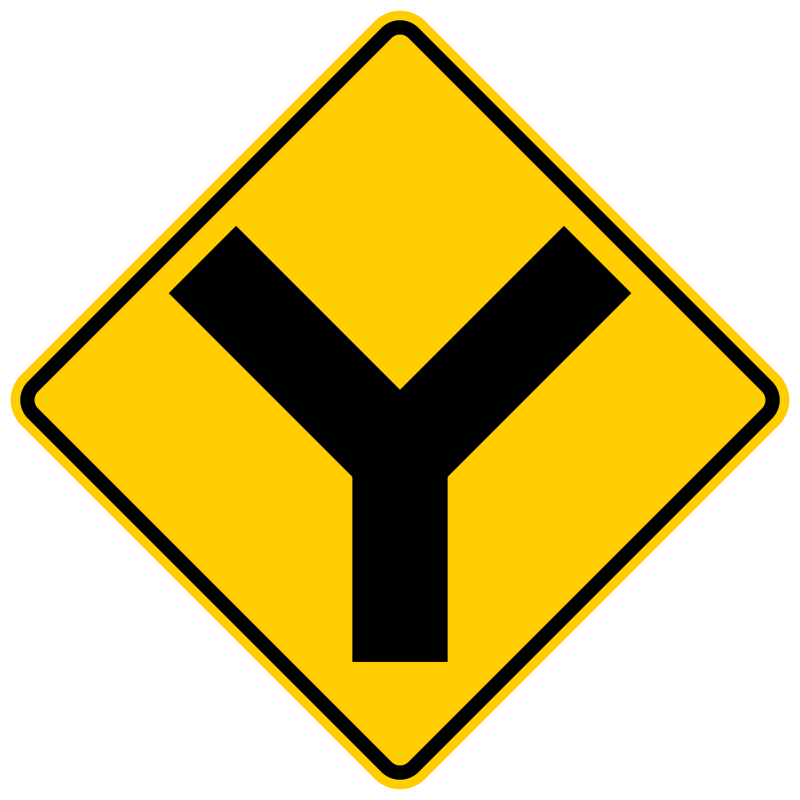
The road splits into a Y configuration ahead. Bear left or right depending on your destination and yield where marked.
This road sign means:
A) The road ends ahead
B) A four-way intersection is ahead
C) “Y” intersection ahead
D) A road joins from the right
10.
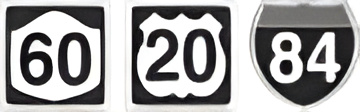
Interstate or State Route numbered highway marker used for route navigation and guide information.
These are:
A) route signs.
B) miles-left signs.
C) speed limit signs.
11.
Designated school crosswalk location. You must yield to all schoolchildren and pedestrians in the crossing.
When they approach this sign, drivers must:
A) slow down and watch for children crossing the road.
B) obey signals from crossing guards.
C) stop if necessary.
D) All of the above.
12.
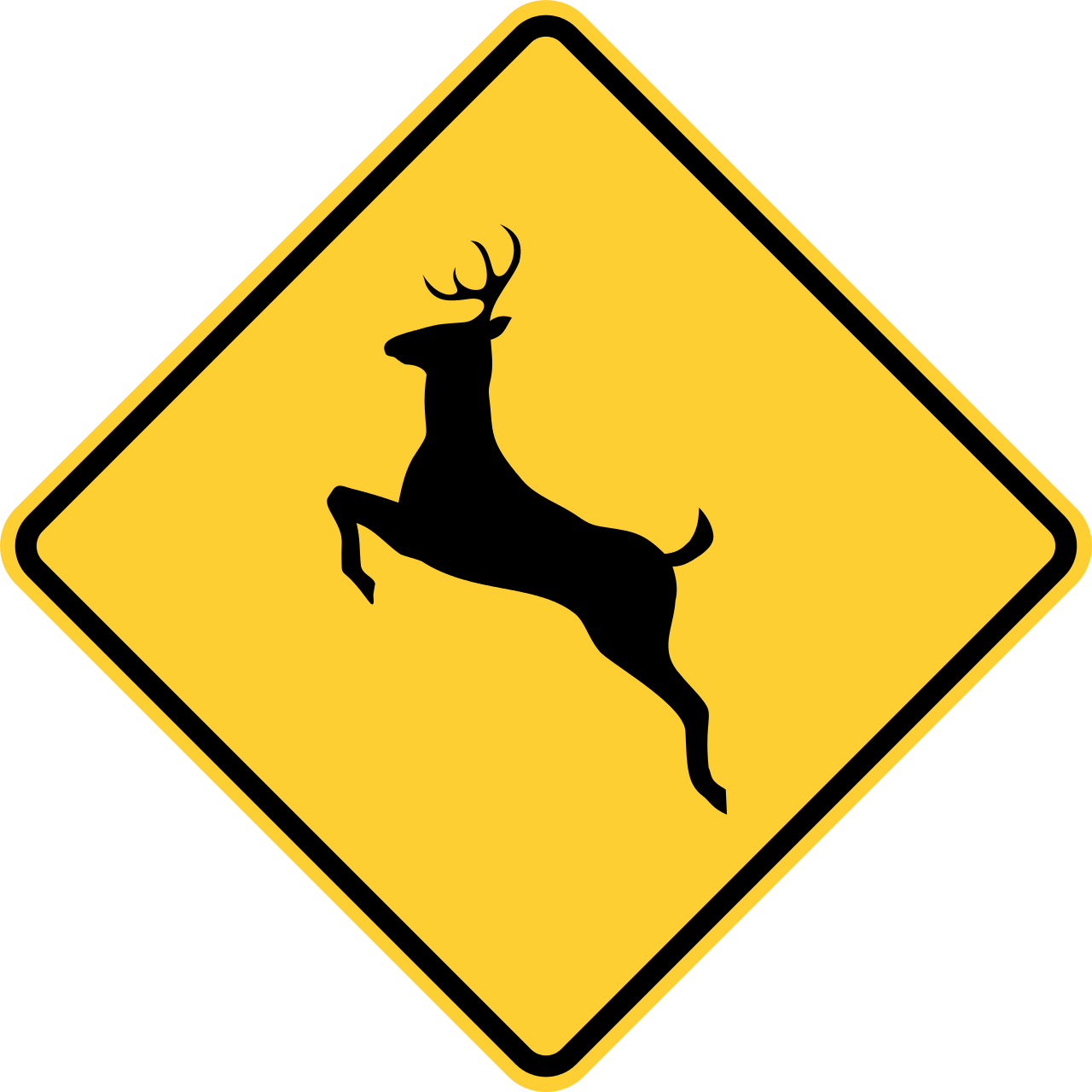
Wildlife and deer frequently cross in this area, especially at dawn and dusk. Scan the roadside and be prepared to brake safely.
When they see this road sign, drivers should:
A) drive carefully because the animal pictured on the sign is extremely rare in the area.
B) watch for this species crossing the road.
C) park in the zoo area.
13.
When the driver behind you wants to pass, you should:
A) change lanes.
B) speed up.
C) use your brake lights.
D) slow down to allow room for the other driver to complete the pass safely.
14.
If you get 12 points within 3 years:
A) an updated driver's handbook is sent, and you must study it within 2 weeks of receipt.
B) you may lose your license.
C) a warning letter is sent.
D) None of the above.
15.
If your gas pedal is stuck, you should:
A) hook your shoe under the pedal and see if you can free it. If not, shift into neutral and use the brake to slow your vehicle and get off the road.
B) ease your foot off the gas pedal and brake gently.
C) turn off the ignition if your vehicle has power steering.
16.
When you prepare to make a left turn from a one-way road into a two-way road, you must:
A) enter the two-way road to the left of its center line.
B) approach the turn in the right lane or from the right side of a single lane.
C) approach the turn in the left lane or from the left side of a single lane.
17.
Drivers should allow a larger space cushion when stopping:
A) at a stop sign.
B) on an up-hill.
C) at an intersection.
D) at a yield sign.
18.
When driving on a wet road:
A) as you drive faster, your tires may lose traction.
B) you must be aware that the pavement gets even more slippery when it's been raining for long periods of time.
C) you should follow the vehicle ahead of you more closely.
D) as you decrease your speed, the road becomes more slippery.
19.
Roads are most slippery:
A) just before it rains.
B) when it stops raining.
C) when it first starts to rain.
20.
What is the purpose of minimum speed limits?
A) To keep a smooth traffic flow.
B) To halt the traffic flow.
C) To allow emergency vehicles with red flashing lights to safely pass other vehicles.
21.
Before crossing any railroad tracks, you must:
A) look and listen for trains.
B) make sure there is room for your vehicle on the other side.
C) All of the above.
22.
Which of the following must you obey over the others?
A) A flashing red light.
B) A stop sign.
C) A steady red light.
D) A police officer.
23.
Does a vehicle prepared to enter a traffic circle or rotary have right-of-way over vehicles in the circle?
A) Yes, but only if they are entering the rotary from the right lane.
B) No. Vehicles already in the circle have the right-of-way.
C) Only if the light is green.
D) Yes.
24.
To avoid becoming an aggressive driver, you should:
A) Adjust your schedule to drive during times with the most highway traffic.
B) Allow enough travel time to reach your destination on schedule.
C) Listen to heavy metal music.
25.
From top to bottom, traffic lights are:
A) green, red and yellow.
B) green, yellow and red.
C) red, yellow and green.
26.
If the entrance lane is too short to allow acceleration to highway speed, you should:
A) go to the next entrance ramp.
B) stop and wait for a large gap in traffic, then enter the highway and accelerate quickly.
C) merge into highway traffic as soon as possible.
27.
What do flashing red lights on a school bus indicate?
A) The bus is stopped to load or discharge passengers.
B) Traffic that approaches from either direction may proceed.
C) The bus is about to stop.
28.
If your car goes into water, you should:
A) wait for water to rush in and let it out in small breaths through your nose.
B) call the fire department immediately.
C) remove yourself before it starts to sink.
29.
Your BAC depends on:
A) how much alcohol you drink.
B) how much time passes between drinks.
C) All of the above.
30.
Where there is no bicycle lane, where on the road must a bicyclist ride?
A) on the left shoulder of the road.
B) near the right curb or edge of the road.
C) near the left edge of the road.
31.
After you stop for a school bus, you must:
A) turn off your engine.
B) pass the bus before the red lights stop flashing.
C) None of the above.
32.
If another vehicle passes you on the left, you must:
A) increase your speed slightly and keep to the right.
B) decrease your speed, then pull over to the right and stop.
C) decrease your speed slightly and keep to the right.
33.
What should you do as you prepare to turn right at an intersection?
A) Honk your horn.
B) Yield to bicyclists coming from the opposite direction.
C) Signal your turn, check for bicyclists, and do not turn directly in front of a bicyclist.
34.
When driving in heavy rain, drivers should use:
A) parking lights.
B) low beam headlights.
C) high beam headlights.
35.
To avoid being in a truck driver’s blind spot, you should:
A) never pass the truck and put your headlights on.
B) avoid driving on either side of the truck and don’t tailgate.
C) flash your lights.
D) sound your horn.
36.
Traffic lights are normally ____________ from the top to bottom or left to right.
A) red, green and yellow
B) green, yellow and red
C) red, yellow and green
37.
You should use turn signals to indicate your intention with sufficient time to allow other drivers to see the signal:
A) if it’s raining.
B) AFTER you move.
C) BEFORE you move.
ANSWER KEY Check answers after completing the test.
1 C
2 C
3 B
4 A
5 A
6 C
7 C
8 A
9 C
10 A
11 D
12 B
13 D
14 B
15 A
16 C
17 B
18 A
19 C
20 A
21 C
22 D
23 B
24 B
25 C
26 B
27 A
28 C
29 C
30 B
31 C
32 C
33 C
34 B
35 B
36 C
37 C