DriveQuiz drivequiz.com

NC DMV PERMİT PRACTİCE TEST 7

North Carolina
Duration: 34 min
|
Questions: 37
Student Name:
Date:
Correct:      Incorrect:      Score:      
1.
The octagonal (8-sided) shape is exclusively reserved for STOP signs so drivers can identify it immediately even in poor visibility or from behind.
The octagonal shape is used:
A) for stop signs and railroad advance warning signs.
B) exclusively for stop signs.
C) to warn drivers of existing or possible hazards on roadways.
2.
The road makes a sharp 90-degree right turn ahead. Slow down considerably before entering the turn.
This sign warns drivers of:
A) a side road.
B) a sharp turn.
C) a cross road.
3.
Warns drivers that two separate lanes moving in the same direction are merging into one. Drivers in the right lane must adjust speed and merge smoothly with existing traffic.
This sign indicates:
A) Winding road
B) Merging traffic
C) Divided highway ends
4.
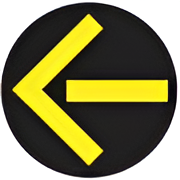
Unprotected left turns are allowed. You may turn left after yielding to oncoming traffic and pedestrians crossing the street.
What does a yellow arrow signal mean?
A) The same as the yellow light, but applies only to movement in the direction of the arrow.
B) The same as a green light.
C) Vehicles moving in all directions must stop if they can. The light will soon be red.
5.
A steep downhill grade is ahead. Trucks and heavy vehicles should downshift to a lower gear to prevent brake overheating.
When they see this sign, drivers should:
A) be ready to brake sharply and stop.
B) be ready to shift to lower gear.
C) yield to trucks coming from the hill on the right.
6.
Slower-moving vehicles must stay in the right-hand lane to allow faster traffic to pass safely on multi-lane highways.
This road sign is:
A) a speed reduction sign.
B) a warning sign.
C) a regulatory sign.
7.
Right turns are strictly prohibited at this intersection under all circumstances.
This road sign means:
A) No left turn
B) No right turn
C) No U-turns
8.
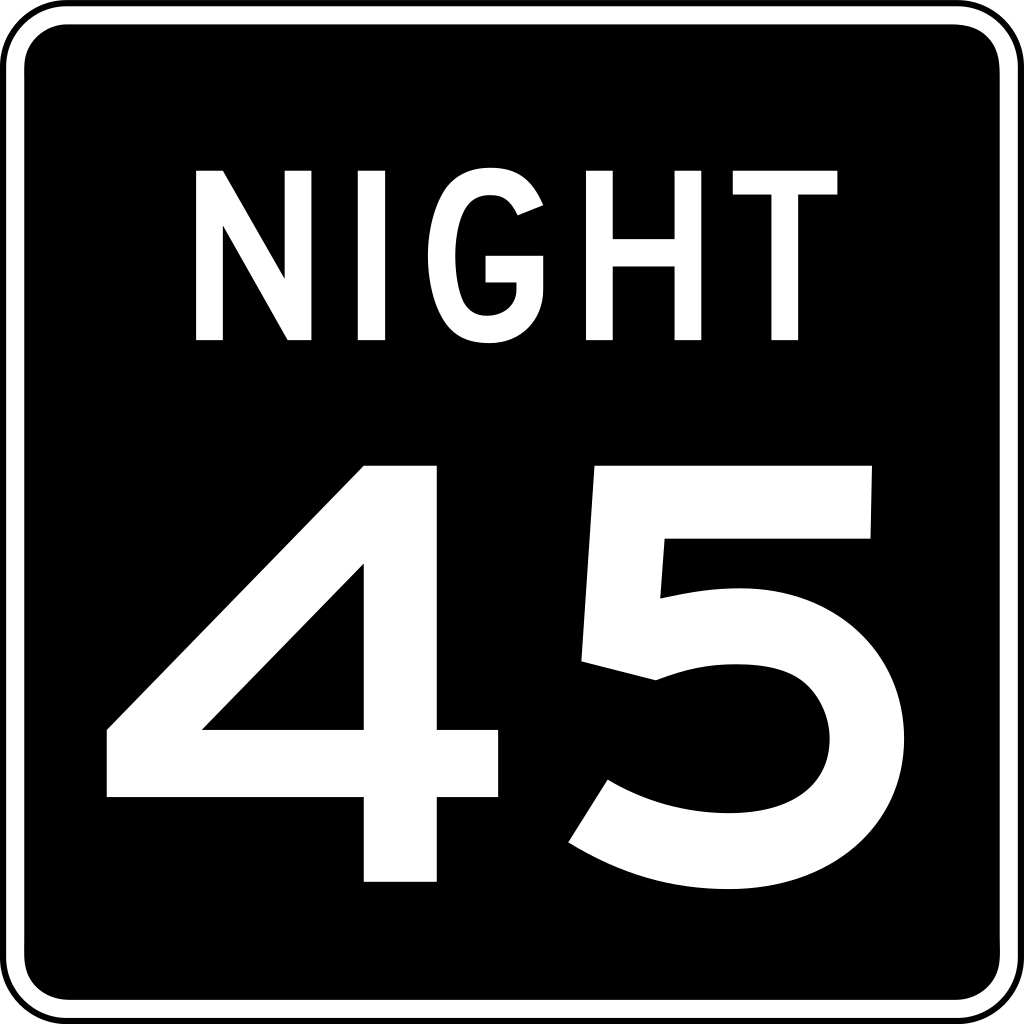
Indicates a lower maximum legal speed limit that applies only during nighttime hours for safety.
This sign means:
A) Take route 45 if you are driving at night.
B) The night-time speed limit is 45 MPH.
C) The minimum speed limit is 45 MPH.
9.
Warns of an extremely sharp 180-degree curve ahead. Decelerate significantly before entering the turn.
This sign means:
A) Hairpin corner ahead.
B) Warning: U-turn ahead.
C) Sharp right turn ahead.
10.
Parking, standing, or stopping is prohibited at all times in this designated zone except for emergency vehicles.
This sign means:
A) U-turns are not allowed.
B) Parking is not allowed.
C) No parking on pavement.
11.
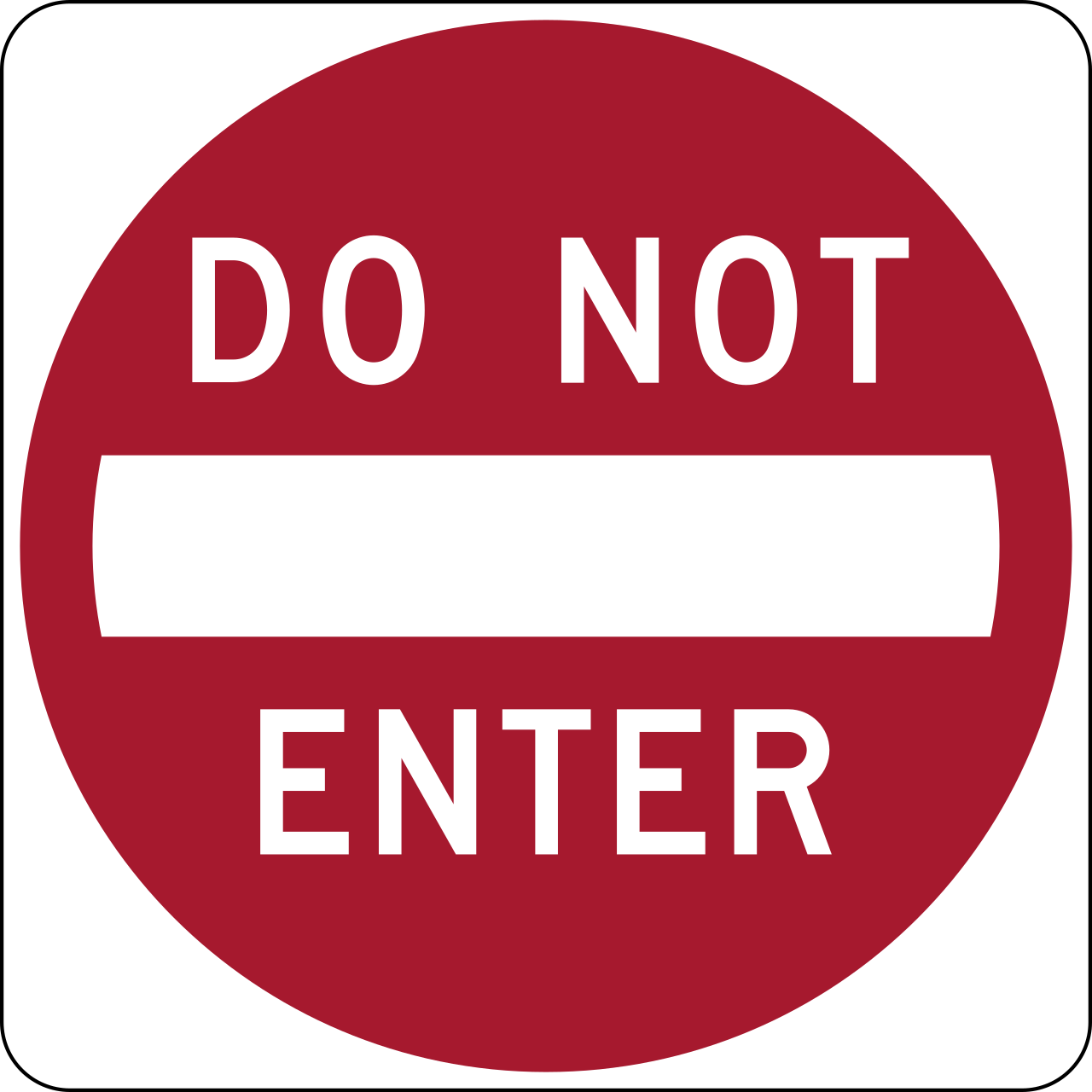
Marks a roadway or ramp where vehicular traffic is strictly forbidden to enter from your direction (such as freeway off-ramps or one-way streets).
This sign indicates:
A) that you must not drive past this sign.
B) that you must yield the right-of-way.
C) the entrance to a construction site.
D) the entrance to a dead-end street.
12.
Parking is permitted only during specified hours and days as posted on the sign. Vehicles parked outside these hours are subject to ticketing or towing.
It's 10 AM. This sign tells you that:
A) you are allowed to park until 5:30 PM.
B) you must display a special permit in order to park here.
C) you are not allowed to park here.
13.
Where must you position your vehicle when you prepare to make a left turn from a two-way roadway into a one-way roadway?
A) As far to the right as possible.
B) On the right curb.
C) As close as possible to the center line.
14.
What is the first thing to do when you make a three-point turn?
A) Signal with your left turn signal, then check carefully for traffic coming toward you.
B) Signal with your right turn signal, then pull over to the right and stop.
C) Turn left, go across the road so you come to a stop while you face the edge of the road.
15.
If you are continually being passed on the right, you should:
A) move into the right lane and allow other vehicles to pass you on the left.
B) move into the left lane and allow other vehicles to pass you on the right.
C) increase your speed immediately.
16.
Before turning, you should:
A) increase your speed.
B) sound your horn to alert the other drivers.
C) give the proper turn signal.
D) change lanes.
17.
Double solid lines on the roadway mean:
A) you cannot pass.
B) you can not go across the lines except to turn left to enter or leave the highway.
C) All of the above.
18.
Drive below the posted speed limit when:
A) anything makes conditions less than perfect.
B) you are on a four lane road.
C) entering a highway where there are other cars.
D) others drive below the speed limit.
19.
Drivers may continue carefully through a yellow light if:
A) there are no pedestrians crossing.
B) they are turning right.
C) they already are within the intersection.
D) an emergency vehicle is crossing your lane.
20.
Lanes of traffic moving in the same direction are divided by ____ lines.
A) orange
B) yellow
C) black
D) white
21.
To check your blind spot before changing lanes:
A) look into the right side mirror.
B) look into the rearview mirror.
C) look over your shoulder in the direction you plan to move.
D) look into the left side mirror.
22.
Before backing up, you should:
A) get off the car to see if it is clear to proceed.
B) rely on your mirrors to see if it is clear to proceed.
C) turn your head and look through the rear window.
D) flash your headlights.
23.
Keeping a space cushion between you and the other vehicles around you is important because it:
A) gives you time to react to situations.
B) prevents distractions from other vehicles.
C) keeps other drivers alert.
D) keeps traffic flowing at a safe pace.
24.
Speed limit signs are:
A) service signs
B) regulation signs (regulatory signs)
C) warning signs
25.
Which of the following is true about the Anti-Locking Brake System?
A) It prevents skidding.
B) It allows drivers to steer during an emergency braking situation.
C) All of the above.
26.
To avoid the risk of being involved in an alcohol-related crash, you should:
A) decide before you start drinking that you are not going to drive.
B) say 'No, thanks' if someone offers you alcohol.
C) call a taxi if you've been drinking.
D) All of the above.
27.
When driving at night, you should slow down and:
A) use high beams whenever possible, but never when there's oncoming traffic.
B) use high beams until other drivers dim their lights.
C) follow the vehicle ahead more closely to avoid glare from oncoming headlights.
D) come to a complete stop whenever there's oncoming traffic.
28.
You must pull over to the edge of the road and allow an emergency vehicle to pass:
A) only if the emergency vehicle is following you.
B) regardless of your direction.
C) only if the emergency vehicle is approaching.
D) None of the above.
29.
What is the most important rule to remember in any emergency?
A) Do not panic.
B) Run away.
C) Call the police.
30.
The shape of a route sign tells you:
A) the type of route you are on.
B) the speed limit on that route.
C) that the route you are on might be dangerous.
31.
Which of the following drugs could affect your ability to drive?
A) A cold remedy.
B) Marijuana.
C) All of the above.
32.
What are some telltale signs of a drunk driver?
A) Sudden stops.
B) Weaving between lanes.
C) Driving slower than the normal flow of traffic.
D) All of the above.
33.
What is the main reason night driving is more difficult than daytime driving?
A) The use of headlight is required by law.
B) Reduced visibility.
C) Driving within the range.
34.
When approaching any intersection or driveway, drivers should:
A) look both ways and be ready to stop.
B) pass other vehicles and then stop.
C) drive at the fastest speed just before entering the intersection.
35.
Your blind spot is the area of the road:
A) you see in your rearview mirror.
B) directly behind your vehicle.
C) you cannot see without moving your head.
D) you see in your side mirror.
36.
If you get on a wrong expressway exit, you must:
A) get off at the next exit and look for signs that tell you how to return to the expressway.
B) use the the exit ramp to accelerate to expressway speed and blend with traffic.
C) drive in reverse to return to the expressway.
37.
Drivers may not cross ______________ unless turning left when it is safe to do so.
A) double solid yellow lines
B) red lines
C) broken yellow lines
D) double solid white lines
ANSWER KEY Check answers after completing the test.
1 B
2 B
3 B
4 A
5 B
6 C
7 B
8 B
9 A
10 B
11 A
12 C
13 C
14 B
15 A
16 C
17 C
18 A
19 C
20 D
21 C
22 C
23 A
24 B
25 C
26 D
27 A
28 B
29 A
30 A
31 C
32 D
33 B
34 A
35 C
36 A
37 A