DriveQuiz drivequiz.com

NC DMV PERMİT PRACTİCE TEST 6

North Carolina
Duration: 34 min
|
Questions: 37
Student Name:
Date:
Correct:      Incorrect:      Score:      
1.

Proceed with caution. You do not need to stop unless pedestrians or hazards are present in the intersection.
What does a flashing yellow light mean?
A) The same thing as a stop sign.
B) Drivers may move forward with caution.
C) All of the above.
2.
Slow down and give right-of-way to all oncoming vehicles, cyclists, and pedestrians. Stop completely if necessary before entering the intersection or merging.
The yield sign means:
A) Go. The light will soon be red.
B) If the way is clear, you may move forward slowly without stopping.
C) Stop if you can.
3.
The road curves gradually to the right ahead. Reduce speed before entering the curve.
This sign means:
A) The road will curve to the right.
B) Left turns are not allowed at the intersection.
C) Do not turn right.
4.
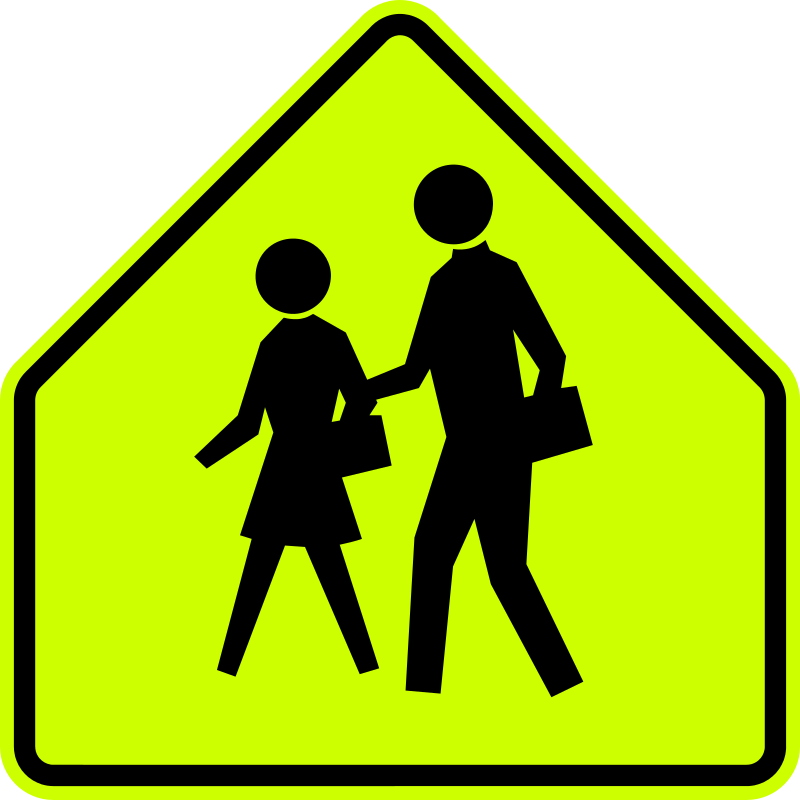
Five-sided pentagon sign indicating an upcoming school area. Watch for children crossing, school buses, and observe posted reduced school speed limits.
This warning sign means:
A) You are approaching a school
B) Watch out for children crossing the street
C) Slow down, drive with caution and watch for children
D) All of the above.
5.
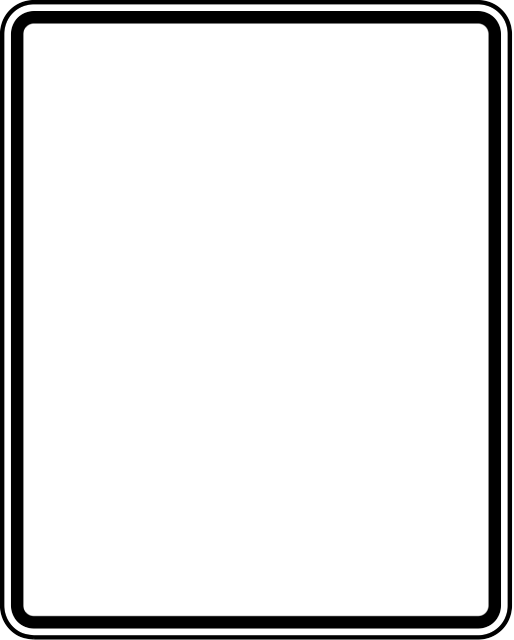
Standard rectangular shape used for general regulatory instructions and speed limits.
Vertical rectangles tell drivers:
A) the law.
B) what is not allowed.
C) the direction they should travel.
6.
A side road enters the highway from the right or left. Watch for traffic turning onto or crossing your lane.
This road sign means:
A) Merge
B) Side Road
C) Merging Traffic
D) All traffic must go straight ahead
7.
Blue service guide sign indicating that emergency medical and hospital facilities are located in the direction of the arrow.
What does this road sign indicate?
A) Hospital service
B) Area reserved for people with disabilities
C) Interstate highway
8.
Right turns are strictly prohibited at this intersection under all circumstances.
This sign tells drivers that:
A) they must make a left turn at the intersection.
B) U-turns are not allowed.
C) they must not make a right turn.
D) None of the above.
9.
A sharp curve is ahead with a recommended safe speed plate. Slow down before entering the curve to prevent vehicle rollover.
This road sign means:
A) Merge, then slow down to the safe speed indicated
B) The road ahead curves right; slow down to indicated speed
C) Winding road ahead; slow down to the indicated speed
D) Divided highway begins. Slow down to the safe speed indicated
10.
The median divider ends ahead, and you are returning to a two-way, two-lane undivided roadway. Watch for oncoming traffic on your left.
This road sign means:
A) Curves ahead
B) Divided highway ahead
C) Divided highway ends
11.
Right turns are strictly prohibited at this intersection under all circumstances.
This road sign means:
A) No left turn
B) No right turn
C) No U-turns
12.
Prohibits drivers from making a 180-degree turn to travel in the opposite direction at this intersection or stretch of road.
This road sign means:
A) No left turn
B) No U-turn
C) Detour ahead
13.
When making a turn, drivers must _____ their speed.
A) reduce
B) maintain
C) increase
D) double
14.
What should you do if a vehicle is approaching head-on in your lane?
A) Pull over to the left and use your emergency lights to stop the other driver.
B) Decrease speed, pull over to the right and sound your horn to warn the other driver.
C) Turn off the ignition if your vehicle has power steering.
15.
Doing all you can to prevent crashes is called:
A) Anti-Collision Driving
B) Crash-Prevention Driving
C) Defensive Driving
D) ABS Driving
16.
Drivers should use the horn:
A) if a driver is moving slowly, and you want them to drive faster.
B) only when necessary, to avoid collisions.
C) when feeling angry or upset.
D) to alert other drivers that they made a mistake.
17.
What type of pavement marking shows you which lane you must use for a turn?
A) Edge line
B) Diamond
C) Crosswalk Lines
D) Arrows
18.
If a driver follows you too closely, you should:
A) move to another lane if possible.
B) activate your stop lights.
C) brake suddenly.
19.
Drivers must yield for emergency vehicles:
A) Never.
B) only when other vehicles yield.
C) when they see a flashing red or blue light or hear a siren.
D) None of the above.
20.
If you refuse to take a chemical test issued by a law enforcement officer, the DMV is required to:
A) place you on probation.
B) suspend your driver license for 3 months.
C) wait for a court decision before taking action.
D) revoke your driver license for at least 12 months.
21.
You must come to a full stop at a yield sign:
A) Always.
B) Never.
C) If traffic conditions require it.
22.
If you missed your exit on a freeway, you should:
A) use the right turn signal, check your mirrors and move to the right.
B) None of the above.
C) go to the next exit and come back to the exit you missed.
D) make a quick U-turn from your lane of travel.
23.
Alcohol causes:
A) poor judgment.
B) loss of concentration.
C) reduced perception.
D) All of the above.
24.
What is the first thing you should do if your wheels move off the pavement?
A) Pull the steering wheel back.
B) Pull over to the right and sound your horn to warn the other drivers.
C) Ease your foot off the gas pedal and brake gently.
25.
If you hear a thumping sound while driving, you should:
A) hook your shoe under the gas pedal and see if you can free it.
B) get off the road and check your tires.
C) try your emergency lights.
26.
Two motorcyclists are allowed to:
A) ride side-by-side in a single lane.
B) share the lane with another vehicle.
C) race on empty roads.
27.
A broken white line:
A) means passing or crossing is prohibited in that lane.
B) separates two lanes traveling in the same direction.
C) marks the right edge of the roadway.
28.
Double solid yellow lines mean:
A) the lane to the right may pass.
B) passing is not permitted in either direction.
C) the lane to the left may pass.
D) passing is permitted in either direction.
29.
When entering a highway from an entrance ramp, drivers should:
A) enter slowly to avoid other vehicles.
B) stop first, then gradually enter traffic.
C) accelerate to the speed of traffic.
D) drive above the speed of traffic to get ahead.
30.
A large vehicle is backing up to unload goods. You should:
A) enter one of the blind spots and wait.
B) try to pass close behind.
C) be patient and wait until the large vehicle has completed its backup maneuver.
31.
You may park or stop along the shoulder of the freeway:
A) if you need to check your smartphone for directions.
B) only if you have an emergency.
C) if no part of your vehicle is on the road.
D) as long as you turn on your emergency flashers.
32.
A driver cuts off another vehicle, or threatens another motorist or a pedestrian. These are examples of:
A) excessive driving
B) road rage
C) defensive driving
33.
What should you do in case of a brake failure?
A) Pull off the road into an open space, if available.
B) Apply the parking brake slowly.
C) All of the above.
34.
What should you do if your vision through the windshield becomes blocked?
A) Pull your vehicle off the road and park it.
B) Turn on your emergency lights.
C) Open the side window so you can see.
D) All of the above.
35.
When driving behind a motorcycle:
A) allow a following distance of at least 4 motorcycle lengths.
B) allow a following distance of at least 2 car lengths.
C) allow at least 2 seconds of following distance.
D) allow at least 4 seconds of following distance.
36.
If traffic on the other side of an intersection is backed up and you cannot get completely through, you must:
A) enter the intersection and try to avoid blocking it.
B) enter the intersection and proceed with caution.
C) wait until traffic ahead is clear.
37.
A flashing yellow traffic signal means:
A) Slow down and be alert at the upcoming intersection.
B) The same thing as a stop sign.
C) Stop and proceed when a green light appears.
D) No right turn.
ANSWER KEY Check answers after completing the test.
1 B
2 B
3 A
4 D
5 A
6 B
7 A
8 C
9 B
10 C
11 B
12 B
13 A
14 B
15 C
16 B
17 D
18 A
19 C
20 D
21 C
22 C
23 D
24 C
25 B
26 A
27 B
28 B
29 C
30 C
31 B
32 B
33 C
34 D
35 D
36 C
37 A