DriveQuiz drivequiz.com

MT DMV PERMİT PRACTİCE TEST 9

Montana
Duration: 30 min
|
Questions: 33
Student Name:
Date:
Correct:      Incorrect:      Score:      
1.
Slow down and give right-of-way to all oncoming vehicles, cyclists, and pedestrians. Stop completely if necessary before entering the intersection or merging.
This road sign means:
A) Slow down and yield to traffic on main road when merging
B) Always come to a complete stop
C) Lane reduction ahead
D) You must come to a complete stop and yield right-of-way
2.
A flashing yellow light means:
A) The light will soon change from green to red.
B) Drive with caution.
C) Yield the right-of-way to other traffic at the intersection.
3.
What should you do if one of your tires blows out?
A) Hold the steering wheel tight and brake immediately to avoid the risk of skidding.
B) Leave the road immediately.
C) Hold the steering wheel tight and slowly take your foot off the gas pedal.
4.
Pentagonal signs are used to indicate:
A) possible hazards on roadways.
B) no passing zones.
C) school crossings.
5.
When you make a left turn from a one-way road into a two-way road, you must:
A) enter the two-way road to the left of its center line.
B) make a U-turn into the two-way road.
C) enter the two-way road to the right of its center line.
6.
Paved road surface ends and transitions to gravel, dirt, or unpaved roadway. Reduce speed and prepare for reduced traction.
This road sign warns drivers that:
A) the road surface ahead changes to a low-type surface or earth road.
B) vehicles must leave the pavement immediately.
C) the dirt on the side of the road is soft.
7.
What should you do if your brakes fail?
A) Hook your shoe under the pedal and see if you can free it.
B) Turn on your cruise control.
C) Try pumping the brake pedal to increase pressure.
8.
On slippery roads, drivers should:
A) leave more space in front of their vehicle.
B) increase their speed to avoid hydroplaning.
C) come to a complete stop.
9.
Two drivers reach an uncontrolled intersection at the same time. Who has the right of way?
A) The driver on the left.
B) No one.
C) The driver on the right.
10.
Who is most at risk?
A) Drivers who are fatigued.
B) Drivers who are driving on long, boring roads.
C) All of the above.
11.
If another vehicle is approaching you head-on in your lane, you should _______, sound your horn and brake.
A) steer right
B) None of the other answers is correct.
C) steer left
D) stay in the center of your lane
12.
If you stop at a railroad crossing with more than one track:
A) proceed with caution until you see a train.
B) go through when one of the tracks is free.
C) go through as soon as the first train passes.
D) wait until you have a clear view of both tracks.
13.
Alerts drivers to an upcoming crosswalk where pedestrians frequently cross. Slow down and yield right-of-way to anyone in or about to enter the roadway.
This sign means:
A) Railroad crossing
B) No Passing Zone
C) The road ends ahead
14.
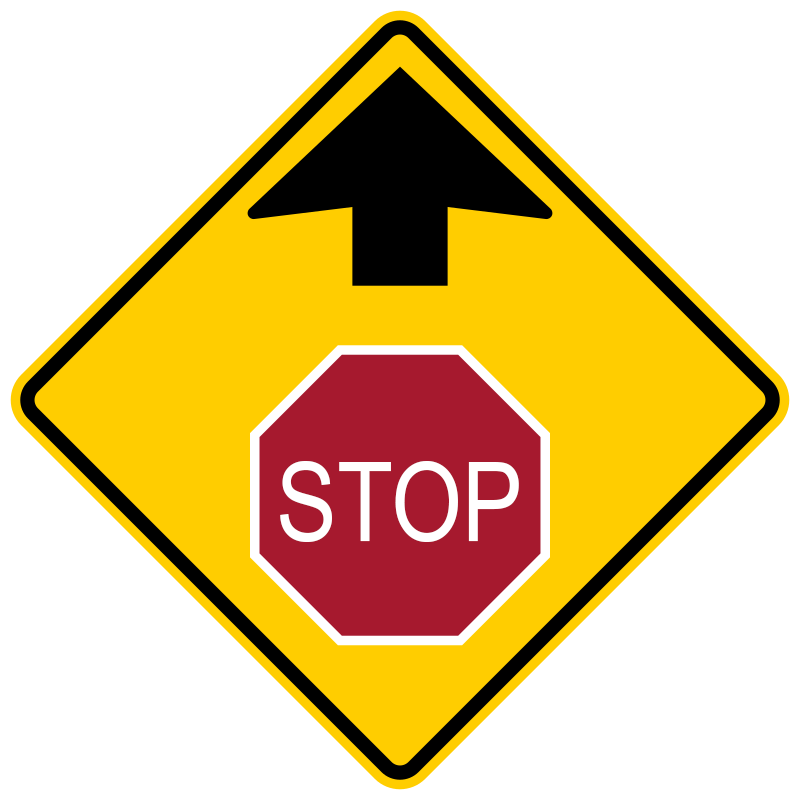
Warns of an upcoming STOP sign that may not be immediately visible. Begin slowing down to prepare for a complete stop.
When drivers come to this sign, they must:
A) be ready to stop at the stop sign.
B) warn other drivers that a stop sign is ahead.
C) brake sharply and come to a complete stop.
15.
Increasing your vehicle’s speed _____ your field of vision.
A) decreases
B) increases
C) inverts
D) has no effect on
16.
You may not pass another vehicle on either side of a _______ centerline.
A) solid or broken yellow
B) single broken white
C) double solid yellow
D) single broken yellow
17.
Come to a complete stop before the stop line, crosswalk, or intersection. Look left, right, and left again, and proceed only when it is safe and right-of-way is clear.
This road sign means:
A) Yield the right-of-way to oncoming vehicles
B) Stop if necessary
C) You must make a complete stop
D) Slow down or stop
18.
When the road is slippery, you should:
A) brake suddenly carefully.
B) pump your brakes.
C) press your brakes in slow, steady strokes.
19.
If an approaching driver does not dim the headlights, you should:
A) move your eyes to the left to help avoid the glare of approaching high beams.
B) move your eyes to the right and avoid looking directly at the bright lights.
C) flash your headlights to low beam for a second, then return to high beam.
20.
The effect that alcohol has on your judgment:
A) is greater if you were drinking hard liquor.
B) is less if you were only drinking wine.
C) is less if you were only drinking beer.
D) depends on the amount of alcohol in your blood.
21.
Night driving can be more difficult because:
A) the ratio of motorcyles to cars is much higher at night.
B) vehicle operators tend to drive faster at night.
C) speed limits do not apply at night.
D) visibility is reduced.
22.
When a school bus is stopped with its red lights flashing:
A) drivers only need to stop if children are present.
B) drivers don't need to stop unless they are in a school zone.
C) drivers may not pass while the red lights are flashing.
D) you never need to stop.
23.
Aggressive driving includes:
A) quick lane changes without a signal.
B) chasing or challenging other drivers.
C) All of the above.
24.
The best way to deal with tailgaters is to:
A) slow down to encourage the tailgater to pass.
B) pump your brakes to get them to back off.
C) ignore them completely.
D) speed up to increase the space between you and the tailgater.
25.
Which shape is a railroad advance warning sign?
A) Crossbuck
B) Round
C) Pentagon
26.
Slower-moving vehicles must stay in the right-hand lane to allow faster traffic to pass safely on multi-lane highways.
This regulatory road sign indicates that:
A) Vehicles must slow down and stay in the right lane.
B) The right hand lane is reserved for buses and car-pool vehicles.
C) Slower vehicles traveling on multiple lane highways must stay in the right hand lane.
27.
A side road enters the highway from the right or left. Watch for traffic turning onto or crossing your lane.
This road sign means:
A) Merge
B) Side Road
C) Merging Traffic
D) All traffic must go straight ahead
28.
If you are pulled over by law enforcement, you should:
A) stay in the driver’s seat with both hands clearly in sight on the steering wheel.
B) unbuckle your seat belt and lower your window.
C) get out of your vehicle and walk toward the patrol car.
D) turn off on your interior light if stopped at night.
29.
When other drivers around you are acting in anger, you should:
A) slow down or move over safely.
B) distance yourself from the situation.
C) avoid making eye contact.
D) All of the above.
30.
You ________ traffic headed toward you when you turn left.
A) must not yield to
B) must interrupt
C) must yield to
31.
Which signs have black letters on a yellow or orange background?
A) Warning signs (diamond)
B) Regulatory signs (vertical rectangle)
C) Railroad advance warning signs (round)
32.
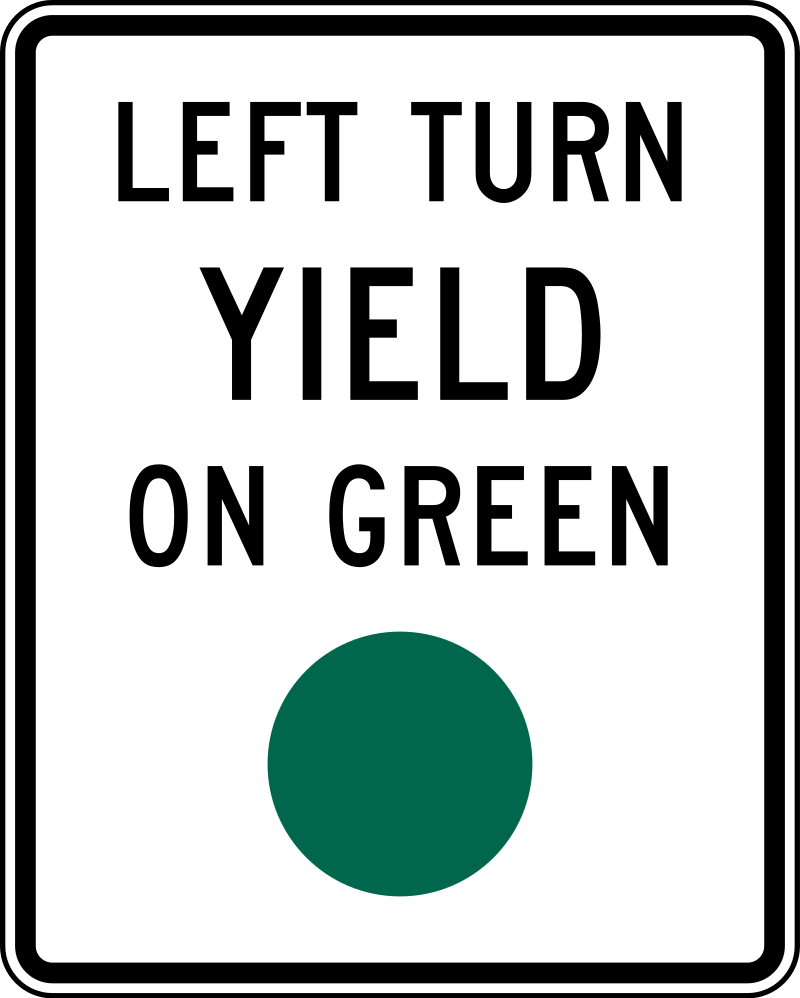
When turning left at a circular green light, you must yield right-of-way to oncoming traffic and pedestrians before completing your turn.
This white sign means you:
A) may turn left on a green light when it is safe to do so.
B) may turn left only on a green arrow.
C) must wait for the solid green light before you turn left.
33.
When driving in bad weather, drivers should:
A) decrease the following distance.
B) increase their speed to get to their destination more quickly.
C) increase the following distance.
D) None of the above.
ANSWER KEY Check answers after completing the test.
1 A
2 B
3 C
4 C
5 C
6 A
7 C
8 A
9 C
10 C
11 A
12 D
13 A
14 A
15 A
16 C
17 C
18 C
19 B
20 D
21 D
22 C
23 C
24 A
25 B
26 C
27 B
28 A
29 D
30 C
31 A
32 A
33 C