DriveQuiz drivequiz.com

MT DMV PERMİT PRACTİCE TEST 8

Montana
Duration: 30 min
|
Questions: 33
Student Name:
Date:
Correct:      Incorrect:      Score:      
1.
When getting ready to change lanes, you should:
A) check your rearview mirror.
B) quickly turn your head to check for other vehicles.
C) check your side view mirror.
D) All of the above.
2.
Signs and markings requiring that you obey the indicated instruction are known as _____ signs.
A) warning
B) guide
C) regulatory
D) information
3.
When entering a highway from an entrance ramp, drivers should:
A) enter slowly to avoid other vehicles.
B) stop first, then gradually enter traffic.
C) accelerate to the speed of traffic.
D) drive above the speed of traffic to get ahead.
4.
The road ahead is divided by a median strip or physical barrier into two separate one-way roadways. Keep to the right of the divider.
This sign means:
A) Divided highway ahead.
B) Divided highway ends.
C) Drivers will soon be on a roadway with two-way traffic.
5.
You are coming to an intersection and have a green light. Pedestrians are crossing against the red. You should:
A) claim your right-of-way and proceed with caution.
B) honk your horn.
C) speed up and pass in front of the pedestrians.
D) stop to let pedestrians cross safely.
6.
What should you do if your vision through the windshield becomes blocked?
A) Pull your vehicle off the road and park it.
B) Turn on your emergency lights.
C) Open the side window so you can see.
D) All of the above.
7.
More than one vehicle is approaching a four-way stop sign. Who has the right of way?
A) The first driver to reach the intersection and stop.
B) The driver on the left.
C) The last driver to reach the intersection.
8.
Aggressive drivers:
A) run stop signs.
B) are high risk drivers.
C) tailgate other vehicles and make improper lane changes.
D) All of the above.
9.
Before turning, you should:
A) increase your speed.
B) sound your horn to alert the other drivers.
C) give the proper turn signal.
D) change lanes.
10.
What should drivers do in case of a brake failure?
A) Shift to a lower gear.
B) Tie a white cloth on the left door handle.
C) Brake lightly.
11.
Speed limit signs are:
A) service signs
B) regulation signs (regulatory signs)
C) warning signs
12.
If one of your tires blows out, you should:
A) apply your brakes gently and steer smoothly where you want to go.
B) pump your brakes and steer where you want to go.
C) apply your brakes immediately.
D) hold the steering wheel tightly, slowly take your foot off the gas pedal and steer smoothly where you want to go.
13.
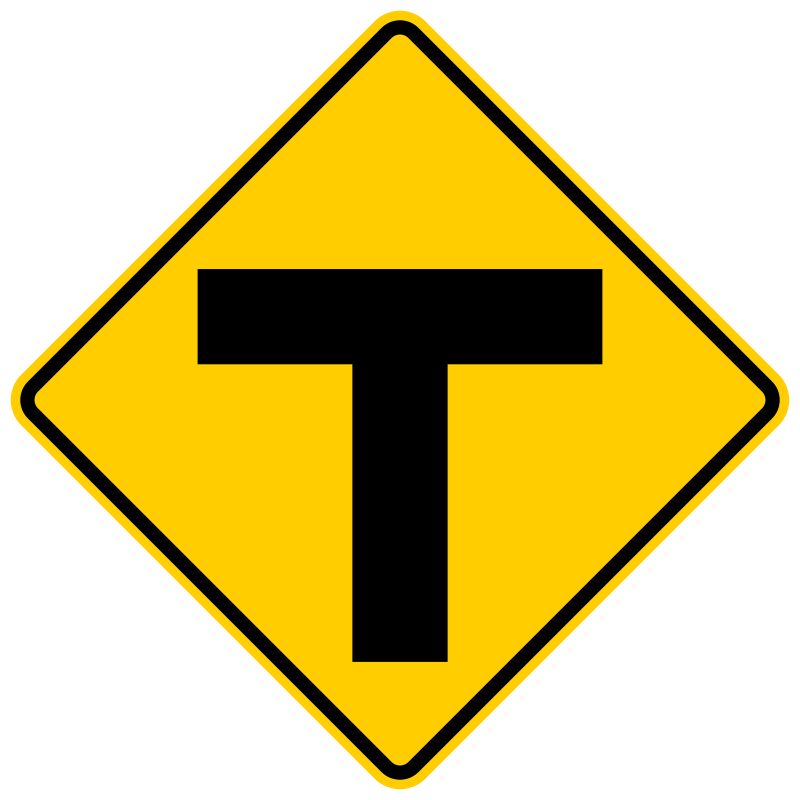
The roadway ends ahead at a T-junction. You must turn either left or right after yielding right-of-way to traffic on the cross street.
This road sign means:
A) Side road
B) T-intersection ahead
C) Keep right
D) Left lane must turn left
14.
The bridge ahead has narrower lanes or shoulders than the preceding road. Use caution when meeting oncoming vehicles.
This road sign means:
A) Low clearance
B) Construction site ahead
C) Pavement is narrowing
D) Narrow bridge ahead
15.
Warns of two consecutive curves in opposite directions (e.g., curves right then left). Slow down to maintain control.
This road sign means:
A) A road joins from the left
B) The road ahead turns sharply right then sharply left
C) Sharp right turn
D) Winding road ahead
16.
A yellow arrow used to control turns from a specific traffic lane:
A) is never used as a traffic signal.
B) is warning the traffic a green arrow is about to be shown.
C) means the same as a circular yellow light for the lane of traffic indicated by the arrow.
D) means that you may go in the direction indicated by the arrow.
17.
The roadway becomes particularly slippery during wet or rainy conditions. Reduce your speed, increase following distance, and avoid abrupt braking or steering.
This road sign means:
A) Winding road ahead
B) Warning, slippery when wet
C) Railroad Warning
D) Stop Sign Ahead
18.
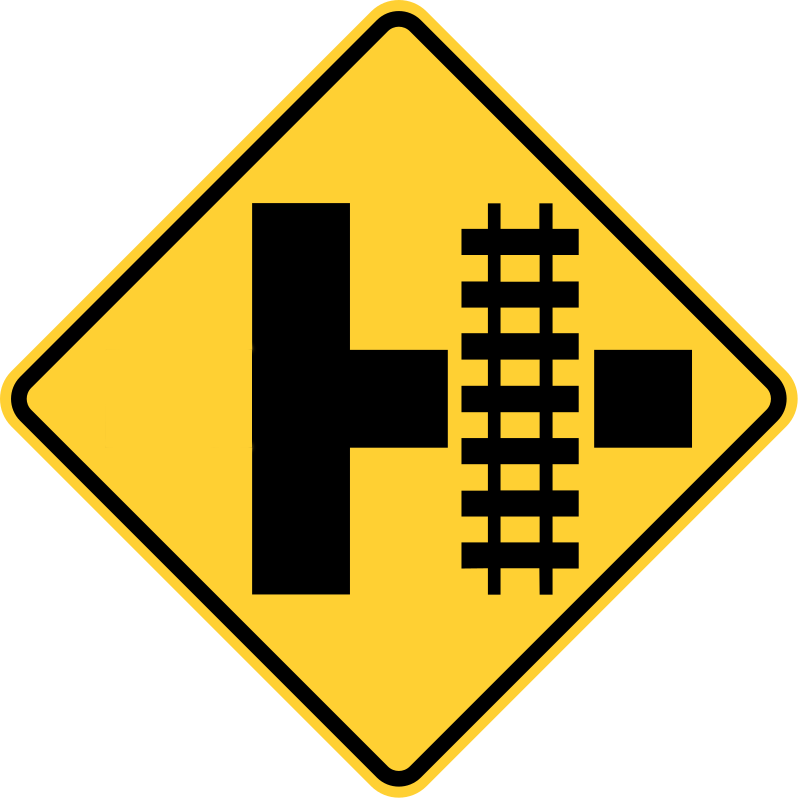
Four-way intersection ahead. Be prepared to yield right-of-way according to traffic control devices.
What does this sign indicate?
A) Parallel railroad crossing (side road)
B) Low ground clearance railroad crossing
C) Parallel railroad crossing (crossroad)
19.
If you are continually being passed on the right, you should:
A) move into the right lane and allow other vehicles to pass you on the left.
B) move into the left lane and allow other vehicles to pass you on the right.
C) increase your speed immediately.
20.
You should use turn signals to indicate your intention with sufficient time to allow other drivers to see the signal:
A) if it’s raining.
B) AFTER you move.
C) BEFORE you move.
21.
________ is the only effective way to reduce your Blood Alcohol Content (BAC).
A) Time
B) Drinking coffee
C) Taking a cold shower
D) Eating food
22.
If a vehicle is approaching with high beams, drivers should look __________ until the vehicle passes.
A) to the right of the road
B) at the center of the road
C) to the left of the road
D) straight ahead
23.
What should you do if your rear wheels start to skid?
A) Steer left if your rear wheels slide right.
B) If the vehicle has ABS, pump the pedal carefully.
C) Turn the steering wheel in the direction the vehicle is trying to go.
24.
What should you do if a vehicle is approaching head-on in your lane?
A) Pull over to the left and use your emergency lights to stop the other driver.
B) Decrease speed, pull over to the right and sound your horn to warn the other driver.
C) Turn off the ignition if your vehicle has power steering.
25.
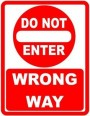
Alerts drivers to a major crossroads intersection ahead. Watch for vehicles entering or crossing the roadway.
This road sign means:
A) U-turns are prohibited
B) You may proceed only if the way is clear
C) You are about to enter a one-way street the wrong way
D) Do not pass
26.
It is important for drivers to know that trucks:
A) are easier for the driver to operate.
B) require more space for turning movements.
C) take longer than cars to stop.
D) require less time to pass on an incline than cars.
27.
As you approach an intersection, the traffic light changes from green to yellow. You should:
A) apply the brakes sharply and come to a complete stop.
B) be prepared to stop before the intersection.
C) be prepared to stop in the middle of the intersection.
D) speed up to beat the red light.
28.
Drivers must yield to pedestrians:
A) only if the pedestrian is in a crosswalk.
B) if the pedestrian signals to the driver that the driver must stop.
C) only if the pedestrian is on the same side of the road.
D) even when the pedestrian crosses the street without looking both ways.
29.
Do not pass:
A) on hills or curves.
B) when approaching intersections.
C) when school bus lights are flashing.
D) All of the above.
30.
Left turns on a red light are allowed:
A) from a one-way street into a one-way street.
B) Never.
C) at intersections, after stopping, if the way is clear.
31.
When changing lanes, __________ to be sure no one is in the 'blind spot'.
A) check your right mirror
B) slow down gradually
C) check your left mirror
D) glance over your shoulder
32.
When driving behind a motorcycle:
A) allow a following distance of at least 4 motorcycle lengths.
B) allow a following distance of at least 2 car lengths.
C) allow at least 2 seconds of following distance.
D) allow at least 4 seconds of following distance.
33.
When exiting a highway, you should slow down:
A) when you first see the exit sign.
B) before moving into the exit lane.
C) once you have moved into the exit lane.
D) once you see the toll booth.
ANSWER KEY Check answers after completing the test.
1 D
2 C
3 C
4 A
5 D
6 D
7 A
8 D
9 C
10 A
11 B
12 D
13 B
14 D
15 B
16 C
17 B
18 A
19 A
20 C
21 A
22 A
23 C
24 B
25 C
26 C
27 B
28 D
29 D
30 A
31 D
32 D
33 C