DriveQuiz drivequiz.com

MT DMV PERMİT PRACTİCE TEST 6

Montana
Duration: 30 min
|
Questions: 33
Student Name:
Date:
Correct:      Incorrect:      Score:      
1.
Regulatory signs:
A) are diamond shaped and yellow or green.
B) warn drivers about road hazards.
C) provide information about the road rules and traffic laws.
D) regulate the flow of traffic at school zone.
2.
You are driving behind another vehicle and notice that the driver is driving with one hand, talking to a passenger. You as a driver:
A) know that you should avoid this bad habit.
B) know that you should give the vehicle ahead extra room.
C) know that the driver in the vehicle ahead is reducing his safety margin by being an inattentive driver.
D) All of the above.
3.
When the pavement is marked with a double yellow line, drivers may pass other vehicles:
A) None of the other answers is correct.
B) only if there are no oncoming vehicles.
C) only if the vehicle ahead is driving 10 mph or more under the speed limit.
D) Never.
4.
Prohibits drivers from making a 180-degree turn to travel in the opposite direction at this intersection or stretch of road.
This road sign means:
A) No left turn
B) No U-turn
C) Detour ahead
5.
When you make a left turn from a one-way road into a one-way road, if the road you enter has two lanes, you:
A) must turn into its right lane.
B) can not turn left.
C) must turn into its left lane.
6.
Which of the following is NOT true about ABS?
A) It improves the vehicle stability.
B) It helps increase your stopping distance.
C) It improves the steering ability.
7.
Parking is not allowed:
A) in an intersection, unless permitted by signs.
B) within 300 feet of a pedestrian safety area.
C) on public roads
8.
Work zone signs:
A) mean that road conditions will improve soon.
B) mean that drivers must come to a complete stop and back up.
C) provide information on road work or other temporary road conditions.
D) mean that drivers should drive faster to get out of the work zone.
9.
Studies show that wearing seat belts:
A) reduces your chances of serious injury in a crash.
B) increases your chances of fatality in a crash.
C) reduces your chances of damaging your car in a crash.
D) All of the above.
10.
The driver of an emergency vehicle that uses lights and a siren can legally:
A) pass red lights.
B) exceed the speed limit
C) All of the above.
11.
When driving at night with no other vehicles ahead, a driver should use:
A) high beam lights.
B) low-beam lights.
C) parking lights.
12.
Railroad crossings should always be considered:
A) safe when railroad crossing lights are active.
B) a place where stopping is required.
C) safe to cross.
D) dangerous.
13.
When entering a crowded freeway, to merge into traffic you should:
A) yield to vehicles already on the freeway.
B) use the acceleration lane to adjust your speed to the same speed as freeway traffic.
C) check your blind spots.
D) All of the above.
14.
The first sign drivers see when approaching a highway-rail intersection is usually:
A) a crossbuck sign.
B) an advance warning sign.
C) a speed limit sign.
15.
Emergency vehicles:
A) may follow each other.
B) may use a loudspeaker to give instructions.
C) have the right-of-way when using siren and red/blue lights.
D) All of the above.
16.
Slow down and give right-of-way to all oncoming vehicles, cyclists, and pedestrians. Stop completely if necessary before entering the intersection or merging.
The yield sign means:
A) Go. The light will soon be red.
B) If the way is clear, you may move forward slowly without stopping.
C) Stop if you can.
17.
Drivers may need more space in front of their vehicle:
A) when following motorcycles.
B) when carrying a heavy load or pulling a trailer.
C) All of the above.
18.
___________ are green with white letters and symbols.
A) Warning signs
B) Destination signs (guide signs)
C) Regulation signs (regulatory signs)
19.
Drivers should allow a larger space cushion when stopping:
A) at a stop sign.
B) on an up-hill.
C) at an intersection.
D) at a yield sign.
20.
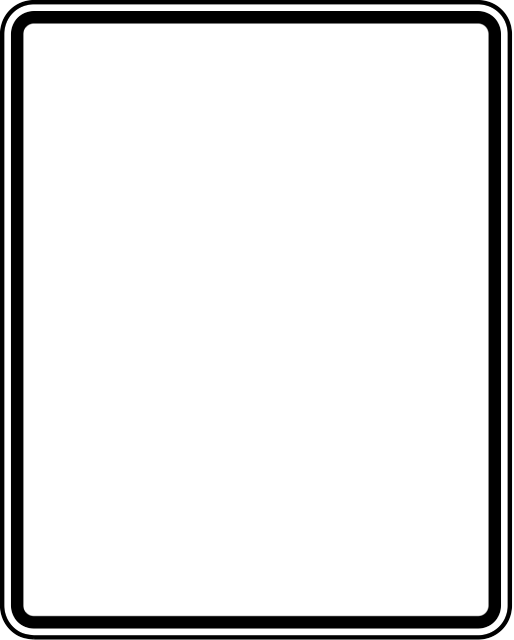
Standard rectangular shape used for general regulatory instructions and speed limits.
Vertical rectangles tell drivers:
A) the law.
B) what is not allowed.
C) the direction they should travel.
21.
When you prepare to make a left turn from a one-way road into a one-way road, you must:
A) move into the right lane, or to the left side of a single lane.
B) move into the right lane, or to the right side of a single lane.
C) move into the left lane, or to the left side of a single lane.
22.
Indicates a series of three or more consecutive sharp turns or curves ahead. Reduce speed and maintain lane control.
This road sign means:
A) Pavement ends
B) Winding road
C) Double curve ahead
23.
A vehicle is stopped at a crosswalk to permit a pedestrian to cross the roadway. The driver of the vehicle approaching from the rear should:
A) sound the horn.
B) overtake and pass the stopped vehicle.
C) not overtake and pass the stopped vehicle.
24.
To drive defensively, you must:
A) avoid scanning the road ahead.
B) keep one hand on the steering wheel.
C) keep your eyes moving.
25.
The ‘Slower Traffic Keep Right’ sign is used:
A) at most intersections.
B) on multiple lane highways.
C) in school zones.
26.
Which of the following is true about the Anti-Locking Brake System?
A) It prevents skidding.
B) It allows drivers to steer during an emergency braking situation.
C) All of the above.
27.
A sharp curve is ahead with a recommended safe speed plate. Slow down before entering the curve to prevent vehicle rollover.
This sign indicates that:
A) the highest safe speed drivers should travel around the curve ahead is 25 MPH.
B) the safe speed around the curve ahead is at least 25 MPH.
C) drivers may not turn right if traveling at 25 MPH or less.
28.
Posted on the far side of a sharp curve or T-intersection to indicate a sharp change in direction of travel.
This sign means:
A) Not enter
B) Detour to the right
C) The road to the right is for one-way traffic only
29.
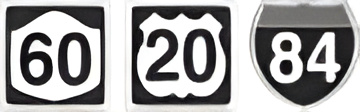
Interstate or State Route numbered highway marker used for route navigation and guide information.
These are:
A) route signs.
B) miles-left signs.
C) speed limit signs.
30.
Slow down and give right-of-way to all oncoming vehicles, cyclists, and pedestrians. Stop completely if necessary before entering the intersection or merging.
This is the shape and color of a ________ sign.
A) yield
B) stop
C) do not enter
31.
A red traffic signal light means that you must:
A) when there is no stop line, stop before entering any crosswalk.
B) stop at the stop line.
C) where there is no stop line or crosswalk, stop before entering the intersection.
D) All of the above.
32.
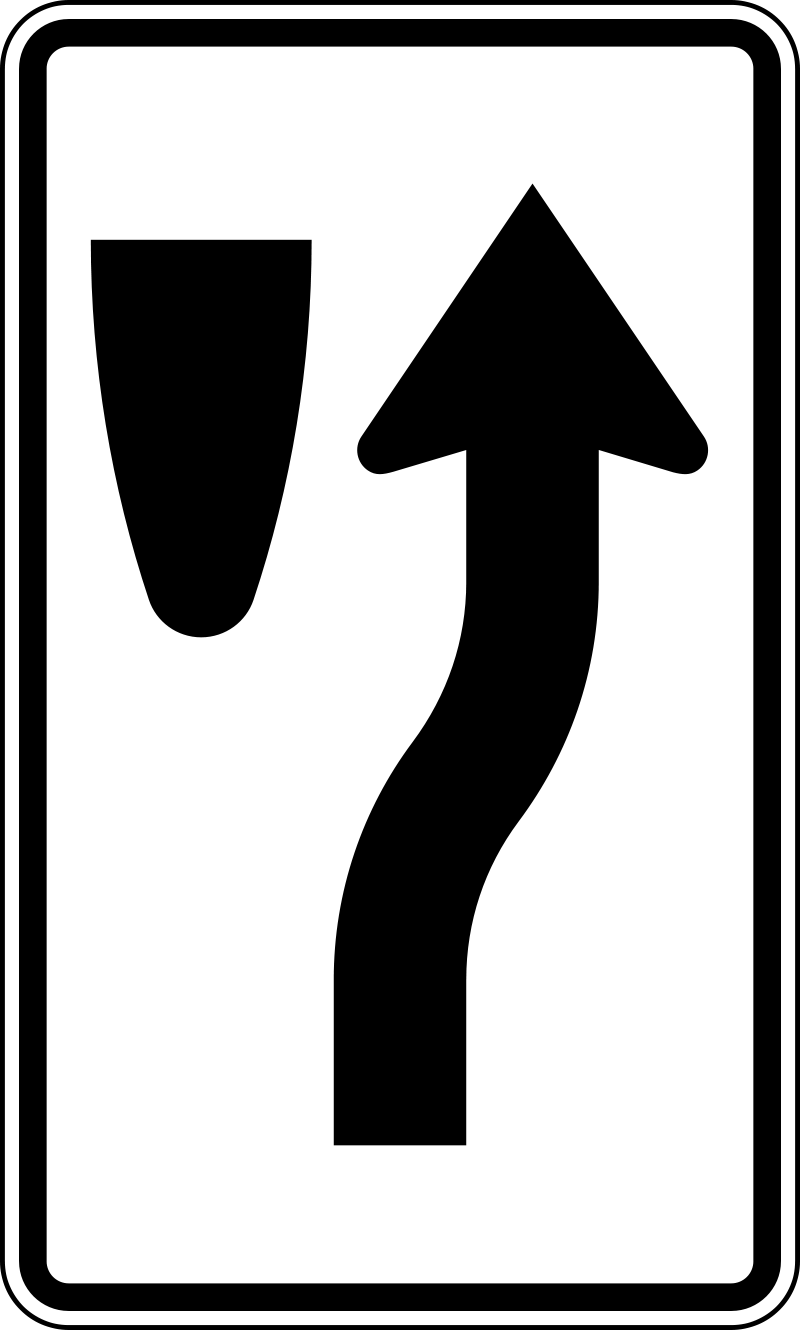
Drivers must pass to the right side of a traffic island, median barrier, or highway divider.
This road sign means:
A) Stop sign ahead
B) Keep to the side indicated by the arrow
C) Side road
D) Low shoulder
33.
If you begin to feel drowsy while driving, you should:
A) open your window.
B) get some coffee.
C) get an energy drink.
D) stop driving.
ANSWER KEY Check answers after completing the test.
1 C
2 D
3 D
4 B
5 C
6 B
7 A
8 C
9 A
10 C
11 A
12 D
13 D
14 B
15 D
16 B
17 C
18 B
19 B
20 A
21 C
22 B
23 C
24 C
25 B
26 C
27 A
28 B
29 A
30 A
31 D
32 B
33 D