DriveQuiz drivequiz.com

MT DMV PERMİT PRACTİCE TEST 2

Montana
Duration: 30 min
|
Questions: 33
Student Name:
Date:
Correct:      Incorrect:      Score:      
1.
When there is a _______ at an intersection, you should come to a complete stop, yield to cross traffic/pedestrians, and then proceed when clear.
A) a solid green light
B) a solid red light
C) a flashing red light
D) a flashing yellow light
2.
Prohibits drivers from making a 180-degree turn to travel in the opposite direction at this intersection or stretch of road.
This road sign means:
A) No left turn
B) No U-turn
C) Detour ahead
3.
Before entering a traffic circle, drivers must slow down and yield to ___________ in the traffic circle.
A) pedestrians
B) vehicles
C) bicyclists
D) All of the above.
4.
When driving on slippery roads, drivers should:
A) increase their following distance.
B) avoid crossing bridges or intersections.
C) brake harder than usual.
D) change lanes quickly.
5.
If involved in an accident, drivers should:
A) avoid standing or walking in traffic lanes.
B) turn off the ignitions of wrecked vehicles.
C) stop their vehicle at or near the scene.
D) All of the above.
6.
The road ahead is divided by a median strip or physical barrier into two separate one-way roadways. Keep to the right of the divider.
This road sign means:
A) Divided highway ahead - stay to the right
B) Do not enter
C) Do not pass
7.
The roadway becomes particularly slippery during wet or rainy conditions. Reduce your speed, increase following distance, and avoid abrupt braking or steering.
This road sign means:
A) Slow down, slippery when wet
B) Detour ahead
C) Road curves ahead
8.
While inside the roundabout, you should:
A) remain in your lane until you are ready to exit.
B) change lanes before you check for vehicles behind you.
C) use your left turn signal if you are in position to exit now.
9.
The roadway becomes particularly slippery during wet or rainy conditions. Reduce your speed, increase following distance, and avoid abrupt braking or steering.
This sign means:
A) The road will curve to the right, then to the left.
B) Road slippery when wet. Drive slowly.
C) Winding road ahead. Drive with caution.
10.
You can pass on the right:
A) when a vehicle ahead makes a right turn.
B) when a vehicle ahead makes a left turn.
C) when a vehicle that is approaching from the opposite direction is prepared to turn left.
11.
To safely cross a railroad, drivers should:
A) listen and look both ways, then proceed if it is safe to do so.
B) drive across quickly if a train is approaching, or if it is too close, stop and then back up.
C) stop within 10 feet of all railroad crossings.
D) look both ways only if the red light is flashing.
12.
When driving on wet roads, you should remember:
A) driving on wet roads can cause hydroplaning.
B) you should give yourself additional time to stop.
C) to stay farther behind the vehicle ahead of you.
D) All of the above.
13.
If a bus has signaled and is pulling back onto the roadway, you must:
A) yield.
B) honk to let them know you’re there.
C) move to the left lane.
D) speed up to pass.
14.
Drivers can not pass a vehicle on the left if:
A) they approach the top of a hill on a two-way road and can not see over it.
B) they can not safely return to the right lane before they reach a solid yellow center line for the right lane.
C) All of the above.
15.
When changing lanes, you can check your blind spot by:
A) using the outside rearview mirror.
B) using the inside rearview mirror.
C) turning your head and glancing over your shoulder.
D) checking the rearview and outside mirrors.
16.
When you are in a line of traffic that is crossing a railroad track that has no signals or gates:
A) you may pass slower drivers crossing the track.
B) before you start to cross, you need to make sure there is space to get all the way across the tracks without stopping.
C) you have the right of way and do not need to check for trains.
D) All of the above.
17.
Directions given by traffic officers ___________ signs, signals or pavement markings.
A) take precedence over
B) are less important than
C) must obey
18.
An emergency vehicle that uses lights and a siren can be unpredictable. Why?
A) The driver can legally pass red lights.
B) Emergency vehicles must go faster than the posted speed limit when it is safe to do so.
C) Emergency vehicle drivers are not required to be careful.
19.
If your front wheels start to skid, the first thing you should do is:
A) Take your foot off the gas pedal and shift to neutral.
B) Immediately turn in the direction you want to go.
C) Speed up, pump your brakes and steer in the direction the vehicle is trying to go.
20.
Right turns are strictly prohibited at this intersection under all circumstances.
This sign tells drivers that:
A) they must make a left turn at the intersection.
B) U-turns are not allowed.
C) they must not make a right turn.
D) None of the above.
21.
When turning or changing lanes, drivers must:
A) always signal their intentions even when there are no vehicles.
B) signal only when driving in traffic at night.
C) signal only if there is traffic.
D) signal only when driving at night.
22.
_____________ lights indicate that drivers should slow down and proceed with caution at an intersection.
A) Red
B) Flashing yellow
C) Flashing red
D) Yellow
23.
Parking is not allowed:
A) on the road side of a parked vehicle.
B) in a tunnel.
C) All of the above.
24.
Which of the following is a common cause of a traffic collisions?
A) Following too closely.
B) Excessive speed for conditions.
C) Distracted driving.
D) All of the above.
25.
If you remain in the back blind spot of a large vehicle:
A) you increase the chance of a crash.
B) the large vehicle will take much longer to stop.
C) you can reduce fuel consumption.
26.
If another vehicle passes you on the left, you must:
A) increase your speed slightly and keep to the right.
B) decrease your speed, then pull over to the right and stop.
C) decrease your speed slightly and keep to the right.
27.
When changing lanes, you should not:
A) signal your intentions early.
B) check your side and rear view mirrors.
C) use the inside rearview mirror to check for blind spots
D) check to see if other drivers are moving into the same lane.
28.
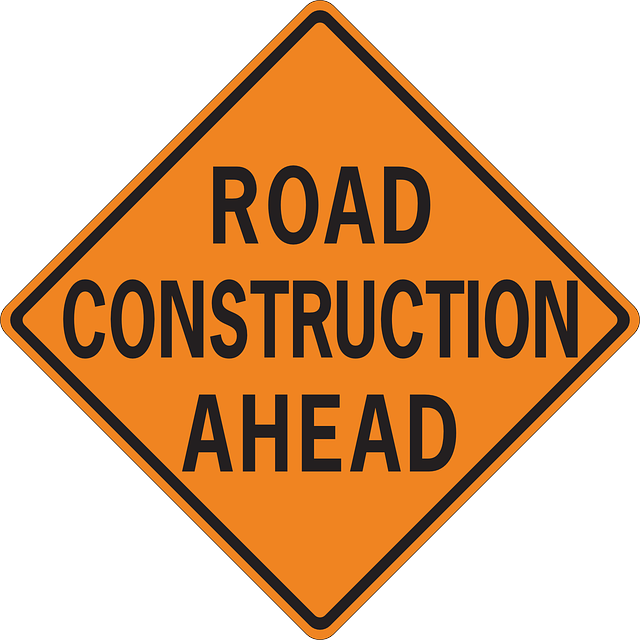
Notifies drivers of highway maintenance or construction ahead. Slow down, expect sudden stops or lane shifts, and remember traffic fines double in active work zones.
This road sign means:
A) No parking
B) Detour ahead
C) Road construction ahead
D) Stop
29.
When a ‘Road Closed’ sign is displayed, drivers must:
A) make a U-turn.
B) look for a detour or another route.
C) come to a complete stop and wait for the lights to turn green.
30.
Standard yellow warning sign outline used across the US for all caution, hazard, and roadway change notifications.
This sign is a:
A) regulatory sign.
B) warning sign.
C) guide sign.
31.
Indicates the maximum bridge or underpass vertical clearance. Vehicles taller than the posted height must not proceed.
This sign means:
A) Narrow bridge ahead. Slow down and drive with caution.
B) Do not to enter if your vehicle is taller than the height listed on the sign.
C) No passing zone ahead.
32.
When making a turn, drivers must _____ their speed.
A) reduce
B) maintain
C) increase
D) double
33.
Blind spots are:
A) Dangerous intersection where the maximum speed limit is 15 MPH or less.
B) At night, the darkest areas of a road, where emergency flashers should be used.
C) Areas to the side or rear of a vehicle that the driver cannot see with use of mirrors.
ANSWER KEY Check answers after completing the test.
1 C
2 B
3 D
4 A
5 D
6 A
7 A
8 A
9 B
10 B
11 A
12 D
13 A
14 C
15 C
16 B
17 A
18 A
19 A
20 C
21 A
22 B
23 C
24 D
25 A
26 C
27 C
28 C
29 B
30 B
31 B
32 A
33 C