DriveQuiz drivequiz.com

MT DMV PERMİT PRACTİCE TEST 17

Montana
Duration: 30 min
|
Questions: 33
Student Name:
Date:
Correct:      Incorrect:      Score:      
1.
To practice defensive driving you should:
A) always leave yourself a way out.
B) look well ahead of your vehicle and be aware of developing traffic situations around you.
C) maintain a proper following distance.
D) All of the above.
2.
To drive more safely at night:
A) don’t drive when you are tired.
B) make sure your headlights are working properly.
C) increase following distance.
D) All of the above.
3.
You may not turn right (or left from a one-way onto a one-way) while the traffic signal is red. Wait for the green signal before turning.
This sign tells drivers:
A) they must wait for the traffic signal to turn green before turning right or left.
B) they may not turn right or left during the red light.
C) All of the above.
4.
Drugs may interfere with a person’s ability to drive safely:
A) unless they are prescribed by a doctor.
B) even if they are prescribed by a doctor.
C) only when driving at night.
D) only when combined with alcohol.
5.
After parking, are you allowed to open a door on the road side of your vehicle?
A) Yes, always.
B) Yes, but only if it does not interfere with bicyclists and other traffic.
C) No, never.
6.
The following symptoms are associated with drowsy driving:
A) You continue to yawn.
B) You don’t remember driving the last few miles.
C) All of the above.
7.
On a road with two or more lanes in the same direction, you approach an emergency vehicle that is stopped with its warning lights on. You must:
A) slow down. If possible, change lanes.
B) pass the emergency vehicle as quickly as possible.
C) drive to the right side of the road and stop.
D) maintain your current speed and stay in your lane.
8.
___________ are the most frequent fatality in work zone crashes.
A) Motorcyclists
B) Construction workers
C) Drivers and their passengers
D) Bicyclists
9.
Your BAC depends on:
A) how much alcohol you drink.
B) how much time passes between drinks.
C) All of the above.
10.
Which of the following does NOT affect the distance that it takes to stop your vehicle?
A) Perception time.
B) Braking distance.
C) Reaction distance.
D) Steering ability.
11.
At a stop sign there is no stop line or crosswalk. You must stop:
A) before you enter the intersection.
B) at the next crosswalk.
C) after you enter the intersection, if you have a clear view of traffic on the intersecting roadway.
12.
Come to a complete stop before the stop line, crosswalk, or intersection. Look left, right, and left again, and proceed only when it is safe and right-of-way is clear.
This road sign means:
A) Slow down or stop
B) Stop
C) Road narrows ahead
13.
You should never depend on your mirrors when you prepare to change lanes. Why?
A) Mirrors leave “blind spots” behind both sides of vehicles.
B) Mirrors need to be adjusted.
C) Mirrors are useless.
14.
Right turns are strictly prohibited at this intersection under all circumstances.
This road sign means:
A) No left turn
B) No right turn
C) No U-turns
15.
Green and white signs:
A) give information about directions and distances.
B) are mainly used at intersections and driveways.
C) warn drivers of unexpected road conditions.
16.
A signalized intersection is ahead. Prepare to stop if the light turns yellow or red.
This sign means:
A) No traffic signal ahead
B) Traffic signal ahead
C) Open intersection ahead
17.
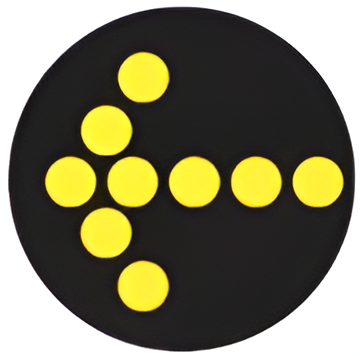
Protected left turns have ended. You may make a left turn only after yielding to all oncoming vehicles and pedestrians.
What does a flashing left yellow arrow mean?
A) Vehicles turning left must stop if they can. The light will soon be red.
B) Only right turns are allowed.
C) Left turns are allowed. Yield to oncoming traffic and pedestrians.
D) None of the above.
18.
Drinking alcoholic beverages:
A) gives you a feeling of false confidence.
B) impairs your judgement.
C) slows your reaction time.
D) All of the above.
19.
A signalized intersection is ahead. Prepare to stop if the light turns yellow or red.
This road sign means:
A) Uncontrolled intersection ahead
B) Don’t park next to the traffic signal
C) The traffic signal ahead is out of order
D) Traffic signals ahead
20.
When driving at night, you should slow down and:
A) use high beams whenever possible, but never when there's oncoming traffic.
B) use high beams until other drivers dim their lights.
C) follow the vehicle ahead more closely to avoid glare from oncoming headlights.
D) come to a complete stop whenever there's oncoming traffic.
21.
A steep downhill grade is ahead. Trucks and heavy vehicles should downshift to a lower gear to prevent brake overheating.
This road sign means:
A) Hill ahead
B) Trucks merging from the right
C) Side road ahead
D) Keep left
22.
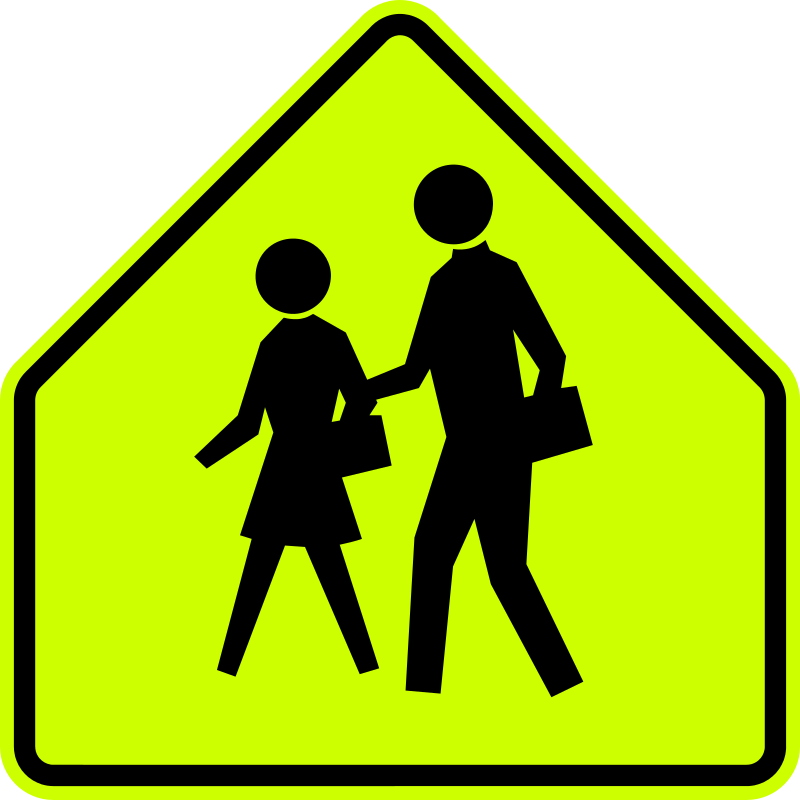
Five-sided pentagon sign indicating an upcoming school area. Watch for children crossing, school buses, and observe posted reduced school speed limits.
This sign means:
A) Business area nearby. Watch for business people.
B) There is a work zone ahead. Watch for workers.
C) The driver is near a school and should watch for children.
23.
The road ahead is divided by a median strip or physical barrier into two separate one-way roadways. Keep to the right of the divider.
This road sign means:
A) Divided highway ahead
B) Merging traffic
C) Flagger ahead
24.
A driver cuts off another vehicle, or threatens another motorist or a pedestrian. These are examples of:
A) excessive driving
B) road rage
C) defensive driving
25.
A signalized intersection is ahead. Prepare to stop if the light turns yellow or red.
This road sign means:
A) Stop before turning right
B) 4-way stop ahead
C) Lane closed for traffic
D) There is a traffic signal ahead
26.
BAC is expressed in:
A) percentage of alcohol to blood.
B) percentage of blood to alcohol.
C) ounces of alcohol in your blood.
27.
Drivers should always look carefully for motorcycles before changing lanes because:
A) motorcycles are not permitted to share traffic lanes.
B) motorcycles are smaller and harder to see.
C) motorcycles always have the right-of-way at intersections.
D) All of the above.
28.
Drivers must yield for emergency vehicles:
A) Never.
B) only when other vehicles yield.
C) when they see a flashing red or blue light or hear a siren.
D) None of the above.
29.
What are some telltale signs of a drunk driver?
A) Sudden stops.
B) Weaving between lanes.
C) Driving slower than the normal flow of traffic.
D) All of the above.
30.
The roadway ahead is narrowing or a lane is ending. Merge smoothly into the continuing lane.
This road sign means:
A) The left lane ends soon
B) one-way street ahead.
C) The right lane ends soon
D) Highway entrance ramp ahead
31.
What should you do if your headlights suddenly go out?
A) Brake immediately and activate your emergency lights.
B) Use your emergency lights, parking lights or directional signals.
C) Ease your foot off the gas pedal and brake gently.
32.
Blue service guide sign indicating that emergency medical and hospital facilities are located in the direction of the arrow.
What does this road sign indicate?
A) Hospital service
B) Area reserved for people with disabilities
C) Interstate highway
33.
When approaching any intersection or driveway, drivers should:
A) look both ways and be ready to stop.
B) pass other vehicles and then stop.
C) drive at the fastest speed just before entering the intersection.
ANSWER KEY Check answers after completing the test.
1 D
2 D
3 C
4 B
5 B
6 C
7 A
8 C
9 C
10 D
11 A
12 B
13 A
14 B
15 A
16 B
17 C
18 D
19 D
20 A
21 A
22 C
23 A
24 B
25 D
26 A
27 B
28 C
29 D
30 C
31 B
32 A
33 A