When you reach an intersection with stop signs at all four corners, you must yield the right-of-way to the driver:
A)on your right.
B)arrived before you.
C)on your left.
3.
When you back up:
A)always look through the rear window.
B)you should rely only on your rearview mirror.
C)do it as fast as possible.
4.
If your vehicle has a mechanical problem, you should:
A)signal and pull into the slow lane.
B)stop in your lane and put on your emergency flashers.
C)turn on your hazard lights and pull off the road.
5.
When entering an expressway from the entrance ramp, you should:
A)go down to the bottom of the ramp and stop until it is safe to enter the expressway.
B)cross over to the traffic lane as soon as possible.
C)use the acceleration lane to blend into the traffic.
6.
This sign warns drivers that:
A)there is a one lane bridge ahead.
B)the right lane ends.
C)the road ahead is narrow.
7.
A flashing yellow light means:
A)The light will soon change from green to red.
B)Drive with caution.
C)Yield the right-of-way to other traffic at the intersection.
8.
In the following situations, drivers should increase their following interval:
A)When following vehicles that are required to come to a stop at railroad crossings.
B)When it is hard to see ahead because of bad weather.
C)All of the above.
9.
This sign tells drivers:
A)they must wait for the traffic signal to turn green before turning right or left.
B)they may not turn right or left during the red light.
C)All of the above.
10.
To drive defensively, you must:
A)avoid scanning the road ahead.
B)keep one hand on the steering wheel.
C)keep your eyes moving.
11.
The extra space in front of a large truck is needed for:
A)other drivers when merging onto a freeway.
B)the truck driver to stop the vehicle.
C)other drivers when they want to pass the truck.
12.
Which shape is a speed limit sign?
A)Round
B)Pentagon
C)Vertical rectangle
13.
The octagonal shape is used:
A)for stop signs and railroad advance warning signs.
B)exclusively for stop signs.
C)to warn drivers of existing or possible hazards on roadways.
14.
When a ‘Road Closed’ sign is displayed, drivers must:
A)make a U-turn.
B)look for a detour or another route.
C)come to a complete stop and wait for the lights to turn green.
15.
From top to bottom, traffic lights are:
A)green, red and yellow.
B)green, yellow and red.
C)red, yellow and green.
16.
When you prepare to make a left turn from a one-way road into a two-way road, you must:
A)enter the two-way road to the left of its center line.
B)approach the turn in the right lane or from the right side of a single lane.
C)approach the turn in the left lane or from the left side of a single lane.
17.
This road sign means:
A)Bicycle crossing
B)Bicycles have the right-of-way
C)This lane is reserved for bicyclists
18.
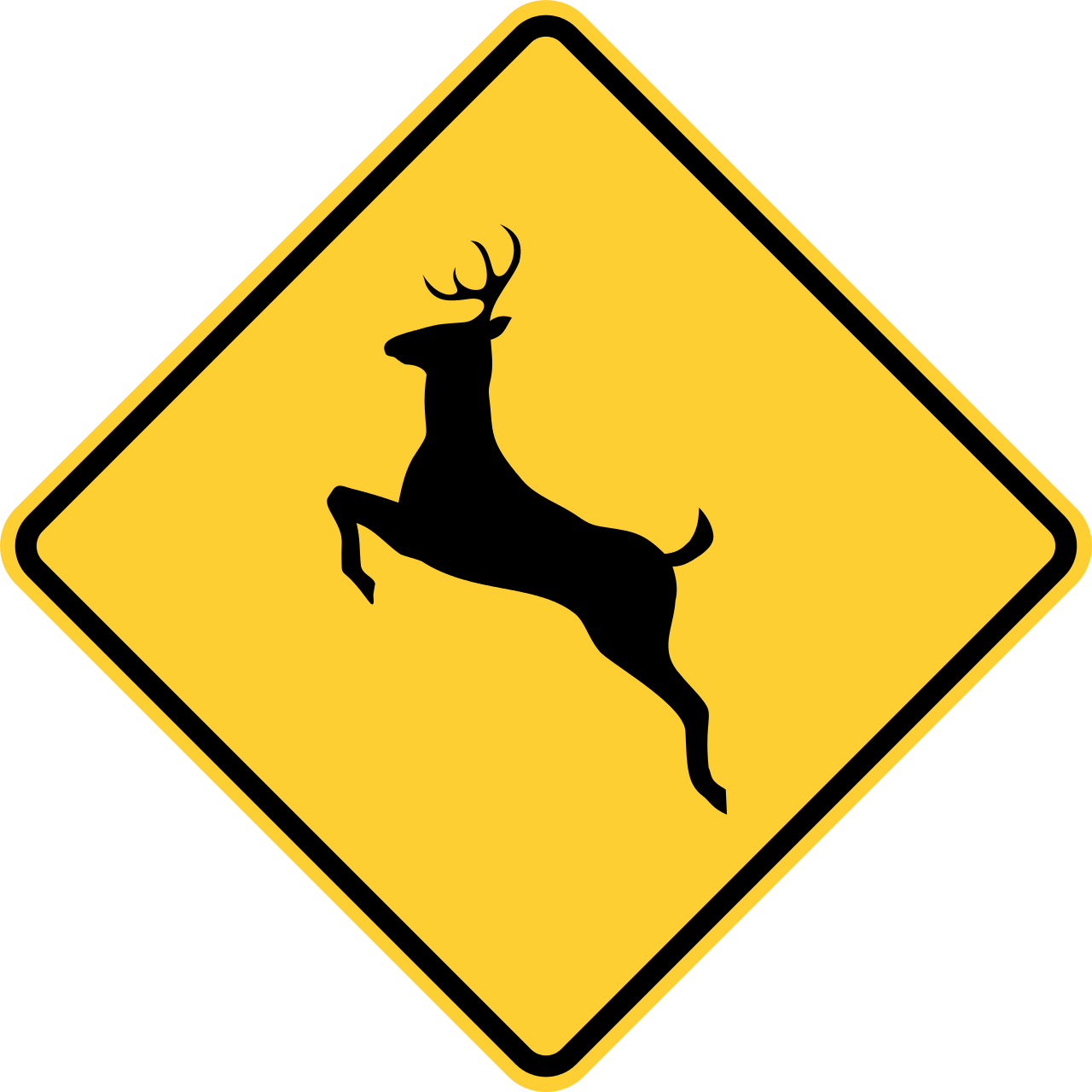
When they see this road sign, drivers should:
A)drive carefully because the animal pictured on the sign is extremely rare in the area.
B)watch for this species crossing the road.
C)park in the zoo area.
19.
Service signs are ____ with ____ letters and symbols.
A)blue; white
B)white; black
C)green; white
20.
Examples of proper glass maintenance include:
A)Replacing worn wiper blades.
B)Keeping your windows clean and clear.
C)All of the above.
21.
A four-way stop sign means:
A)traffic from all four directions must stop.
B)if two vehicles reach the intersection at the same time, the driver on the left yields to the driver on the right.
C)All of the above.
22.
To see vehicles in your blind spots, you must look:
A)in your outside rearview mirror.
B)over your shoulders.
C)in your side mirrors.
23.
When you see this sign you should:
A)increase your speed and try to pass other vehicles.
B)slow your speed and be prepared to stop.
C)slow your speed and do not pass other vehicles.
24.
What should you do if your vision through the windshield becomes blocked?
A)Pull your vehicle off the road and park it.
B)Turn on your emergency lights.
C)Open the side window so you can see.
D)All of the above.
25.
Following another vehicle too closely is known as:
A)speedgating.
B)closetailing.
C)tailgating.
26.
You reach an intersection that is not controlled at the same time as a driver on your right, and both of you prepare to go straight. Who has the right-of-way?
A)You.
B)No one.
C)The other driver.
27.
To avoid panic stops, you should:
A)scan the road ahead for hazards.
B)drive with your window down.
C)pump your brakes to make sure they work.
28.
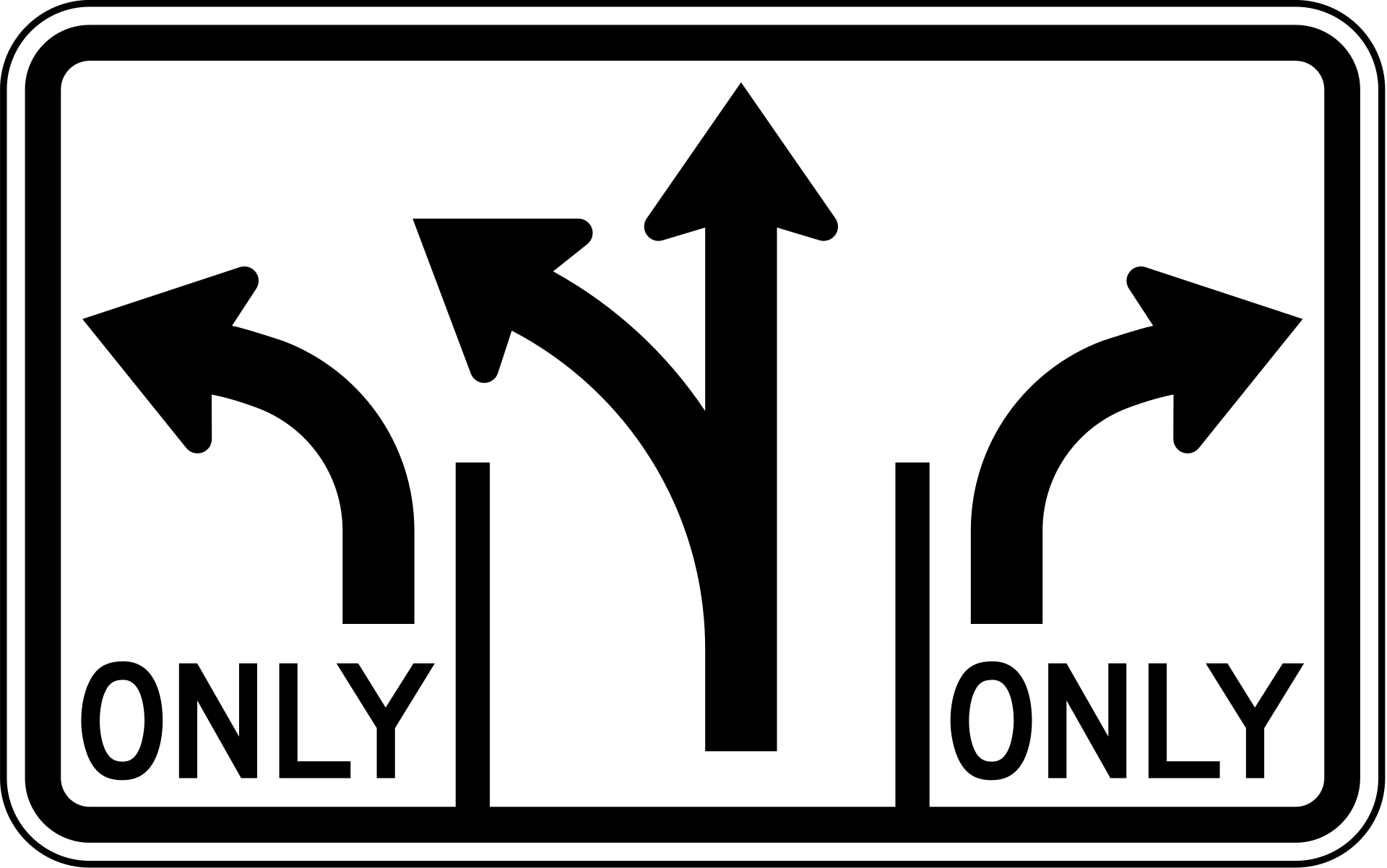
This regulatory sign tells drivers that:
A)traffic in the left lane must turn left at the intersection ahead.
B)all vehicles must turn left immediately.
C)traffic in the right lane must go straight.
29.
Before making a left turn from a one-way street, you must:
A)be in the lane closest to the left curb.
B)be in the lane closest to the right curb.
C)be in the lane closest to the center of the street.
30.
If another vehicle passes you on the left, you must:
A)increase your speed slightly and keep to the right.
B)decrease your speed, then pull over to the right and stop.
C)decrease your speed slightly and keep to the right.
ANSWER KEYCheck answers after completing the test.