DriveQuiz drivequiz.com

MS DMV PERMİT PRACTİCE TEST 3

Mississippi
Duration: 27 min
|
Questions: 30
Student Name:
Date:
Correct:      Incorrect:      Score:      
1.
Which of the following substances can affect the ability to drive?
A) Tranquilizers and sedatives.
B) Cold tablets containing codeine or antihistamines.
C) All of the above.
2.
What is the slow moving vehicle symbol?
A) A reflective yellow diamond
B) A reflective white triangle
C) A reflective orange triangle
3.
If a driver follows you too closely, you should:
A) move to another lane if possible.
B) activate your stop lights.
C) brake suddenly.
4.
Warns of an extremely sharp 180-degree curve ahead. Decelerate significantly before entering the turn.
This sign means:
A) Hairpin corner ahead.
B) Warning: U-turn ahead.
C) Sharp right turn ahead.
5.
You hear a siren close by but can not see where the emergency vehicle is. What do you do?
A) Keep driving until you are sure the emergency vehicle is headed toward you.
B) Stop immediately and activate your emergency flashers.
C) Pull over to the right side of the road and stop until you are sure the emergency vehicle is not headed toward you.
6.
When driving in foggy weather, drivers should:
A) put their lights on low beam.
B) put their lights on high beam.
C) put their emergency flashers on.
7.
When passing another car, you have enough room to return to the driving lane when:
A) you cannot see the vehicle directly to your right.
B) you are at least 50 feet in front of the vehicle.
C) you can see both headlights of the car you passed in your rearview mirror.
8.
Blind spots are:
A) Dangerous intersection where the maximum speed limit is 15 MPH or less.
B) At night, the darkest areas of a road, where emergency flashers should be used.
C) Areas to the side or rear of a vehicle that the driver cannot see with use of mirrors.
9.
Warns drivers that two separate lanes moving in the same direction are merging into one. Drivers in the right lane must adjust speed and merge smoothly with existing traffic.
This sign means:
A) A road crosses the main highway ahead.
B) The divided highway on which drivers are traveling ends ahead.
C) Drivers are coming to a point where another traffic lane joins the one they are on.
10.
Which shape is a railroad advance warning sign?
A) Crossbuck
B) Round
C) Pentagon
11.
If your car goes into water, you should:
A) wait for water to rush in and let it out in small breaths through your nose.
B) call the fire department immediately.
C) remove yourself before it starts to sink.
12.
Paved road surface ends and transitions to gravel, dirt, or unpaved roadway. Reduce speed and prepare for reduced traction.
This road sign warns drivers that:
A) the road surface ahead changes to a low-type surface or earth road.
B) vehicles must leave the pavement immediately.
C) the dirt on the side of the road is soft.
13.
In heavy rain, tires can begin to ride on the water that is on top of the road pavement. This is called:
A) rideplaning.
B) hydroplaning.
C) pavement-planing.
D) waterplaning.
14.
If you've had a few beers, the effects of alcohol will be reduced only by:
A) waiting several hours.
B) taking a cold shower.
C) getting a cup of coffee.
15.
At a crosswalk:
A) construction workers must yield to drivers.
B) drivers must yield to pedestrians.
C) pedestrians must yield to drivers.
16.
A signalized intersection is ahead. Prepare to stop if the light turns yellow or red.
This sign means:
A) No traffic signal ahead
B) Traffic signal ahead
C) Open intersection ahead
17.
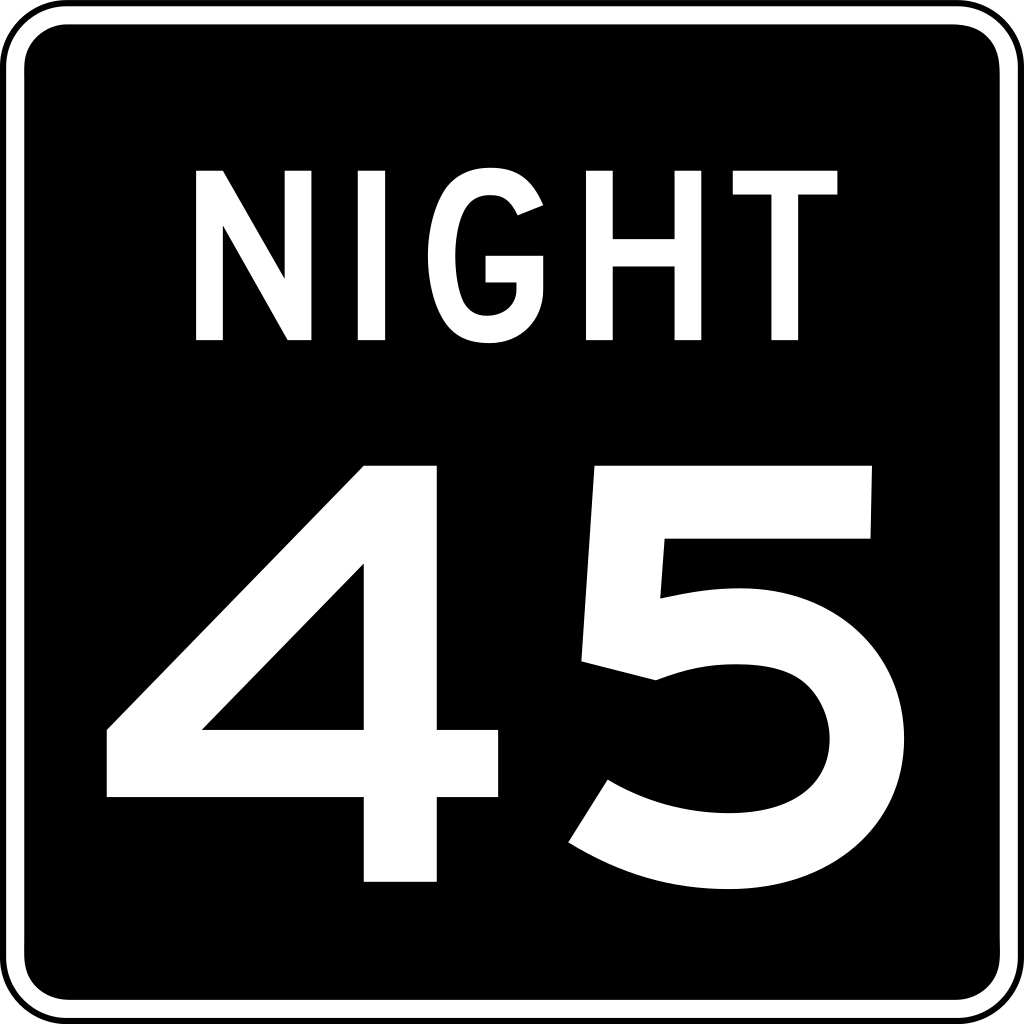
Indicates a lower maximum legal speed limit that applies only during nighttime hours for safety.
This sign means:
A) Take route 45 if you are driving at night.
B) The night-time speed limit is 45 MPH.
C) The minimum speed limit is 45 MPH.
18.
A steep downhill grade is ahead. Trucks and heavy vehicles should downshift to a lower gear to prevent brake overheating.
This road sign means:
A) Watch for trucks entering from the side
B) Merging traffic
C) Steep hill
19.
The road makes a sharp 90-degree right turn ahead. Slow down considerably before entering the turn.
This sign warns drivers that:
A) the road will make a sharp turn to the right.
B) right turns are not allowed.
C) another road enters the highway from the direction shown.
20.
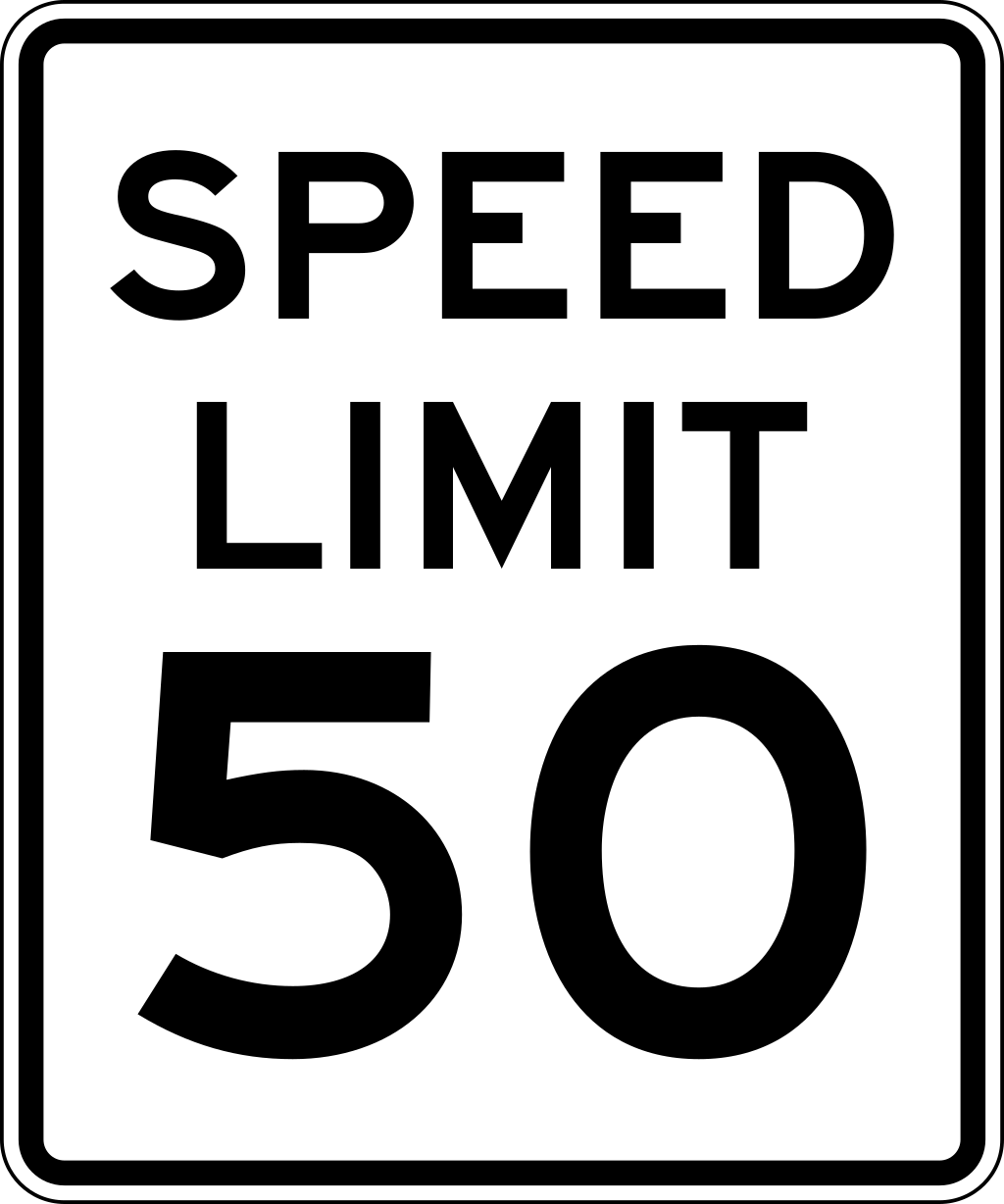
The maximum legal speed under ideal driving conditions is 50 miles per hour. Always adjust speed downward for adverse weather, traffic, or road conditions.
This road sign means:
A) You must travel at the speed indicated
B) The maximum speed limit under ideal conditions
C) None of the above
21.
Alcohol:
A) makes drivers more prone to take chances.
B) increases reaction time.
C) All of the above.
22.
Double solid lines on the roadway mean:
A) you cannot pass.
B) you can not go across the lines except to turn left to enter or leave the highway.
C) All of the above.
23.
When driving behind a motorcycle, drivers should:
A) slow down.
B) be ready to sound the horn.
C) increase the following distance.
24.
At a stop sign there is no stop line or crosswalk. You must stop:
A) before you enter the intersection.
B) at the next crosswalk.
C) after you enter the intersection, if you have a clear view of traffic on the intersecting roadway.
25.
Treat the flashing red signal exactly like a STOP sign: come to a complete stop, yield to cross traffic and pedestrians, then proceed when safe.
What does a flashing red light mean?
A) NO TURN ON RED.
B) The same thing as a stop sign.
C) Drivers may move forward with caution.
26.
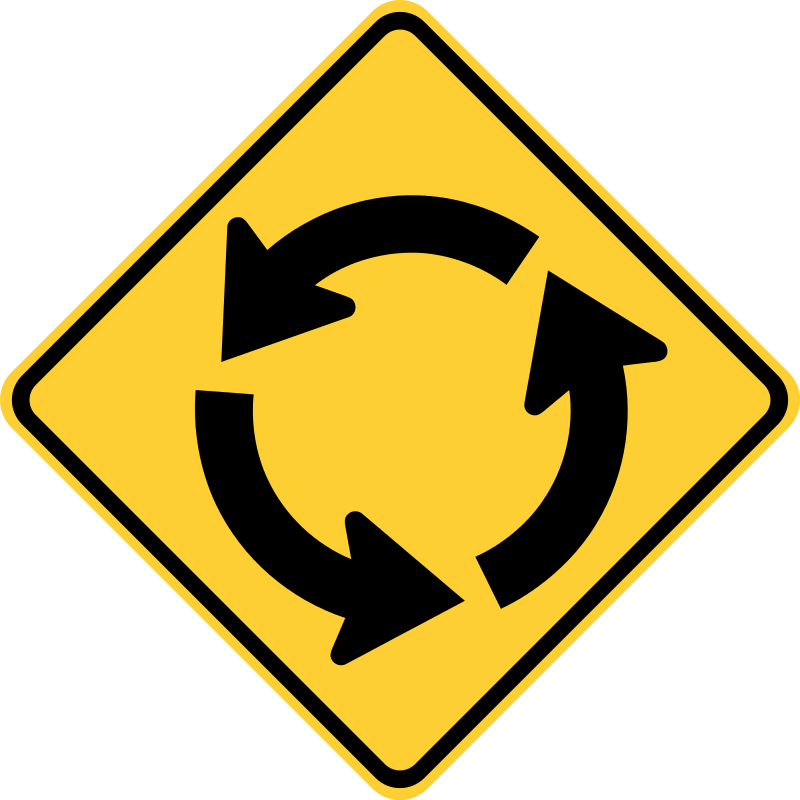
A circular intersection is ahead. Vehicles inside the roundabout have right-of-way; entering traffic must yield to traffic approaching from the left.
This road sign:
A) warns drivers of a sharp turn left. Drivers should slow their speed and keep to the left.
B) provides an advance notice of a roundabout.
C) warns drivers that U-turns are not permitted.
D) is a no-right-turns sign.
27.
A driver who approaches an intersection:
A) must yield the right-of-way to traffic already in the intersection.
B) must drive straight through the intersection, even if another vehicle is already in the intersection.
C) has the right-of-way over traffic already in the intersection.
28.
Always driving slower than other traffic:
A) is a good defensive driving technique.
B) is always safer than driving faster than other traffic.
C) can block traffic.
29.
Some roadway surfaces are more slippery during certain times or at certain places. Which of the following is more likely to be slippery on cold, wet days?
A) Roundabouts and traffic circles.
B) Roads in shady areas.
C) Asphalt rather than concrete roads.
30.
Who is most at risk?
A) Drivers who are fatigued.
B) Drivers who are driving on long, boring roads.
C) All of the above.
ANSWER KEY Check answers after completing the test.
1 C
2 C
3 A
4 A
5 C
6 A
7 C
8 C
9 C
10 B
11 C
12 A
13 B
14 A
15 B
16 B
17 B
18 C
19 A
20 B
21 C
22 C
23 C
24 A
25 B
26 B
27 A
28 C
29 B
30 C