DriveQuiz drivequiz.com

MS DMV PERMİT PRACTİCE TEST 19

Mississippi
Duration: 27 min
|
Questions: 30
Student Name:
Date:
Correct:      Incorrect:      Score:      
1.
When changing lanes, you should remember that:
A) vehicles with two outside mirrors have no blind spots.
B) You only need to turn and look over your right shoulder for lane changes to the right or left.
C) you should look over your left shoulder for a left lane change and your right shoulder for a right lane change.
2.
At intersections, crosswalks, and railroad crossings, drivers should always:
A) look to the sides of their vehicle to see what is coming.
B) slowly pass vehicles the vehicles ahead.
C) stop, listen for oncoming traffic, and proceed with caution.
3.
Prohibits drivers from making a 180-degree turn to travel in the opposite direction at this intersection or stretch of road.
This road sign means:
A) Left turns are not allowed where this sign is displayed.
B) Drivers cannot make a complete turn to go in the opposite direction.
C) Vehicles turning left must make a U-turn.
4.
What is the main reason night driving is more difficult than daytime driving?
A) The use of headlight is required by law.
B) Reduced visibility.
C) Driving within the range.
5.
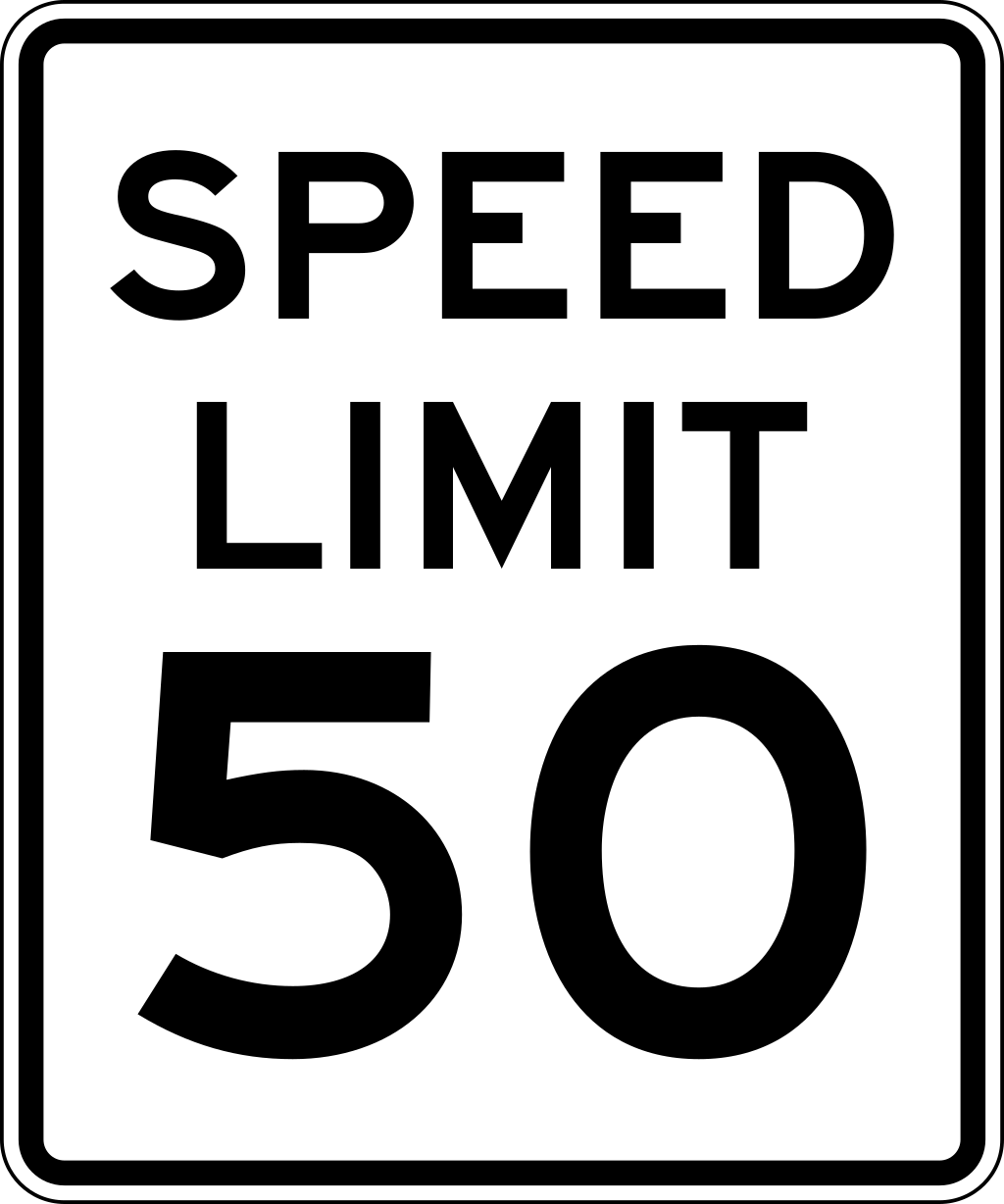
The maximum legal speed under ideal driving conditions is 50 miles per hour. Always adjust speed downward for adverse weather, traffic, or road conditions.
This sign indicates the _______________ vehicles can safely travel in this area.
A) suggested speed
B) maximum speed
C) minimum speed
6.
If a tire suddenly blows out while you are driving, you should:
A) apply the brakes firmly.
B) slow down gradually and brake lightly.
C) pump the brakes rapidly.
7.
Treat the flashing red signal exactly like a STOP sign: come to a complete stop, yield to cross traffic and pedestrians, then proceed when safe.
A flashing red light:
A) is used at dangerous intersections.
B) means the same thing as a stop sign.
C) All of the above.
8.
Which of the following must you obey over the others?
A) Red light
B) Stop sign
C) Police officer
9.
Indicates a two-way left-turn lane in the center of the road. Must only be used to make left turns or U-turns (where permitted), not for regular travel or passing.
This sign means:
A) The center lane is shared for left turns.
B) Left turns in both directions of travel are not permitted.
C) Vehicles may only turn left.
10.
The roadway becomes particularly slippery during wet or rainy conditions. Reduce your speed, increase following distance, and avoid abrupt braking or steering.
This sign indicates:
A) Warning: drunk drivers.
B) Winding road. Drive with caution.
C) The road may be slippery when wet. Drive slowly.
11.
Are drivers allowed to exceed the speed limit to pass other vehicles?
A) Yes, but only by 10 MPH or less.
B) No.
C) Yes, but only if they drive with caution.
12.
In bad weather conditions, when visibility is low, drivers should:
A) drive in the lane closest to oncoming traffic.
B) speed up to get off the road quickly.
C) increase their following distance.
13.
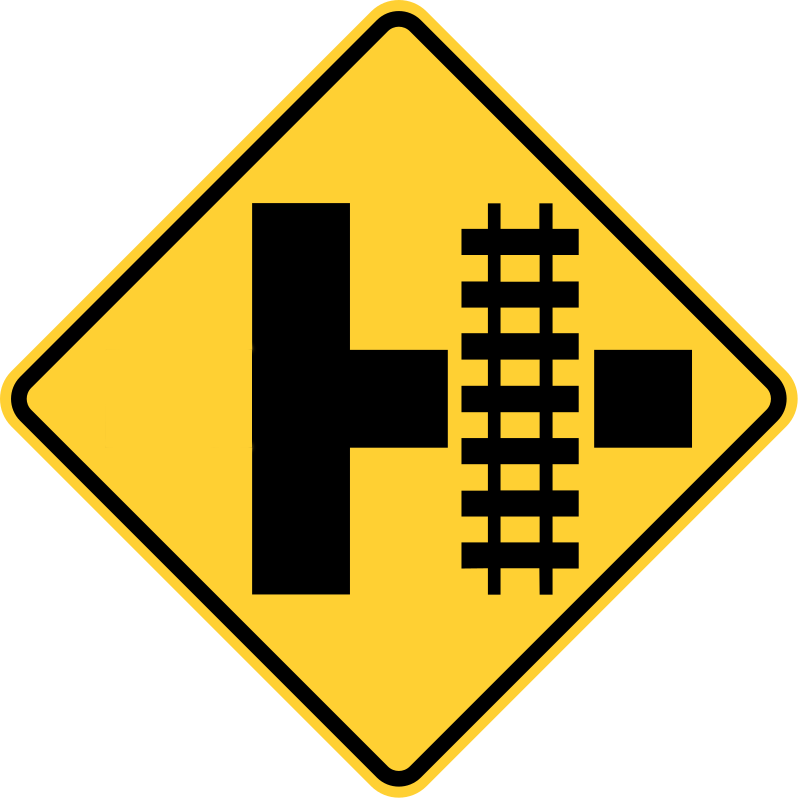
Four-way intersection ahead. Be prepared to yield right-of-way according to traffic control devices.
What does this sign indicate?
A) Parallel railroad crossing (side road)
B) Low ground clearance railroad crossing
C) Parallel railroad crossing (crossroad)
14.
Warns of two consecutive curves in opposite directions (e.g., curves right then left). Slow down to maintain control.
This road sign means:
A) Road construction ahead
B) The road ahead curves right, then left
C) Steep grade ahead
15.
Drivers can not pass a vehicle on the left if:
A) they approach the top of a hill on a two-way road and can not see over it.
B) they can not safely return to the right lane before they reach a solid yellow center line for the right lane.
C) All of the above.
16.
__________________ is a safe driving technique.
A) Using your high beam lights in the fog
B) Starring at the road ahead of your vehicle
C) Checking your rearview mirrors frequently
17.
You may drive faster than the posted speed limit:
A) when passing another vehicle, as long as it is safe to do so.
B) when your lane is empty.
C) Under no circumstances.
18.
Traffic lights are normally ____________ from the top to bottom or left to right.
A) red, green and yellow
B) green, yellow and red
C) red, yellow and green
19.
Only _____ can reduce the alcohol level in the blood.
A) drinking coffee
B) taking a cold shower
C) time
20.
At a red traffic light with a green arrow, you may proceed in the direction of the arrow:
A) after making a complete stop first.
B) if you wait until the light changes.
C) if you are in the proper lane and the roadway is clear.
21.
The golden rule of driving is to:
A) treat others the way you want to be treated.
B) put on your emergency flashers when driving at night.
C) drive faster than the vehicle behind you.
22.
If a pedestrian is illegal crossing in the middle of the street (not at a crosswalk) you:
A) do not have to stop for them.
B) should increase your speed, honk your horn and proceed.
C) must stop for them.
23.
Come to a complete stop before the stop line, crosswalk, or intersection. Look left, right, and left again, and proceed only when it is safe and right-of-way is clear.
This road sign means:
A) Slow down or stop
B) Stop
C) Road narrows ahead
24.
If you are blinded by headlights on an approaching vehicle, you should:
A) avoid looking directly at the bright lights.
B) glance toward the side of the road, then look quickly ahead to determine the other vehicle’s position.
C) All of the above.
25.
Drivers may need more space in front of their vehicle:
A) when following motorcycles.
B) when carrying a heavy load or pulling a trailer.
C) All of the above.
26.
Indicates an upcoming bicycle crossing or shared road zone. Always leave at least 3 feet of clearance when passing cyclists.
This road sign means:
A) Watch for bicycles
B) Bicycle parking ahead
C) Bicycles are not allowed in this area
27.
In case of skidding, drivers should NOT:
A) take their foot off the gas pedal.
B) pump the brakes gently if they are about to hit something.
C) tap the gas pedal with their foot.
28.
Warns drivers that two separate lanes moving in the same direction are merging into one. Drivers in the right lane must adjust speed and merge smoothly with existing traffic.
This sign indicates:
A) Winding road
B) Merging traffic
C) Divided highway ends
29.
Who is most at risk?
A) Drivers who have overslept.
B) Drivers who are driving long distances without rest breaks.
C) Experienced drivers.
30.
The driver of an emergency vehicle that uses lights and a siren can legally:
A) pass red lights.
B) exceed the speed limit
C) All of the above.
ANSWER KEY Check answers after completing the test.
1 C
2 A
3 B
4 B
5 B
6 B
7 C
8 C
9 A
10 C
11 B
12 C
13 A
14 B
15 C
16 C
17 C
18 C
19 C
20 C
21 A
22 C
23 B
24 C
25 C
26 A
27 C
28 B
29 B
30 C