←
Back to Test
Hide Answer Key
Print / Save as PDF
Print / PDF
drive
quiz
.com
MS DMV PERMİT PRACTİCE TEST 18
Mississippi
Duration: 27 min
|
Questions: 30
Student Name:
Date:
Correct:
Incorrect:
Score:
1.
A vehicle is stopped at a crosswalk to permit a pedestrian to cross the roadway. The driver of the vehicle approaching from the rear should:
A)
sound the horn.
B)
overtake and pass the stopped vehicle.
C)
not overtake and pass the stopped vehicle.
2.
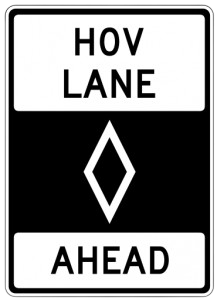
This road sign indicates that:
A)
a lane is reserved for certain purposes or certain vehicles.
B)
buses and car pools may not travel in the restricted lane.
C)
vehicles cannot go straight ahead. Cars must turn either to the right or left.
3.
This road sign means:
A)
Winding Road Ahead
B)
Persons with Disabilities Parking
C)
Merge
4.
Which of the following road surfaces freezes first when wet?
A)
Bridges and overpasses.
B)
Roundabouts.
C)
Tunnels.
5.
What does a flashing yellow light mean?
A)
The same thing as a stop sign.
B)
Drivers may move forward with caution.
C)
All of the above.
6.
A broken white line:
A)
means passing or crossing is prohibited in that lane.
B)
separates two lanes traveling in the same direction.
C)
marks the right edge of the roadway.
7.
This road sign means:
A)
A road joins from the right
B)
All traffic must go straight ahead
C)
All traffic must turn right
8.
Regulation signs normally are:
A)
white triangles.
B)
green rectangles.
C)
white rectangles.
9.
What type of pavement marking shows you which lane you must use for a turn?
A)
Edge line
B)
Diamond
C)
Crosswalk Lines
D)
Arrows
10.
When they see a crossbuck sign, drivers:
A)
must slow down and wait for the red lights to flash.
B)
must always come to a complete stop.
C)
are legally required to yield the right of way to trains.
11.
A traffic sign with a red circle around and a slash over a symbol means:
A)
the maneuver shown by the symbol is not allowed.
B)
Do not drive faster than the posted speed limit.
C)
the maneuver shown on the sign should be executed with extreme caution.
12.
If you get on a wrong expressway exit, you must:
A)
get off at the next exit and look for signs that tell you how to return to the expressway.
B)
use the the exit ramp to accelerate to expressway speed and blend with traffic.
C)
drive in reverse to return to the expressway.
13.
This road sign means:
A)
There is a series of sharp turns up ahead on the road
B)
Sharp right turn ahead.
C)
A road joins from the right
14.
When you approach an intersection with a flashing yellow light, you must:
A)
come to a complete stop, then proceed.
B)
slow and proceed with caution.
C)
maintain your normal speed.
15.
When preparing to exit an expressway, drivers should start reducing their speed:
A)
about halfway through the deceleration lane.
B)
immediately upon entering the deceleration lane.
C)
at least 100 feet before entering the deceleration lane.
16.
A flashing yellow light:
A)
warns drivers to proceed with caution.
B)
is used at dangerous intersections.
C)
All of the above.
17.
A person walking with a white cane or guide dog is likely to be:
A)
a deaf person.
B)
a traffic enforcement officer.
C)
a blind person.
18.
What is the first thing to do when you make a three-point turn?
A)
Signal with your left turn signal, then check carefully for traffic coming toward you.
B)
Signal with your right turn signal, then pull over to the right and stop.
C)
Turn left, go across the road so you come to a stop while you face the edge of the road.
19.
When following a motorcycle, drivers must remember that motorcycles can ____________ than other vehicles.
A)
accelerate much faster
B)
stop much more quickly
C)
stop much more slowly
20.
This road sign means:
A)
Railroad Crossing
B)
One Way
C)
Limited parking
21.
The first sign drivers see when approaching a highway-rail intersection is usually:
A)
a crossbuck sign.
B)
an advance warning sign.
C)
a speed limit sign.
22.
Two motorcyclists are allowed to:
A)
ride side-by-side in a single lane.
B)
share the lane with another vehicle.
C)
race on empty roads.
23.
At a school crossing, drivers should:
A)
always stop, whether there’s a stop sign or not.
B)
always sound their horn and stay alert.
C)
watch for children and be ready to stop.
24.
Drivers should use high beam headlights when:
A)
following another vehicle.
B)
when they come within 50 feet of an oncoming vehicle.
C)
there are no oncoming vehicles approaching.
25.
You want to turn left at an intersection ahead. A car reaches the intersection from the opposite direction and moves straight ahead. You:
A)
can turn left. You have the right of way.
B)
must wait for the car to go through before you turn.
C)
may not enter the intersection to prepare for your left turn if the light is green.
26.
Which statement about driving and drugs is true?
A)
Only illegals drugs can impair your driving.
B)
Prescription drugs are safe to use if they don't make you feel drowsy.
C)
Even over the counter drugs can impair your driving.
27.
Bicyclists making a left hand turn:
A)
must cut through all lanes.
B)
should wait on the right side of the road.
C)
may use the left lane.
28.
When daylight begins to fade, you should use your:
A)
low beam headlights.
B)
emergency flashers.
C)
parking lights.
29.
When you make a left turn from a one-way road into a one-way road, if the road you enter has two lanes, you:
A)
must turn into its right lane.
B)
can not turn left.
C)
must turn into its left lane.
30.
When is the pavement most slippery?
A)
If it's been raining several hours.
B)
When it has just begun to rain.
C)
When it's been raining from at least one hour.
ANSWER KEY
Check answers after completing the test.
1
C
2
A
3
C
4
A
5
B
6
B
7
A
8
C
9
D
10
C
11
A
12
A
13
A
14
B
15
B
16
C
17
C
18
B
19
B
20
A
21
B
22
A
23
C
24
C
25
B
26
C
27
C
28
A
29
C
30
B