DriveQuiz drivequiz.com

MS DMV PERMİT PRACTİCE TEST 16

Mississippi
Duration: 27 min
|
Questions: 30
Student Name:
Date:
Correct:      Incorrect:      Score:      
1.
Alerts drivers to an upcoming crosswalk where pedestrians frequently cross. Slow down and yield right-of-way to anyone in or about to enter the roadway.
The picture shows:
A) a railroad advance warning sign.
B) a speeding fines doubled sign.
C) a reversible road sign.
2.
Where are yield signs usually placed?
A) At intersections, if there is no marked stop line.
B) Where auxiliary roads lead into major roads.
C) Where major roads lead into auxiliary roads.
3.
Posted on the far side of a sharp curve or T-intersection to indicate a sharp change in direction of travel.
This sign means:
A) Not enter
B) Detour to the right
C) The road to the right is for one-way traffic only
4.
If a pedestrian is in the middle of the street when your signal light changes to green, you should:
A) proceed unless the pedestrian is in your lane.
B) proceed because you have the right-of-way.
C) wait until the pedestrian crosses the street before proceeding.
5.
If the entrance lane is too short to allow acceleration to expressway speed, you should:
A) stop and wait for a large space in traffic.
B) enter the expressway and accelerate quickly.
C) reduce your speed to 15 MPH or less and blend with traffic.
6.
Drivers can not pass a vehicle on the left if:
A) they approach the top of a hill on a two-way road and can not see over it.
B) they can not safely return to the right lane before they reach a solid yellow center line for the right lane.
C) All of the above.
7.
To reduce road rage, you should:
A) always signal your intention when changing lanes.
B) use your horn frequently to warn other drivers.
C) talk on your cell phone while driving.
8.
If the entrance lane is too short to allow acceleration to highway speed, you should:
A) go to the next entrance ramp.
B) stop and wait for a large gap in traffic, then enter the highway and accelerate quickly.
C) merge into highway traffic as soon as possible.
9.
Regulatory signs are:
A) white.
B) yellow.
C) green.
10.
Warns drivers that two separate lanes moving in the same direction are merging into one. Drivers in the right lane must adjust speed and merge smoothly with existing traffic.
When you see a 'merging traffic' sign on the freeway, you should:
A) slow down to allow traffic to enter.
B) move to another lane to let traffic enter, if safe.
C) speed up to avoid congesting traffic.
11.
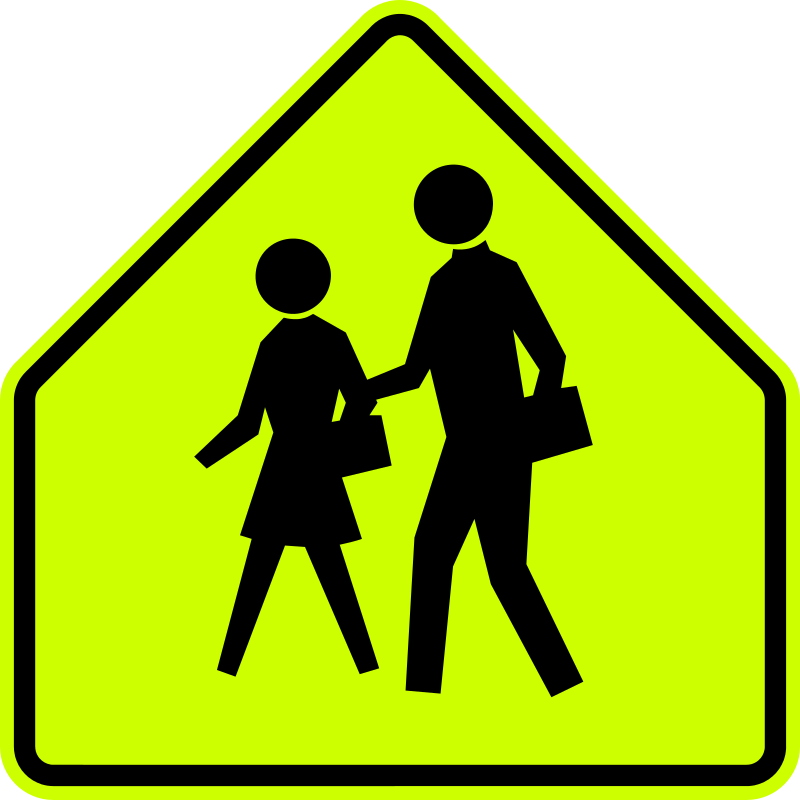
Five-sided pentagon sign indicating an upcoming school area. Watch for children crossing, school buses, and observe posted reduced school speed limits.
This road sign means:
A) School crossing
B) Playground ahead
C) Pedestrian crossing
12.
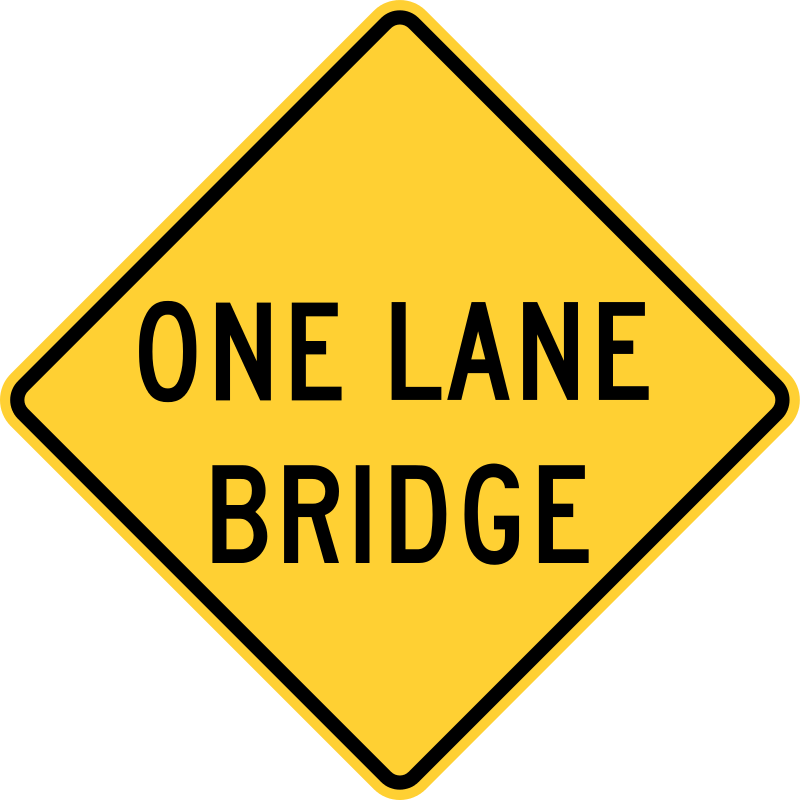
The bridge ahead has narrower lanes or shoulders than the preceding road. Use caution when meeting oncoming vehicles.
This sign warns drivers of:
A) a reduction of lanes.
B) a dip in the road. Drivers should be ready to stop if the dip is filled with water.
C) a bridge ahead, wide enough to accommodate two lanes of traffic, but with very little clearance.
13.
What is the meaning of blue traffic signs?
A) A blue background indicates a regulatory sign.
B) They give directional information.
C) Blue indicates road user services.
14.
The bridge width allows only one vehicle to cross at a time. The vehicle reaching the bridge first has right-of-way; opposing traffic must wait.
What should drivers do when they see this sign?
A) Make sure the bridge is clear of oncoming traffic before they cross.
B) Look to the left and right for other traffic.
C) Allow others to merge smoothly.
15.
The shape of a route sign tells you:
A) the type of route you are on.
B) the speed limit on that route.
C) that the route you are on might be dangerous.
16.
What is the first thing you should do if your wheels move off the pavement?
A) Pull the steering wheel back.
B) Pull over to the right and sound your horn to warn the other drivers.
C) Ease your foot off the gas pedal and brake gently.
17.
When approaching someone using a white cane or guide dog, drivers should:
A) carefully drive around them.
B) stop until the person is well away from the roadway or path of travel.
C) honk their horn as they proceed past them.
18.
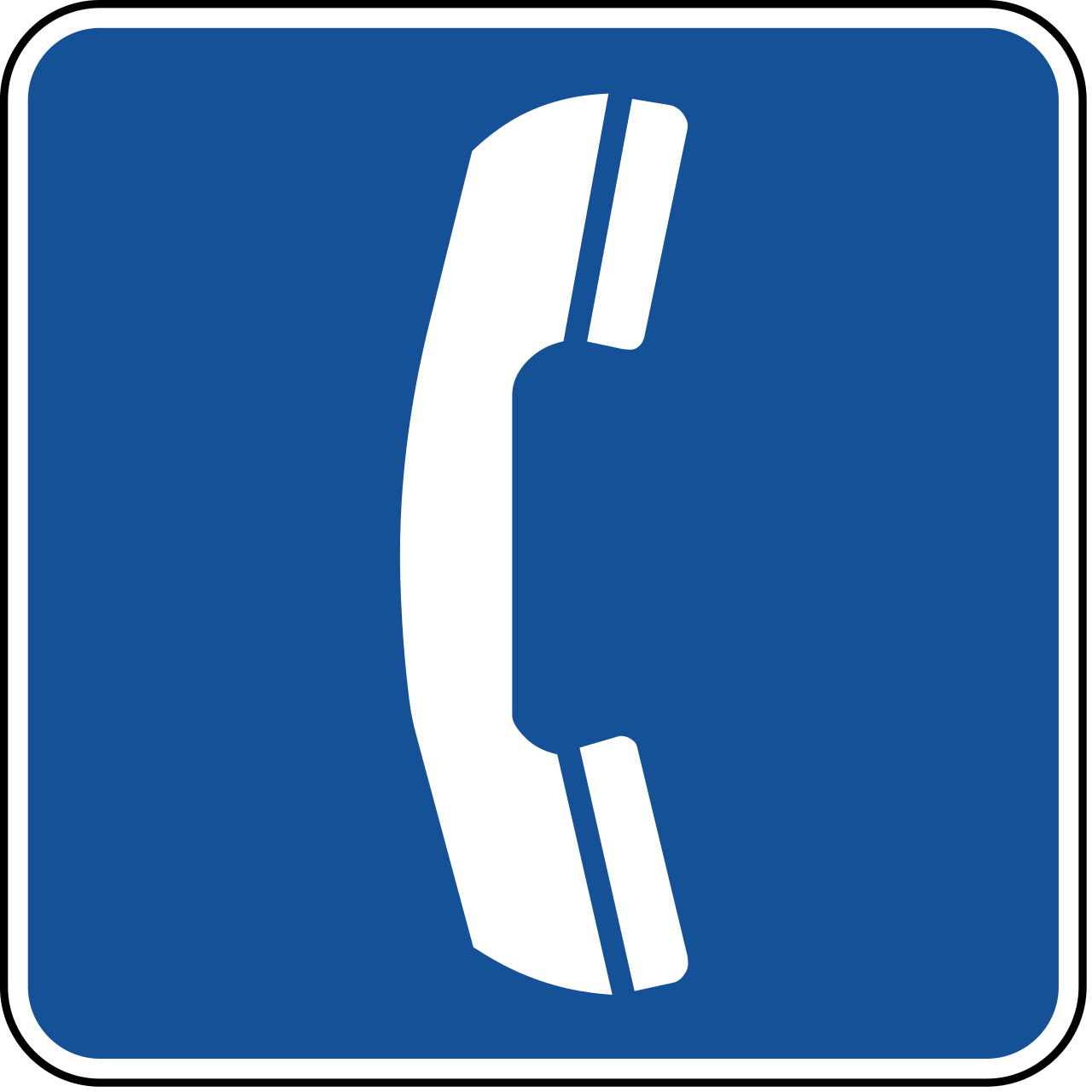
Blue motorist service sign indicating the availability of a public emergency telephone along the highway.
This sign indicates:
A) Phone service ahead
B) Emergency line available
C) Cell phone shop ahead
19.
When entering a freeway, you should check traffic by:
A) using both the inside and outside mirrors.
B) using the inside mirror.
C) using the side mirror and looking over your shoulder.
20.
Yellow diamond warning that pedestrians may be crossing ahead. Exercise caution and yield.
This road sign means:
A) Pedestrian crossing
B) School zone
C) School crossing
21.
If a tire blows out, drivers should:
A) apply the brake firmly and hold it.
B) hold the steering wheel tightly and use the brakes lightly.
C) pull over quickly.
22.
The roadway becomes particularly slippery during wet or rainy conditions. Reduce your speed, increase following distance, and avoid abrupt braking or steering.
This road sign means:
A) Watch for vehicles entering from the side
B) When pavement is wet, reduce your speed
C) Winding road ahead
23.
To make a proper right turn:
A) swing to the left before turning right.
B) slow down and get into the lane nearest the centerline.
C) give the proper signal and get into the lane nearest the right curb.
24.
You have stopped for a train at a railroad crossing. After the train passes, you must:
A) look to see if another train is coming, then cross the tracks if it is safe to do so.
B) watch for vehicles that must stop at railroad crossings (school buses, vehicles carrying hazardous materials, etc.).
C) All of the above.
25.
When driving at night, if an approaching car is using its high-beams you should:
A) look toward the left edge of the road.
B) look toward the right edge of the road.
C) turn your lights on and off.
26.
When parking on a public road, drivers should:
A) move as far away from traffic as possible.
B) always park on the left side of the roadway.
C) All of the above.
27.
It is unlawful­ to:
A) pass within 250 feet of any intersection.
B) exceed the posted speed limit when passing.
C) pass within 150 feet of any railroad crossing.
28.
Having a drivers license is:
A) a requirement.
B) a privilege.
C) a constitutional right.
29.
No Zones are areas around trucks where cars:
A) disappear into blind spots or are so close to the truck that the driver's ability to stop or maneuver safely is restricted.
B) can turn safely because several car lengths have been left between the truck and car.
C) can travel behind trucks at constant speed and have no risks of being involved in a collision.
30.
If you have to wait for a space to enter a freeway, you should:
A) slow down on the ramp and search ahead for a gap in traffic on the freeway.
B) stop at the end of the ramp to wait for a gap in traffic.
C) maintain speed and signal other drivers to make a gap.
ANSWER KEY Check answers after completing the test.
1 A
2 B
3 B
4 C
5 A
6 C
7 A
8 B
9 A
10 B
11 A
12 C
13 C
14 A
15 A
16 C
17 B
18 A
19 C
20 A
21 B
22 B
23 C
24 C
25 B
26 A
27 B
28 B
29 A
30 A