DriveQuiz drivequiz.com

MN DMV PERMİT PRACTİCE TEST 8

Minnesota
Duration: 36 min
|
Questions: 40
Student Name:
Date:
Correct:      Incorrect:      Score:      
1.
BAC is expressed in:
A) percentage of alcohol to blood.
B) percentage of blood to alcohol.
C) ounces of alcohol in your blood.
2.
Your car stalls on the tracks at a railroad crossing, and a collision with a train is imminent. After getting yourself and your passengers out of the car, you should:
A) run toward the train but stay off the tracks.
B) signal the train to stop.
C) cross the tracks.
3.
A speed limit is the __________ speed at which a vehicle may legally travel on the road under ideal conditions.
A) maximum
B) minimum
C) suggested
D) None of the above.
4.
Following another vehicle too closely is known as:
A) speedgating.
B) closetailing.
C) tailgating.
5.
You should increase your following distance when:
A) exiting a freeway.
B) following a motorcycle.
C) driving behind a large vehicle that blocks your vision.
D) All of the above.
6.
Flashing Upraised Hand signal indicates pedestrians should finish crossing if already in the crosswalk, but not start crossing.
A pedestrian in the crosswalk when the 'DON’T WALK' signal begins flashing must:
A) stop immediately.
B) go back and wait the “WALK” light
C) finish crossing the street.
7.
When approaching a railroad crossing that has no warning signals (such as electric flashing lights or gates) a driver should look, listen and slow down.
A) False
B) True
8.
Passing is prohibited:
A) when a school bus is stopped to load or unload children on a public road.
B) at intersections.
C) whenever a solid line marks the left side of your lane.
D) All of the above.
9.
Alerts drivers to an upcoming crosswalk where pedestrians frequently cross. Slow down and yield right-of-way to anyone in or about to enter the roadway.
What should drivers do when they see this road sign?
A) come to a complete stop and wait for a train to cross.
B) slow down, look for a train, and be prepared to stop.
C) look for a human flagger.
10.
When driving on a wet road:
A) as you drive faster, your tires may lose traction.
B) you must be aware that the pavement gets even more slippery when it's been raining for long periods of time.
C) you should follow the vehicle ahead of you more closely.
D) as you decrease your speed, the road becomes more slippery.
11.
When following a motorcycle, drivers must remember that motorcycles can ____________ than other vehicles.
A) accelerate much faster
B) stop much more quickly
C) stop much more slowly
12.
Drivers should use the horn:
A) if a driver is moving slowly, and you want them to drive faster.
B) only when necessary, to avoid collisions.
C) when feeling angry or upset.
D) to alert other drivers that they made a mistake.
13.
To avoid the risk of being involved in an alcohol-related crash, you should:
A) decide before you start drinking that you are not going to drive.
B) say 'No, thanks' if someone offers you alcohol.
C) call a taxi if you've been drinking.
D) All of the above.
14.
On what three conditions does your blood alcohol content (BAC) depend?
A) Your weight. How much alcohol you drink. How much time passes between drinks.
B) Your weight. The type of beverage you drink. How fit you are.
C) Your height. How much alcohol you drink. The type of beverage you drink.
15.
A steep downhill grade is ahead. Trucks and heavy vehicles should downshift to a lower gear to prevent brake overheating.
This road sign means:
A) Merging traffic
B) Steep grade ahead
C) Intersection ahead
16.
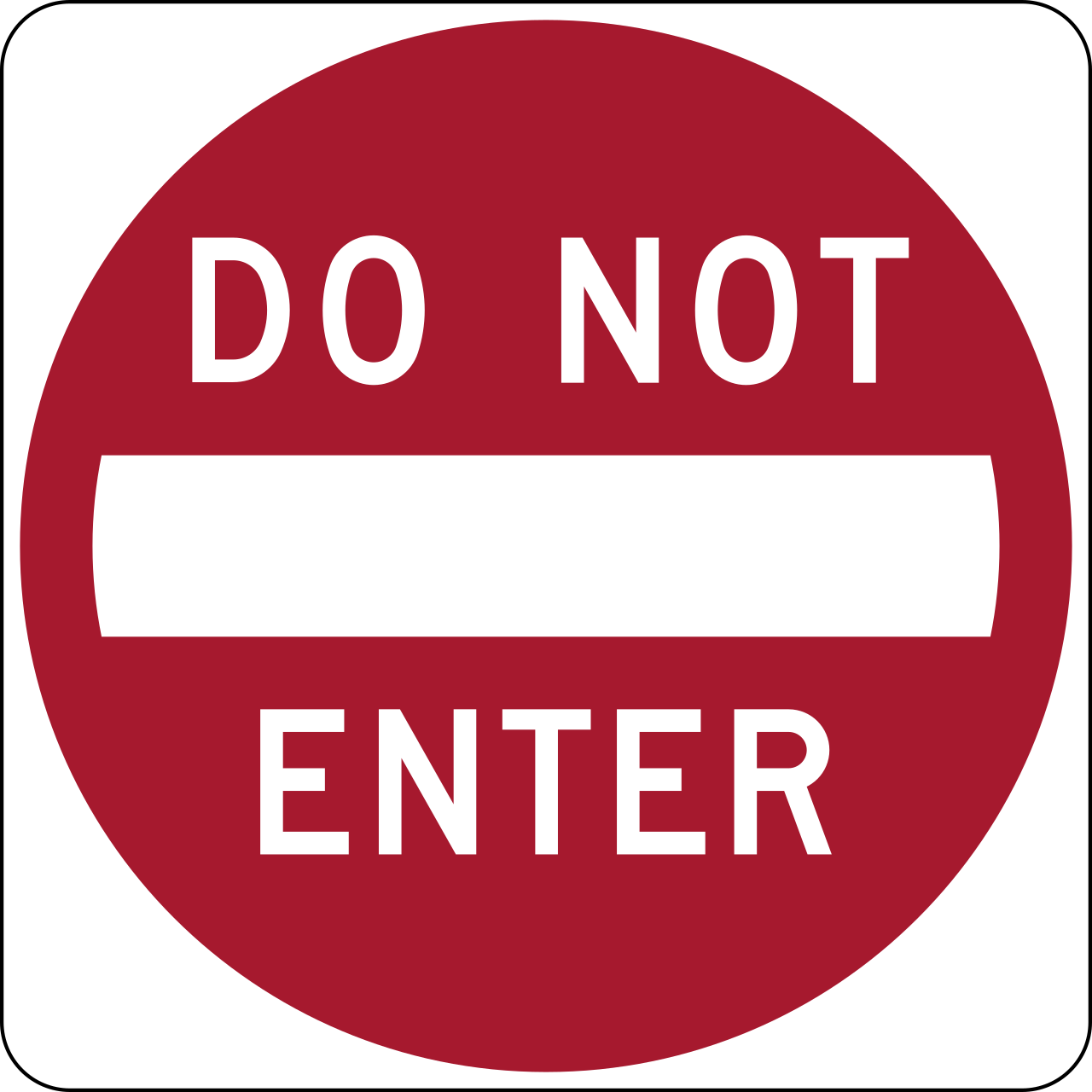
Marks a roadway or ramp where vehicular traffic is strictly forbidden to enter from your direction (such as freeway off-ramps or one-way streets).
This sign indicates:
A) that you must not drive past this sign.
B) that you must yield the right-of-way.
C) the entrance to a construction site.
D) the entrance to a dead-end street.
17.
Come to a complete stop before the stop line, crosswalk, or intersection. Look left, right, and left again, and proceed only when it is safe and right-of-way is clear.
This road sign means:
A) Slow down or stop
B) Stop
C) Road narrows ahead
18.
Object marker used to mark obstacles or bridge abutments near the edge of the road to alert drivers at night.
When they see a yellow X signal, drivers should:
A) come to a complete stop at the marked stop line.
B) turn off the ignition.
C) prepare to leave the lane safely.
19.
BAC is:
A) the acronym for Beer ACcumulation.
B) the number of ounces of alcohol in your blood.
C) the percentage of alcohol in your blood.
20.
A steep downhill grade is ahead. Trucks and heavy vehicles should downshift to a lower gear to prevent brake overheating.
This sign warns of a ________ ahead.
A) hill
B) no passing zone
C) soft shoulder
21.
When driving on wet roads, you should remember:
A) driving on wet roads can cause hydroplaning.
B) you should give yourself additional time to stop.
C) to stay farther behind the vehicle ahead of you.
D) All of the above.
22.
When driving at night, you should slow down and:
A) use high beams whenever possible, but never when there's oncoming traffic.
B) use high beams until other drivers dim their lights.
C) follow the vehicle ahead more closely to avoid glare from oncoming headlights.
D) come to a complete stop whenever there's oncoming traffic.
23.
When approaching any intersection or driveway, drivers should:
A) look both ways and be ready to stop.
B) pass other vehicles and then stop.
C) drive at the fastest speed just before entering the intersection.
24.
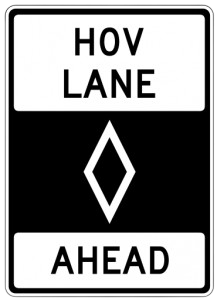
High-Occupancy Vehicle (HOV) diamond lane ahead. Only vehicles carrying the minimum required number of passengers (usually 2 or more) may use this lane.
This road sign indicates that:
A) a lane is reserved for certain purposes or certain vehicles.
B) buses and car pools may not travel in the restricted lane.
C) vehicles cannot go straight ahead. Cars must turn either to the right or left.
25.
Your BAC depends on:
A) how much alcohol you drink.
B) how much time passes between drinks.
C) All of the above.
26.
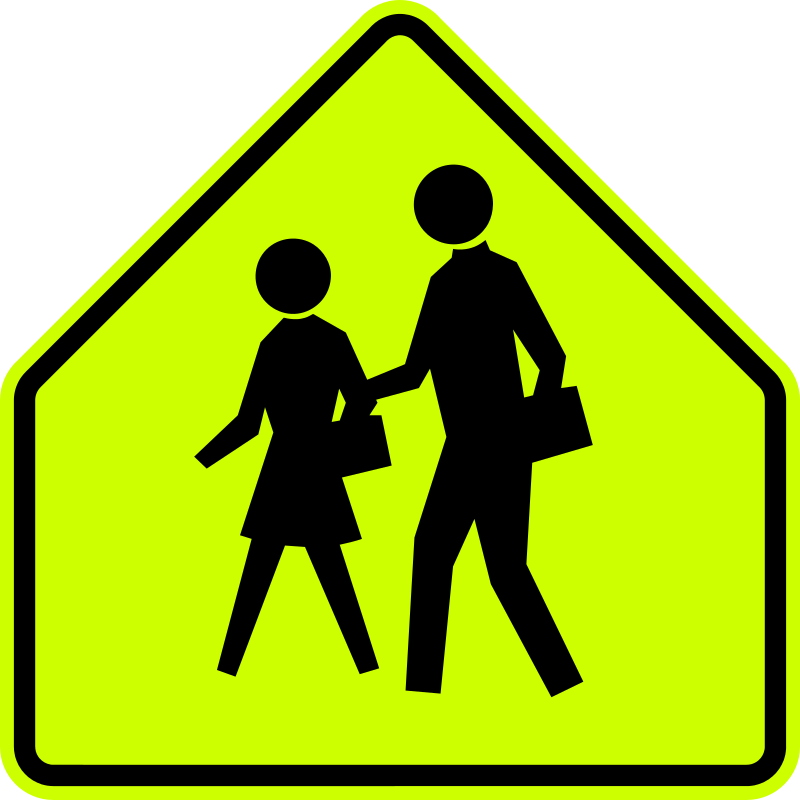
Five-sided pentagon sign indicating an upcoming school area. Watch for children crossing, school buses, and observe posted reduced school speed limits.
This sign means:
A) Business area nearby. Watch for business people.
B) There is a work zone ahead. Watch for workers.
C) The driver is near a school and should watch for children.
27.
The roadway becomes particularly slippery during wet or rainy conditions. Reduce your speed, increase following distance, and avoid abrupt braking or steering.
This sign indicates:
A) Warning: drunk drivers.
B) Winding road. Drive with caution.
C) The road may be slippery when wet. Drive slowly.
28.
The roadway becomes particularly slippery during wet or rainy conditions. Reduce your speed, increase following distance, and avoid abrupt braking or steering.
This road sign means:
A) Winding road
B) Side road ahead
C) Slippery when wet
29.
When driving in fog, drivers should:
A) not use high beam headlights.
B) use low beam headlights to better illuminate the road ahead.
C) slow down and drive cautiously.
D) All of the above.
30.
When changing lanes, you should not:
A) signal your intentions early.
B) check your side and rear view mirrors.
C) use the inside rearview mirror to check for blind spots
D) check to see if other drivers are moving into the same lane.
31.
What is the purpose of minimum speed limits?
A) To keep a smooth traffic flow.
B) To halt the traffic flow.
C) To allow emergency vehicles with red flashing lights to safely pass other vehicles.
32.
If you miss your exit from an interstate expressway, you should:
A) go to the next exit and come back to the exit you missed.
B) use the right turn signal, check your mirrors and move to the right.
C) pull over to the right and back up with caution until you reach the exit ramp.
D) make a quick U-turn from your lane of travel.
33.
The amount of space you need to cross traffic depends on the:
A) road and weather conditions and oncoming traffic.
B) number of cars behind you.
C) presence of a yield sign.
D) number of cars in front of you.
34.
How can you prevent fatigue on a long trip?
A) Plan to drive long trips with a companion.
B) Get enough sleep.
C) All of the above.
35.
Right turns are strictly prohibited at this intersection under all circumstances.
This road sign means:
A) No left turn
B) No right turn
C) No U-turns
36.
The bridge ahead has narrower lanes or shoulders than the preceding road. Use caution when meeting oncoming vehicles.
This sign warns drivers of:
A) a reduction of lanes.
B) a dip in the road. Drivers should be ready to stop if the dip is filled with water.
C) a bridge ahead, wide enough to accommodate two lanes of traffic, but with very little clearance.
37.
Service signs are ____ with ____ letters and symbols.
A) blue; white
B) white; black
C) green; white
38.
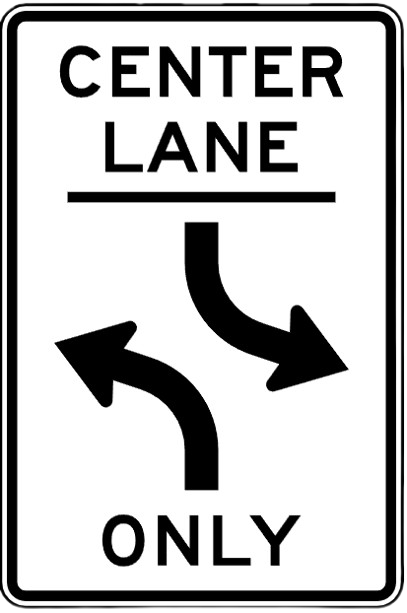
Indicates a two-way left-turn lane in the center of the road. Must only be used to make left turns or U-turns (where permitted), not for regular travel or passing.
This sign means:
A) The center lane is shared for left turns.
B) Left turns in both directions of travel are not permitted.
C) Vehicles may only turn left.
39.
You may not pass another vehicle on either side of a _______ centerline.
A) solid or broken yellow
B) single broken white
C) double solid yellow
D) single broken yellow
40.
Pentagonal signs are used to indicate:
A) possible hazards on roadways.
B) no passing zones.
C) school crossings.
ANSWER KEY Check answers after completing the test.
1 A
2 A
3 A
4 C
5 D
6 C
7 B
8 D
9 B
10 A
11 B
12 B
13 D
14 A
15 B
16 A
17 B
18 C
19 C
20 A
21 D
22 A
23 A
24 A
25 C
26 C
27 C
28 C
29 D
30 C
31 A
32 A
33 A
34 C
35 B
36 C
37 A
38 A
39 C
40 C