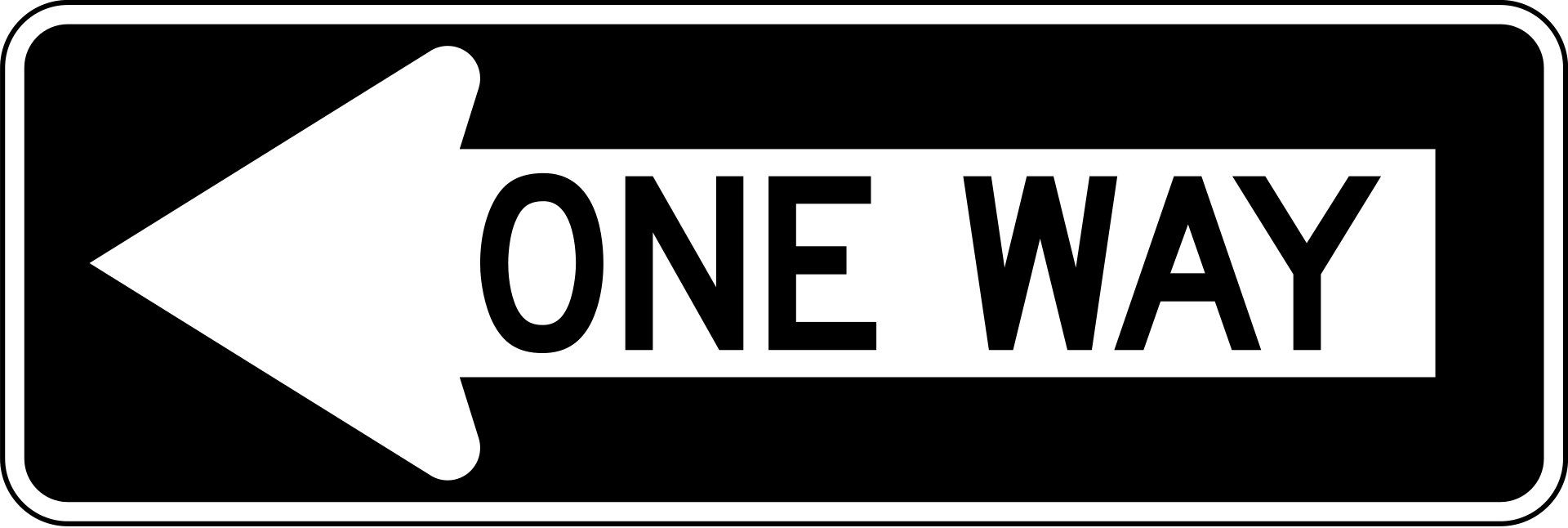
C)The road to the right is for one-way traffic only
2.
What are some telltale signs of a drunk driver?
A)Sudden stops.
B)Weaving between lanes.
C)Driving slower than the normal flow of traffic.
D)All of the above.
3.
This road sign means:
A)Truck stop ahead
B)No trucks allowed
C)Hill or downgrade up ahead
4.
__________ are blue with white letters and symbols.
A)Warning signs
B)Service signs
C)Destination signs (guide signs)
5.
Which of the following does NOT affect the distance that it takes to stop your vehicle?
A)Perception time.
B)Braking distance.
C)Reaction distance.
D)Steering ability.
6.
An edge line that angles toward the center of the road indicates that:
A)the road is narrower ahead.
B)there’s a narrow bridge ahead.
C)you must turn right.
7.
A flashing red light:
A)is used at dangerous intersections.
B)means the same thing as a stop sign.
C)All of the above.
8.
Aggressive drivers:
A)run stop signs.
B)are high risk drivers.
C)tailgate other vehicles and make improper lane changes.
D)All of the above.
9.
When you pass another vehicle, before you return to the right lane, you must:
A)look at your interior rear-view mirror.
B)signal.
C)All of the above.
10.
Are drivers allowed to exceed the speed limit to pass other vehicles?
A)Yes, but only by 10 MPH or less.
B)No.
C)Yes, but only if they drive with caution.
11.
The driver of an emergency vehicle that uses lights and a siren can legally:
A)pass red lights.
B)exceed the speed limit
C)All of the above.
12.
What should you do if your headlights suddenly go out?
A)Brake immediately and activate your emergency lights.
B)Use your emergency lights, parking lights or directional signals.
C)Ease your foot off the gas pedal and brake gently.
13.
A flashing red traffic light:
A)has the same meaning as a yield sign.
B)is used to indicate a pedestrian crossing.
C)has the same meaning as a stop sign.
D)indicates that you should drive with caution.
14.
If a bus has signaled and is pulling back onto the roadway, you must:
A)yield.
B)honk to let them know you’re there.
C)move to the left lane.
D)speed up to pass.
15.
Drivers who eat and drink while driving:
A)have no driving errors.
B)may have trouble controlling their vehicles.
C)must yield the right-of-way.
D)tend to be more aggressive.
16.
When passing another vehicle, before turning back into the right-hand lane drivers should wait until they can see the vehicle they are passing in the rearview mirror.
A)True
B)False
17.
When they see this sign, drivers should:
A)increase their speed and keep well to the right.
B)slow down and keep well to the right.
C)slow down and keep well to the left.
18.
A vehicle is stopped at a crosswalk to permit a pedestrian to cross the roadway. The driver of the vehicle approaching from the rear should:
A)sound the horn.
B)overtake and pass the stopped vehicle.
C)not overtake and pass the stopped vehicle.
19.
Never make a U-turn from:
A)the lane you’re in.
B)the right lane.
C)the left part of the lane nearest to the centerline of the roadway.
20.
Before a school bus stops to load passengers, the driver will usually flash:
A)yellow warning lights.
B)red warning lights.
C)red lights.
21.
Before turning, you should:
A)increase your speed.
B)sound your horn to alert the other drivers.
C)give the proper turn signal.
D)change lanes.
22.
Warning signs normally are:
A)rectangles.
B)triangles.
C)diamond-shaped.
23.
At a school crossing, drivers should:
A)always stop, whether there’s a stop sign or not.
B)always sound their horn and stay alert.
C)watch for children and be ready to stop.
24.
This road sign means:
A)Yield right-of-way to bicycles
B)Bicycles cross or ride beside traffic
C)Yield to motorcyles, but not to bicycles
D)Bicycles have the same rights as other vehicles
25.
When two cars arrive at an intersection with no signs or signals at the same time, which car has the right-of-way?
A)The car that is traveling faster.
B)The car approaching from the right.
C)The car approaching from the left.
D)The car in which the driver sounds the horn.
26.
Road signs that point out scenic areas and parks are:
A)brown and white.
B)black and orange.
C)green and white.
27.
What is the first thing to do when you make a three-point turn?
A)Signal with your left turn signal, then check carefully for traffic coming toward you.
B)Signal with your right turn signal, then pull over to the right and stop.
C)Turn left, go across the road so you come to a stop while you face the edge of the road.
28.
Double solid lines on the roadway mean:
A)you cannot pass.
B)you can not go across the lines except to turn left to enter or leave the highway.
C)All of the above.
29.
What should you do when an aggressive driver confronts you?
A)Avoid eye contact with the aggressive driver.
B)Make eye contact.
C)Challenge the aggressive driver with increased speed.
30.
This sign means:
A)Reversible lane ahead.
B)The divided highway ends ahead.
C)Drivers are coming to a point where another traffic lane joins the one they are on.
31.
The shape of a route sign tells you:
A)the type of route you are on.
B)the speed limit on that route.
C)that the route you are on might be dangerous.
32.
If your front wheels start to skid, the first thing you should do is:
A)Take your foot off the gas pedal and shift to neutral.
B)Immediately turn in the direction you want to go.
C)Speed up, pump your brakes and steer in the direction the vehicle is trying to go.
33.
This sign means:
A)Railroad crossing
B)No Passing Zone
C)The road ends ahead
34.
The ‘One Way’ sign means that:
A)only vehicles turning left may travel in the direction of the arrow.
B)there is only one road that turns left at the intersection.
C)drivers may travel only in the direction of the arrow.
35.
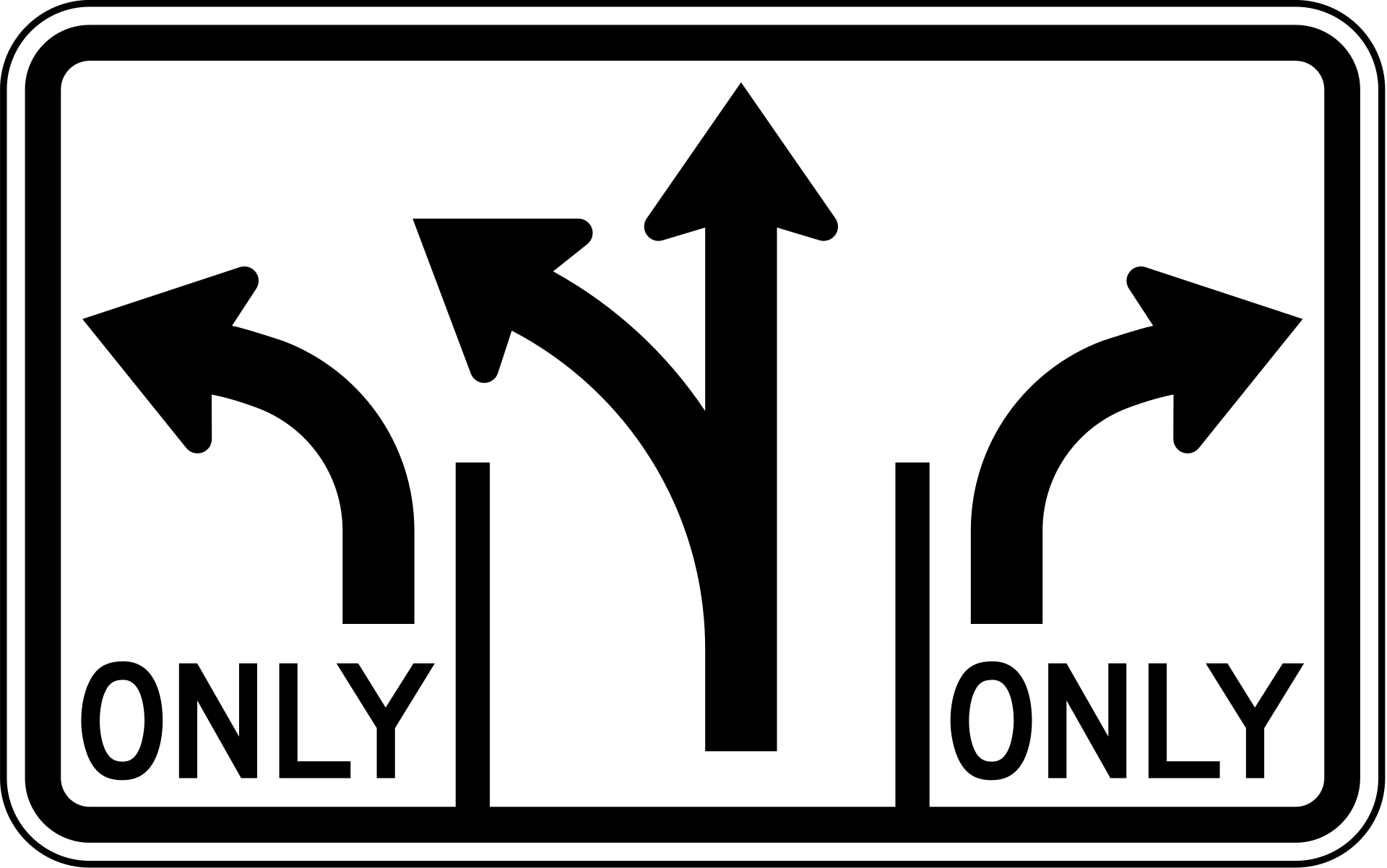
This regulatory sign tells drivers that:
A)traffic in the left lane must turn left at the intersection ahead.
B)all vehicles must turn left immediately.
C)traffic in the right lane must go straight.
36.
What should you do in case of a brake failure?
A)Pull off the road into an open space, if available.
B)Apply the parking brake slowly.
C)All of the above.
37.
The yield sign means:
A)Drive with caution in wet weather.
B)You must come to a complete stop.
C)Slow down and give vehicles crossing your path the right-of-way.
38.
Regulation signs normally are:
A)white triangles.
B)green rectangles.
C)white rectangles.
39.
If the entrance lane is too short to allow acceleration to highway speed, you should:
A)go to the next entrance ramp.
B)stop and wait for a large gap in traffic, then enter the highway and accelerate quickly.
C)merge into highway traffic as soon as possible.
40.
Drivers often fail to see a motorcycle headed toward them. Why?
A)It is difficult to judge a motorcycle's speed.
B)Motorcycles are hard to see.
C)All of the above.
ANSWER KEYCheck answers after completing the test.