←
Back to Test
Hide Answer Key
Print / Save as PDF
Print / PDF
drive
quiz
.com
MI DMV PERMİT PRACTİCE TEST 9
Michigan
Duration: 45 min
|
Questions: 50
Student Name:
Date:
Correct:
Incorrect:
Score:
1.

When they see this sign, drivers should:
A)
be ready to brake sharply and stop.
B)
be ready to shift to lower gear.
C)
yield to trucks coming from the hill on the right.
2.
In heavy rain, tires can begin to ride on the water that is on top of the road pavement. This is called:
A)
rideplaning.
B)
hydroplaning.
C)
pavement-planing.
D)
waterplaning.
3.
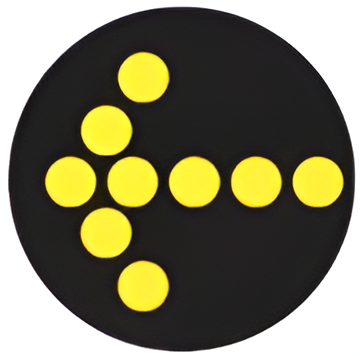
What does a flashing left yellow arrow mean?
A)
Vehicles turning left must stop if they can. The light will soon be red.
B)
Only right turns are allowed.
C)
Left turns are allowed. Yield to oncoming traffic and pedestrians.
D)
None of the above.
4.
Lanes of traffic moving in the same direction are divided by ____ lines.
A)
orange
B)
yellow
C)
black
D)
white
5.
The yield sign means:
A)
Drive with caution in wet weather.
B)
You must come to a complete stop.
C)
Slow down and give vehicles crossing your path the right-of-way.
6.
When parking on a public road, drivers should:
A)
move as far away from traffic as possible.
B)
always park on the left side of the roadway.
C)
All of the above.
7.
If you see a “lane closed ahead” sign you should:
A)
make a U-turn. You are on the wrong side of the road.
B)
merge into the correct lane when it is safe.
C)
speed to the end of the closed lane and try to get into the other lane.
8.
The sign in the picture:
A)
is a Construction and Maintenance Traffic Control sign.
B)
is found at most intersections and indicates that drivers must yield to other vehicles.
C)
is displayed on the rear of slow moving vehicles.
9.
A flashing yellow light:
A)
warns drivers to proceed with caution.
B)
is used at dangerous intersections.
C)
All of the above.
10.
Left turns on a red light are allowed:
A)
from a one-way street into a one-way street.
B)
Never.
C)
at intersections, after stopping, if the way is clear.
11.
Your red traffic signal changes to green while a pedestrian is crossing in your traffic lane. The right of way should be given:
A)
by the pedestrian, but only when vehicles are turning left.
B)
by the pedestrian.
C)
to the pedestrian.
12.
It is important for drivers to know that trucks:
A)
are easier for the driver to operate.
B)
require more space for turning movements.
C)
take longer than cars to stop.
D)
require less time to pass on an incline than cars.
13.
What can you do to prevent skids on snow and ice?
A)
Allow the wheels to keep turning.
B)
Brake early and gently.
C)
All of the above.
14.
Which signs have black letters on a yellow or orange background?
A)
Warning signs (diamond)
B)
Regulatory signs (vertical rectangle)
C)
Railroad advance warning signs (round)
15.
This road sign means:
A)
Merge, then slow down to the safe speed indicated
B)
The road ahead curves right; slow down to indicated speed
C)
Winding road ahead; slow down to the indicated speed
D)
Divided highway begins. Slow down to the safe speed indicated
16.
You may park or stop along the shoulder of the freeway:
A)
if you need to check your smartphone for directions.
B)
only if you have an emergency.
C)
if no part of your vehicle is on the road.
D)
as long as you turn on your emergency flashers.
17.
This sign means:
A)
The highway ahead is divided into two one-way roadways.
B)
Roundabout ahead. Slow down.
C)
The divided highway on which drivers are traveling ends ahead.
18.
_________________ your mirrors when you prepare to change lanes.
A)
Never depend on
B)
Never use
C)
Always rely on
19.
What does this road sign indicate?
A)
Hospital service
B)
Area reserved for people with disabilities
C)
Interstate highway
20.
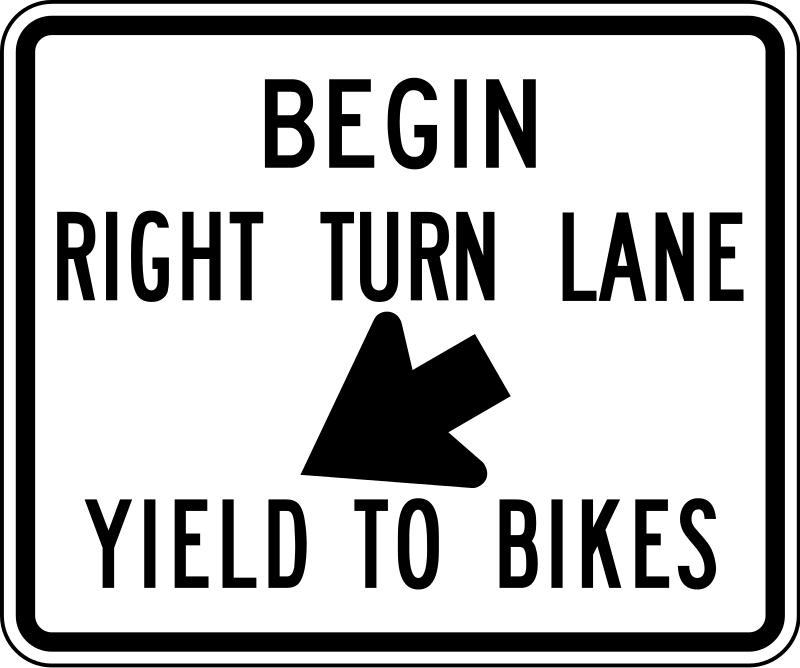
What does this road sign indicate?
A)
Drivers have the right of way over bikes turning left.
B)
Vehicles turning left must yield to bikes entering a right turn lane.
C)
Motor vehicles entering an exclusive right-turn lane must weave across bicycle traffic in bicycle lanes.
21.
When a hazard is seen ahead, reaction distance:
A)
is the sum of perception distance and braking distance.
B)
equals total stopping distance minus perception distance.
C)
is how far a vehicle will continue to travel, in ideal conditions, before the driver hits the brakes.
22.
You must pull over to the edge of the road and allow an emergency vehicle to pass:
A)
only if the emergency vehicle is following you.
B)
regardless of your direction.
C)
only if the emergency vehicle is approaching.
D)
None of the above.
23.
What is the only effective method to reduce your BAC?
A)
Eating before or while you drink.
B)
Not drinking over a period of time.
C)
Drinking coffee.
24.
Speed limit signs are:
A)
service signs
B)
regulation signs (regulatory signs)
C)
warning signs
25.
Keeping a space cushion between you and the other vehicles around you is important because it:
A)
gives you time to react to situations.
B)
prevents distractions from other vehicles.
C)
keeps other drivers alert.
D)
keeps traffic flowing at a safe pace.
26.
Drivers are required to stop:
A)
when a traffic officer orders them to stop.
B)
where there is a red light.
C)
at an intersection with a stop sign.
D)
All of the above.
27.
Alcohol causes:
A)
poor judgment.
B)
loss of concentration.
C)
reduced perception.
D)
All of the above.
28.
At a stop sign there is no stop line, you must stop:
A)
before you enter the intersection.
B)
before you enter the crosswalk.
C)
after you enter the crosswalk.
29.
City driving is more dangerous than expressway driving because of the:
A)
worse pavement conditions.
B)
lower speed limits.
C)
cross traffic and pedestrians.
D)
narrower driving lanes.
30.
A flashing yellow traffic signal means:
A)
Slow down and be alert at the upcoming intersection.
B)
The same thing as a stop sign.
C)
Stop and proceed when a green light appears.
D)
No right turn.
31.
This sign warns drivers of:
A)
a side road.
B)
a sharp turn.
C)
a cross road.
32.
A red traffic sign means?
A)
Do not enter.
B)
Stop.
C)
All of the above.
33.
Drivers may cross solid yellow lines:
A)
at any time.
B)
only to pass traffic moving in the same direction.
C)
when making turns.
D)
during daylight hours only.
34.
What should you do in case of a brake failure?
A)
Pull off the road into an open space, if available.
B)
Apply the parking brake slowly.
C)
All of the above.
35.
This sign means drivers should:
A)
not drive in this lane.
B)
give the right-of-way to traffic on the road they wish to enter.
C)
proceed at normal speed through the upcoming intersection.
D)
come to a complete stop and check for oncoming traffic before proceeding.
36.
When driving behind a motorcycle, drivers must:
A)
remembers that motorcyclists have the right to use a complete traffic lane.
B)
pass the motorcycle in the same lane.
C)
drive on the shoulder beside the motorcycle.
D)
share the lane with the motorcycle.
37.
Pentagonal signs are used to indicate:
A)
possible hazards on roadways.
B)
no passing zones.
C)
school crossings.
38.
Aggressive drivers:
A)
run stop signs.
B)
are high risk drivers.
C)
tailgate other vehicles and make improper lane changes.
D)
All of the above.
39.
This sign means:
A)
You must yield the right-of-way ahead
B)
Traffic signals ahead
C)
You must stop ahead
D)
Speeding is not allowed
40.
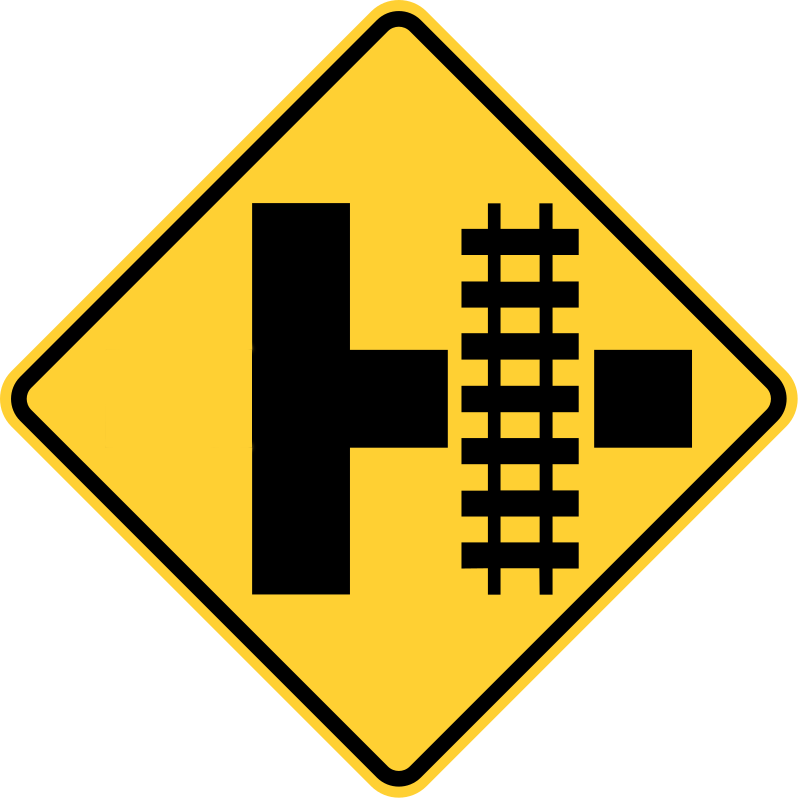
What does this sign indicate?
A)
Parallel railroad crossing (side road)
B)
Low ground clearance railroad crossing
C)
Parallel railroad crossing (crossroad)
41.
The octagonal shape is used:
A)
for stop signs and railroad advance warning signs.
B)
exclusively for stop signs.
C)
to warn drivers of existing or possible hazards on roadways.
42.
If another vehicle is approaching you head-on in your lane, you should _______, sound your horn and brake.
A)
steer right
B)
None of the other answers is correct.
C)
steer left
D)
stay in the center of your lane
43.
When driving in heavy traffic, you should:
A)
drive with the flow of traffic.
B)
maintain a constant speed.
C)
drive faster than the flow of traffic.
D)
drive slower than the flow of traffic.
44.
Double solid lines on the roadway mean:
A)
you cannot pass.
B)
you can not go across the lines except to turn left to enter or leave the highway.
C)
All of the above.
45.
In the following situations, drivers should increase their following interval:
A)
When following vehicles that are required to come to a stop at railroad crossings.
B)
When it is hard to see ahead because of bad weather.
C)
All of the above.
46.
Drive below the posted speed limit when:
A)
anything makes conditions less than perfect.
B)
you are on a four lane road.
C)
entering a highway where there are other cars.
D)
others drive below the speed limit.
47.
What is the first thing you should do if your wheels move off the pavement?
A)
Pull the steering wheel back.
B)
Pull over to the right and sound your horn to warn the other drivers.
C)
Ease your foot off the gas pedal and brake gently.
48.
The amount of space you need to cross traffic depends on the:
A)
road and weather conditions and oncoming traffic.
B)
number of cars behind you.
C)
presence of a yield sign.
D)
number of cars in front of you.
49.
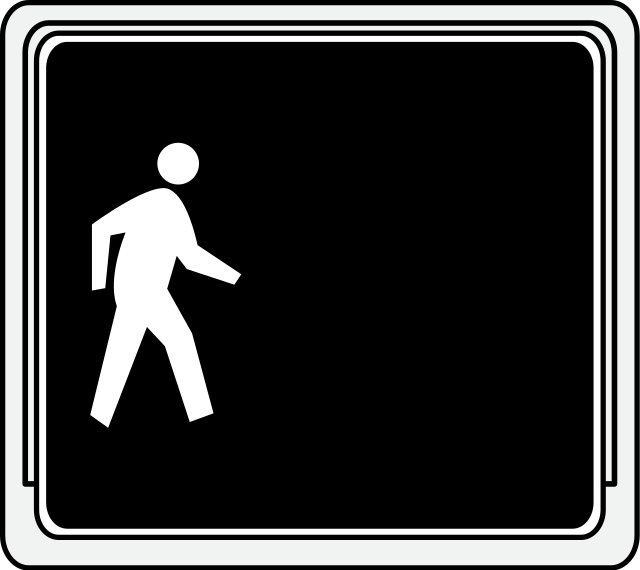
What does the pictured signal indicate?
A)
A pedestrian may begin crossing the street.
B)
Pedestrians may turn right.
C)
A pedestrian may not not begin crossing the street.
50.
This sign means:
A)
U-turns are not allowed.
B)
Parking is not allowed.
C)
No parking on pavement.
ANSWER KEY
Check answers after completing the test.
1
B
2
B
3
C
4
D
5
C
6
A
7
B
8
C
9
C
10
A
11
C
12
C
13
C
14
A
15
B
16
B
17
A
18
A
19
A
20
C
21
C
22
B
23
B
24
B
25
A
26
D
27
D
28
B
29
C
30
A
31
B
32
C
33
C
34
C
35
B
36
A
37
C
38
D
39
B
40
A
41
B
42
A
43
A
44
C
45
C
46
A
47
C
48
A
49
A
50
B