DriveQuiz drivequiz.com

MI DMV PERMİT PRACTİCE TEST 8

Michigan
Duration: 45 min
|
Questions: 50
Student Name:
Date:
Correct:      Incorrect:      Score:      
1.
The first sign drivers see when approaching a highway-rail intersection is usually:
A) a crossbuck sign.
B) an advance warning sign.
C) a speed limit sign.
2.
The roadway becomes particularly slippery during wet or rainy conditions. Reduce your speed, increase following distance, and avoid abrupt braking or steering.
This sign indicates:
A) Warning: drunk drivers.
B) Winding road. Drive with caution.
C) The road may be slippery when wet. Drive slowly.
3.
When an aggressive driver confronts you, you should:
A) Try to move away safely.
B) Remain calm and relaxed.
C) All of the above.
4.
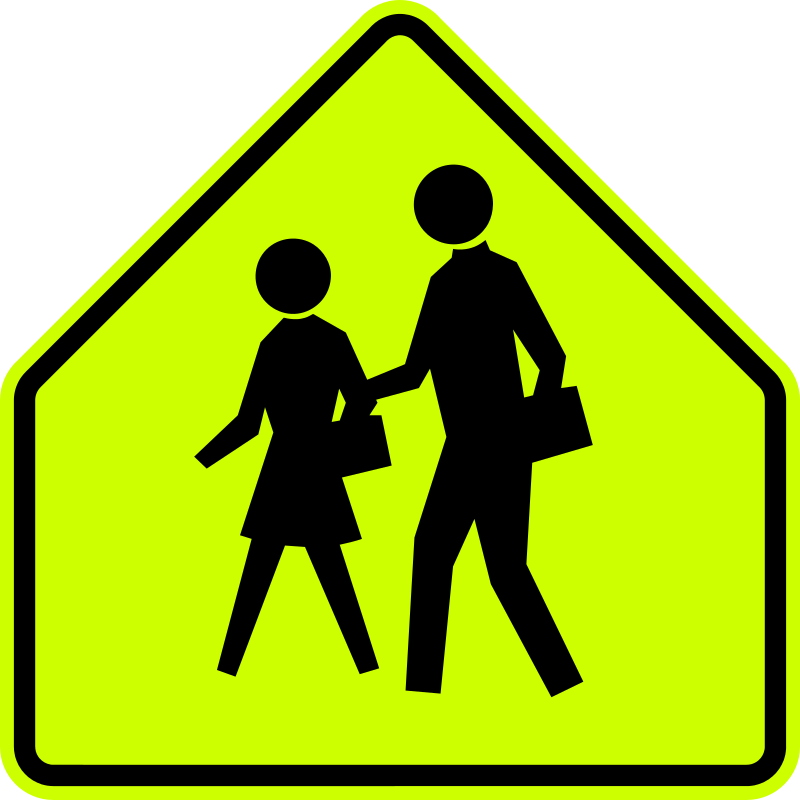
Five-sided pentagon sign indicating an upcoming school area. Watch for children crossing, school buses, and observe posted reduced school speed limits.
This warning sign means:
A) You are approaching a school
B) Watch out for children crossing the street
C) Slow down, drive with caution and watch for children
D) All of the above.
5.
Drivers should use the horn:
A) if a driver is moving slowly, and you want them to drive faster.
B) only when necessary, to avoid collisions.
C) when feeling angry or upset.
D) to alert other drivers that they made a mistake.
6.
The driver of an emergency vehicle that uses lights and a siren can legally:
A) pass red lights.
B) exceed the speed limit
C) All of the above.
7.
What is the main reason night driving is more difficult than daytime driving?
A) The use of headlight is required by law.
B) Reduced visibility.
C) Driving within the range.
8.
To check your blind spot before changing lanes:
A) look into the right side mirror.
B) look into the rearview mirror.
C) look over your shoulder in the direction you plan to move.
D) look into the left side mirror.
9.
A steady yellow light means that a ______ light will soon appear.
A) steady green
B) steady red
C) flashing yellow
D) flashing green
10.
Warns drivers that two separate lanes moving in the same direction are merging into one. Drivers in the right lane must adjust speed and merge smoothly with existing traffic.
This sign indicates:
A) Winding road
B) Merging traffic
C) Divided highway ends
11.
If a bus has signaled and is pulling back onto the roadway, you must:
A) yield.
B) honk to let them know you’re there.
C) move to the left lane.
D) speed up to pass.
12.
Most signs used in street work areas are:
A) round.
B) diamond shaped.
C) rectangle shaped.
13.
The road ahead is divided by a median strip or physical barrier into two separate one-way roadways. Keep to the right of the divider.
This road sign means:
A) Divided highway ahead - stay to the right
B) Do not enter
C) Do not pass
14.
Right turns are strictly prohibited at this intersection under all circumstances.
This road sign means:
A) Right turn permitted on red light
B) Drivers must turn right
C) No U-turns
D) No right turn permitted
15.
Parking is not allowed:
A) on the road side of a parked vehicle.
B) in a tunnel.
C) All of the above.
16.
From top to bottom, traffic lights are:
A) green, red and yellow.
B) green, yellow and red.
C) red, yellow and green.
17.
If you get on a wrong expressway exit, you must:
A) get off at the next exit and look for signs that tell you how to return to the expressway.
B) use the the exit ramp to accelerate to expressway speed and blend with traffic.
C) drive in reverse to return to the expressway.
18.
Prohibits drivers from making a 180-degree turn to travel in the opposite direction at this intersection or stretch of road.
This road sign means:
A) No left turn
B) No U-turn
C) Detour ahead
19.
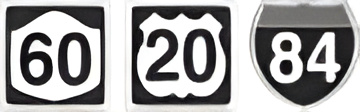
Interstate or State Route numbered highway marker used for route navigation and guide information.
These are:
A) route signs.
B) miles-left signs.
C) speed limit signs.
20.
When they see a crossbuck sign, drivers:
A) must slow down and wait for the red lights to flash.
B) must always come to a complete stop.
C) are legally required to yield the right of way to trains.
21.
What should you do if your rear wheels start to skid?
A) Steer left if your rear wheels slide right.
B) If the vehicle has ABS, pump the pedal carefully.
C) Turn the steering wheel in the direction the vehicle is trying to go.
22.
You are driving and you are feeling drowsy. You should:
A) avoid drinking coffee.
B) turn on the radio to keep you awake.
C) find a safe place to stop for a break.
23.
When approaching a highway-rail intersection, the first sign drivers see is usually:
A) an RXR round sign on a yellow background.
B) a stop sign.
C) a yield sign.
24.
To drive defensively, you must:
A) anticipate errors by other drivers.
B) assume that a driver who approaches a STOP sign on a side road is actually going to stop.
C) not check behind you through your mirrors.
25.
If you stop at a railroad crossing with more than one track:
A) proceed with caution until you see a train.
B) go through when one of the tracks is free.
C) go through as soon as the first train passes.
D) wait until you have a clear view of both tracks.
26.
The median divider ends ahead, and you are returning to a two-way, two-lane undivided roadway. Watch for oncoming traffic on your left.
This road sign means:
A) Curves ahead
B) Divided highway ahead
C) Divided highway ends
27.
Indicates the maximum bridge or underpass vertical clearance. Vehicles taller than the posted height must not proceed.
This sign means:
A) Narrow bridge ahead. Slow down and drive with caution.
B) Do not to enter if your vehicle is taller than the height listed on the sign.
C) No passing zone ahead.
28.
When changing lanes, you can check your blind spot by:
A) using the outside rearview mirror.
B) using the inside rearview mirror.
C) turning your head and glancing over your shoulder.
D) checking the rearview and outside mirrors.
29.
What do pennant-shaped signs indicate?
A) A school crossing
B) Yield
C) A No Passing Zone
30.
If you stop along the road at night:
A) turn on your emergency flashers and leave your low beams on.
B) turn off your emergency lights and leave your high beams on.
C) turn on your headlights only.
D) turn off all your lights.
31.
To avoid becoming an aggressive driver, you should:
A) Adjust your schedule to drive during times with the most highway traffic.
B) Allow enough travel time to reach your destination on schedule.
C) Listen to heavy metal music.
32.
Alcohol:
A) makes drivers more prone to take chances.
B) increases reaction time.
C) All of the above.
33.
When driving at night, you should slow down and:
A) use high beams whenever possible, but never when there's oncoming traffic.
B) use high beams until other drivers dim their lights.
C) follow the vehicle ahead more closely to avoid glare from oncoming headlights.
D) come to a complete stop whenever there's oncoming traffic.
34.
Which of the following must you obey over the others?
A) Red light
B) Stop sign
C) Police officer
35.
Drivers can not pass a vehicle on the left if:
A) they approach the top of a hill on a two-way road and can not see over it.
B) they can not safely return to the right lane before they reach a solid yellow center line for the right lane.
C) All of the above.
36.
BAC is expressed in:
A) percentage of alcohol to blood.
B) percentage of blood to alcohol.
C) ounces of alcohol in your blood.
37.
When driving in icy or snowy conditions, to avoid crashes drivers should:
A) get off the highway as quickly as possible.
B) reduce speed and increase following distance.
C) add extra weight to the vehicle to improve traction.
D) engage 4 wheel drive on the vehicle.
38.
A thumping sound can be a warning:
A) that a tire blowout is about to occur.
B) of a steering failure.
C) of a brake failure.
39.
Drinking alcohol while taking drugs can:
A) have a less pronounced effect than either taken separately.
B) have a more pronounced effect than either taken separately.
C) improves concentration.
D) improve your driving performance.
40.
You must come to a full stop at a yield sign:
A) Always.
B) Never.
C) If traffic conditions require it.
41.
You may not pass another vehicle on either side of a _______ centerline.
A) solid or broken yellow
B) single broken white
C) double solid yellow
D) single broken yellow
42.
The roadway ahead is narrowing or a lane is ending. Merge smoothly into the continuing lane.
This sign means:
A) divided highway ahead.
B) narrow bridge ahead.
C) road construction.
D) lane ends, merge left.
43.
You should never depend on your mirrors when you prepare to change lanes. Why?
A) Mirrors leave “blind spots” behind both sides of vehicles.
B) Mirrors need to be adjusted.
C) Mirrors are useless.
44.
All approaching traffic must stop completely. The first vehicle to reach the intersection and stop has right-of-way; if two vehicles arrive simultaneously, the vehicle on the right goes first.
A 4-way stop sign means:
A) The first vehicle to reach the intersection should move forward first.
B) Traffic from all four directions must stop.
C) There are four stop signs at the intersection.
D) All of the above.
45.
Slower-moving vehicles must stay in the right-hand lane to allow faster traffic to pass safely on multi-lane highways.
This regulatory road sign indicates that:
A) Vehicles must slow down and stay in the right lane.
B) The right hand lane is reserved for buses and car-pool vehicles.
C) Slower vehicles traveling on multiple lane highways must stay in the right hand lane.
46.
Your BAC depends on:
A) how much alcohol you drink.
B) how much time passes between drinks.
C) All of the above.
47.
A flashing red traffic light:
A) has the same meaning as a yield sign.
B) is used to indicate a pedestrian crossing.
C) has the same meaning as a stop sign.
D) indicates that you should drive with caution.
48.
Parking is not allowed:
A) in an intersection, unless permitted by signs.
B) within 300 feet of a pedestrian safety area.
C) on public roads
49.
A steep downhill grade is ahead. Trucks and heavy vehicles should downshift to a lower gear to prevent brake overheating.
This road sign means:
A) Truck stop ahead
B) No trucks allowed
C) Hill or downgrade up ahead
50.
The traffic light is green and you want to drive straight through an intersection. If a car is already in the intersection and is making a turn, you must:
A) enter the intersection and then stop.
B) drive through the intersection. You have the right-of-way.
C) let that car complete its turn before you enter the intersection.
ANSWER KEY Check answers after completing the test.
1 B
2 C
3 C
4 D
5 B
6 C
7 B
8 C
9 B
10 B
11 A
12 B
13 A
14 D
15 C
16 C
17 A
18 B
19 A
20 C
21 C
22 C
23 A
24 A
25 D
26 C
27 B
28 C
29 C
30 A
31 B
32 C
33 A
34 C
35 C
36 A
37 B
38 A
39 B
40 C
41 C
42 D
43 A
44 D
45 C
46 C
47 C
48 A
49 C
50 C