DriveQuiz drivequiz.com

MI DMV PERMİT PRACTİCE TEST 7

Michigan
Duration: 45 min
|
Questions: 50
Student Name:
Date:
Correct:      Incorrect:      Score:      
1.
The effects of alcohol on driving include:
A) None of the above.
B) Improved coordination
C) Better reflexes
D) Improved judgement
2.
The roadway becomes particularly slippery during wet or rainy conditions. Reduce your speed, increase following distance, and avoid abrupt braking or steering.
This sign means:
A) The road will curve to the right, then to the left.
B) Road slippery when wet. Drive slowly.
C) Winding road ahead. Drive with caution.
3.
A side road enters the highway from the right or left. Watch for traffic turning onto or crossing your lane.
This is:
A) a side road sign.
B) a merging traffic sign.
C) a right curve sign.
4.
Regulatory signs are:
A) Suggestions
B) Warnings
C) Law
5.
While driving, it is important to slow down:
A) when the road is wet.
B) on narrow roads.
C) at intersections.
D) All of the above.
6.
To enter a freeway:
A) signal, yield, and enter at the same speed that traffic is moving.
B) drive slowly so you can check traffic.
C) signal and enter the freeway. You have the right-of-way.
D) make a complete stop before entering the freeway.
7.
Indicates that traffic is permitted to pass on either the left or the right side of an island, median, or obstruction.
This sign tells drivers that:
A) left and right turns are not allowed.
B) a divided highway is ahead.
C) they cannot go straight ahead.
8.
When drivers see the ‘Wrong Way’ sign:
A) they are going the wrong way on an expressway exit ramp.
B) they must drive past this sign and reach the next intersection.
C) they must not leave the pavement except in an emergency.
9.
What is the most important rule to remember in any emergency?
A) Do not panic.
B) Run away.
C) Call the police.
10.
Which of the following is a defensive driving skill/technique?
A) Maintain the correct speed.
B) Do not drive if you are very weary.
C) All of the above.
11.
After you stop for a school bus, you must:
A) turn off your engine.
B) pass the bus before the red lights stop flashing.
C) None of the above.
12.
Alerts drivers to an upcoming crosswalk where pedestrians frequently cross. Slow down and yield right-of-way to anyone in or about to enter the roadway.
The picture shows:
A) a railroad advance warning sign.
B) a speeding fines doubled sign.
C) a reversible road sign.
13.
If a vehicle using high beams comes toward you, look towards __________ of the road.
A) either side
B) the center
C) the right side
D) the left side
14.
A large vehicle is backing up to unload goods. You should:
A) enter one of the blind spots and wait.
B) try to pass close behind.
C) be patient and wait until the large vehicle has completed its backup maneuver.
15.
Prohibits drivers from making a 180-degree turn to travel in the opposite direction at this intersection or stretch of road.
The picture shows a _________ sign.
A) no U-turn
B) no left turn
C) sharp turn
16.
What should you do as you prepare to turn right at an intersection?
A) Honk your horn.
B) Yield to bicyclists coming from the opposite direction.
C) Signal your turn, check for bicyclists, and do not turn directly in front of a bicyclist.
17.
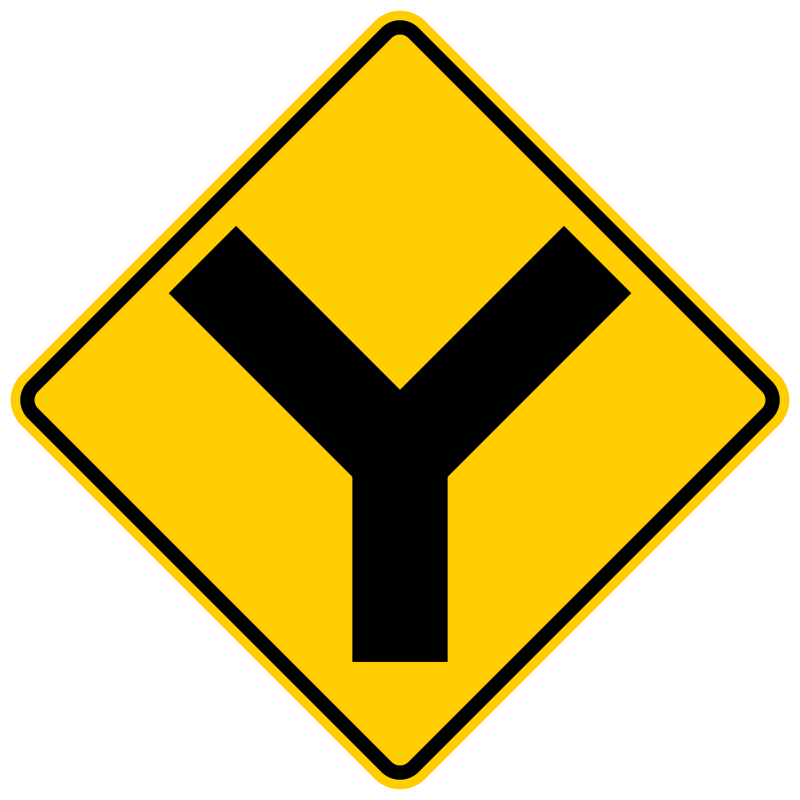
The road splits into a Y configuration ahead. Bear left or right depending on your destination and yield where marked.
This road sign means:
A) The road ends ahead
B) A four-way intersection is ahead
C) “Y” intersection ahead
D) A road joins from the right
18.
A steep downhill grade is ahead. Trucks and heavy vehicles should downshift to a lower gear to prevent brake overheating.
This traffic sign warns you about:
A) merging traffic.
B) a hill or a downgrade up ahead on the road.
C) an intersection ahead.
D) a winding road.
19.
Which shape is a warning sign?
A) Diamond
B) Triangle
C) Pennant
20.
A driver should be extra alert for motorcyclists, bicycles and pedestrians. Why?
A) They obey specific traffic laws.
B) They always have the right-of-way.
C) They are hard to see in traffic.
D) They don’t have rearview mirrors.
21.
ABS is the acronym for:
A) Anti-Braking System
B) Average-Beam System
C) Anti-Locking Brake System
22.
While inside the roundabout, you should:
A) remain in your lane until you are ready to exit.
B) change lanes before you check for vehicles behind you.
C) use your left turn signal if you are in position to exit now.
23.
If your car goes into water, you should:
A) wait for water to rush in and let it out in small breaths through your nose.
B) call the fire department immediately.
C) remove yourself before it starts to sink.
24.
When driving in travel lanes on the roadway:
A) you may make a U-turn if you get on the wrong entrance ramp of the freeway.
B) you may stop to let out passengers.
C) do not stop for any reason, keep moving until you can safely pull off the road.
D) you may make back up quickly if there are no vehicles behind.
25.
Right turns are strictly prohibited at this intersection under all circumstances.
This road sign means:
A) No left turn
B) No right turn
C) No U-turns
26.
When making a turn, drivers must _____ their speed.
A) reduce
B) maintain
C) increase
D) double
27.
A steep downhill grade is ahead. Trucks and heavy vehicles should downshift to a lower gear to prevent brake overheating.
This sign warns of a ________ ahead.
A) hill
B) no passing zone
C) soft shoulder
28.
When entering an expressway behind several other vehicles, what is most important?
A) Stay as close as possible to the vehicle in front of you.
B) Cancel your turn signal.
C) Keep your eyes on the vehicle behind you.
D) Adjust the position and speed of your vehicle to the flow of traffic.
29.
The roadway ahead is narrowing or a lane is ending. Merge smoothly into the continuing lane.
This road sign means:
A) The left lane ends soon
B) one-way street ahead.
C) The right lane ends soon
D) Highway entrance ramp ahead
30.
Warns of an extremely sharp 180-degree curve ahead. Decelerate significantly before entering the turn.
This sign means:
A) Hairpin corner ahead.
B) Warning: U-turn ahead.
C) Sharp right turn ahead.
31.
Indicates an upcoming bicycle crossing or shared road zone. Always leave at least 3 feet of clearance when passing cyclists.
This sign means:
A) Bicycles should yield to vehicles ahead.
B) Warning: a bikeway crosses the roadway ahead.
C) The lane ahead is reserved for bicycles.
32.
___________ normally are white rectangles with black letters or symbols.
A) Warning signs
B) Destination signs (guide signs)
C) Regulation signs (regulatory signs)
33.
Slow down and give right-of-way to all oncoming vehicles, cyclists, and pedestrians. Stop completely if necessary before entering the intersection or merging.
This is the shape and color of a ________ sign.
A) yield
B) stop
C) do not enter
34.
Designated school crosswalk location. You must yield to all schoolchildren and pedestrians in the crossing.
At a school crossing, drivers should:
A) always stop, whether there’s a stop sign or not.
B) always sound their horn and stay alert.
C) watch for children and be ready to stop.
35.
When two cars arrive at an intersection with no signs or signals at the same time, which car has the right-of-way?
A) The car that is traveling faster.
B) The car approaching from the right.
C) The car approaching from the left.
D) The car in which the driver sounds the horn.
36.
Does a vehicle prepared to enter a traffic circle or rotary have right-of-way over vehicles in the circle?
A) Yes, but only if they are entering the rotary from the right lane.
B) No. Vehicles already in the circle have the right-of-way.
C) Only if the light is green.
D) Yes.
37.
A side road enters the highway from the right or left. Watch for traffic turning onto or crossing your lane.
This road sign warns drivers that:
A) left turns are not allowed at the intersection.
B) the road will make a sharp turn to the right.
C) another road enters the highway from the direction shown.
38.
Regulation signs normally are:
A) white triangles.
B) green rectangles.
C) white rectangles.
39.
Anything that requires you to _______ could cause you to crash.
A) take your hands off the wheel
B) take your attention away from driving
C) take your eyes off the road
D) All of the above.
40.
The bridge ahead has narrower lanes or shoulders than the preceding road. Use caution when meeting oncoming vehicles.
This sign warns drivers of:
A) low clearance.
B) a narrow bridge ahead.
C) a low place in the road.
41.
What do warning signs mean?
A) Danger ahead.
B) Drivers are approaching a location where there is a special rule.
C) All of the above.
42.
Drivers must be prepared for anything coming up in the road ahead. They should:
A) scan the road for traffic conditions and possible hazards.
B) drive with the right foot resting lightly on the brake pedal.
C) stare straight ahead at all times.
D) maintain focus toward the left of the road.
43.
Come to a complete stop before the stop line, crosswalk, or intersection. Look left, right, and left again, and proceed only when it is safe and right-of-way is clear.
This road sign means:
A) Slow down or stop
B) Stop
C) Road narrows ahead
44.
When getting ready to change lanes, you should:
A) check your rearview mirror.
B) quickly turn your head to check for other vehicles.
C) check your side view mirror.
D) All of the above.
45.
Which shape is a railroad advance warning sign?
A) Crossbuck
B) Round
C) Pentagon
46.
Bicyclists must:
A) ride in a bicycle lane, if available.
B) remain to the right when they prepare for a left turn.
C) remain near the left edge of the road.
47.
When other drivers around you are acting in anger, you should:
A) slow down or move over safely.
B) distance yourself from the situation.
C) avoid making eye contact.
D) All of the above.
48.
What is the meaning of red traffic signs?
A) High emphasis warning.
B) Stop, do not enter or wrong way.
C) Regulatory.
49.
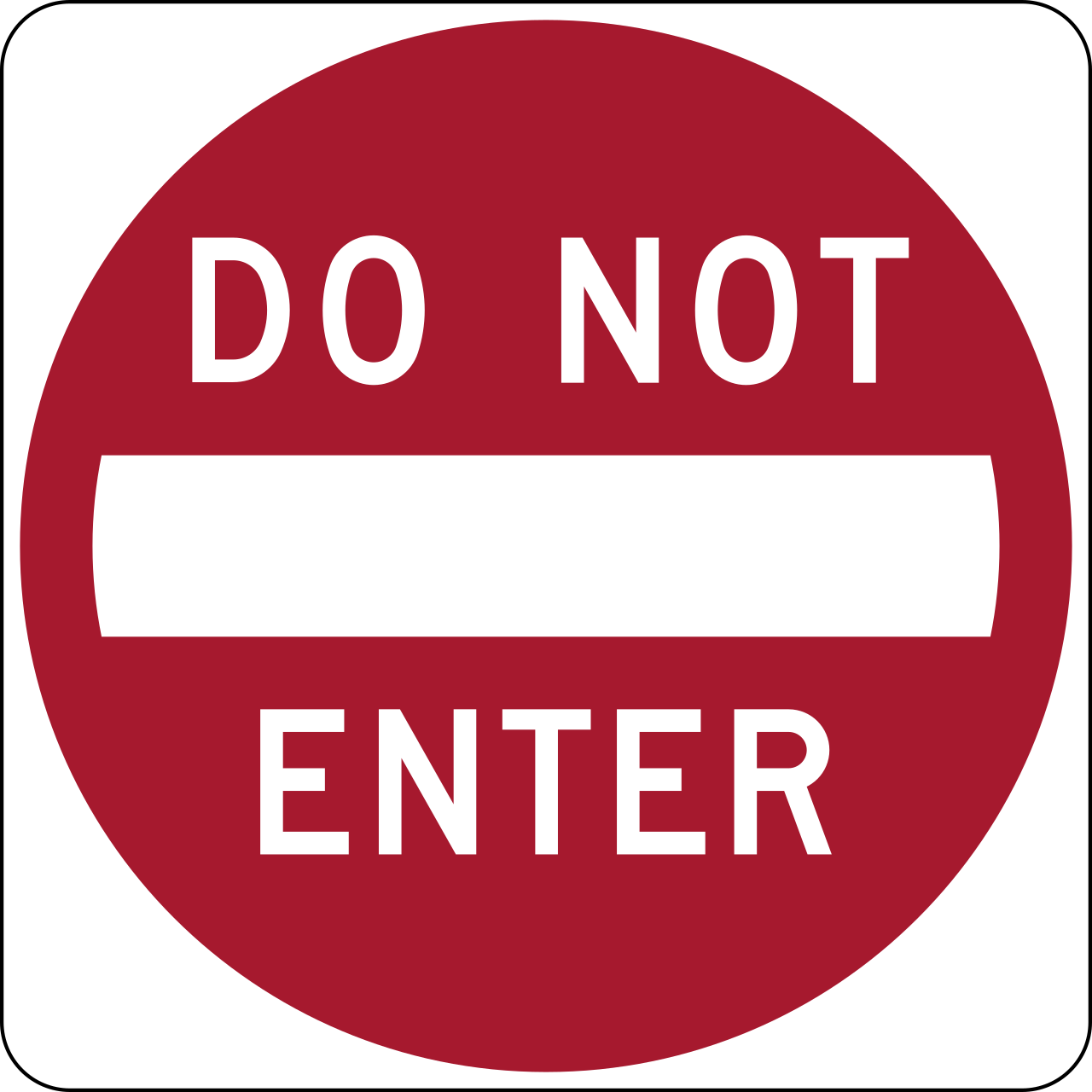
Marks a roadway or ramp where vehicular traffic is strictly forbidden to enter from your direction (such as freeway off-ramps or one-way streets).
This sign indicates:
A) that you must not drive past this sign.
B) that you must yield the right-of-way.
C) the entrance to a construction site.
D) the entrance to a dead-end street.
50.
Blind spots around a large vehicle are _________________ than the blind spots around a car.
A) larger and deeper
B) less dangerous
C) narrower and shorter
ANSWER KEY Check answers after completing the test.
1 A
2 B
3 A
4 C
5 D
6 A
7 C
8 A
9 A
10 C
11 C
12 A
13 C
14 C
15 A
16 C
17 C
18 B
19 A
20 C
21 C
22 A
23 C
24 C
25 B
26 A
27 A
28 D
29 C
30 A
31 B
32 C
33 A
34 C
35 B
36 B
37 C
38 C
39 D
40 B
41 C
42 A
43 B
44 D
45 B
46 A
47 D
48 B
49 A
50 A