DriveQuiz drivequiz.com

MI DMV PERMİT PRACTİCE TEST 6

Michigan
Duration: 45 min
|
Questions: 50
Student Name:
Date:
Correct:      Incorrect:      Score:      
1.
Flashing Upraised Hand signal indicates pedestrians should finish crossing if already in the crosswalk, but not start crossing.
A pedestrian in the crosswalk when the 'DON’T WALK' signal begins flashing must:
A) stop immediately.
B) go back and wait the “WALK” light
C) finish crossing the street.
2.
If you are continually being passed on the right, you should:
A) move into the right lane and allow other vehicles to pass you on the left.
B) move into the left lane and allow other vehicles to pass you on the right.
C) increase your speed immediately.
3.
The minimum drinking age in this State is ____ years.
A) 20
B) 21
C) 9
D) 18
4.
Indicates a series of three or more consecutive sharp turns or curves ahead. Reduce speed and maintain lane control.
This sign warns drivers that:
A) they must turn either to the right or left.
B) there is a double curve ahead.
C) there is a winding road ahead.
5.
Slow down and give right-of-way to all oncoming vehicles, cyclists, and pedestrians. Stop completely if necessary before entering the intersection or merging.
The yield sign means:
A) Go. The light will soon be red.
B) If the way is clear, you may move forward slowly without stopping.
C) Stop if you can.
6.
Designated school crosswalk location. You must yield to all schoolchildren and pedestrians in the crossing.
When you approach this sign, you must:
A) stop if necessary.
B) watch for workers crossing the road.
C) None of the above.
7.
If an intersection has crosswalk lines but no STOP line, where must you stop for a red light?
A) After the crosswalk.
B) Before the stop line.
C) Before the crosswalk.
8.
If your car starts to skid, turn your steering wheel:
A) in the direction you want to go.
B) in the opposite direction of the skid.
C) to keep the front wheels straight.
D) in any direction. It doesnt matter.
9.
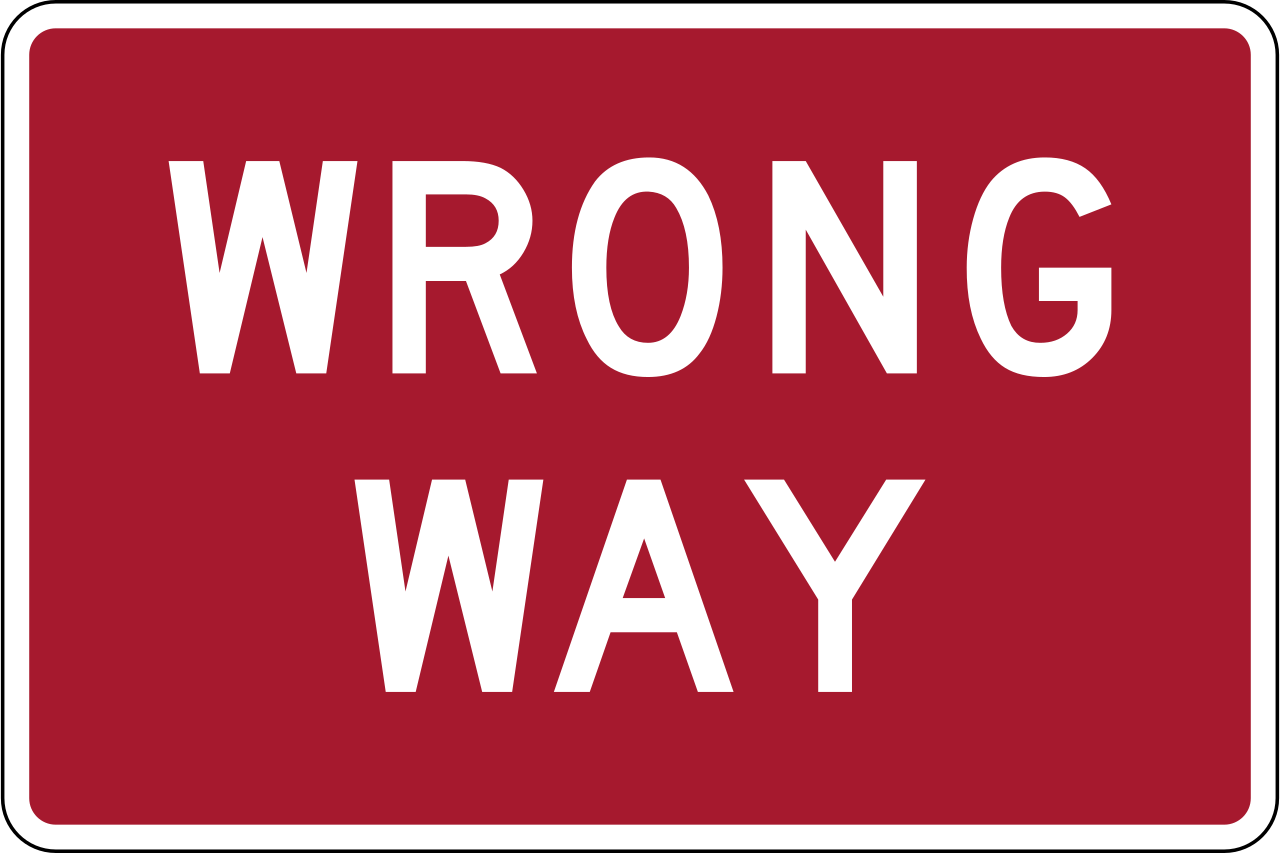
You are driving against the legal flow of traffic on a one-way street or freeway ramp. Immediately pull over, stop safely, and turn around when clear.
When drivers see this road sign:
A) they must come to a complete stop and call the police.
B) they must not drive past this sign.
C) they must turn around immediately.
10.
What should you do if your headlights suddenly go out?
A) Brake immediately and activate your emergency lights.
B) Use your emergency lights, parking lights or directional signals.
C) Ease your foot off the gas pedal and brake gently.
11.
When a ‘Road Closed’ sign is displayed, drivers must:
A) make a U-turn.
B) look for a detour or another route.
C) come to a complete stop and wait for the lights to turn green.
12.
Where are yield signs usually placed?
A) At intersections, if there is no marked stop line.
B) Where auxiliary roads lead into major roads.
C) Where major roads lead into auxiliary roads.
13.
To avoid the risk of being involved in an alcohol-related crash, you should:
A) decide before you start drinking that you are not going to drive.
B) say 'No, thanks' if someone offers you alcohol.
C) call a taxi if you've been drinking.
D) All of the above.
14.
Driver arm extended downward out the left window with palm facing rearward signals an intention to slow down or stop completely.
This signal means:
A) Stop
B) Move to the left
C) Slow down
D) Proceed
15.
Warns that a one-way street or divided highway is ending, and you are entering a roadway with oncoming traffic in the opposing lane. Stay to the right.
This road sign warns drivers that:
A) they are coming to a point where another traffic lane joins the one they are on.
B) a divided highway is ahead.
C) the one-way street or roadway is about to change to two-way traffic.
16.
When following a motorcycle, drivers must remember that motorcycles can ____________ than other vehicles.
A) accelerate much faster
B) stop much more quickly
C) stop much more slowly
17.
The maximum legal speed under ideal driving conditions is 50 miles per hour. Always adjust speed downward for adverse weather, traffic, or road conditions.
This sign indicates the _______________ vehicles can safely travel in this area.
A) suggested speed
B) maximum speed
C) minimum speed
18.
Drivers must yield for emergency vehicles:
A) Never.
B) only when other vehicles yield.
C) when they see a flashing red or blue light or hear a siren.
D) None of the above.
19.
Indicates a series of three or more consecutive sharp turns or curves ahead. Reduce speed and maintain lane control.
This road sign means:
A) Pavement ends
B) Winding road
C) Double curve ahead
20.
You are stopped at a stop sign and you are going to go straight through the intersection. A car on the cross road has stopped at a stop sign on your right and is going to go straight. Who has the right-of-way?
A) Whoever enters the intersection first.
B) You.
C) The car on your right.
21.
As you approach an intersection, the traffic light changes from green to yellow. You should:
A) apply the brakes sharply and come to a complete stop.
B) be prepared to stop before the intersection.
C) be prepared to stop in the middle of the intersection.
D) speed up to beat the red light.
22.
At intersections where two or more drivers stop at STOP signs at the same time and they are at right angles:
A) the driver on the left must yield to the driver on the right.
B) the driver who is late for work has the right-of-way.
C) the driver on the right must yield to the driver on the left.
23.
Prohibits drivers from making a 180-degree turn to travel in the opposite direction at this intersection or stretch of road.
This road sign means:
A) No left turn
B) No U-turn
C) Detour ahead
24.
For protection, motorcyclists are required to:
A) keep their headlights and taillights on at all times.
B) signal turns, lane changes and stops.
C) wear approved helmets.
25.
When driving on slick roads, drivers should:
A) accelerate quickly.
B) take turns more slowly.
C) use alternate routes.
D) drive as they would on dry roads.
26.
Regulation signs normally are ____ rectangles with ____ letters or symbols.
A) yellow; black
B) white; black
C) green; white
27.
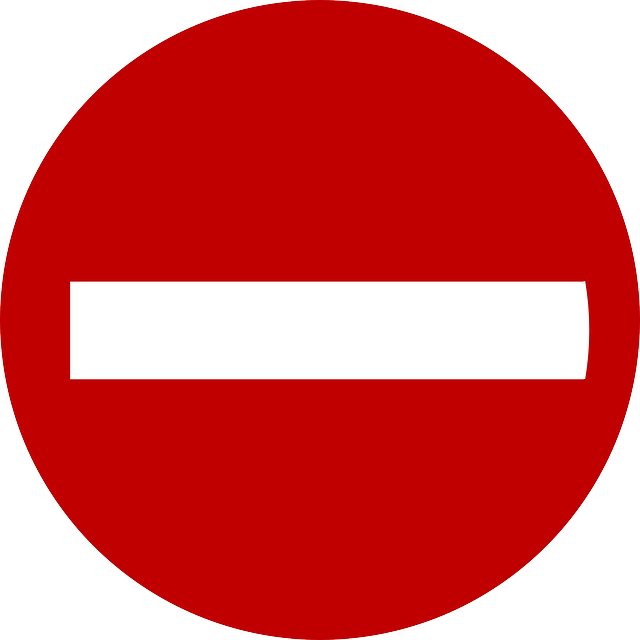
Indicates you have entered an exit ramp or one-way street in the incorrect direction. Stop immediately and safely turn around.
This road sign means:
A) No left turn
B) Lane ends
C) Do not enter
28.
If a driver follows you too closely, you should:
A) move to another lane if possible.
B) activate your stop lights.
C) brake suddenly.
29.
If another car has stopped in an adjacent lane in the same direction of travel, you should:
A) speed up and pass the vehicle on the right.
B) pass the car on the left.
C) be careful in case the other vehicle has stopped for a pedestrian.
D) tap your horn to let the other driver know you are passing.
30.
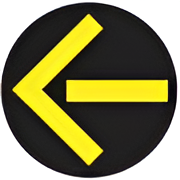
Unprotected left turns are allowed. You may turn left after yielding to oncoming traffic and pedestrians crossing the street.
What does a yellow arrow signal mean?
A) The same as the yellow light, but applies only to movement in the direction of the arrow.
B) The same as a green light.
C) Vehicles moving in all directions must stop if they can. The light will soon be red.
31.
Which sign has white letters on a red background?
A) Stop
B) School zone
C) Yield
32.
You are entering a roadway from a private road, and you need to turn left. You have to yield to:
A) vehicles from the right.
B) vehicles from the left.
C) vehicles from both directions.
33.
If you missed your exit on a freeway, you should:
A) use the right turn signal, check your mirrors and move to the right.
B) None of the above.
C) go to the next exit and come back to the exit you missed.
D) make a quick U-turn from your lane of travel.
34.
A yellow arrow means:
A) Do not go in the direction of the arrow.
B) If you intend to turn in the direction of the arrow, be prepared to stop.
C) The same as a steady yellow light.
35.
Object marker used to mark obstacles or bridge abutments near the edge of the road to alert drivers at night.
When they see a yellow X signal, drivers should:
A) come to a complete stop at the marked stop line.
B) turn off the ignition.
C) prepare to leave the lane safely.
36.
What should you do if one of your tires blows out?
A) Hold the steering wheel tight and brake immediately to avoid the risk of skidding.
B) Leave the road immediately.
C) Hold the steering wheel tight and slowly take your foot off the gas pedal.
37.
When driving, it is important to keep a space cushion _______ of your vehicle.
A) only on the left and right side
B) only in back
C) on all sides
D) only in front
38.
Warns of two consecutive curves in opposite directions (e.g., curves right then left). Slow down to maintain control.
This sign indicates that the road ahead:
A) turns sharply right, then left.
B) is a divided highway.
C) curves right, then left.
D) curves right.
39.
A driver who approaches an intersection:
A) must yield the right-of-way to traffic already in the intersection.
B) must drive straight through the intersection, even if another vehicle is already in the intersection.
C) has the right-of-way over traffic already in the intersection.
40.
Slow down and give right-of-way to all oncoming vehicles, cyclists, and pedestrians. Stop completely if necessary before entering the intersection or merging.
This road sign means:
A) Slow down and be prepared to stop if necessary
B) You must come to a complete stop
C) You may proceed at regular speed through the intersection
D) Wrong Way
41.
Braking distance is affected by:
A) the condition of your brakes and tires.
B) pavement conditions.
C) the speed your vehicle is traveling.
D) All of the above.
42.
A flashing yellow light means:
A) Merging traffic ahead
B) Pedestrian crossing
C) Come to a full stop
D) Proceed with caution
43.
What should drivers do in case of a brake failure?
A) Shift to a lower gear.
B) Tie a white cloth on the left door handle.
C) Brake lightly.
44.
Unlike passenger cars, trucks have blind spots:
A) on the right.
B) directly behind them.
C) on the front.
45.
Drivers can not pass a vehicle on the left if:
A) they approach the top of a hill on a two-way road and can not see over it.
B) they can not safely return to the right lane before they reach a solid yellow center line for the right lane.
C) All of the above.
46.
Who has a greater risk of being involved in a traffic crash?
A) Drivers who are driving alone.
B) Young people.
C) All of the above.
47.
Arrows on the roadway:
A) show which lanes you must use.
B) indicate reserved lanes.
C) indicate HOV lanes.
48.
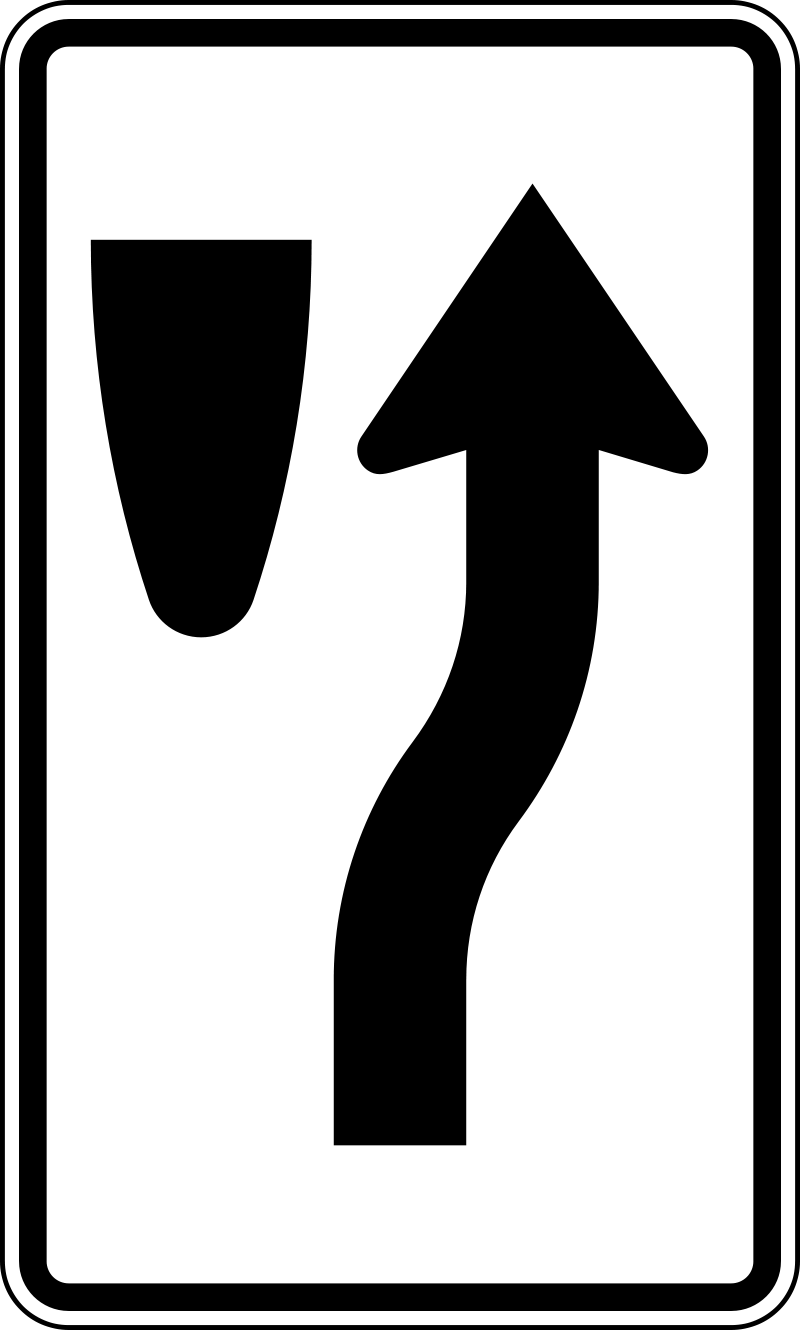
Drivers must pass to the right side of a traffic island, median barrier, or highway divider.
This sign tells drivers that:
A) there is a right turn ahead.
B) they must stay on the right side of the divider
C) a divided highway ends ahead.
49.
Warns drivers that two separate lanes moving in the same direction are merging into one. Drivers in the right lane must adjust speed and merge smoothly with existing traffic.
This road sign means:
A) Cars in right lane must slow down
B) Merging traffic ahead
C) Pass only in the right lane
D) No left turn
50.
Passing is prohibited:
A) when a school bus is stopped to load or unload children on a public road.
B) at intersections.
C) whenever a solid line marks the left side of your lane.
D) All of the above.
ANSWER KEY Check answers after completing the test.
1 C
2 A
3 B
4 C
5 B
6 A
7 C
8 A
9 C
10 B
11 B
12 B
13 D
14 A
15 C
16 B
17 B
18 C
19 B
20 C
21 B
22 A
23 B
24 C
25 B
26 B
27 C
28 A
29 C
30 A
31 A
32 C
33 C
34 B
35 C
36 C
37 C
38 C
39 A
40 A
41 D
42 D
43 A
44 B
45 C
46 C
47 A
48 B
49 B
50 D