←
Back to Test
Hide Answer Key
Print / Save as PDF
Print / PDF
drive
quiz
.com
MI DMV PERMİT PRACTİCE TEST 1
Michigan
Duration: 45 min
|
Questions: 50
Student Name:
Date:
Correct:
Incorrect:
Score:
1.

This road sign means:
A)
Merging traffic
B)
Steep grade ahead
C)
Intersection ahead
2.
If a traffic officer signals you to drive through a red light:
A)
you must do it.
B)
you must wait for the red light to turn green.
C)
you must not obey the officer. Signs and signals take precedence over directions given by traffic officers.
3.
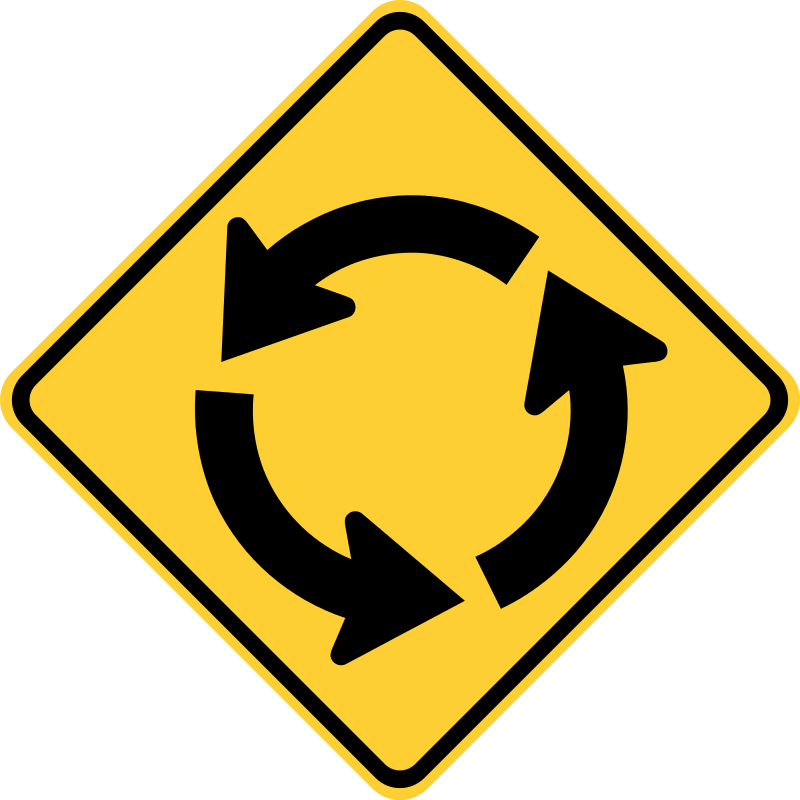
This road sign:
A)
warns drivers of a sharp turn left. Drivers should slow their speed and keep to the left.
B)
provides an advance notice of a roundabout.
C)
warns drivers that U-turns are not permitted.
D)
is a no-right-turns sign.
4.
This sign warns drivers of:
A)
a reduction of lanes.
B)
a dip in the road. Drivers should be ready to stop if the dip is filled with water.
C)
a bridge ahead, wide enough to accommodate two lanes of traffic, but with very little clearance.
5.
What does this sign indicate?
A)
The highway ahead is divided into two one-way roadways.
B)
Winding road ahead. Drive with caution.
C)
Drivers will soon be on a roadway with two-way traffic.
6.
What type of pavement marking shows you which lane you must use for a turn?
A)
Edge line
B)
Diamond
C)
Crosswalk Lines
D)
Arrows
7.
When you are in a line of traffic that is crossing a railroad track that has no signals or gates:
A)
you may pass slower drivers crossing the track.
B)
before you start to cross, you need to make sure there is space to get all the way across the tracks without stopping.
C)
you have the right of way and do not need to check for trains.
D)
All of the above.
8.
This road sign means:
A)
Crossroads ahead
B)
Side Road
C)
Turn right or go through
D)
Flagger ahead
9.
When you prepare to make a left turn from a one-way road into a one-way road, you must:
A)
move into the right lane, or to the left side of a single lane.
B)
move into the right lane, or to the right side of a single lane.
C)
move into the left lane, or to the left side of a single lane.
10.
This sign tells drivers that:
A)
they must make a left turn at the intersection.
B)
U-turns are not allowed.
C)
they must not make a right turn.
D)
None of the above.
11.
Vertical rectangles tell drivers:
A)
the law.
B)
what is not allowed.
C)
the direction they should travel.
12.
What should drivers do when they see this road sign?
A)
come to a complete stop and wait for a train to cross.
B)
slow down, look for a train, and be prepared to stop.
C)
look for a human flagger.
13.
What should you do if you see smoke come from under the hood?
A)
Call the fire department and then pull off the road and park your vehicle.
B)
Pull off the road and park your vehicle. Turn off the ignition, get away from the car and call the fire department.
C)
Try to fight the fire yourself.
14.
Air bags are meant to _________ seat belts.
A)
work with
B)
fix
C)
replace
15.
This sign means:
A)
The road will curve to the right.
B)
Left turns are not allowed at the intersection.
C)
Do not turn right.
16.
When driving in bad weather, drivers should:
A)
decrease the following distance.
B)
increase their speed to get to their destination more quickly.
C)
increase the following distance.
D)
None of the above.
17.
This road sign means:
A)
Crossroad
B)
Hospital parking ahead
C)
Merge
18.
Roads are most slippery:
A)
just before it rains.
B)
when it stops raining.
C)
when it first starts to rain.
19.
A broken yellow line alongside a solid yellow line means:
A)
Passing is permitted on the side of the broken yellow line
B)
Passing is not permitted in either direction
C)
Passing on the right is permitted in either direction
20.
At a light rail intersection, you should always:
A)
share the road with pedestrians and bicyclists.
B)
look both ways before crossing the tracks.
C)
be alert and obey all traffic signals.
D)
All of the above.
21.
This road sign means:
A)
Yield the right-of-way to oncoming vehicles
B)
Stop if necessary
C)
You must make a complete stop
D)
Slow down or stop
22.
When you come to an intersection with a flashing red light, you must:
A)
stop at the intersection, then proceed when safe and observe the right-of-way rules.
B)
slow down and drive carefully through the intersection.
C)
stop at the intersection and wait for a flashing green light.
D)
stop only if cars are approaching the intersection.
23.
This sign is a:
A)
regulatory sign.
B)
warning sign.
C)
guide sign.
24.
Double solid yellow lines mean:
A)
the lane to the right may pass.
B)
passing is not permitted in either direction.
C)
the lane to the left may pass.
D)
passing is permitted in either direction.
25.
A traffic sign with a red circle around and a slash over a symbol means:
A)
the maneuver shown by the symbol is not allowed.
B)
Do not drive faster than the posted speed limit.
C)
the maneuver shown on the sign should be executed with extreme caution.
26.
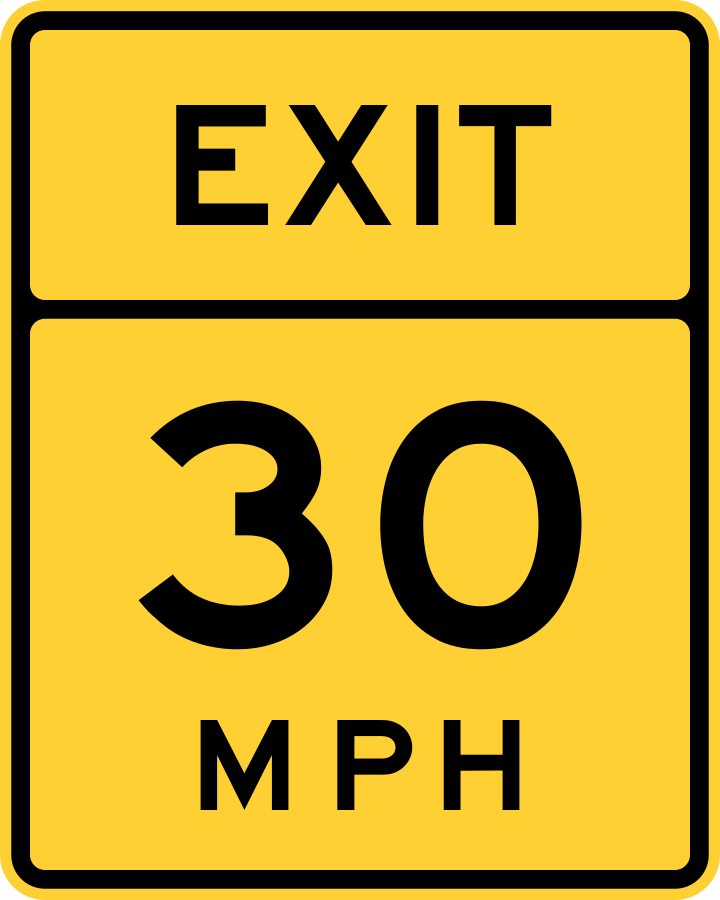
The sign in the picture:
A)
shows the highest speed drivers can travel at the exit of the intersection.
B)
is used to advise motorists of the appropriate ramp speed at the highway exit point.
C)
indicates the minimum ramp speed at the highway exit point.
27.
This road sign warns drivers that:
A)
the road surface ahead changes to a low-type surface or earth road.
B)
vehicles must leave the pavement immediately.
C)
the dirt on the side of the road is soft.
28.
If traffic on the other side of an intersection is backed up and you cannot get completely through, you must:
A)
enter the intersection and try to avoid blocking it.
B)
enter the intersection and proceed with caution.
C)
wait until traffic ahead is clear.
29.
This sign warns ____________ ahead.
A)
of two-way traffic
B)
of a reduction of lanes
C)
that a divided highway ends
30.
When driving behind a motorcycle:
A)
allow a following distance of at least 4 motorcycle lengths.
B)
allow a following distance of at least 2 car lengths.
C)
allow at least 2 seconds of following distance.
D)
allow at least 4 seconds of following distance.
31.
What should you do if your brakes fail?
A)
Hook your shoe under the pedal and see if you can free it.
B)
Turn on your cruise control.
C)
Try pumping the brake pedal to increase pressure.
32.
When they see this sign, drivers:
A)
should be prepared to make sharp turns at a high speed.
B)
need to be prepared to turn right and then left quickly.
C)
should not speed up or brake quickly.
33.
Are drivers allowed to exceed the speed limit to pass other vehicles?
A)
Yes, but only by 10 MPH or less.
B)
No.
C)
Yes, but only if they drive with caution.
34.
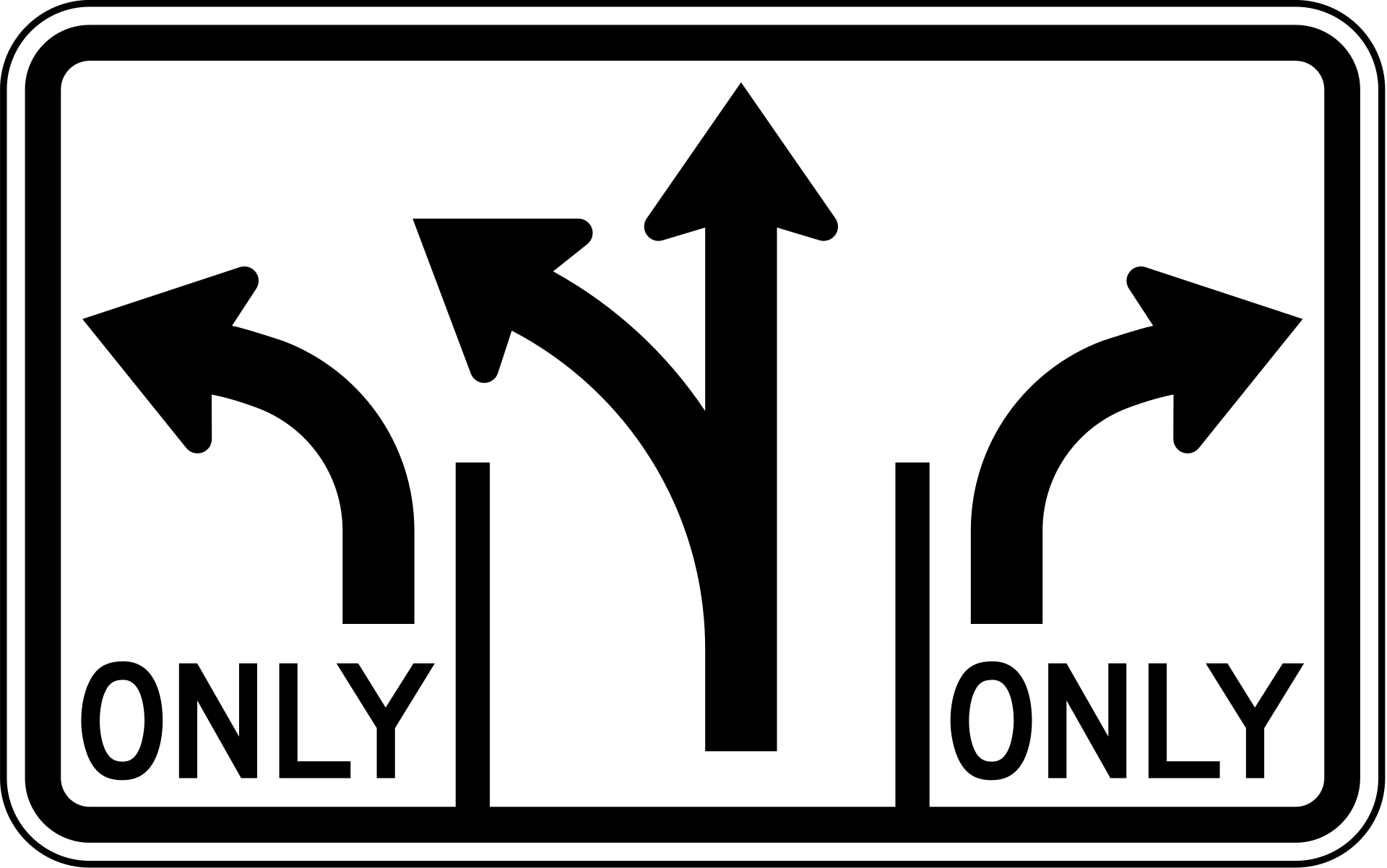
This regulatory sign tells drivers that:
A)
traffic in the left lane must turn left at the intersection ahead.
B)
all vehicles must turn left immediately.
C)
traffic in the right lane must go straight.
35.
This road sign means:
A)
Winding road
B)
Side road ahead
C)
Slippery when wet
36.
Which of the following drugs could affect your ability to drive?
A)
A cold remedy.
B)
Marijuana.
C)
All of the above.
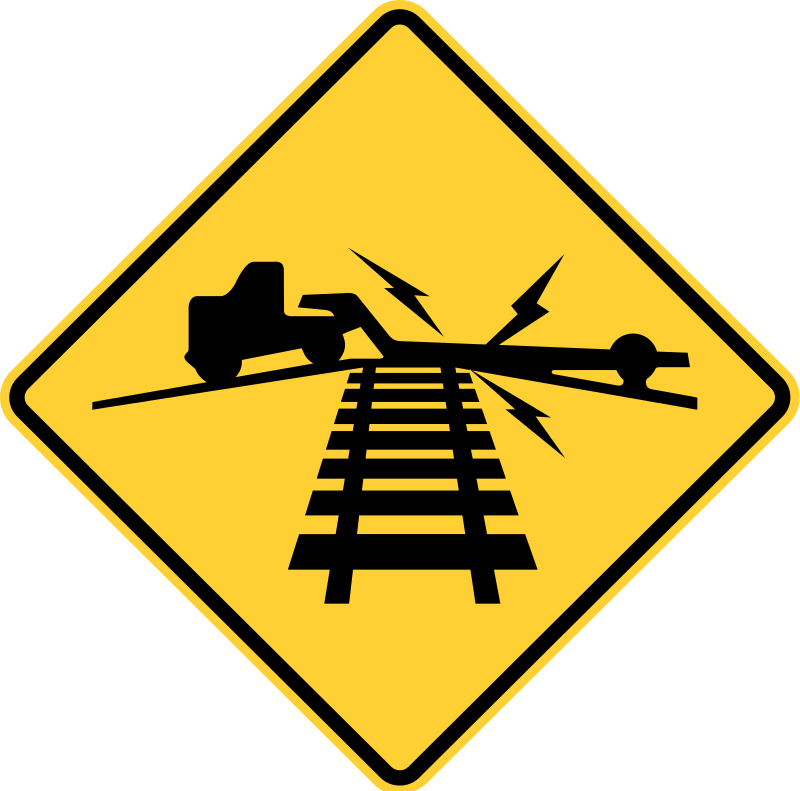
37.
This road sign means:
A)
Winding road ahead
B)
Pedestrian crossing
C)
Low ground railroad crossing
D)
No-passing zone
38.
This road sign means:
A)
Traffic increases ahead
B)
Steep grade ahead
C)
Winding road ahead
D)
Slippery road ahead
39.
Drivers should allow a larger space cushion when stopping:
A)
at a stop sign.
B)
on an up-hill.
C)
at an intersection.
D)
at a yield sign.
40.
This sign indicates that:
A)
the highest safe speed drivers should travel around the curve ahead is 25 MPH.
B)
the safe speed around the curve ahead is at least 25 MPH.
C)
drivers may not turn right if traveling at 25 MPH or less.
41.
What is the first thing you should do if your wheels move off the pavement?
A)
Pull the steering wheel back.
B)
Pull over to the right and sound your horn to warn the other drivers.
C)
Ease your foot off the gas pedal and brake gently.
42.
Are bicyclists required to obey traffic laws and signs?
A)
No, bicyclists are considered pedestrians when it comes to the rules of the road.
B)
Yes.
C)
Yes, but only if they are riding in a bicycle lane.
43.
This road sign means:
A)
You must come to a complete stop
B)
Do not enter
C)
Slow down, stop if necessary and yield the right-of-way
D)
Merging traffic
44.
To avoid being in a truck driver’s blind spot, you should:
A)
never pass the truck and put your headlights on.
B)
avoid driving on either side of the truck and don’t tailgate.
C)
flash your lights.
D)
sound your horn.
45.
Examples of proper glass maintenance include:
A)
Replacing worn wiper blades.
B)
Keeping your windows clean and clear.
C)
All of the above.
46.
If you hear a thumping sound while driving, you should:
A)
hook your shoe under the gas pedal and see if you can free it.
B)
get off the road and check your tires.
C)
try your emergency lights.
47.
You go with a group of friends to a social event, and you plan to have a few drinks. You should:
A)
make alcohol the focus of the event.
B)
avoid alternating between drinks with alcohol and drinks without any alcohol.
C)
arrange to ride home with a friend who does not drink.
48.
__________ limit(s) your concentration, perception, judgment, and memory.
A)
Even the smallest amount of alcohol
B)
Only a blood alcohol level greater than .05
C)
Alcohol does not
D)
Only a blood alcohol level greater than the legal limit
49.
Which of the following does NOT affect the distance that it takes to stop your vehicle?
A)
Perception time.
B)
Braking distance.
C)
Reaction distance.
D)
Steering ability.
50.
After parking, are you allowed to open a door on the road side of your vehicle?
A)
Yes, always.
B)
Yes, but only if it does not interfere with bicyclists and other traffic.
C)
No, never.
ANSWER KEY
Check answers after completing the test.
1
B
2
A
3
B
4
C
5
C
6
D
7
B
8
A
9
C
10
C
11
A
12
B
13
B
14
A
15
A
16
C
17
A
18
C
19
A
20
D
21
C
22
A
23
B
24
B
25
A
26
B
27
A
28
C
29
A
30
D
31
C
32
C
33
B
34
A
35
C
36
C
37
C
38
D
39
B
40
A
41
C
42
B
43
C
44
B
45
C
46
B
47
C
48
A
49
D
50
B