DriveQuiz drivequiz.com

ME DMV PERMİT PRACTİCE TEST 7

Maine
Duration: 54 min
|
Questions: 60
Student Name:
Date:
Correct:      Incorrect:      Score:      
1.
Drivers must signal anytime they pull away from the curb.
A) True
B) False
2.
As you approach an intersection, the traffic light changes from green to yellow. You should:
A) apply the brakes sharply and come to a complete stop.
B) be prepared to stop before the intersection.
C) be prepared to stop in the middle of the intersection.
D) speed up to beat the red light.
3.
When a pedestrian is crossing a street guided carrying a white cane, drivers must:
A) help the pedestrian cross the street.
B) yield the right of way at corners only.
C) always yield the right-of-way.
4.
What should you do in case of a steering failure?
A) Pump your gas pedal a few times to increase the pressure.
B) Don't panic. Turn on your emergency lights to let other drivers know you are having car problems. Move toward the side of the road and bring the car to a gradual stop.
C) Leave the road immediately.
5.
If a vehicle using high beams comes toward you, look towards __________ of the road.
A) either side
B) the center
C) the right side
D) the left side
6.
Slow down and give right-of-way to all oncoming vehicles, cyclists, and pedestrians. Stop completely if necessary before entering the intersection or merging.
This road sign means:
A) Slow down and yield to traffic on main road when merging
B) Always come to a complete stop
C) Lane reduction ahead
D) You must come to a complete stop and yield right-of-way
7.
The only effective way to reduce your blood alcohol content (BAC) is:
A) drinking coffee.
B) fresh air.
C) not to drink over a period of time.
8.
What is the first thing you should do if your wheels move off the pavement?
A) Pull the steering wheel back.
B) Pull over to the right and sound your horn to warn the other drivers.
C) Ease your foot off the gas pedal and brake gently.
9.
A flashing yellow light means:
A) The light will soon change from green to red.
B) Drive with caution.
C) Yield the right-of-way to other traffic at the intersection.
10.
Your blind spot is the area of the road:
A) you see in your rearview mirror.
B) directly behind your vehicle.
C) you cannot see without moving your head.
D) you see in your side mirror.
11.
What is the first thing to do when you make a three-point turn?
A) Signal with your left turn signal, then check carefully for traffic coming toward you.
B) Signal with your right turn signal, then pull over to the right and stop.
C) Turn left, go across the road so you come to a stop while you face the edge of the road.
12.
Anything that requires you to _______ could cause you to crash.
A) take your hands off the wheel
B) take your attention away from driving
C) take your eyes off the road
D) All of the above.
13.
If you have to wait for a space to enter a freeway, you should:
A) slow down on the ramp and search ahead for a gap in traffic on the freeway.
B) stop at the end of the ramp to wait for a gap in traffic.
C) maintain speed and signal other drivers to make a gap.
14.
Driving at night is more dangerous because:
A) the road is more slippery.
B) your reaction time is slower.
C) you cannot see as far ahead at night.
15.
Drivers should not sound their horn when:
A) near blind pedestrians.
B) visibility ahead is limited.
C) they may hit another vehicle.
16.
While driving, it is important to slow down:
A) when the road is wet.
B) on narrow roads.
C) at intersections.
D) All of the above.
17.
To reduce road rage, you should:
A) always signal your intention when changing lanes.
B) use your horn frequently to warn other drivers.
C) talk on your cell phone while driving.
18.
A flashing red light means:
A) The same as a STOP sign.
B) The light will soon change to steady red.
C) Drive with caution.
19.
For protection, motorcyclists are required to:
A) keep their headlights and taillights on at all times.
B) signal turns, lane changes and stops.
C) wear approved helmets.
20.
At an intersection without stop or yield signs, you should:
A) yield to the vehicle to your left.
B) wait until there are no vehicles at the intersection.
C) yield to the vehicle to your right.
21.
Drivers are required to stop:
A) when a traffic officer orders them to stop.
B) where there is a red light.
C) at an intersection with a stop sign.
D) All of the above.
22.
A vehicle that enters a road from a driveway:
A) has the right-of-way.
B) must yield to traffic approaching from the right, while it has the right-of-way over vehicles approaching from the left.
C) must stop and yield the right-of-way to traffic on the roadway and to pedestrians.
23.
Drinking alcohol while taking drugs can:
A) have a less pronounced effect than either taken separately.
B) have a more pronounced effect than either taken separately.
C) improves concentration.
D) improve your driving performance.
24.
Which of the following may result in an arrest for driving under the influence of intoxicants (DUII)?
A) A controlled substance, such as prescription medicines or illegal drugs.
B) An inhalant, such as glue or paint.
C) Alcohol
D) All of the above.
25.
When you come to an intersection with a flashing red light, you must:
A) stop at the intersection, then proceed when safe and observe the right-of-way rules.
B) slow down and drive carefully through the intersection.
C) stop at the intersection and wait for a flashing green light.
D) stop only if cars are approaching the intersection.
26.
The traffic light is green and you want to drive straight through an intersection. If a car is already in the intersection and is making a turn, you must:
A) enter the intersection and then stop.
B) drive through the intersection. You have the right-of-way.
C) let that car complete its turn before you enter the intersection.
27.
Don't be afraid to sound a sharp blast on your horn when:
A) when a child is about to run into the street.
B) another vehicle is in danger of hitting you.
C) All of the above.
28.
If your front wheels start to skid, the first thing you should do is:
A) Take your foot off the gas pedal and shift to neutral.
B) Immediately turn in the direction you want to go.
C) Speed up, pump your brakes and steer in the direction the vehicle is trying to go.
29.
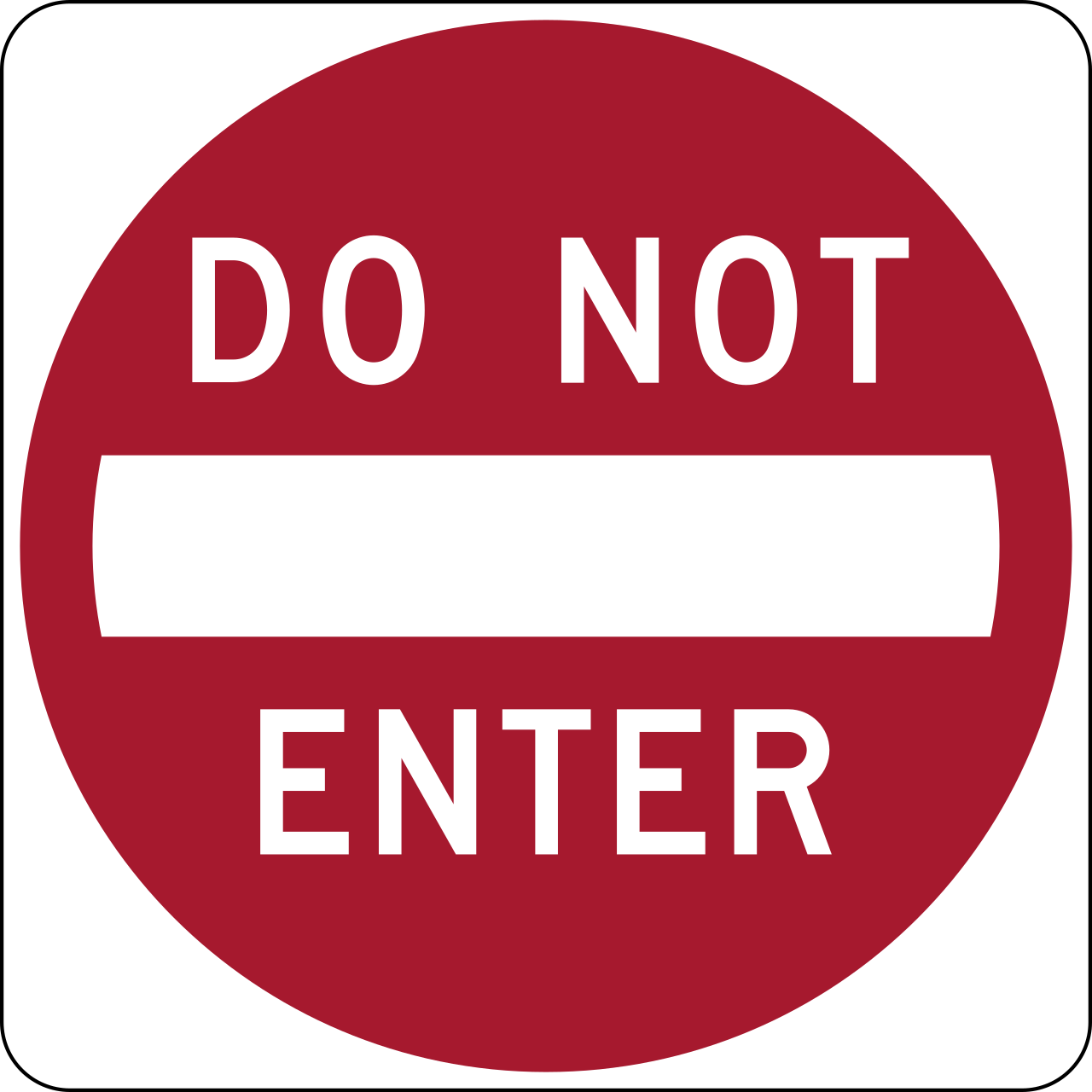
Marks a roadway or ramp where vehicular traffic is strictly forbidden to enter from your direction (such as freeway off-ramps or one-way streets).
This sign indicates:
A) that you must not drive past this sign.
B) that you must yield the right-of-way.
C) the entrance to a construction site.
D) the entrance to a dead-end street.
30.
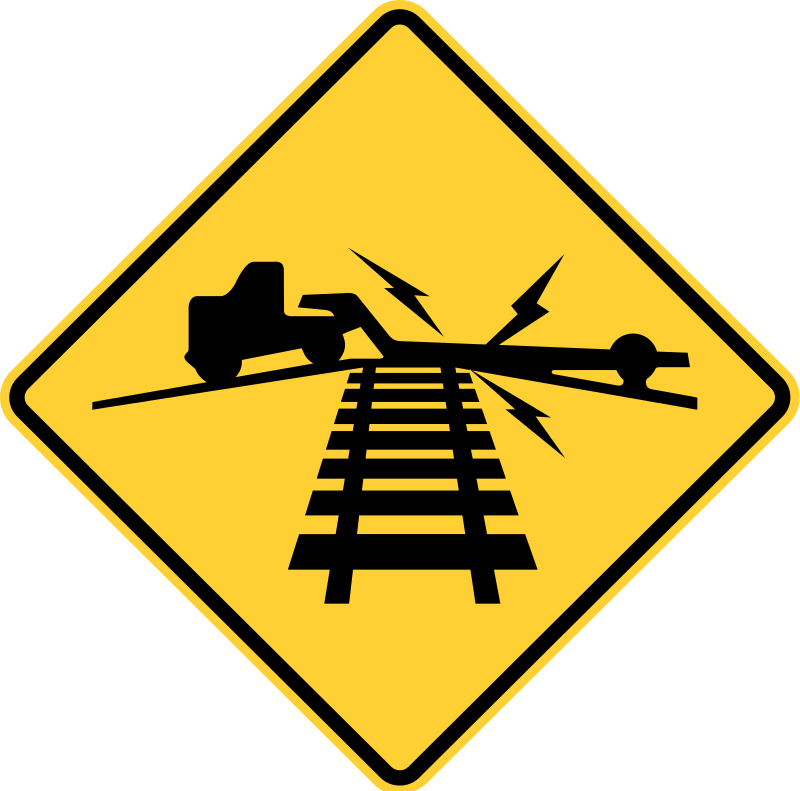
Warns of a high-centered or steep railroad hump crossing where long-wheelbase or low-slung vehicles may become stuck on the tracks.
This road sign means:
A) Winding road ahead
B) Pedestrian crossing
C) Low ground railroad crossing
D) No-passing zone
31.
When in a motor vehicle on a highway, it is:
A) illegal to drink from, but permissible to transport, open containers of alcohol in the passenger compartment.
B) illegal to possess an open container of alcohol in the passenger compartment.
C) acceptable to drink alcoholic beverages if you are not driving.
D) permissible to drink a moderate amount of alcohol when driving with a passenger.
32.
A steady green light at intersections means:
A) You may drive through the intersection if the road is clear
B) You must increase your speed
C) You may not turn right
33.
When driving in work zones, drivers should:
A) tailgate the vehicle ahead while reducing their speed.
B) pass the vehicle ahead when safe.
C) keep a safe following distance.
34.
If the driver of an oncoming vehicle fails to dim the lights, you should look:
A) toward the right side of the road.
B) toward the center of the roadway.
C) straight ahead.
35.
What does it mean If an oncoming driver flashes headlights at you during a period of low visibility?
A) Your headlights are too bright. You should turn them off.
B) Your vehicle was difficult to see. You should turn on your headlights.
C) Your headlights are too bright. You should use parking lights instead.
36.
What is a likely effect when you take another drug while you drink alcohol?
A) The effects of the alcohol and the drug are enhanced.
B) There are no effects, unless the drug is prescription only.
C) If the drug is over-the-counter, there are no effects.
37.
The basic color for traffic control devices used in construction zones is:
A) red.
B) orange.
C) yellow.
38.
Regulatory signs:
A) are diamond shaped and yellow or green.
B) warn drivers about road hazards.
C) provide information about the road rules and traffic laws.
D) regulate the flow of traffic at school zone.
39.
Highway hypnosis is a driving condition that can result from:
A) heavy traffic.
B) staring at the roadway for long periods of time.
C) travelling on HOV lanes.
D) frequent rest stops.
40.
Warns of two consecutive curves in opposite directions (e.g., curves right then left). Slow down to maintain control.
When you see this sign you should:
A) increase your speed and try to pass other vehicles.
B) slow your speed and be prepared to stop.
C) slow your speed and do not pass other vehicles.
41.
Indicates an upcoming bicycle crossing or shared road zone. Always leave at least 3 feet of clearance when passing cyclists.
This road sign means:
A) Watch for bicycles
B) Bicycle parking ahead
C) Bicycles are not allowed in this area
42.
If you get on a wrong expressway exit, you must:
A) get off at the next exit and look for signs that tell you how to return to the expressway.
B) use the the exit ramp to accelerate to expressway speed and blend with traffic.
C) drive in reverse to return to the expressway.
43.
You are driving at night, and a vehicle comes toward you with their high beam headlights on. You should:
A) flash your headlights once quickly.
B) look in the direction of the vehicle.
C) keep your high beams on.
44.
If you see orange construction signs and cones on a freeway, you must:
A) be prepared for workers and equipment ahead.
B) make a U-turn because the lane ends ahead.
C) maintain your current speed while changing lanes.
45.
Indicates an upcoming bicycle crossing or shared road zone. Always leave at least 3 feet of clearance when passing cyclists.
This road sign means:
A) Bicycle crossing
B) Bicycles have the right-of-way
C) This lane is reserved for bicyclists
46.
When passing other vehicles, drivers should:
A) make sure the passing lane is clear of traffic, and check behind and to the left to make sure another vehicle is not attempting to pass.
B) pass the vehicle as slowly as possible.
C) apply the brake and slow down.
D) All of the above.
47.
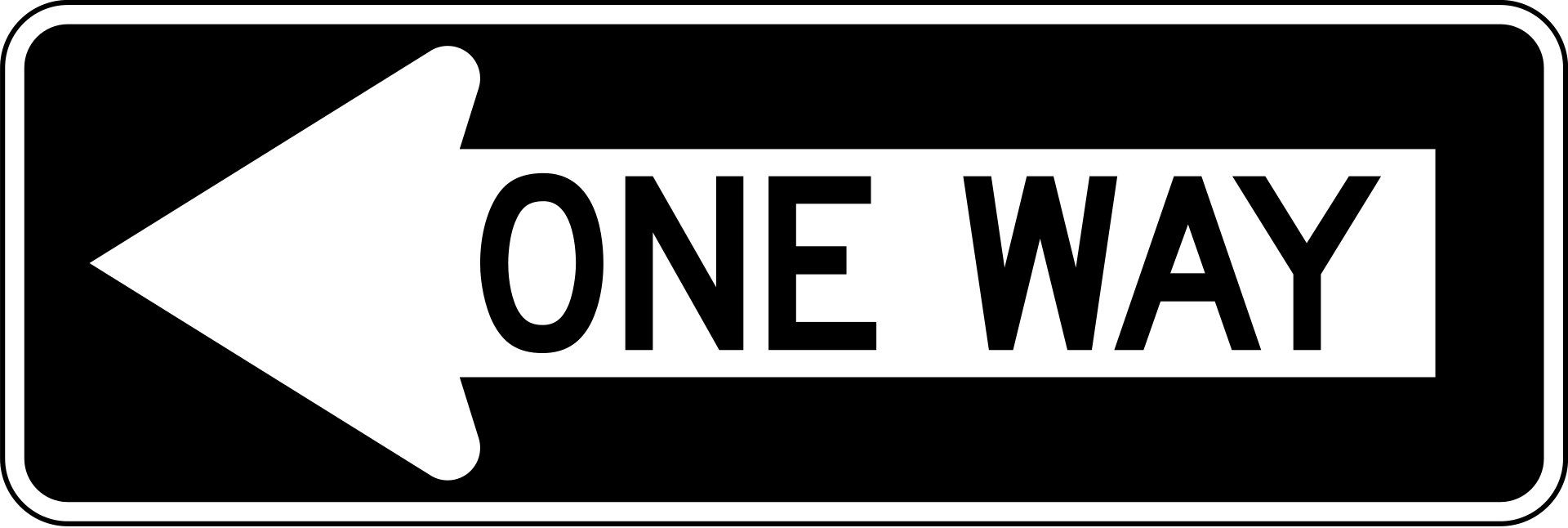
Traffic flows only in the direction indicated by the arrow. Never drive in the opposing direction.
This road sign means:
A) Two way Traffic
B) Traffic must move only in the direction of the arrow
C) Minimum Speed
48.
Large trucks:
A) have large blind spots.
B) can stop quicker than passenger vehicles.
C) do not need more room to maneuver.
D) All of the above.
49.
You must come to a full stop at a yield sign:
A) Always.
B) Never.
C) If traffic conditions require it.
50.
To avoid panic stops, you should:
A) scan the road ahead for hazards.
B) drive with your window down.
C) pump your brakes to make sure they work.
51.
When driving in snow, you should:
A) use your cruise control if possible.
B) slowly increase your speed for better traction.
C) make speed and directional changes more gradually.
52.
Two solid yellow lines on the pavement mean:
A) passing is not allowed.
B) passing is allowed during daylight only.
C) passing is allowed for both drivers.
D) passing is allowed if you are at the top of a hill.
53.
When a traffic signal light turns green, you should:
A) back up slowly.
B) yield the right-of-way to pedestrians.
C) yield the right-of-way to larger vehicles.
D) wait 5 seconds before proceeding.
54.
When another vehicle is passing you:
A) stay in your lane and reduce speed.
B) stay in your lane and maintain speed unless there is an emergency.
C) pull your vehicle as far to the right as possible without leaving the pavement.
55.
If your brakes are wet, you can dry them by:
A) riding the pedal lightly.
B) pull over to the right and wait until it stops raining.
C) having them checked by a mechanic.
56.
The road curves gradually to the right ahead. Reduce speed before entering the curve.
This sign is used to warn drivers about:
A) road construction.
B) changes in traffic lanes.
C) curves ahead.
D) drowsy driving.
57.
A thumping sound can be a warning:
A) that a tire blowout is about to occur.
B) of a steering failure.
C) of a brake failure.
58.
The roadway becomes particularly slippery during wet or rainy conditions. Reduce your speed, increase following distance, and avoid abrupt braking or steering.
This road sign means:
A) Winding road
B) Side road ahead
C) Slippery when wet
59.
Before you change lanes, you should:
A) look for other traffic by turning your head and looking behind you for oncoming traffic.
B) check your left mirror.
C) keep other vehicles out of your blind spots.
60.
In 55 MPH traffic you are least likely to be involved in a collision if you:
A) stay within that speed range.
B) drive a few MPH faster than most.
C) drive a few MPH slower than most.
ANSWER KEY Check answers after completing the test.
1 A
2 B
3 C
4 B
5 C
6 A
7 C
8 C
9 B
10 C
11 B
12 D
13 A
14 C
15 A
16 D
17 A
18 A
19 C
20 C
21 D
22 C
23 B
24 D
25 A
26 C
27 C
28 A
29 A
30 C
31 B
32 A
33 C
34 A
35 B
36 A
37 B
38 C
39 B
40 C
41 A
42 A
43 A
44 A
45 A
46 A
47 B
48 A
49 C
50 A
51 C
52 A
53 B
54 B
55 A
56 C
57 A
58 C
59 A
60 A