DriveQuiz drivequiz.com

ME DMV PERMİT PRACTİCE TEST 6

Maine
Duration: 53 min
|
Questions: 58
Student Name:
Date:
Correct:      Incorrect:      Score:      
1.
When a vehicle is hydroplaning:
A) the windshield wipers cannot keep the windshield clear of rain.
B) the spray from large trucks reduces visibility.
C) the tires lose contact with the road surface.
D) All of the above.
2.
When other vehicles are approaching an uncontrolled intersection at approximately the same time, you should:
A) maintain your speed and proceed through the intersection.
B) come to a complete stop and wait until there are no vehicles at the intersection.
C) watch for vehicles coming from the right and yield the right-of-way, then proceed when safe.
D) increase your speed and get through the intersection.
3.
Warns drivers that two separate lanes moving in the same direction are merging into one. Drivers in the right lane must adjust speed and merge smoothly with existing traffic.
This road sign means:
A) Merging traffic from the right
B) Sharp curves ahead
C) Intersection ahead
4.
When you see an emergency vehicle with flashing lights, you must:
A) pull over to the side of the road and stop.
B) increase your speed to provide a clear path for the emergency vehicle.
C) slow down until it passes you.
D) drive with your flashers on.
5.
At dawn you should:
A) drive with your parking lights on.
B) drive with your emergency flashers on.
C) turn on your headlights.
D) avoid turning your vehicle lights on.
6.
To help relieve fatigue on a trip:
A) drink coffee frequently.
B) change feet on the gas pedal.
C) stretch your legs while driving.
D) stop for a rest every two hours.
7.
When being passed by another vehicle, drivers should:
A) slow down.
B) slightly increase their speed.
C) maintain a constant speed.
8.
Some roadway surfaces are more slippery during certain times or at certain places. Which of the following is more likely to be slippery on cold, wet days?
A) Roundabouts and traffic circles.
B) Roads in shady areas.
C) Asphalt rather than concrete roads.
9.
As long as you don’t leave the road, you may legally pass a vehicle on the right:
A) if you are on a two-lane, two-way road and the other vehicle is turning left.
B) when you are turning into a one-way street with no oncoming traffic.
C) Never.
D) Only during daylight hours.
10.
When you are driving, turning your head and looking before changing lanes is:
A) a good driving habit.
B) unnecessary, you should use your rearview mirror instead.
C) a bad driving habit.
D) prohibited.
11.
Never make a U-turn from:
A) the lane you’re in.
B) the right lane.
C) the left part of the lane nearest to the centerline of the roadway.
12.
At intersections, crosswalks, and railroad crossings, drivers should always:
A) look to the sides of their vehicle to see what is coming.
B) slowly pass vehicles the vehicles ahead.
C) stop, listen for oncoming traffic, and proceed with caution.
13.
A signalized intersection is ahead. Prepare to stop if the light turns yellow or red.
This road sign means:
A) Uncontrolled intersection ahead
B) Don’t park next to the traffic signal
C) The traffic signal ahead is out of order
D) Traffic signals ahead
14.
To avoid the risk of being involved in an alcohol-related crash, you should:
A) decide before you start drinking that you are not going to drive.
B) say 'No, thanks' if someone offers you alcohol.
C) call a taxi if you've been drinking.
D) All of the above.
15.
When approaching a construction site, drivers should:
A) accelerate to get out of the way quickly.
B) slow down and adjust their driving manner.
C) honk their horn to alert construction workers of their presence.
16.
What is the purpose of minimum speed limits?
A) To keep a smooth traffic flow.
B) To halt the traffic flow.
C) To allow emergency vehicles with red flashing lights to safely pass other vehicles.
17.
______________ is an unsafe distraction when driving.
A) Leaving early to drive to an appointment.
B) Texting a message on your cell phone.
C) Controlling an emotion before putting the vehicle in gear.
D) Asking a passenger to enter your mapping request into your GPS.
18.
Drivers should check their rearview mirrors:
A) often to see how traffic is moving behind them.
B) only when slowing down.
C) to see if a truck is in their blind spot.
19.
Your license can be suspended if you are under 21 and drive with a BAC of:
A) 0.15% or more.
B) any amount.
C) 0.08% or more.
20.
Broken yellow lines:
A) separate lanes of traffic moving in opposite directions.
B) indicate you are in a no passing zone.
C) separate lanes of traffic moving in the same direction.
21.
Having a drivers license is:
A) a requirement.
B) a privilege.
C) a constitutional right.
22.
Drivers should always signal when:
A) pulling into traffic from a parking area or alley.
B) changing lanes.
C) pulling out of a parking space.
D) All of the above.
23.
A broken white line:
A) means passing or crossing is prohibited in that lane.
B) separates two lanes traveling in the same direction.
C) marks the right edge of the roadway.
24.
A steep downhill grade is ahead. Trucks and heavy vehicles should downshift to a lower gear to prevent brake overheating.
This road sign means:
A) Truck stop ahead
B) No trucks allowed
C) Hill or downgrade up ahead
25.
__________________ give you right-of-way to make a left turn.
A) A green arrow pointing left
B) A flashing red light
C) A flashing yellow light
D) A solid green light
26.
Passing is prohibited:
A) when a school bus is stopped to load or unload children on a public road.
B) at intersections.
C) whenever a solid line marks the left side of your lane.
D) All of the above.
27.
When entering a freeway, you should check traffic by:
A) using both the inside and outside mirrors.
B) using the inside mirror.
C) using the side mirror and looking over your shoulder.
28.
When passing another vehicle, you should return to your lane if:
A) you have passed the other vehicle’s front bumper.
B) you are at least 25 feet in front of the passed vehicle.
C) you can see both headlights in the rearview mirror.
29.
Your BAC depends on:
A) how fit you are.
B) the type of beverage you drink.
C) the amount of alcohol you drink.
30.
A signalized intersection is ahead. Prepare to stop if the light turns yellow or red.
This sign means:
A) You must stop ahead
B) Railroad crossing ahead
C) No Passing Zone
D) There is a traffic signal ahead
31.
The amount of alcohol in the blood is measured by:
A) blood alcohol concentration (BAC).
B) Number of Drinks (NOC).
C) Amount of Alcohol Drunk (AAD).
32.
To safely cross a railroad, drivers should:
A) listen and look both ways, then proceed if it is safe to do so.
B) drive across quickly if a train is approaching, or if it is too close, stop and then back up.
C) stop within 10 feet of all railroad crossings.
D) look both ways only if the red light is flashing.
33.
When you make a left turn from a one-way road into a two-way road, you must:
A) enter the two-way road to the left of its center line.
B) make a U-turn into the two-way road.
C) enter the two-way road to the right of its center line.
34.
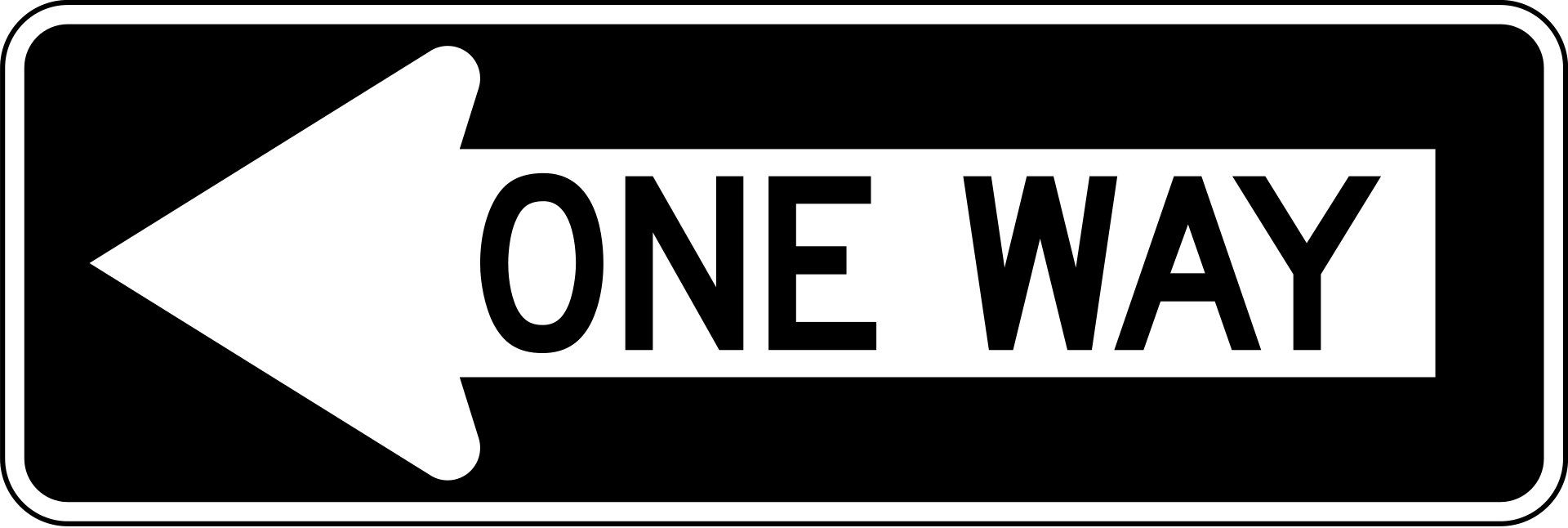
Traffic flows only in the direction indicated by the arrow. Never drive in the opposing direction.
This road sign means:
A) Traffic flows only in the direction of the arrow
B) Turn right or left
C) No right turn
D) Sharp curve ahead
35.
When a school bus is picking up or dropping off children, you must:
A) slow down and pass the bus with caution.
B) stop if you are driving in the same direction.
C) stop regardless of your direction of travel.
36.
When driving in rainy weather, you should:
A) steer and brake smoothly.
B) drive in low gear.
C) steer off the road.
37.
If a bus has signaled and is pulling back onto the roadway, you must:
A) yield.
B) honk to let them know you’re there.
C) move to the left lane.
D) speed up to pass.
38.
Your first response to reduced visibility should be:
A) to look for road edge markings to guide you.
B) to turn on your windshield wipers.
C) to reduce your speed.
D) to turn on your headlights.
39.
You are stopped at a stop sign and you are going to go straight through the intersection. A car on the cross road has stopped at a stop sign on your right and is going to go straight. Who has the right-of-way?
A) Whoever enters the intersection first.
B) You.
C) The car on your right.
40.
In heavy rain, tires can begin to ride on the water that is on top of the road pavement. This is called:
A) rideplaning.
B) hydroplaning.
C) pavement-planing.
D) waterplaning.
41.
To safely cross a railroad, drivers should:
A) drive across quickly if a train is approaching, or if it is too close, stop and then back up.
B) look both ways only if the red light is flashing.
C) listen and look both ways, then proceed if it is safe to do so.
D) stop within 10 feet of all railroad crossings.
42.
When you make a left turn from a one-way road into a two-way road, you must:
A) make a U-turn into the two-way road.
B) enter the two-way road to the left of its center line.
C) enter the two-way road to the right of its center line.
D) turn left into the one-way road.
43.
This road sign means:
A) Traffic flows only in the direction of the arrow
B) No right turn
C) Turn right or left
D) Sharp curve ahead
44.
When a school bus is picking up or dropping off children, you must:
A) stop regardless of your direction of travel.
B) slow down and pass the bus with caution.
C) stop if you are driving in the same direction.
45.
When driving in rainy weather, you should:
A) steer off the road.
B) steer and brake smoothly.
C) drive in low gear.
46.
If a bus has signaled and is pulling back onto the roadway, you must:
A) move to the left lane.
B) speed up to pass.
C) yield.
D) honk to let them know you’re there.
47.
The road ahead is divided by a median strip or physical barrier into two separate one-way roadways. Keep to the right of the divider.
Your first response to reduced visibility should be:
A) to turn on your headlights.
B) to turn on your windshield wipers.
C) to reduce your speed.
D) to look for road edge markings to guide you.
48.
You are stopped at a stop sign and you are going to go straight through the intersection. A car on the cross road has stopped at a stop sign on your right and is going to go straight. Who has the right-of-way?
A) Whoever enters the intersection first.
B) The car on your right.
C) No one.
D) You.
49.
When a stop is required at an intersection with no stop line or crosswalk:
A) Drivers should stop only at a place where the driver can see at least 100 feet on either side.
B) Drivers are required to slow down to make sure crossing traffic is clear.
C) Drivers are not required to stop.
D) Drivers should stop at the point nearest the intersecting roadway where the driver has a view of approaching traffic on the intersecting roadway before actually entering the roadway.
50.
The roadway becomes particularly slippery during wet or rainy conditions. Reduce your speed, increase following distance, and avoid abrupt braking or steering.
This road sign means:
A) Winding road
B) Side road ahead
C) Slippery when wet
51.
If your vehicle’s right wheels leave the pavement, you should:
A) maintain your current speed to gain better traction.
B) build up brake pressure by pumping the brake pedal several times.
C) take your foot off the gas and when you are slowed down, ease back on the road when it is safe to do so.
D) immediately come to a complete stop.
52.
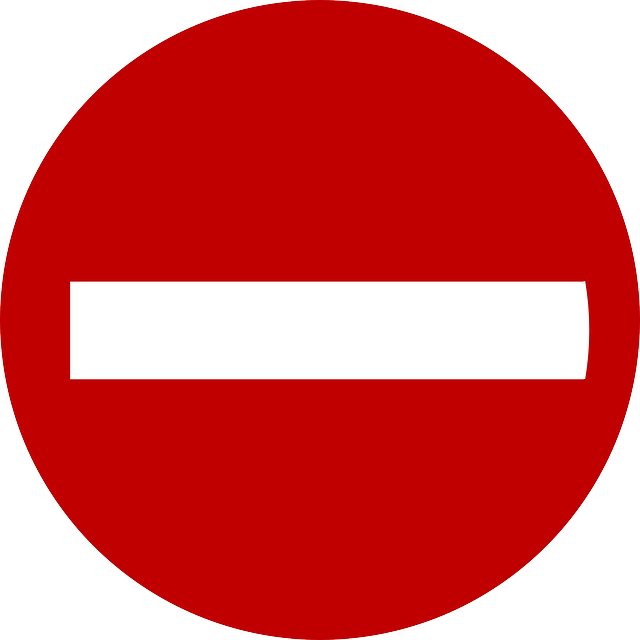
Indicates you have entered an exit ramp or one-way street in the incorrect direction. Stop immediately and safely turn around.
This road sign means:
A) No left turn
B) Lane ends
C) Do not enter
53.
Warns of two consecutive curves in opposite directions (e.g., curves right then left). Slow down to maintain control.
This road sign means:
A) A road joins from the left
B) The road ahead turns sharply right then sharply left
C) Sharp right turn
D) Winding road ahead
54.
When driving on gravel roads:
A) your tires do not have as much traction.
B) you should use cruise control to increase traction.
C) you should keep your eyes moving.
55.
A broken yellow line alongside a solid yellow line means:
A) Passing is permitted on the side of the broken yellow line
B) Passing is not permitted in either direction
C) Passing on the right is permitted in either direction
56.
If a driver follows you too closely, you should:
A) move to another lane if possible.
B) activate your stop lights.
C) brake suddenly.
57.
Indicates a series of three or more consecutive sharp turns or curves ahead. Reduce speed and maintain lane control.
This sign means:
A) narrow road ahead.
B) no turns are allowed on this road.
C) series of curves ahead.
D) the road may be slippery when wet.
58.
To enter a gap in traffic while driving on a highway:
A) check behind, then watch the vehicle ahead.
B) speed up and let vehicles make way.
C) watch only the vehicles behind the gap.
ANSWER KEY Check answers after completing the test.
1 C
2 C
3 A
4 A
5 C
6 D
7 C
8 B
9 A
10 A
11 B
12 A
13 D
14 D
15 B
16 A
17 B
18 A
19 B
20 A
21 B
22 D
23 B
24 C
25 A
26 D
27 C
28 C
29 C
30 D
31 A
32 A
33 C
34 A
35 C
36 A
37 A
38 C
39 C
40 B
41 A
42 B
43 B
44 C
45 C
46 D
47 A
48 D
49 D
50 C
51 C
52 C
53 B
54 A
55 A
56 A
57 C
58 A