DriveQuiz drivequiz.com

ME DMV PERMİT PRACTİCE TEST 4

Maine
Duration: 54 min
|
Questions: 60
Student Name:
Date:
Correct:      Incorrect:      Score:      
1.
You should increase your following distance when:
A) exiting a freeway.
B) following a motorcycle.
C) driving behind a large vehicle that blocks your vision.
D) All of the above.
2.
At intersections marked with stop lines, drivers must:
A) come to a complete stop.
B) slow down and enter the intersection.
C) signal other vehicles to stop.
3.
When is it safe to pass another vehicle?
A) Whenever signs and/or markings permit passing other vehicles.
B) When you are entering a curve and there are no oncoming vehicles.
C) When you are driving through an intersection and there are no oncoming vehicles.
4.
What should you do if your rear wheels start to skid?
A) Steer left if your rear wheels slide right.
B) If the vehicle has ABS, pump the pedal carefully.
C) Turn the steering wheel in the direction the vehicle is trying to go.
5.
When in a vehicle, wear a seat belt:
A) at all times.
B) on long trips.
C) on high-speed highways.
6.
When driving on the freeway behind large trucks, you should:
A) move to the right of the truck and pass it quickly.
B) drive closer behind the truck than for a passenger vehicle.
C) increase your following distance.
7.
If your wheels drop off the pavement edge, you should:
A) stop.
B) turn back onto the roadway immediately.
C) turn gradually back onto the roadway when safe.
8.
To avoid being in a truck driver’s blind spot, you should:
A) never pass the truck and put your headlights on.
B) avoid driving on either side of the truck and don’t tailgate.
C) flash your lights.
D) sound your horn.
9.
To drive more safely at night:
A) don’t drive when you are tired.
B) make sure your headlights are working properly.
C) increase following distance.
D) All of the above.
10.
You are approaching an intersection with a traffic signal indicating a steady yellow light. If you have not already entered the intersection, you should:
A) slow down and proceed with caution through the intersection.
B) speed up to cross the intersection before the light turns red.
C) stop before entering the intersection if it is safe to do so.
11.
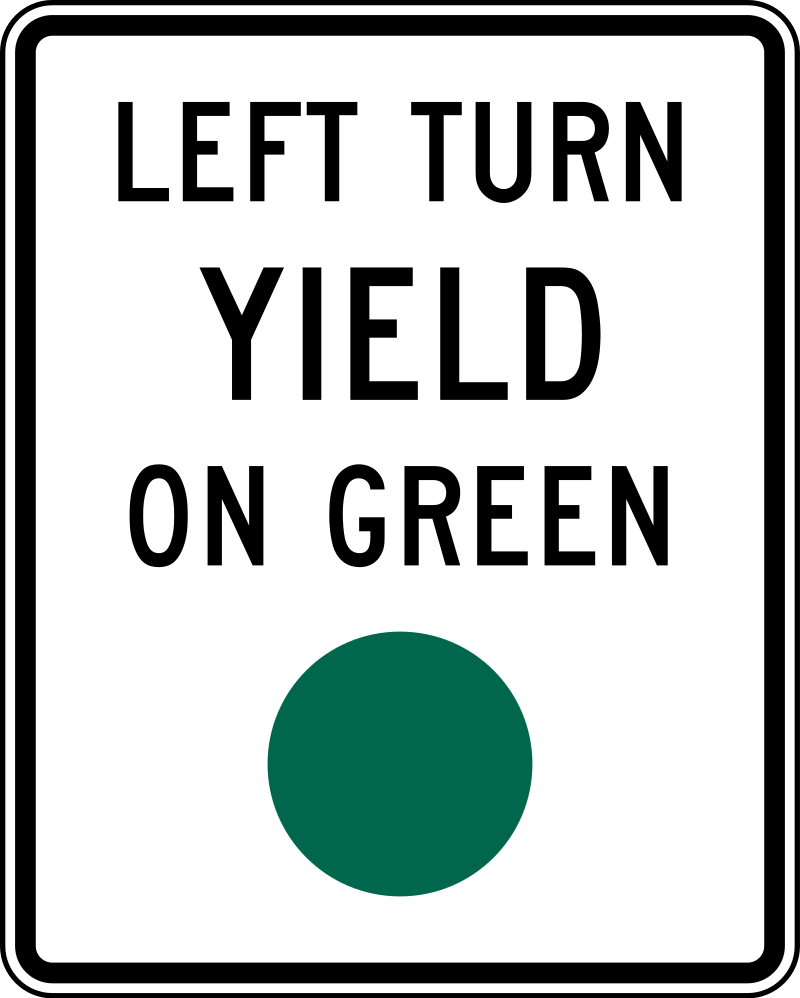
When turning left at a circular green light, you must yield right-of-way to oncoming traffic and pedestrians before completing your turn.
This white sign means you:
A) may turn left on a green light when it is safe to do so.
B) may turn left only on a green arrow.
C) must wait for the solid green light before you turn left.
12.
If traffic on the other side of an intersection is backed up and you cannot get completely through, you must:
A) enter the intersection and try to avoid blocking it.
B) enter the intersection and proceed with caution.
C) wait until traffic ahead is clear.
13.
Who has a greater risk of being involved in a traffic crash?
A) Drivers who are driving alone.
B) Young people.
C) All of the above.
14.
Parking, standing, or stopping is prohibited at all times in this designated zone except for emergency vehicles.
This road sign means:
A) No parking
B) Yield
C) No left turn
D) Divided highway
15.
To make a proper right turn:
A) swing to the left before turning right.
B) slow down and get into the lane nearest the centerline.
C) give the proper signal and get into the lane nearest the right curb.
16.
Signs that indicate a No Passing Zone tell drivers that:
A) it is not safe to pass.
B) passing is only permitted in daylight hours.
C) not passing other vehicles is prohibited.
17.
Following another vehicle too closely is known as:
A) speedgating.
B) closetailing.
C) tailgating.
18.
Another road crosses the highway ahead. Look left and right for crossing or entering vehicles.
This road sign means:
A) Railroad Crossing
B) Side Road
C) Intersection
D) No Passing Zone
19.
If you park facing uphill where there is NO curb, you should set the parking brake and:
A) turn the wheels toward the curb.
B) leave the wheels straight.
C) turn the wheels toward the edge of the road.
20.
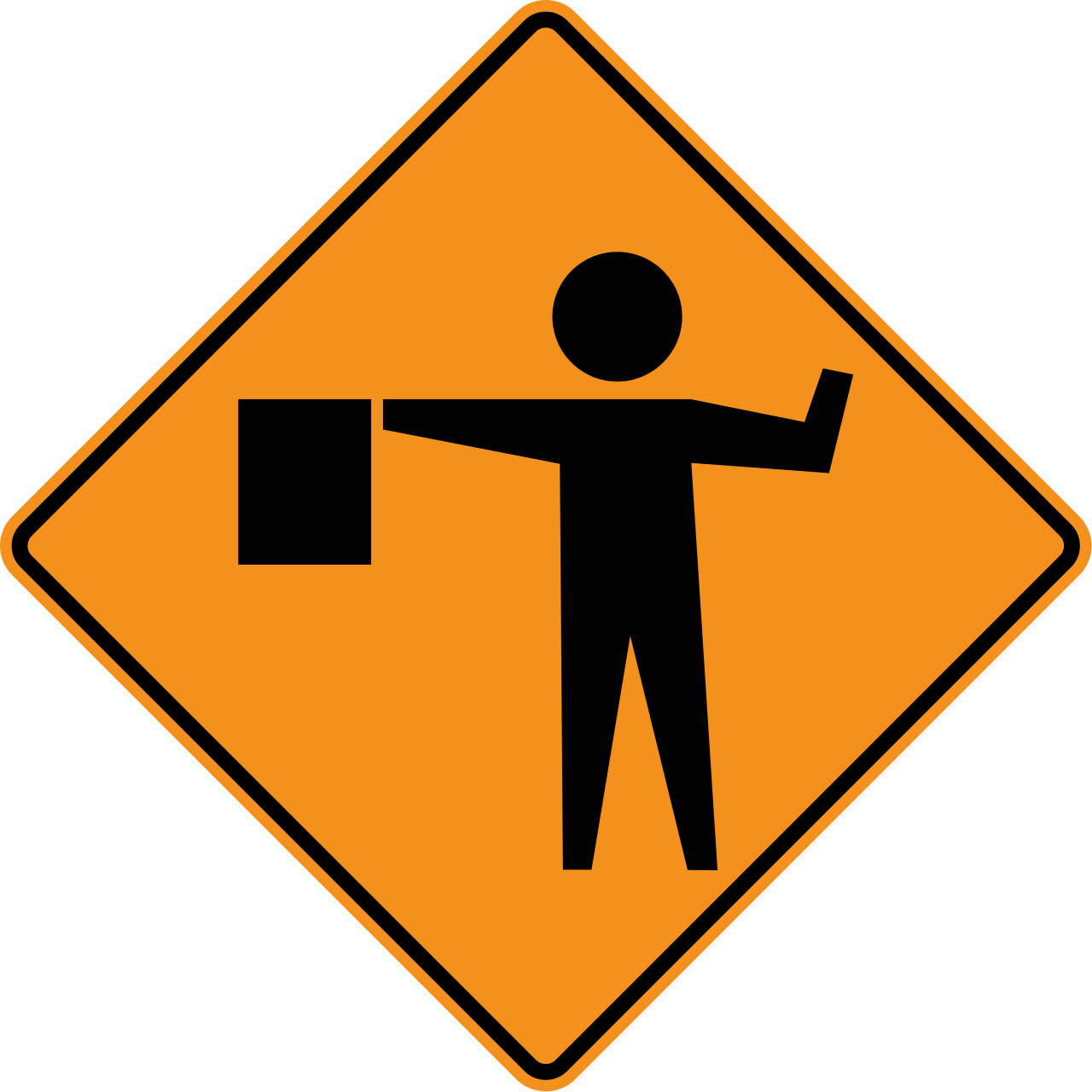
A human traffic control flagger is stationed ahead in a construction or utility work zone. Follow their hand and paddle signals strictly.
This road sign means:
A) Right lane closed
B) Do not block intersection
C) Flagger ahead
21.
Drivers may need more space in front of their vehicle:
A) when following motorcycles.
B) when carrying a heavy load or pulling a trailer.
C) All of the above.
22.
Right turns are strictly prohibited at this intersection under all circumstances.
This road sign means:
A) No left turn
B) No right turn
C) No U-turns
23.
If two vehicles arrive at a four-way stop at the same time:
A) both vehicles must stop.
B) the vehicle on the left must yield to the vehicle on the right.
C) the driver on the left must signal the driver on the right to go.
D) the vehicle on the right must yield to the vehicle on the left.
24.
If a tire blows out, drivers should:
A) apply the brake firmly and hold it.
B) hold the steering wheel tightly and use the brakes lightly.
C) pull over quickly.
25.
Just like alcohol and other drugs, drowsiness can:
A) help you to be a better driver.
B) make you feel better.
C) impair your judgment.
26.
With conventional brakes, the correct way to stop in an emergency situation where traction is lost and the car slides is by pumping the brakes.
A) True
B) False
27.
A broken yellow line to the right of a solid yellow center line means:
A) you may pass other vehicles if no oncoming traffic is present.
B) passing is prohibited.
C) you are only allowed to make left turns in this area.
28.
When changing lanes, drivers should never:
A) check to see if other drivers are moving into the same lane.
B) change lanes abruptly.
C) glance over their shoulder to check for blind spots.
29.
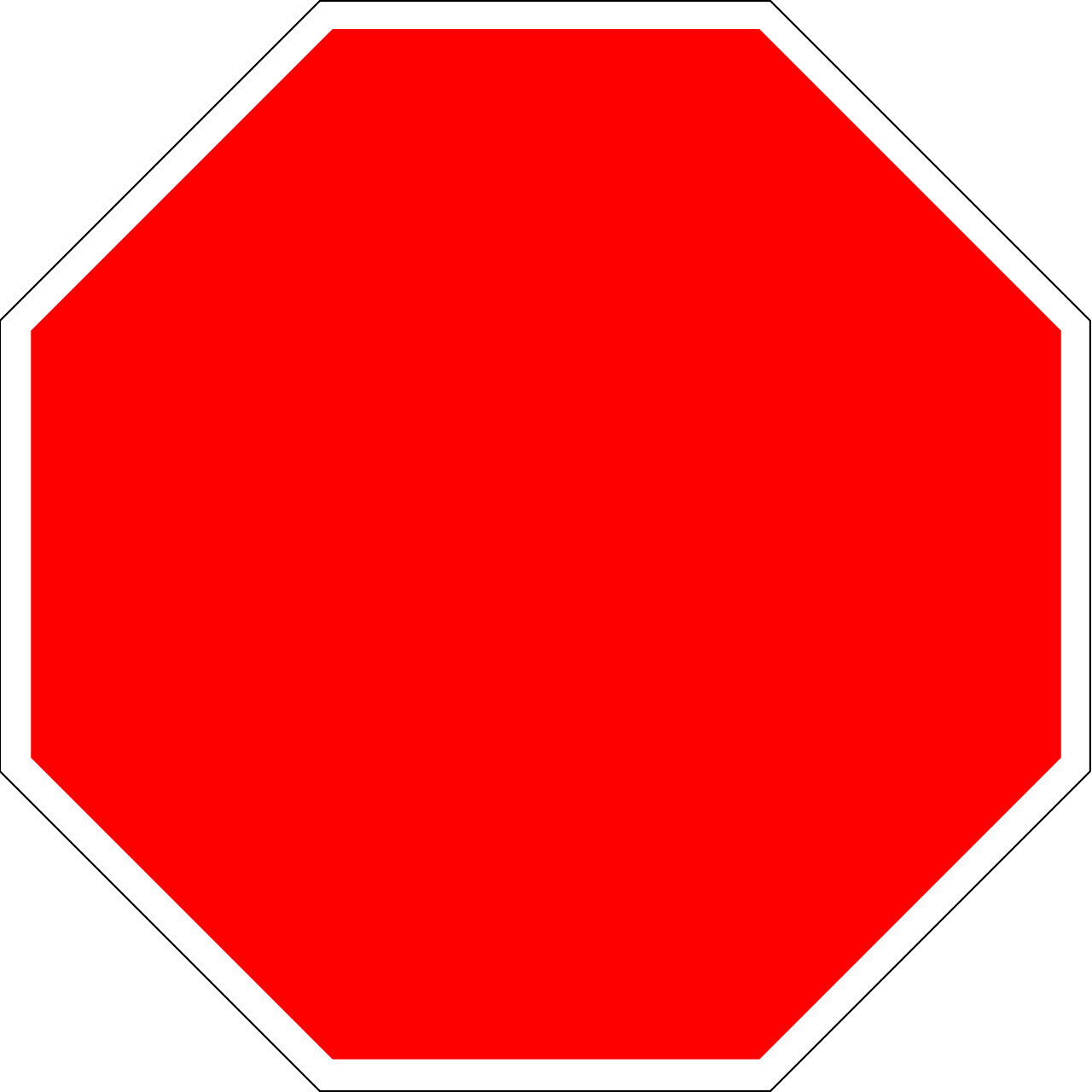
The 8-sided octagon shape always indicates a mandatory STOP in US traffic regulation.
This road sign means:
A) Be prepared to stop if necessary
B) Slow down and be prepared to stop
C) Stop and yield to pedestrians and cross traffic
30.
If the traffic lights are out of service when you approach an intersection, you:
A) must continue according to the rules of right-of-way.
B) must slow down and yield to oncoming traffic and pedestrians.
C) must come to a stop as you would for a stop sign.
D) must proceed with caution.
31.
Drinking alcohol:
A) has no effect on either judgement or driving ability.
B) has no effect on driving ability but affects your judgement.
C) harms both judgement and driving skills.
32.
If you become sleepy while driving you should:
A) get some rest or change drivers.
B) drink coffee.
C) open a window.
33.
The road is the most slippery:
A) when it first starts to rain.
B) after it rains.
C) All of the above.
34.
A broken yellow line between two lanes of traffic means:
A) Passing is permitted when safe.
B) Passing is not permitted.
C) Passing on the right is permitted in either direction
35.
When the road is slippery, you should:
A) brake suddenly carefully.
B) pump your brakes.
C) press your brakes in slow, steady strokes.
36.
When entering a highway from an entrance ramp, drivers should:
A) enter slowly to avoid other vehicles.
B) stop first, then gradually enter traffic.
C) accelerate to the speed of traffic.
D) drive above the speed of traffic to get ahead.
37.
The best way to deal with tailgaters is to:
A) let them pass if it's safe to do so.
B) flash your brake lights.
C) always keep your eyes focused ahead of your car.
38.
A driver who's being passed on the right and the left by many vehicles while driving in the center lane of an highway should:
A) take the next exit.
B) move to the lane on their right.
C) move to the lane on their left.
39.
What is the most important rule to remember in any emergency?
A) Do not panic.
B) Run away.
C) Call the police.
40.
To see vehicles in your blind spots, you must look:
A) in your outside rearview mirror.
B) over your shoulders.
C) in your side mirrors.
41.
Drivers should allow a larger space cushion when stopping:
A) at a stop sign.
B) on an up-hill.
C) at an intersection.
D) at a yield sign.
42.
When a driver is turning and a pedestrian is crossing without a traffic light, __________ must yield the right-of-way.
A) the pedestrian
B) the driver
C) both
D) whoever is slower
43.
No Zones are areas around trucks where cars:
A) disappear into blind spots or are so close to the truck that the driver's ability to stop or maneuver safely is restricted.
B) can turn safely because several car lengths have been left between the truck and car.
C) can travel behind trucks at constant speed and have no risks of being involved in a collision.
44.
When passing a motorcycle you must:
A) give the motorcyclist the right hand part of his traffic lane.
B) give the motorcyclist the entire traffic lane as if the motorcycle was a car.
C) sound your horn to alert the motorcyclist.
45.
Worn tires:
A) may cause you to hydroplane even with very little water on the road.
B) can increase your stopping distance.
C) can make turning more difficult.
D) All of the above.
46.
The roadway becomes particularly slippery during wet or rainy conditions. Reduce your speed, increase following distance, and avoid abrupt braking or steering.
This road sign means:
A) Slow down, slippery when wet
B) Detour ahead
C) Road curves ahead
47.
If you see an animal on the road:
A) be very cautious.
B) honk your horn.
C) pass the animal as fast as possible.
D) None of the above.
48.
The best way to avoid loss of control in wet conditions is pump your brakes.
A) False
B) True
49.
Night driving can be more difficult because:
A) vehicle speed and distance are harder to judge.
B) there are more cars on the roads at night.
C) the speed limit is increased at night.
50.
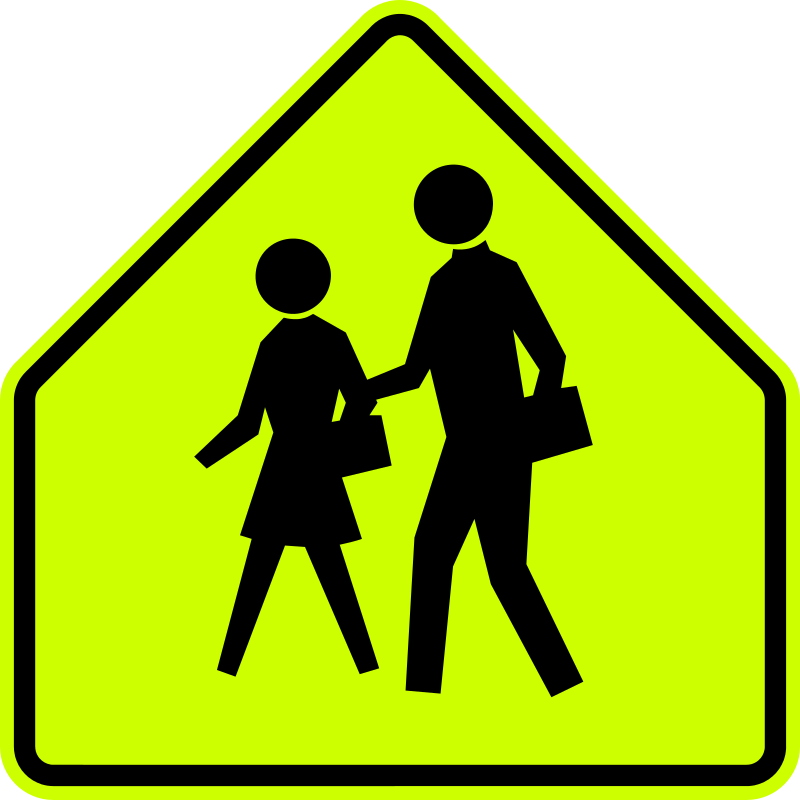
Five-sided pentagon sign indicating an upcoming school area. Watch for children crossing, school buses, and observe posted reduced school speed limits.
This road sign means:
A) School crossing
B) Playground ahead
C) Pedestrian crossing
51.
Directions given by traffic officers ___________ signs, signals or pavement markings.
A) take precedence over
B) are less important than
C) must obey
52.
If a bus needs to make a right turn and you are also turning right:
A) squeeze between the bus and the curb.
B) try to turn right before the bus does.
C) wait until the bus turns before turning right.
53.
________ is the only effective way to reduce your Blood Alcohol Content (BAC).
A) Time
B) Drinking coffee
C) Taking a cold shower
D) Eating food
54.
Bicyclists must:
A) ride in a bicycle lane, if available.
B) remain to the right when they prepare for a left turn.
C) remain near the left edge of the road.
55.
You are stopped behind other vehicles waiting at a stop sign. When the intersection is clear:
A) you may follow the vehicle ahead without stopping again.
B) you may proceed with caution through the intersection without stopping if there is no other traffic.
C) you must stop again at the stop sign.
D) you must proceed through the intersection without stopping again.
56.
When passing another vehicle, before turning back into the right-hand lane drivers should wait until they can see the vehicle they are passing in the rearview mirror.
A) True
B) False
57.
You arrive at the same time as another vehicle at an intersection has no traffic signs or signals. You should:
A) slow down and yield to the vehicle on the right.
B) speed up and get through the intersection.
C) sound your horn and drive through the intersection with extreme caution.
D) drive through the intersection and make the other vehicle stop.
58.
Indicates an upcoming bicycle crossing or shared road zone. Always leave at least 3 feet of clearance when passing cyclists.
This road sign means:
A) Watch for bicycles
B) Bicycle parking ahead
C) Bicycles are not allowed in this area
59.
What are some telltale signs of a drunk driver?
A) Sudden stops.
B) Weaving between lanes.
C) Driving slower than the normal flow of traffic.
D) All of the above.
60.
Prohibits drivers from making a 180-degree turn to travel in the opposite direction at this intersection or stretch of road.
This road sign means:
A) No left turn
B) No U-turn
C) Detour ahead
ANSWER KEY Check answers after completing the test.
1 D
2 A
3 A
4 C
5 A
6 C
7 C
8 B
9 D
10 C
11 A
12 C
13 C
14 A
15 C
16 A
17 C
18 C
19 C
20 C
21 C
22 B
23 B
24 B
25 C
26 A
27 A
28 B
29 C
30 C
31 C
32 A
33 A
34 A
35 C
36 C
37 A
38 B
39 A
40 B
41 B
42 B
43 A
44 B
45 D
46 A
47 A
48 A
49 A
50 A
51 A
52 C
53 A
54 A
55 C
56 A
57 A
58 A
59 D
60 B