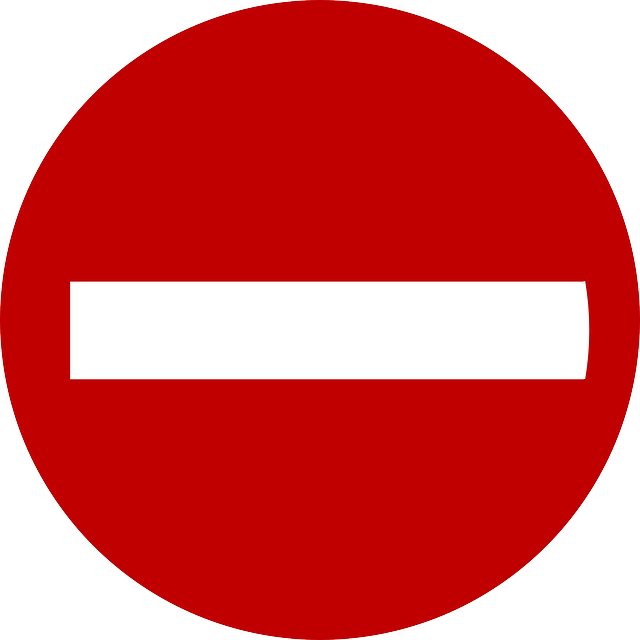
A solid yellow line on your side of the center line means:
A)Stop
B)Pass with caution
C)Do not pass
3.
This road sign means:
A)Keep left
B)Divided highway begins
C)Lane ends
4.
When passing a pedestrian who is walking on the road and an oncoming vehicle is approaching, you should:
A)keep driving, you have the right-of-way.
B)honk your horn to warn the pedestrian.
5.
A crosswalk is:
A)a special type of 4-way intersection.
B)an area designated for blind persons.
C)the area where pedestrians may cross the road.
6.
Signs and markings requiring that you obey the indicated instruction are known as _____ signs.
A)warning
B)guide
C)regulatory
D)information
7.
Drivers should always be looking:
A)at the left lane.
B)beside, ahead and to the rear of the vehicle.
C)directly in front of the car.
8.
There is no crosswalk and a pedestrian is crossing your lane ahead. You should:
A)stop and let the pedestrian finish crossing the street.
B)slow down as you pass the pedestrian.
C)make eye contact and then pass the pedestrian.
9.
When following a motorcycle, drivers must remember that motorcycles can ____________ than other vehicles.
A)accelerate much faster
B)stop much more quickly
C)stop much more slowly
10.
If you stop at a railroad crossing with more than one track:
A)proceed with caution until you see a train.
B)go through when one of the tracks is free.
C)go through as soon as the first train passes.
D)wait until you have a clear view of both tracks.
11.
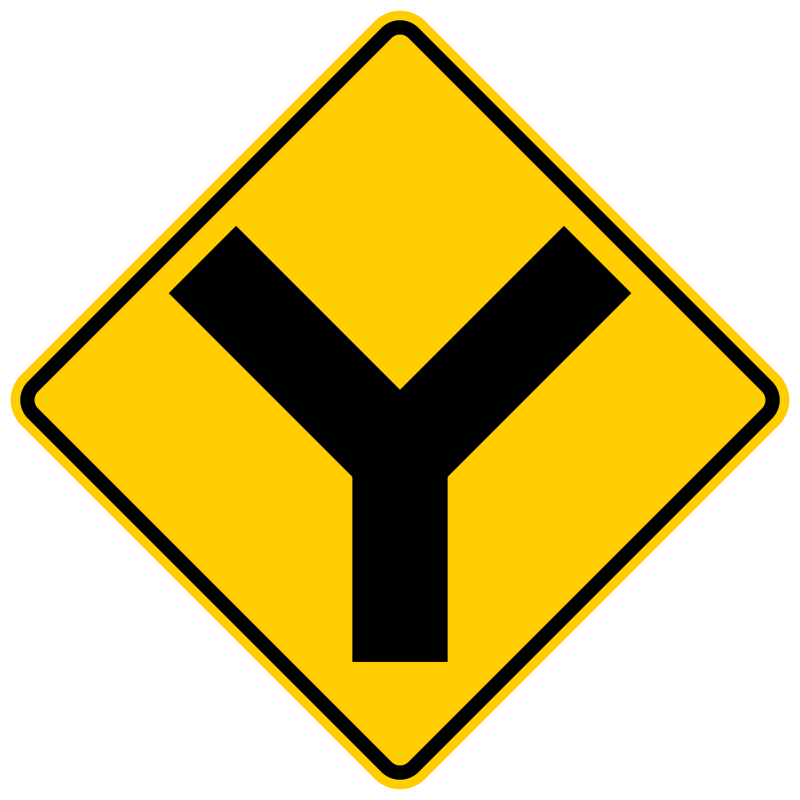
This road sign means:
A)The road ends ahead
B)A road joins from the right
C)A four-way intersection is ahead
D)'Y' intersection ahead
12.
This road sign means:
A)Merging traffic
B)Steep grade ahead
C)Intersection ahead
13.
Drivers making a left turn at an intersection should yield the right-of-way to a bicyclist entering the intersection from the opposite direction.
A)True
B)False
14.
When entering an interstate highway, you should check for a gap in traffic in the nearest lane, adjust your speed to match the flow of traffic, signal and:
A)wait for the lane to be clear.
B)merge into that gap when safe.
C)slow down gradually.
15.
When you are angry or upset you should:
A)listen to loud music while driving.
B)take a few minutes to cool off before you drive.
C)drive fast to let off steam.
16.
If there is no crosswalk and you see a pedestrian crossing your lane, you should:
A)stop and let the pedestrian finish crossing.
B)make sure the pedestrian can see you before proceeding.
C)honk your horn and proceed with caution.
17.
Drivers must yield for emergency vehicles:
A)Never.
B)only when other vehicles yield.
C)when they see a flashing red or blue light or hear a siren.
D)None of the above.
18.
Emergency vehicles:
A)may follow each other.
B)may use a loudspeaker to give instructions.
C)have the right-of-way when using siren and red/blue lights.
D)All of the above.
19.
Arrows on the roadway:
A)show which lanes you must use.
B)indicate reserved lanes.
C)indicate HOV lanes.
20.
Vehicles stopped behind a school bus when the red lights are flashing must remain stopped until:
A)the flashing lights turn green.
B)the stop arm is retracted and the bus begins moving.
C)all students are off the bus.
21.
Braking distance is how far a vehicle travels:
A)before the driver hits the brakes.
B)while the driver is braking.
C)when pumping the brakes.
22.
Drivers who have been drinking are more likely to:
A)keep a safe following distance.
B)yield right-of-way to oncoming vehicles.
C)be less reactive.
23.
A yellow arrow used to control turns from a specific traffic lane:
A)is never used as a traffic signal.
B)is warning the traffic a green arrow is about to be shown.
C)means the same as a circular yellow light for the lane of traffic indicated by the arrow.
D)means that you may go in the direction indicated by the arrow.
24.
Parking is not allowed:
A)in an intersection, unless permitted by signs.
B)within 300 feet of a pedestrian safety area.
C)on public roads
25.
If you are blinded by headlights on an approaching vehicle, you should:
A)avoid looking directly at the bright lights.
B)glance toward the side of the road, then look quickly ahead to determine the other vehicle’s position.
C)All of the above.
26.
When entering an interstate highway, drivers should:
A)check for cars and slow down to 25 MPH before merging with the flow of traffic.
B)wait for an opening in traffic on the entrance ramp.
C)adjust speed to meet a traffic gap, then merge at a safe speed.
27.
Your car stalls on the tracks at a railroad crossing, and a collision with a train is imminent. After getting yourself and your passengers out of the car, you should:
A)run toward the train but stay off the tracks.
B)signal the train to stop.
C)cross the tracks.
28.
It is illegal to drive below the speed limit:
A)when the pavement is wet.
B)only in residential areas.
C)when driving slowly disrupts the normal flow of traffic.
D)only in rural areas.
29.
If one of your tires blows out while driving, you should:
A)apply the brakes firmly and steer toward the right edge of the road.
B)pump the brakes.
C)hold the steering wheel firmly, slow down, and steer smoothly.
30.
To prevent a fatigue-related crash while driving:
A)find a safe parking area to take a 15 to 20 minute nap.
B)drive at night when there are not as many vehicles on the roadway.
C)continue driving so you will reach your destination sooner.
31.
Reaction time is slower:
A)after drinking alcohol.
B)after sleeping.
C)between 9 and 11 PM.
32.
Motorcyclists are entitled to use the full width of a traffic lane; therefore, a driver should pass a motorcycle the same way as passing another vehicle.
A)False
B)True
33.
The following symptoms are associated with drowsy driving:
A)You continue to yawn.
B)You don’t remember driving the last few miles.
C)All of the above.
34.
A driver should be extra alert for motorcyclists, bicycles and pedestrians. Why?
A)They obey specific traffic laws.
B)They always have the right-of-way.
C)They are hard to see in traffic.
D)They don’t have rearview mirrors.
35.
At a crosswalk:
A)construction workers must yield to drivers.
B)drivers must yield to pedestrians.
C)pedestrians must yield to drivers.
36.
At a stop sign there is no stop line or crosswalk. You must stop:
A)before you enter the intersection.
B)at the next crosswalk.
C)after you enter the intersection, if you have a clear view of traffic on the intersecting roadway.
37.
When the road is slippery, drivers should _________ their following distance.
A)increase
B)maintain
C)decrease
38.
When you are facing a green light and there are pedestrians in the intersection:
A)you must signal your intention to cross the intersection at least 100 feet before yielding the right-of-way.
B)you must yield the right-of-way to pedestrians.
C)you have the right-of-way over pedestrians.
39.
When you are driving at night and another vehicle is approaching, you should use your parking lights.
A)True
B)False
40.
Look over your shoulder to check your blind spot:
A)when changing lanes.
B)when pulling to the right side of the road or away from a curb.
C)on all right and left turns.
D)All of the above.
41.
If an aggressive driver is behind you:
A)sound your horn and move to the left lane.
B)slow down and confront the aggressive driver.
C)try to get out of the aggressive driver’s way.
D)increase you speed and flash your brake lights.
42.
To avoid traction loss from hydroplaning, drivers should:
A)keep a constant speed.
B)apply the brakes as soon as the car starts to skid.
C)slow down.
43.
This road sign means:
A)A road joins from the left
B)You must bear either right or left
C)A 3-way intersection is ahead
44.
When you make a left turn from a two-way road into a four-lane highway, you must:
A)enter the left lane, to the right of the center line.
B)enter the right lane, to the left of the center line.
C)go straight through the intersection, and then make the turn.
45.
This sign means:
A)Merge left
B)Merge right
C)Divided highway begins
46.
When approaching any intersection or driveway, drivers should:
A)look both ways and be ready to stop.
B)pass other vehicles and then stop.
C)drive at the fastest speed just before entering the intersection.
47.
To keep your vehicle from rolling into traffic when parked on a hill, if you are facing uphill you should:
A)turn the front wheels away from the curb or edge of the road.
B)turn the back wheels towards the curb or edge of the road.
C)set the parking brake and keep the front wheels straight.
D)turn the front wheels towards the curb or edge of the road.
48.
You must pull over to the edge of the road and allow an emergency vehicle to pass:
A)only if the emergency vehicle is following you.
B)regardless of your direction.
C)only if the emergency vehicle is approaching.
D)None of the above.
49.
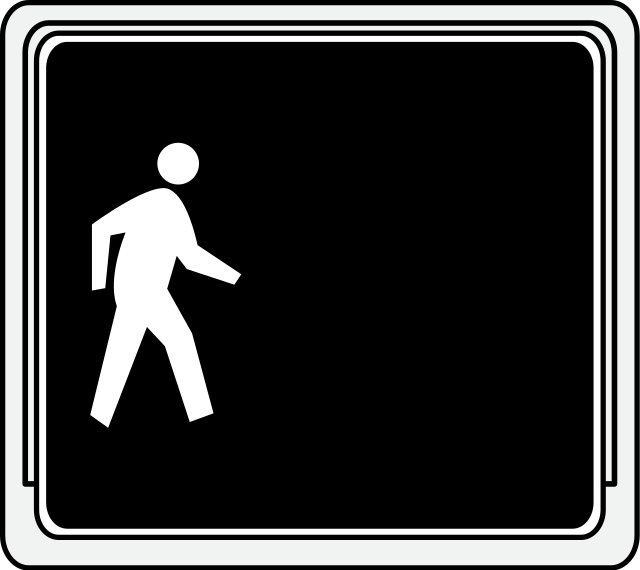
What does the pictured signal indicate?
A)A pedestrian may begin crossing the street.
B)Pedestrians may turn right.
C)A pedestrian may not not begin crossing the street.
50.
This road sign means:
A)Railroad Crossing
B)One Way
C)Limited parking
51.
You are driving behind another vehicle and notice that the driver is driving with one hand, talking to a passenger. You as a driver:
A)know that you should avoid this bad habit.
B)know that you should give the vehicle ahead extra room.
C)know that the driver in the vehicle ahead is reducing his safety margin by being an inattentive driver.
D)All of the above.
52.
Smoking while driving:
A)does not affect driving abilities.
B)is not distracting.
C)helps increase driver alertness.
D)is distracting.
53.
Left turns on a red light are allowed:
A)from a one-way street into a one-way street.
B)Never.
C)at intersections, after stopping, if the way is clear.
54.
A flashing yellow light means:
A)Merging traffic ahead
B)Pedestrian crossing
C)Come to a full stop
D)Proceed with caution
55.
In bad weather conditions, when visibility is low, drivers should:
A)drive in the lane closest to oncoming traffic.
B)speed up to get off the road quickly.
C)increase their following distance.
56.
When changing lanes, you should not:
A)signal your intentions early.
B)check your side and rear view mirrors.
C)use the inside rearview mirror to check for blind spots
D)check to see if other drivers are moving into the same lane.
57.
When you approach an intersection with a flashing yellow light, you must:
A)come to a complete stop, then proceed.
B)slow and proceed with caution.
C)maintain your normal speed.
58.
A bad car suspension can cause:
A)pumping brakes.
B)vehicle control problems.
C)squealing brakes.
59.
This road sign means:
A)Watch for vehicles entering from the side
B)When pavement is wet, reduce your speed
C)Winding road ahead
ANSWER KEYCheck answers after completing the test.