You reach an intersection that is not controlled at the same time as a driver on your right, and both of you prepare to go straight. Who has the right-of-way?
A)You.
B)No one.
C)The other driver.
2.
This road sign means:
A)No left turn
B)No right turn
C)No U-turns
3.
When driving in fog, drivers should use:
A)low beam headlights.
B)parking lights.
C)high beam headlights.
4.
When following a motorcycle, drivers must remember that motorcycles can ____________ than other vehicles.
A)accelerate much faster
B)stop much more quickly
C)stop much more slowly
5.
Parking is not allowed:
A)in an intersection, unless permitted by signs.
B)within 300 feet of a pedestrian safety area.
C)on public roads
6.
Just like alcohol and other drugs, drowsiness can:
A)help you to be a better driver.
B)make you feel better.
C)impair your judgment.
7.
In heavy rain, tires can begin to ride on the water that is on top of the road pavement. This is called:
A)rideplaning.
B)hydroplaning.
C)pavement-planing.
D)waterplaning.
8.
If a driver follows you too closely, you should:
A)move to another lane if possible.
B)activate your stop lights.
C)brake suddenly.
9.
Which of the following drugs could affect your ability to drive?
A)A cold remedy.
B)Marijuana.
C)All of the above.
10.
What is the meaning of orange traffic signs?
A)Yield.
B)Warning of school, pedestrian, and bicycling activity.
C)Construction and maintenance warning.
11.
Don't be afraid to sound a sharp blast on your horn when:
A)when a child is about to run into the street.
B)another vehicle is in danger of hitting you.
C)All of the above.
12.
Which statement about blind spots is true?
A)Before changing lanes, you should check mirrors and look over your shoulder toward the rear.
B)Large trucks have smaller blind spots than most passenger vehicles.
C)If traffic conditions permit you should cruise in blind spot of the vehicle ahead.
13.
Distracted driving is anything that:
A)causes you to focus on your driving.
B)causes evasive action while driving.
C)takes your attention away from driving.
14.
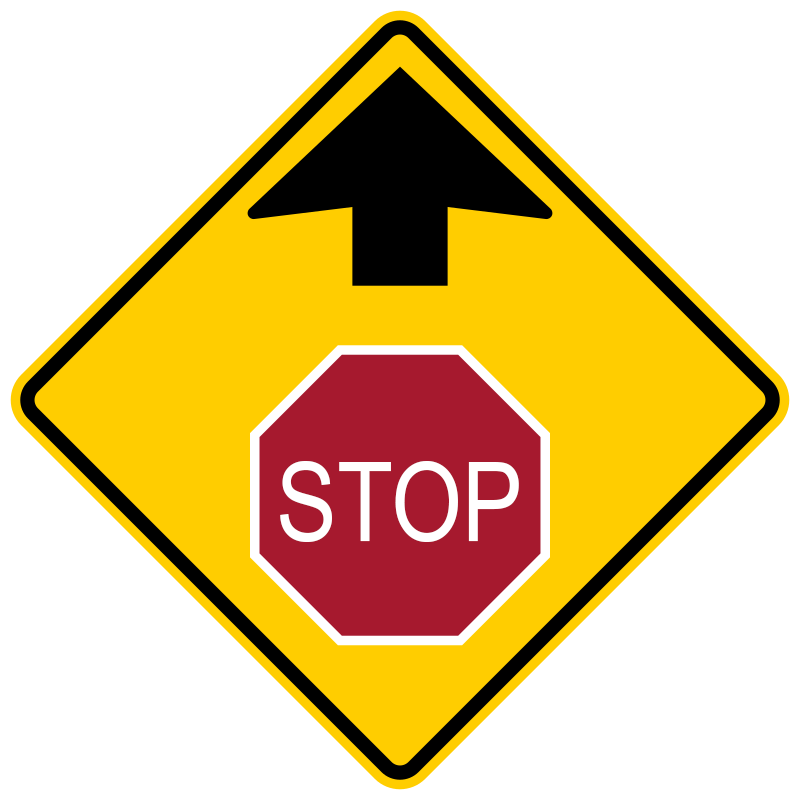
When drivers come to this sign, they must:
A)be ready to stop at the stop sign.
B)warn other drivers that a stop sign is ahead.
C)brake sharply and come to a complete stop.
15.
What should drivers do when they see this road sign?
A)come to a complete stop and wait for a train to cross.
B)slow down, look for a train, and be prepared to stop.
C)look for a human flagger.
16.
What should drivers do when the red lights begin to flash?
A)Stop.
B)Yield.
C)Slow down.
17.
This road sign means:
A)Do not pass trucks
B)Truck must back up
C)Steep downgrade ahead
18.
This road sign means:
A)Winding road
B)Side road ahead
C)Slippery when wet
19.
This is:
A)a side road sign.
B)a merging traffic sign.
C)a right curve sign.
20.
At a school crossing, drivers should:
A)always stop, whether there’s a stop sign or not.
B)always sound their horn and stay alert.
C)watch for children and be ready to stop.
21.
When you are facing a green light and there are pedestrians in the intersection:
A)you must signal your intention to cross the intersection at least 100 feet before yielding the right-of-way.
B)you must yield the right-of-way to pedestrians.
C)you have the right-of-way over pedestrians.
22.
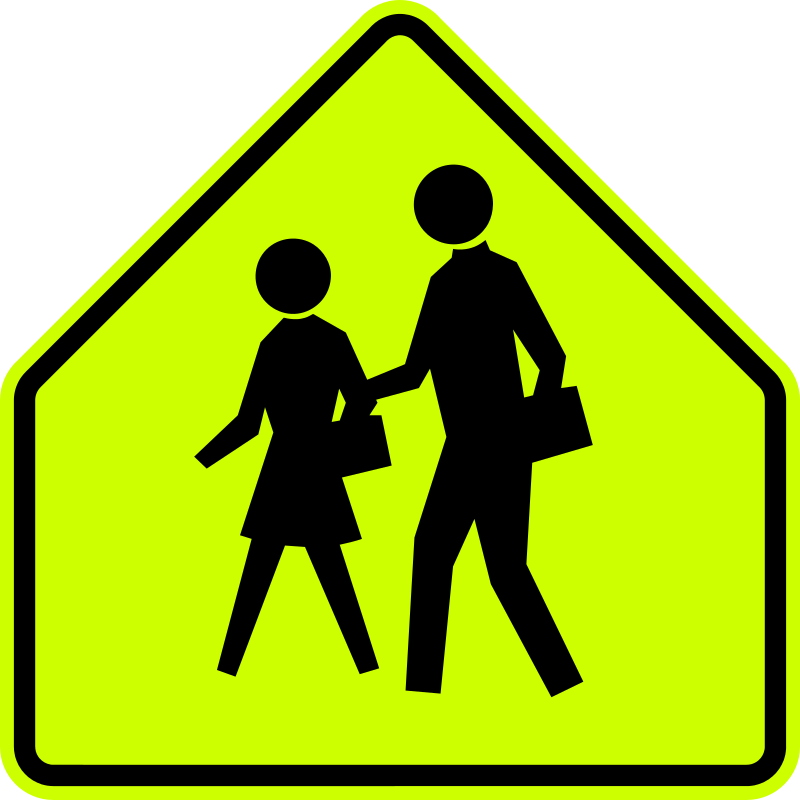
This road sign means:
A)School crossing
B)Playground ahead
C)Pedestrian crossing
23.
Service signs are ____ with ____ letters and symbols.
A)blue; white
B)white; black
C)green; white
24.
Green and white signs:
A)give information about directions and distances.
B)are mainly used at intersections and driveways.
C)warn drivers of unexpected road conditions.
25.
When passing another vehicle, you should:
A)assume the other vehicle will maintain a constant speed.
B)check your mirrors and blind spots.
C)drive at the same speed as the vehicle you are passing.
ANSWER KEYCheck answers after completing the test.