DriveQuiz drivequiz.com

MA DMV PERMİT PRACTİCE TEST 4

Massachusetts
Duration: 23 min
|
Questions: 25
Student Name:
Date:
Correct:      Incorrect:      Score:      
1.
Anything that requires you to _______ could cause you to crash.
A) take your hands off the wheel
B) take your attention away from driving
C) take your eyes off the road
D) All of the above.
2.
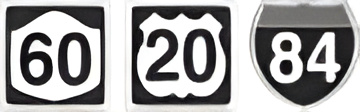
Interstate or State Route numbered highway marker used for route navigation and guide information.
These are:
A) route signs.
B) miles-left signs.
C) speed limit signs.
3.
At a stop sign there is no stop line, you must stop:
A) before you enter the intersection.
B) before you enter the crosswalk.
C) after you enter the crosswalk.
4.
Road signs that direct drivers to services are:
A) brown and white.
B) blue and white.
C) green and white.
5.
If you begin to feel drowsy while driving, you should:
A) open your window.
B) get some coffee.
C) get an energy drink.
D) stop driving.
6.
When you prepare to make a left turn from a one-way road into a one-way road, you must:
A) move into the right lane, or to the left side of a single lane.
B) move into the right lane, or to the right side of a single lane.
C) move into the left lane, or to the left side of a single lane.
7.
If your car breaks down on the highway, you should:
A) use your four-way flashers to warn other drivers.
B) sound your horn to warn passing vehicles.
C) flash your headlights at oncoming traffic.
D) stop in the right lane.
8.
A flashing yellow traffic signal means:
A) Slow down and be alert at the upcoming intersection.
B) The same thing as a stop sign.
C) Stop and proceed when a green light appears.
D) No right turn.
9.
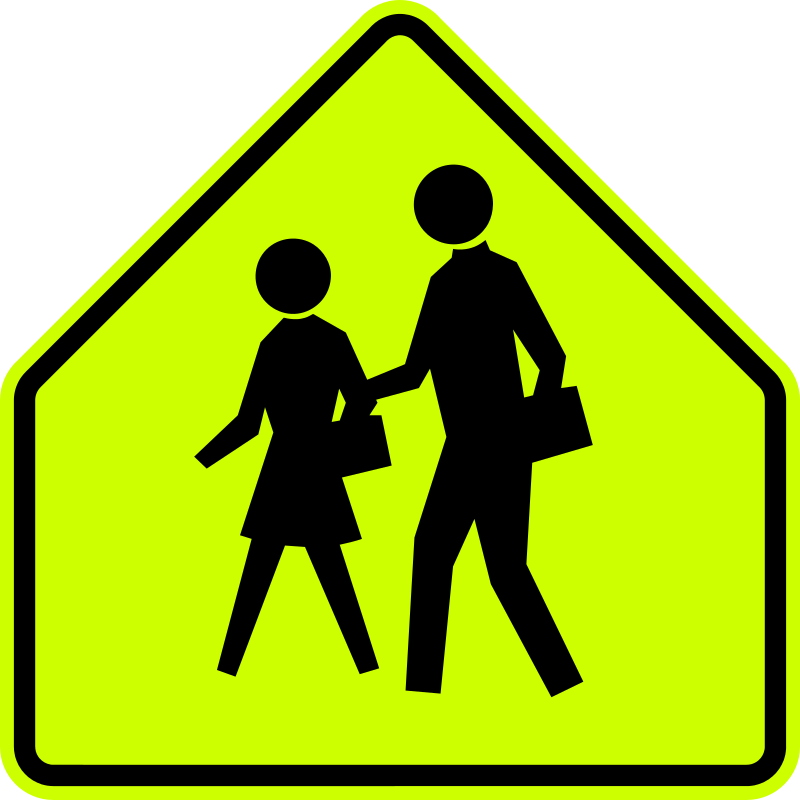
Five-sided pentagon sign indicating an upcoming school area. Watch for children crossing, school buses, and observe posted reduced school speed limits.
This sign means:
A) Business area nearby. Watch for business people.
B) There is a work zone ahead. Watch for workers.
C) The driver is near a school and should watch for children.
10.
If an approaching driver does not dim the headlights, you should:
A) move your eyes to the left to help avoid the glare of approaching high beams.
B) move your eyes to the right and avoid looking directly at the bright lights.
C) flash your headlights to low beam for a second, then return to high beam.
11.
___________ are green with white letters and symbols.
A) Warning signs
B) Destination signs (guide signs)
C) Regulation signs (regulatory signs)
12.
When approaching any intersection or driveway, drivers should:
A) look both ways and be ready to stop.
B) pass other vehicles and then stop.
C) drive at the fastest speed just before entering the intersection.
13.
Designated school crosswalk location. You must yield to all schoolchildren and pedestrians in the crossing.
At a school crossing, drivers should:
A) always stop, whether there’s a stop sign or not.
B) always sound their horn and stay alert.
C) watch for children and be ready to stop.
14.
Parking, standing, or stopping is prohibited at all times in this designated zone except for emergency vehicles.
This road sign means:
A) No parking
B) Yield
C) No left turn
D) Divided highway
15.
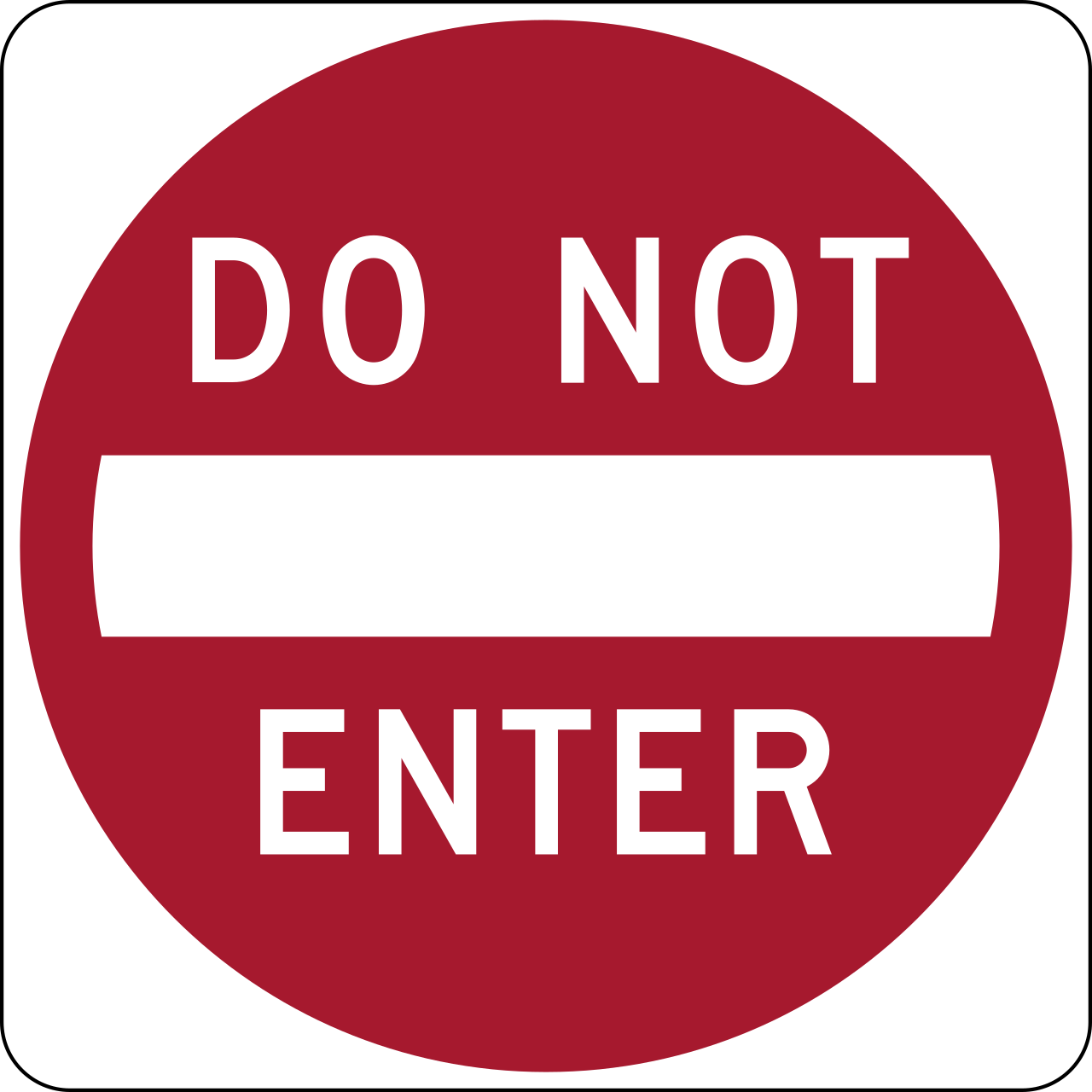
Marks a roadway or ramp where vehicular traffic is strictly forbidden to enter from your direction (such as freeway off-ramps or one-way streets).
This sign indicates:
A) that you must not drive past this sign.
B) that you must yield the right-of-way.
C) the entrance to a construction site.
D) the entrance to a dead-end street.
16.
A driver should be extra alert for motorcyclists, bicycles and pedestrians. Why?
A) They obey specific traffic laws.
B) They always have the right-of-way.
C) They are hard to see in traffic.
D) They don’t have rearview mirrors.
17.
When you come to an intersection with a flashing red light, you must:
A) stop at the intersection, then proceed when safe and observe the right-of-way rules.
B) slow down and drive carefully through the intersection.
C) stop at the intersection and wait for a flashing green light.
D) stop only if cars are approaching the intersection.
18.
When approaching someone using a white cane, you should proceed with caution because:
A) the pedestrian might be using a guide dog.
B) the pedestrian might be blind.
C) the pedestrian is deaf.
D) the pedestrian is blind.
19.
Which of the following drugs could affect your ability to drive?
A) A cold remedy.
B) Marijuana.
C) All of the above.
20.
Before turning left, it is important to:
A) swing to the right side of your lane.
B) sound your horn to warn the other drivers.
C) yield to oncoming vehicles.
D) flash your headlights to alert the other drivers.
21.
When getting ready to change lanes, you should:
A) check your rearview mirror.
B) quickly turn your head to check for other vehicles.
C) check your side view mirror.
D) All of the above.
22.
Aggressive drivers:
A) run stop signs.
B) are high risk drivers.
C) tailgate other vehicles and make improper lane changes.
D) All of the above.
23.
The roadway becomes particularly slippery during wet or rainy conditions. Reduce your speed, increase following distance, and avoid abrupt braking or steering.
When they see this sign, drivers:
A) should be prepared to make sharp turns at a high speed.
B) need to be prepared to turn right and then left quickly.
C) should not speed up or brake quickly.
24.
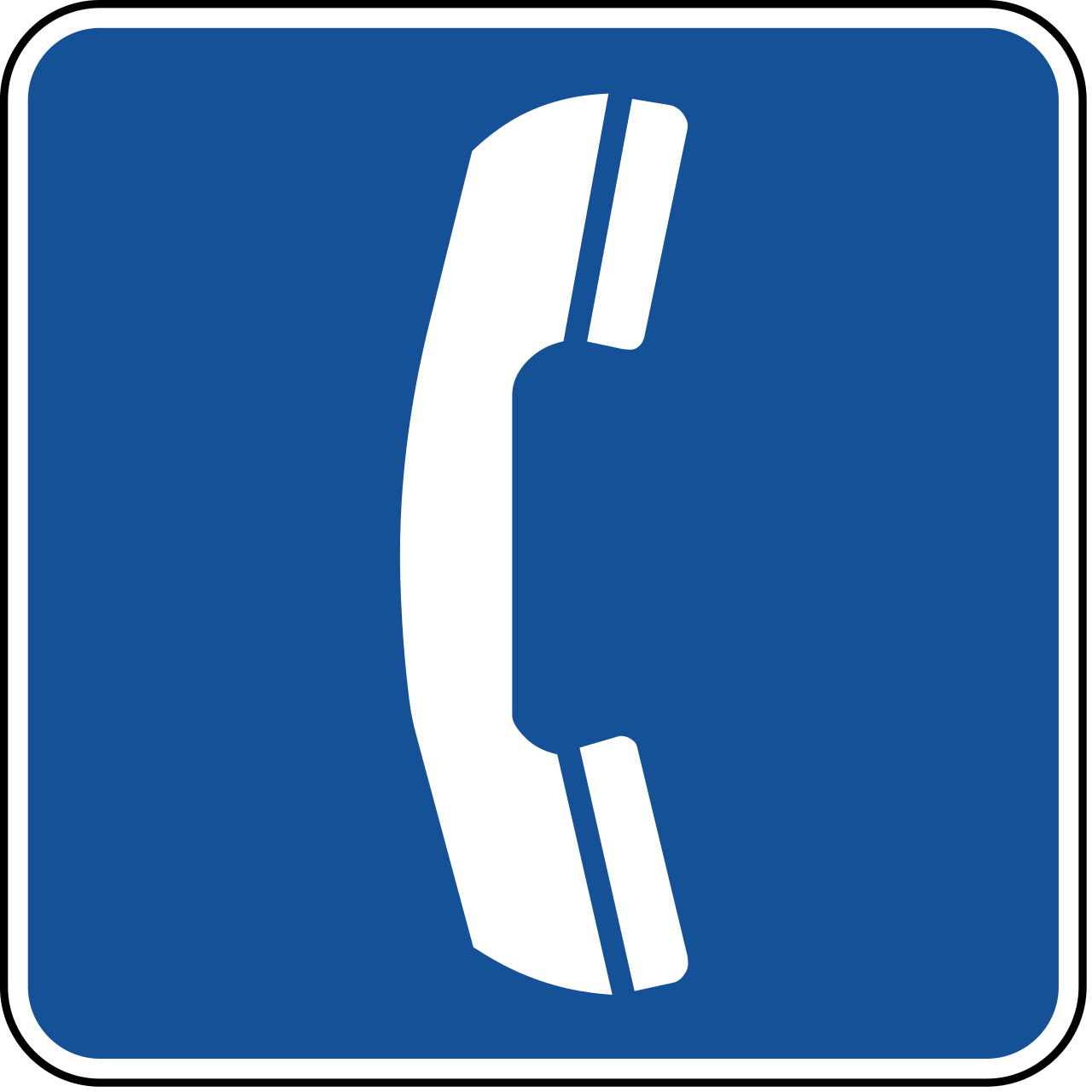
Blue motorist service sign indicating the availability of a public emergency telephone along the highway.
This sign indicates:
A) Phone service ahead
B) Emergency line available
C) Cell phone shop ahead
25.
Object marker used to mark obstacles or bridge abutments near the edge of the road to alert drivers at night.
When they see a yellow X signal, drivers should:
A) come to a complete stop at the marked stop line.
B) turn off the ignition.
C) prepare to leave the lane safely.
ANSWER KEY Check answers after completing the test.
1 D
2 A
3 B
4 B
5 D
6 C
7 A
8 A
9 C
10 B
11 B
12 A
13 C
14 A
15 A
16 C
17 A
18 D
19 C
20 C
21 D
22 D
23 C
24 A
25 C