DriveQuiz drivequiz.com

LA DMV PERMİT PRACTİCE TEST 11

Louisiana
Duration: 36 min
|
Questions: 40
Student Name:
Date:
Correct:      Incorrect:      Score:      
1.
When changing lanes, you can check your blind spot by:
A) using the outside rearview mirror.
B) using the inside rearview mirror.
C) turning your head and glancing over your shoulder.
D) checking the rearview and outside mirrors.
2.
Another road crosses the highway ahead. Look left and right for crossing or entering vehicles.
This road sign means:
A) Church ahead
B) Intersection ahead
C) Do not enter
D) Side road
3.
Emergency vehicles:
A) may follow each other.
B) may use a loudspeaker to give instructions.
C) have the right-of-way when using siren and red/blue lights.
D) All of the above.
4.
The road ahead is divided by a median strip or physical barrier into two separate one-way roadways. Keep to the right of the divider.
This sign means:
A) The highway ahead is divided into two one-way roadways.
B) Roundabout ahead. Slow down.
C) The divided highway on which drivers are traveling ends ahead.
5.
___________ are green with white letters and symbols.
A) Warning signs
B) Destination signs (guide signs)
C) Regulation signs (regulatory signs)
6.
Drinking alcohol while taking drugs can:
A) have a less pronounced effect than either taken separately.
B) have a more pronounced effect than either taken separately.
C) improves concentration.
D) improve your driving performance.
7.
Warns that a one-way street or divided highway is ending, and you are entering a roadway with oncoming traffic in the opposing lane. Stay to the right.
This road sign means:
A) School zone ahead
B) Keep right
C) Two-way Traffic
8.
If your car goes into water, you should:
A) wait for water to rush in and let it out in small breaths through your nose.
B) call the fire department immediately.
C) remove yourself before it starts to sink.
9.
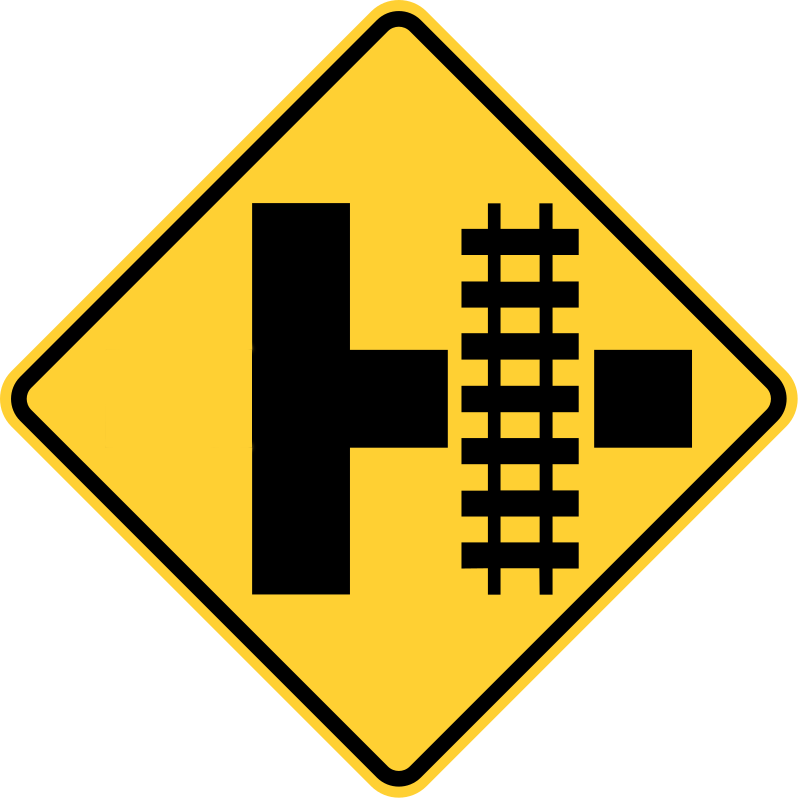
Four-way intersection ahead. Be prepared to yield right-of-way according to traffic control devices.
What does this sign indicate?
A) Parallel railroad crossing (side road)
B) Low ground clearance railroad crossing
C) Parallel railroad crossing (crossroad)
10.
Come to a complete stop before the stop line, crosswalk, or intersection. Look left, right, and left again, and proceed only when it is safe and right-of-way is clear.
This road sign means:
A) Drive with caution and be ready to stop
B) Slow down or stop
C) You must come to a complete stop
11.
The octagonal (8-sided) shape is exclusively reserved for STOP signs so drivers can identify it immediately even in poor visibility or from behind.
The octagonal shape is used:
A) for stop signs and railroad advance warning signs.
B) exclusively for stop signs.
C) to warn drivers of existing or possible hazards on roadways.
12.
The roadway becomes particularly slippery during wet or rainy conditions. Reduce your speed, increase following distance, and avoid abrupt braking or steering.
This road sign means:
A) Winding road
B) Side road ahead
C) Slippery when wet
13.
If another car has stopped in an adjacent lane in the same direction of travel, you should:
A) speed up and pass the vehicle on the right.
B) pass the car on the left.
C) be careful in case the other vehicle has stopped for a pedestrian.
D) tap your horn to let the other driver know you are passing.
14.
Alerts drivers to a major crossroads intersection ahead. Watch for vehicles entering or crossing the roadway.
This road sign means:
A) U-turns are prohibited
B) You may proceed only if the way is clear
C) You are about to enter a one-way street the wrong way
D) Do not pass
15.
Parking is permitted only during specified hours and days as posted on the sign. Vehicles parked outside these hours are subject to ticketing or towing.
This sign means:
A) You can only park between 8:30 AM and 5:30 PM.
B) Parking is not allowed at 8:30 AM and at 5:30 PM
C) No parking between 8:30 AM and 5:30 PM.
16.
Right turns are strictly prohibited at this intersection under all circumstances.
This road sign means:
A) No left turn
B) No right turn
C) No U-turns
17.
To pass a bicyclist traveling in the same direction on a two-lane road without bicycle lanes, you should:
A) continue driving straight, it is the bicyclist’s responsibility to get out of your way.
B) slow down and wait until there is no oncoming traffic, then pass the bicyclist leaving him or her sufficient space.
C) honk at the bicyclist to let him or her know you are about to pass.
D) not pass the bicyclist until you come to a traffic signal or stop sign.
18.
A steady yellow light means:
A) Be prepared to stop for the red light.
B) Drive with caution.
C) Be prepared to go. The light will soon be green.
19.
When you pass another vehicle, before you return to the right lane, you must:
A) look at your interior rear-view mirror.
B) signal.
C) All of the above.
20.
The amount of space you need to cross traffic depends on the:
A) road and weather conditions and oncoming traffic.
B) number of cars behind you.
C) presence of a yield sign.
D) number of cars in front of you.
21.
A steady green light at intersections means:
A) You may drive through the intersection if the road is clear
B) You must increase your speed
C) You may not turn right
22.
Worn tires:
A) may cause you to hydroplane even with very little water on the road.
B) can increase your stopping distance.
C) can make turning more difficult.
D) All of the above.
23.
Drivers who eat and drink while driving:
A) have no driving errors.
B) may have trouble controlling their vehicles.
C) must yield the right-of-way.
D) tend to be more aggressive.
24.
The median divider ends ahead, and you are returning to a two-way, two-lane undivided roadway. Watch for oncoming traffic on your left.
This road sign means:
A) Curves ahead
B) Divided highway ahead
C) Divided highway ends
25.
Slow down and give right-of-way to all oncoming vehicles, cyclists, and pedestrians. Stop completely if necessary before entering the intersection or merging.
This road sign means:
A) You must come to a complete stop
B) Do not enter
C) Slow down, stop if necessary and yield the right-of-way
D) Merging traffic
26.
Alerts drivers to an upcoming crosswalk where pedestrians frequently cross. Slow down and yield right-of-way to anyone in or about to enter the roadway.
This sign means:
A) Railroad crossing
B) No Passing Zone
C) The road ends ahead
27.
Alcohol:
A) makes you less aware of what is happening to your driving abilities.
B) makes it easier to make correct decisions.
C) improves your reaction time.
28.
Designated school crosswalk location. You must yield to all schoolchildren and pedestrians in the crossing.
At a school crossing, drivers should:
A) always stop, whether there’s a stop sign or not.
B) always sound their horn and stay alert.
C) watch for children and be ready to stop.
29.
A side road enters the highway from the right or left. Watch for traffic turning onto or crossing your lane.
This is:
A) a side road sign.
B) a merging traffic sign.
C) a right curve sign.
30.
When driving on wet roads, you should remember:
A) driving on wet roads can cause hydroplaning.
B) you should give yourself additional time to stop.
C) to stay farther behind the vehicle ahead of you.
D) All of the above.
31.
The traffic light is green and you want to drive straight through an intersection. If a car is already in the intersection and is making a turn, you must:
A) enter the intersection and then stop.
B) drive through the intersection. You have the right-of-way.
C) let that car complete its turn before you enter the intersection.
32.
What should you do if your vision through the windshield becomes blocked?
A) Pull your vehicle off the road and park it.
B) Turn on your emergency lights.
C) Open the side window so you can see.
D) All of the above.
33.
A steady yellow light means that a ______ light will soon appear.
A) steady green
B) steady red
C) flashing yellow
D) flashing green
34.
Before turning, you should:
A) increase your speed.
B) sound your horn to alert the other drivers.
C) give the proper turn signal.
D) change lanes.
35.
Arrows on the roadway:
A) show which lanes you must use.
B) indicate reserved lanes.
C) indicate HOV lanes.
36.
When a stop is required at an intersection with no stop line or crosswalk:
A) Drivers should stop only at a place where the driver can see at least 100 feet on either side.
B) Drivers are required to slow down to make sure crossing traffic is clear.
C) Drivers are not required to stop.
D) Drivers should stop at the point nearest the intersecting roadway where the driver has a view of approaching traffic on the intersecting roadway before actually entering the roadway.
37.
The roadway ahead is narrowing or a lane is ending. Merge smoothly into the continuing lane.
This road sign means:
A) No right turn
B) Divided highway ends
C) Lane ends
D) Two way Traffic
38.
To enter a freeway:
A) signal, yield, and enter at the same speed that traffic is moving.
B) drive slowly so you can check traffic.
C) signal and enter the freeway. You have the right-of-way.
D) make a complete stop before entering the freeway.
39.
When passing other vehicles, drivers should:
A) make sure the passing lane is clear of traffic, and check behind and to the left to make sure another vehicle is not attempting to pass.
B) pass the vehicle as slowly as possible.
C) apply the brake and slow down.
D) All of the above.
40.
When you are in a line of traffic that is crossing a railroad track that has no signals or gates:
A) you may pass slower drivers crossing the track.
B) before you start to cross, you need to make sure there is space to get all the way across the tracks without stopping.
C) you have the right of way and do not need to check for trains.
D) All of the above.
ANSWER KEY Check answers after completing the test.
1 C
2 B
3 D
4 A
5 B
6 B
7 C
8 C
9 A
10 C
11 B
12 C
13 C
14 C
15 C
16 B
17 B
18 A
19 C
20 A
21 A
22 D
23 B
24 C
25 C
26 A
27 A
28 C
29 A
30 D
31 C
32 D
33 B
34 C
35 A
36 D
37 C
38 A
39 A
40 B