←
Back to Test
Hide Answer Key
Print / Save as PDF
Print / PDF
drive
quiz
.com
KY DMV PERMİT PRACTİCE TEST 8
Kentucky
Duration: 36 min
|
Questions: 40
Student Name:
Date:
Correct:
Incorrect:
Score:
1.
The side mirror(s) should be set so when you lean left/right you:
A)
can see half of your vehicle.
B)
can barely see the side of your vehicle.
C)
can't see your vehicle.
2.
A driver who approaches an intersection:
A)
must yield the right-of-way to traffic already in the intersection.
B)
must drive straight through the intersection, even if another vehicle is already in the intersection.
C)
has the right-of-way over traffic already in the intersection.
3.
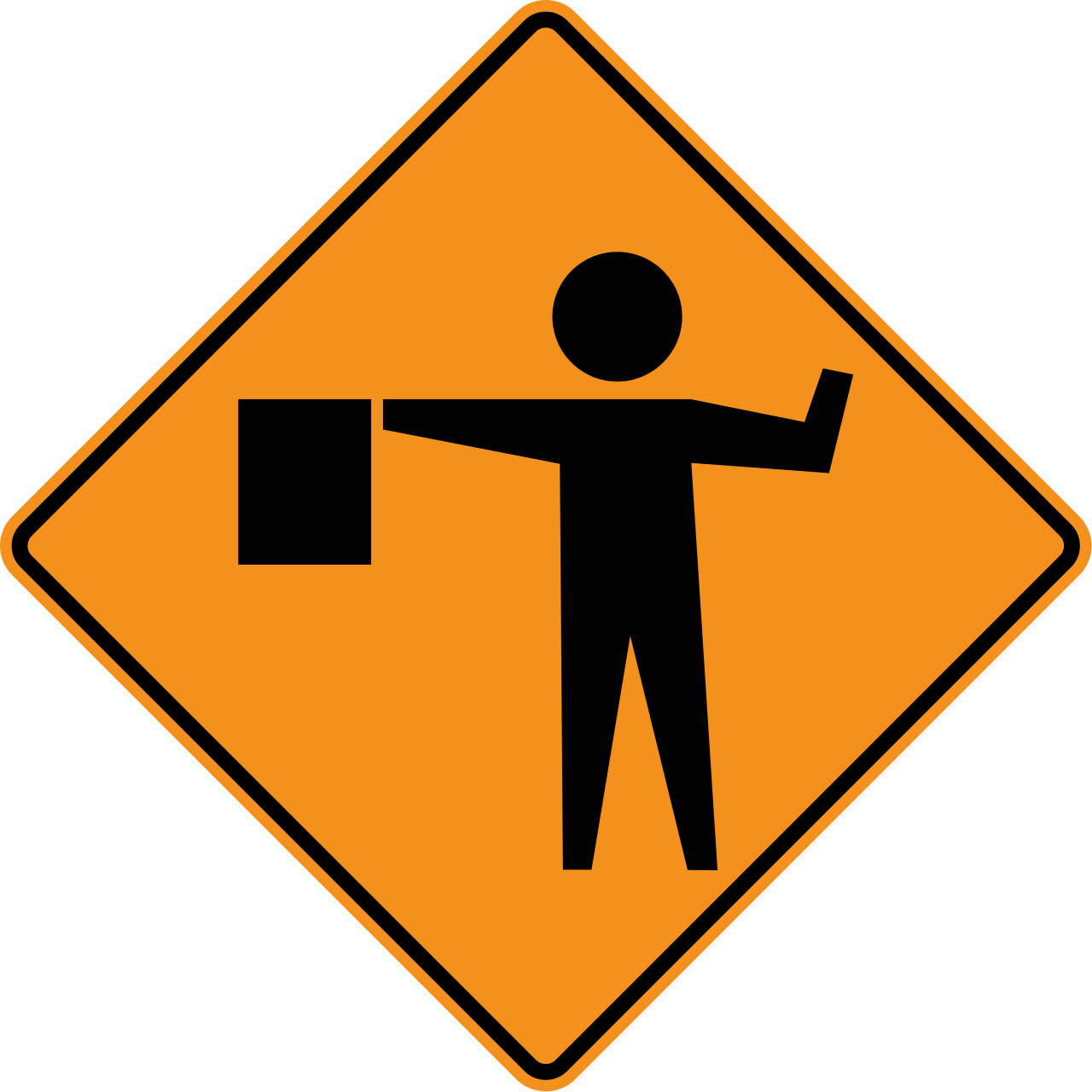
This road sign means:
A)
Right lane closed
B)
Do not block intersection
C)
Flagger ahead
4.
After you stop for a school bus, you must:
A)
turn off your engine.
B)
pass the bus before the red lights stop flashing.
C)
None of the above.
5.
If your brakes are wet, you can dry them by:
A)
riding the pedal lightly.
B)
pull over to the right and wait until it stops raining.
C)
having them checked by a mechanic.
6.
If another vehicle passes you on the left, you must:
A)
increase your speed slightly and keep to the right.
B)
decrease your speed, then pull over to the right and stop.
C)
decrease your speed slightly and keep to the right.
7.
You should increase your following distance:
A)
at night or if it is raining.
B)
when the roads are slippery.
C)
All of the above.
8.
When they see this sign, drivers should:
A)
increase their speed and keep well to the right.
B)
slow down and keep well to the right.
C)
slow down and keep well to the left.
9.
Blind spots are:
A)
Areas to the side or rear of a vehicle that are easy to spot.
B)
areas of the road that cannot be seen even when looking into mirrors.
C)
traffic control devices.
10.
What is the first thing you should do if your wheels move off the pavement?
A)
Pull the steering wheel back.
B)
Pull over to the right and sound your horn to warn the other drivers.
C)
Ease your foot off the gas pedal and brake gently.
11.
The picture shows:
A)
a railroad advance warning sign.
B)
a speeding fines doubled sign.
C)
a reversible road sign.
12.
Collisions can happen more often when:
A)
one lane of traffic is traveling faster than the others.
B)
one vehicle is traveling faster than the flow of traffic.
C)
all vehicles are traveling at the posted speed limit.
13.
On slippery roads, drivers should:
A)
leave more space in front of their vehicle.
B)
increase their speed to avoid hydroplaning.
C)
come to a complete stop.
14.
When the road is slippery, you should:
A)
brake suddenly carefully.
B)
pump your brakes.
C)
press your brakes in slow, steady strokes.
15.
Which of the following substances can affect the ability to drive?
A)
Tranquilizers and sedatives.
B)
Cold tablets containing codeine or antihistamines.
C)
All of the above.
16.
If an emergency vehicle with flashing lights is traveling in the area where you are driving, you must:
A)
drive to the right side of the road and stop.
B)
proceed slowly and let the vehicle pass.
C)
keep driving in your lane.
17.
If a pedestrian is in the middle of the street when your signal light changes to green, you should:
A)
proceed unless the pedestrian is in your lane.
B)
proceed because you have the right-of-way.
C)
wait until the pedestrian crosses the street before proceeding.
18.
Following another vehicle too closely is known as:
A)
speedgating.
B)
closetailing.
C)
tailgating.
19.
If you see a 'lane closed ahead' sign you should:
A)
make a U-turn. You are on the wrong side of the road.
B)
merge into the correct lane when it is safe.
C)
speed to the end of the closed lane and try to get into the other lane.
D)
None of the above.
20.
Which sign has white letters on a red background?
A)
Stop
B)
School zone
C)
Yield
21.
If your vehicle is equipped with ABS and you need to stop quickly, you should:
A)
press on the brake pedal as hard as you can and keep pressing on it.
B)
press hard on the brakes, then let up on the brake pedal.
C)
gently apply the brakes and hold the steering wheel firmly.
22.
What should you do if your vision through the windshield becomes blocked?
A)
Pull your vehicle off the road and park it.
B)
Turn on your emergency lights.
C)
Open the side window so you can see.
D)
All of the above.
23.
Motorcycles:
A)
must share a traffic lane with another vehicle.
B)
are easier to see than cars.
C)
are entitled to use a complete traffic lane.
24.
Which shape is a railroad advance warning sign?
A)
Crossbuck
B)
Round
C)
Pentagon
25.
Roads are the most slippery:
A)
the first rain after a dry spell.
B)
after it has been raining for an hour or more.
C)
for the first 2 hours of a rain storm.
26.
You are driving in the far right lane of a four lane freeway and notice broken white lines on the left side of your lane. You are driving:
A)
on the entrance ramp.
B)
in a special lane for slow moving vehicles.
C)
in an exit lane.
27.
A red arrow on a traffic light means:
A)
You may not turn in the direction of the arrow until a green light or arrow light goes on.
B)
You may turn in in the direction of the arrow after coming to a complete stop.
C)
You must stop and then proceed when the way is clear.
28.
When in a motor vehicle on a highway, it is:
A)
illegal to drink from, but permissible to transport, open containers of alcohol in the passenger compartment.
B)
illegal to possess an open container of alcohol in the passenger compartment.
C)
acceptable to drink alcoholic beverages if you are not driving.
D)
permissible to drink a moderate amount of alcohol when driving with a passenger.
29.
The driver is about to:
A)
turn right.
B)
turn left.
C)
stop.
30.
It's 10 AM. This sign tells you that:
A)
you are allowed to park until 5:30 PM.
B)
you must display a special permit in order to park here.
C)
you are not allowed to park here.
31.
If you approach a flashing red traffic light, you should treat the intersection the same as:
A)
a yield sign.
B)
a stop sign.
C)
a warning sign.
32.
If an intersection has crosswalk lines but no STOP line, where must you stop for a red light?
A)
After the crosswalk.
B)
Before the stop line.
C)
Before the crosswalk.
33.
This sign warns drivers that:
A)
the road will make a sharp turn to the right.
B)
right turns are not allowed.
C)
another road enters the highway from the direction shown.
34.
The driver of an emergency vehicle that uses lights and a siren can legally:
A)
pass red lights.
B)
exceed the speed limit
C)
All of the above.
35.
If an approaching driver does not dim the headlights, you should:
A)
move your eyes to the left to help avoid the glare of approaching high beams.
B)
move your eyes to the right and avoid looking directly at the bright lights.
C)
flash your headlights to low beam for a second, then return to high beam.
36.
Speed limit signs are:
A)
service signs
B)
regulation signs (regulatory signs)
C)
warning signs
37.
What should you do as you prepare to turn right at an intersection?
A)
Honk your horn.
B)
Yield to bicyclists coming from the opposite direction.
C)
Signal your turn, check for bicyclists, and do not turn directly in front of a bicyclist.
38.
If the entrance lane is too short to allow acceleration to expressway speed, you should:
A)
stop and wait for a large space in traffic.
B)
enter the expressway and accelerate quickly.
C)
reduce your speed to 15 MPH or less and blend with traffic.
39.
If you become sleepy while driving you should:
A)
get some rest or change drivers.
B)
drink coffee.
C)
open a window.
40.
Where are yield signs usually placed?
A)
At intersections, if there is no marked stop line.
B)
Where auxiliary roads lead into major roads.
C)
Where major roads lead into auxiliary roads.
ANSWER KEY
Check answers after completing the test.
1
B
2
A
3
C
4
C
5
A
6
C
7
C
8
C
9
B
10
C
11
A
12
B
13
A
14
C
15
C
16
A
17
C
18
C
19
B
20
A
21
A
22
D
23
C
24
B
25
A
26
C
27
A
28
B
29
B
30
C
31
B
32
C
33
A
34
C
35
B
36
B
37
C
38
A
39
A
40
B