DriveQuiz drivequiz.com

KY DMV PERMİT PRACTİCE TEST 3

Kentucky
Duration: 36 min
|
Questions: 40
Student Name:
Date:
Correct:      Incorrect:      Score:      
1.
Warns drivers that two separate lanes moving in the same direction are merging into one. Drivers in the right lane must adjust speed and merge smoothly with existing traffic.
This sign means:
A) A road crosses the main highway ahead.
B) The divided highway on which drivers are traveling ends ahead.
C) Drivers are coming to a point where another traffic lane joins the one they are on.
2.
When you prepare to make a left turn from a one-way road into a two-way road, you must:
A) enter the two-way road to the left of its center line.
B) approach the turn in the right lane or from the right side of a single lane.
C) approach the turn in the left lane or from the left side of a single lane.
3.
As you enter a roundabout you should slow down and:
A) yield to pedestrians and bicyclist crossing before entering the roundabout.
B) yield to any vehicle coming from your left in the roundabout.
C) All of the above.
4.
When approaching any intersection or driveway, drivers should:
A) look both ways and be ready to stop.
B) pass other vehicles and then stop.
C) drive at the fastest speed just before entering the intersection.
5.
Right turns are strictly prohibited at this intersection under all circumstances.
This road sign means:
A) No left turn
B) No right turn
C) No U-turns
6.
Warns of two consecutive curves in opposite directions (e.g., curves right then left). Slow down to maintain control.
This sign warns drivers that:
A) the highway ahead is divided into two one-way roadways. Drivers should keep to the right.
B) there is a winding road ahead.
C) there is a double curve ahead.
7.
When you make a left turn from a one-way road into a one-way road, if the road you enter has two lanes, you:
A) must turn into its right lane.
B) can not turn left.
C) must turn into its left lane.
8.
A steep downhill grade is ahead. Trucks and heavy vehicles should downshift to a lower gear to prevent brake overheating.
This road sign means:
A) Do not pass trucks
B) Truck must back up
C) Steep downgrade ahead
9.
What is the most important rule to remember in any emergency?
A) Do not panic.
B) Run away.
C) Call the police.
10.
The road makes a sharp 90-degree right turn ahead. Slow down considerably before entering the turn.
This sign warns drivers of:
A) a side road.
B) a sharp turn.
C) a cross road.
11.
Alcohol:
A) makes drivers more prone to take chances.
B) increases reaction time.
C) All of the above.
12.
Treat the flashing red signal exactly like a STOP sign: come to a complete stop, yield to cross traffic and pedestrians, then proceed when safe.
A flashing red light:
A) is used at dangerous intersections.
B) means the same thing as a stop sign.
C) All of the above.
13.
Indicates a series of three or more consecutive sharp turns or curves ahead. Reduce speed and maintain lane control.
This road sign means:
A) Pavement ends
B) Winding road
C) Double curve ahead
14.
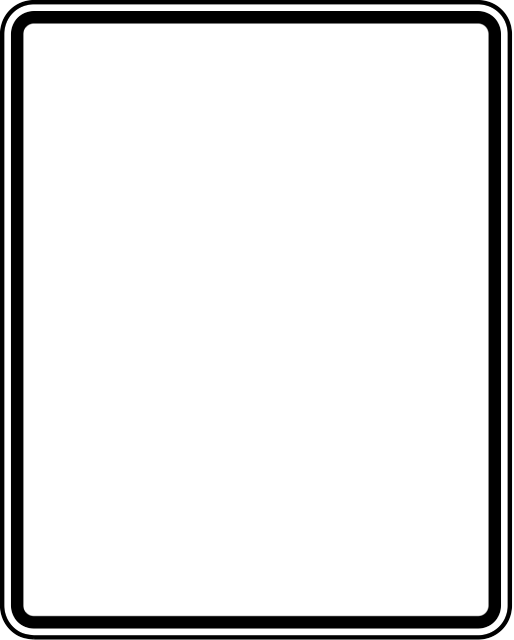
Standard rectangular shape used for general regulatory instructions and speed limits.
Vertical rectangles tell drivers:
A) the law.
B) what is not allowed.
C) the direction they should travel.
15.
When entering an interstate highway, drivers should:
A) check for cars and slow down to 25 MPH before merging with the flow of traffic.
B) wait for an opening in traffic on the entrance ramp.
C) adjust speed to meet a traffic gap, then merge at a safe speed.
16.
A curb painted red means:
A) No parking or stopping
B) Parking is for disabled persons with a special placard or plate.
C) Reserved for passengers pick up or drop off
17.
The road is the most slippery:
A) when it first starts to rain.
B) after it rains.
C) All of the above.
18.
Examples of proper glass maintenance include:
A) Replacing worn wiper blades.
B) Keeping your windows clean and clear.
C) All of the above.
19.
Yellow diamond warning that pedestrians may be crossing ahead. Exercise caution and yield.
This road sign means:
A) Pedestrian crossing
B) School zone
C) School crossing
20.
The best way to deal with tailgaters is to:
A) let them pass if it's safe to do so.
B) flash your brake lights.
C) always keep your eyes focused ahead of your car.
21.
When taking medication while driving, you should:
A) follow other vehicles closely.
B) consult your physicians and/or pharmacist regarding any prescription medication and its possible effects on driving.
C) drive 20 MPH below the posted speed limit.
22.
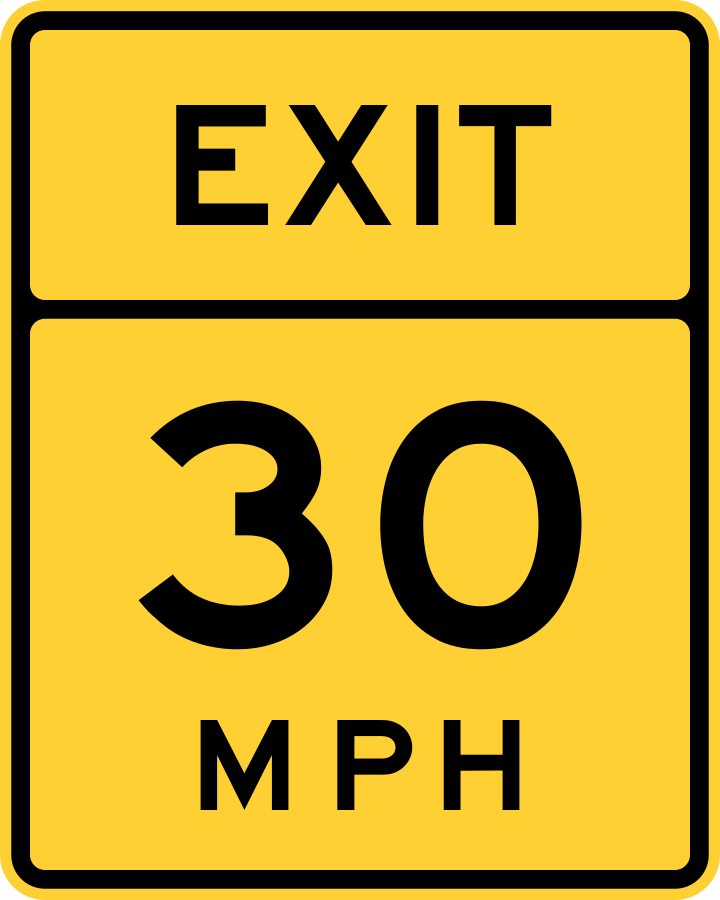
Recommends a safe speed of 30 MPH for negotiating the freeway exit ramp deceleration lane.
The sign in the picture:
A) shows the highest speed drivers can travel at the exit of the intersection.
B) is used to advise motorists of the appropriate ramp speed at the highway exit point.
C) indicates the minimum ramp speed at the highway exit point.
23.
If you remain in the back blind spot of a large vehicle:
A) you increase the chance of a crash.
B) the large vehicle will take much longer to stop.
C) you can reduce fuel consumption.
24.
Where must you position your vehicle when you prepare to make a left turn from a two-way roadway into a one-way roadway?
A) As far to the right as possible.
B) On the right curb.
C) As close as possible to the center line.
25.
A thumping sound can be a warning:
A) that a tire blowout is about to occur.
B) of a steering failure.
C) of a brake failure.
26.
You are entering a roadway from a private road, and you need to turn left. You have to yield to:
A) vehicles from the right.
B) vehicles from the left.
C) vehicles from both directions.
27.
To avoid panic stops, you should:
A) scan the road ahead for hazards.
B) drive with your window down.
C) pump your brakes to make sure they work.
28.
Before changing lanes or attempting to pass another vehicle, you should:
A) signal your intention before changing lanes.
B) check your blind spots and, mirrors.
C) All of the above.
29.
When driving on the freeway behind large trucks, you should:
A) move to the right of the truck and pass it quickly.
B) drive closer behind the truck than for a passenger vehicle.
C) increase your following distance.
30.
You reach an intersection that is not controlled at the same time as a driver on your right, and both of you prepare to go straight. Who has the right-of-way?
A) You.
B) No one.
C) The other driver.
31.
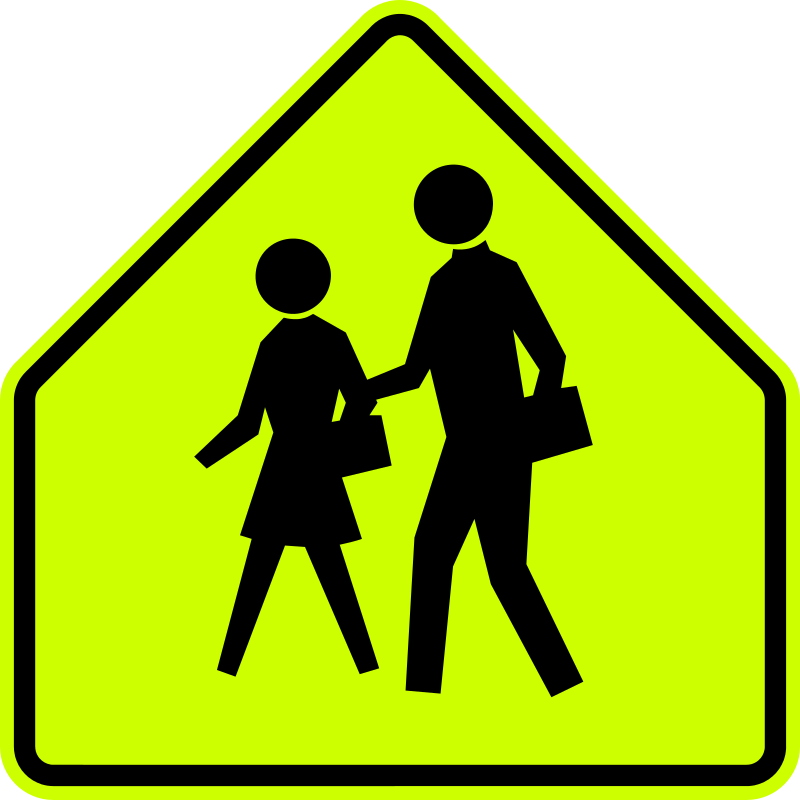
Five-sided pentagon sign indicating an upcoming school area. Watch for children crossing, school buses, and observe posted reduced school speed limits.
When you see this sign, you should:
A) be prepared to stop if children are in the crosswalk.
B) slow down, proceed with caution and watch for blind people.
C) always stop at the crosswalk.
32.
The extra space in front of a large truck is needed for:
A) other drivers when merging onto a freeway.
B) the truck driver to stop the vehicle.
C) other drivers when they want to pass the truck.
33.
When you prepare to make a left turn from a one-way road into a one-way road, you must:
A) move into the right lane, or to the left side of a single lane.
B) move into the right lane, or to the right side of a single lane.
C) move into the left lane, or to the left side of a single lane.
34.
A solid yellow line on your side of the center line means:
A) Stop
B) Pass with caution
C) Do not pass
35.
You can pass on the right:
A) when a vehicle ahead makes a right turn.
B) when a vehicle ahead makes a left turn.
C) when a vehicle that is approaching from the opposite direction is prepared to turn left.
36.
Which of the following drugs could affect your ability to drive?
A) A cold remedy.
B) Marijuana.
C) All of the above.
37.
The median divider ends ahead, and you are returning to a two-way, two-lane undivided roadway. Watch for oncoming traffic on your left.
This road sign means:
A) Curves ahead
B) Divided highway ahead
C) Divided highway ends
38.
What is the meaning of orange traffic signs?
A) Yield.
B) Warning of school, pedestrian, and bicycling activity.
C) Construction and maintenance warning.
39.
What do flashing red lights on a school bus indicate?
A) The bus is stopped to load or discharge passengers.
B) Traffic that approaches from either direction may proceed.
C) The bus is about to stop.
40.
To drive defensively, you must:
A) avoid scanning the road ahead.
B) keep one hand on the steering wheel.
C) keep your eyes moving.
ANSWER KEY Check answers after completing the test.
1 C
2 C
3 C
4 A
5 B
6 C
7 C
8 C
9 A
10 B
11 C
12 C
13 B
14 A
15 C
16 A
17 A
18 C
19 A
20 A
21 B
22 B
23 A
24 C
25 A
26 C
27 A
28 C
29 C
30 C
31 A
32 B
33 C
34 C
35 B
36 C
37 C
38 C
39 A
40 C